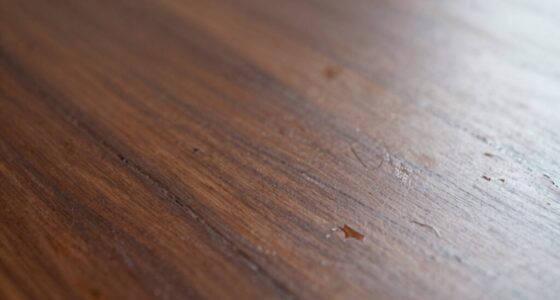
Excess glue squeeze-out can prevent an even stain because it causes uneven absorption and blotches. When you apply too much glue and don’t clean it up promptly, it soaks into the surface unevenly, resulting in patchy coloration. Rushing to stain before the glue cures can also lead to blotchy results. If you want a smooth, uniform finish, it’s essential to control the glue application, clean up excess immediately, and allow proper drying time—there’s more to uncover if you keep exploring.

Get business pricing on tools and workshop supplies
- Business-only prices and quantity discounts
- Tax-exempt purchasing
- Multiple users, one account, clear invoices
Key Takeaways
- Excess glue creates thick squeeze-out that absorbs stain unevenly, causing blotchy or patchy finishes.
- Not cleaning excess glue promptly allows it to set and resist staining, resulting in uneven coloration.
- Applying too much glue leads to excessive seepage, which can prevent uniform stain absorption.
- Staining before the glue fully cures causes blotchiness due to uneven absorption into wet or tacky glue.
- Poor surface preparation or contamination (dirt, dust, oils) can prevent even glue bonding and stain absorption.

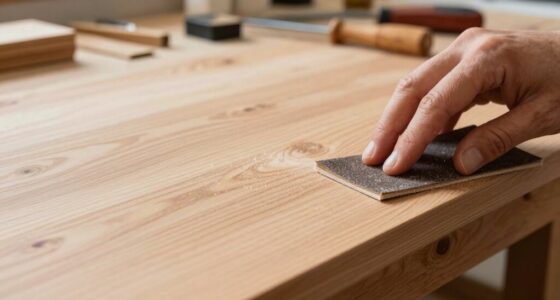
When applying glue, squeeze-out and staining often become unavoidable issues that can compromise the final appearance of your project. If you notice that your glue squeeze-out isn’t staining evenly, the first thing to consider is your surface prep. Proper surface prep involves cleaning and sanding the surfaces thoroughly before applying glue, which helps ensure a more uniform distribution and reduces excessive squeeze-out. When surfaces are dirty or uneven, the glue tends to seep unevenly, causing inconsistent staining and making it more difficult to achieve a clean, professional look. Making sure your surfaces are dry, smooth, and free of dust or oils creates a better bond and encourages even glue spread and staining.
Another key factor influencing staining consistency is drying time. If you rush the process or try to stain too soon after applying glue, the stain may not penetrate evenly. Different glues have varying drying times, so it’s essential to wait until the glue has fully cured before applying stain or finish. If the glue is still wet or tacky, staining can result in blotchy, uneven coloration because the stain reacts differently with wet glue versus dry surfaces. Patience is vital; giving the glue ample time to dry ensures that the stain will be absorbed uniformly, leading to a more consistent appearance.
Additionally, the amount of glue applied plays a role. Excessive glue creates thick squeeze-out that’s harder to control and more prone to uneven staining. When you apply glue sparingly and evenly, you minimize the amount of squeeze-out, reducing the risk of staining issues. Use a controlled application tool, such as a glue spreader or a fine-tipped applicator, to help distribute the glue evenly across the surface. This way, you prevent excessive buildup and make it easier to clean off any squeeze-out before staining.
Cleaning up squeeze-out promptly also impacts staining uniformity. Once the glue starts to set, any excess can be difficult to remove completely, especially if it’s already absorbed into the wood or material. Wiping away excess glue with a damp cloth immediately after application prevents it from seeping into the material and affecting the stain. If you wait too long, you might end up with sticky patches that stain unevenly, ruining the project’s appearance.
Furthermore, understanding the drying time of your glue type can help you plan your staining process better, ensuring a more even finish. Ultimately, achieving even staining with glue squeeze-out hinges on good surface prep, patience with drying time, careful application, and prompt cleanup. When you take these steps seriously, you’ll notice your project’s final look improves dramatically, with a cleaner, more professional finish free of blotchy or uneven staining caused by excess or improperly dried glue.
As an affiliate, we earn on qualifying purchases.
Frequently Asked Questions
Can Environmental Humidity Affect Glue Stain Results?
Yes, environmental humidity can influence glue stain results. High humidity levels cause humidity effects that prevent the glue from drying evenly, leading to uneven stains. Plus, excess moisture encourages mold growth, which can further distort the stain’s appearance. To get consistent results, you should control humidity in your workspace and ensure proper ventilation, reducing moisture and preventing mold from impacting your project.
Does the Type of Wood Influence Glue Stain Absorption?
You might be surprised, but the type of wood really does influence stain absorption. Wood porosity varies greatly; some woods absorb stain quickly, creating uneven results, while others resist it, leading to dull patches. To get a consistent stain, choose wood with uniform porosity or prepare the surface properly. Understanding how different woods interact with stain can make all the difference in achieving that perfect finish you want.
How Does Temperature Impact Glue Squeeze-Out and Staining?
Temperature effects markedly influence glue squeeze-out and staining. When it’s warmer, glue viscosity decreases, making the glue more fluid and easier to spread, which can lead to more squeeze-out. Conversely, colder temperatures increase viscosity, resulting in thicker glue that doesn’t spread as evenly. This uneven distribution affects how the stain interacts with the glue, often causing uneven staining. Keep the temperature consistent to achieve a smoother, more uniform stain.
Are There Specific Adhesives That Stain More Evenly?
You might think certain adhesives stain more evenly, but it’s mostly about adhesive consistency and stain compatibility. A uniform, medium-viscosity glue often results in better stain absorption, offering more even coloring. Look for adhesives designed specifically for staining or finishing projects, as they tend to have better compatibility. Testing small areas first helps confirm if the adhesive’s consistency will yield an even stain, ensuring your final result looks just right.
Can Finishing Techniques Improve Stain Uniformity?
Yes, finishing techniques can improve stain uniformity. You should focus on proper application techniques, like applying thin, even coats of stain to prevent blotchiness. Additionally, using appropriate drying methods—such as allowing sufficient drying time and controlling humidity—helps the stain penetrate evenly. By combining careful application with controlled drying, you’ll achieve a more consistent, professional-looking finish that enhances the natural beauty of your project.
As an affiliate, we earn on qualifying purchases.
Conclusion
To guarantee your glue squeeze-out stains evenly, pay close attention to your application and surface preparation. When done right, you’ll prevent a mess that could rival a Picasso in chaos. Small adjustments make a huge difference, transforming a potential disaster into a polished finish. Remember, patience and precision are your best tools—master them, and you’ll achieve a flawless, professional look that outshines even the most meticulous craftsman.
As an affiliate, we earn on qualifying purchases.
As an affiliate, we earn on qualifying purchases.
Fall yard work Picks
leaf blowers
As an affiliate, we earn on qualifying purchases.