
TL;DR

Get business pricing on tools and workshop supplies
- Business-only prices and quantity discounts
- Tax-exempt purchasing
- Multiple users, one account, clear invoices
A Livingetc report examines the growing social-media interest in buying marble sinks directly from Turkish makers, where established stoneworking and processing industries can help make finished pieces more affordable. Designers also point to differences between marble types and warn that buyers need to check what stone they are purchasing; shipping, installation and other import costs are not detailed in the report.
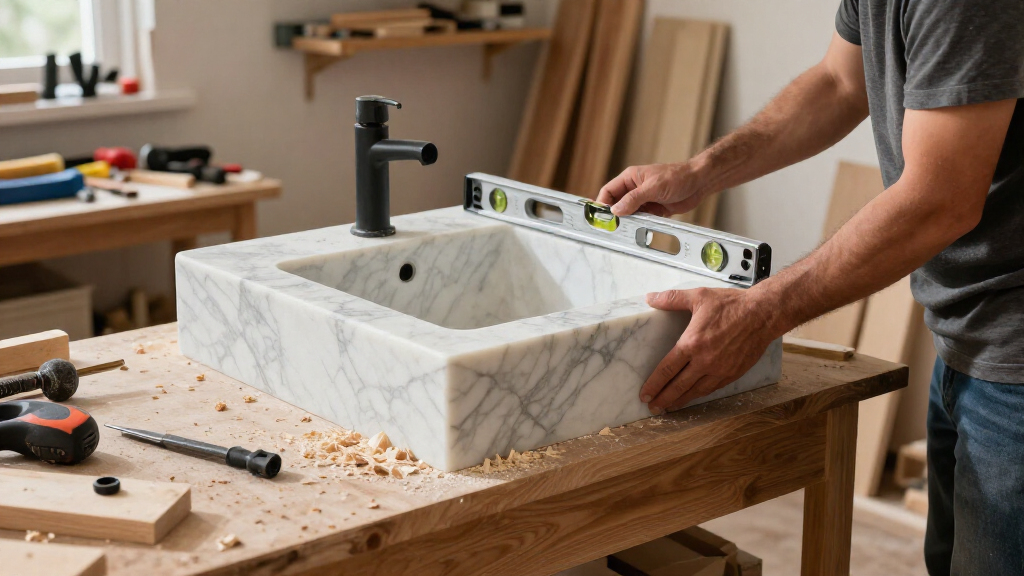
Turkish marble sinks are gaining attention on social media, with buyers sharing purchases from makers and describing the process as “worth the risk,” according to a Livingetc report. The appeal is a combination of distinctive, often bespoke designs and prices that can be lower than comparable high-end Italian stone, but the report also stresses that marble varies and buyers should identify the specific material before ordering.
Livingetc reports seeing more buyers use online retail platforms such as Etsy to find decorative marble sinks offered by Turkish manufacturers. The publication describes the products as visually striking and says some listings have attractive starting prices. It does not provide a survey of buyers, sales figures or a typical price range, so the scale of the trend and the size of any savings are not established.
Damla Turgut, founder of tile brand Otto Tiles, told Livingetc that Turkey has a long history of natural-stone work and a mature industry of quarries, processing facilities and workshops. She said Turkish marble can be significantly more budget-friendly than high-end Italian stone, often roughly half the price, attributing the difference to Turkey’s active quarry reserves and domestic processing capacity. That comparison is Turgut’s estimate, not a universal price guarantee for every sink or stone.
Turgut also cautioned that marble quality and appearance vary. She described Turkish marble as often having softer color and more uniform veining, while some Italian varieties, including Carrara and Calacatta, are associated with more pronounced patterns. Individual slabs differ, she said, and the stone in a sink may not visually match marble tiles sourced elsewhere. The report presents these as general observations rather than a rule for every Turkish or Italian product.
The Price Comes With Trade-Offs
The trend matters to homeowners because a stone basin is both a functional fixture and a substantial purchase. A lower listing price may make a custom-looking design accessible, but the price comparison alone does not establish the total cost of bringing a heavy, fragile item into a home. The Livingetc report does not set out shipping charges, import duties, delivery arrangements, return terms or installation costs, all of which buyers would need to confirm directly with a seller.
Material choice also affects the finished room. Buyers hoping to coordinate a sink with existing stone should verify the marble’s identity, color and veining, rather than relying on a broad label such as “Turkish marble.” A photo or sample may help, but the report does not give a standardized verification process. The difference between an attractive online image and a delivered, installed basin is where the practical risk lies.
The appeal is not only price. Turgut said Turkish workshops have experience with bespoke pieces, while designer Tanya Selway told Livingetc that the hammam basin, or kurna, is a form rooted in Turkey. Her point links the product trend to regional craft and design knowledge, rather than treating the sink simply as a discounted import.
Popular right now

Apple AirPods Pro 3 Wireless Earbuds with Active Noise Cancellation

Ninja SP151 Flip Toaster Oven and Air Fryer

Ninja Foodi 10-Qt DualZone Air Fryer, 6-in-1, Black (DZ302)
As an affiliate, we earn on qualifying purchases.
Turkey’s Stoneworking Tradition
Turkey’s natural-stone industry includes quarries, processing facilities and workshops, according to Turgut, who said the country has worked with stone for thousands of years. She told Livingetc that manufacturers have increasingly made finished pieces for international interiors markets in recent years, including sinks, fireplace surrounds and coffee tables. The report identifies this manufacturing base as one reason buyers may find bespoke work at competitive prices.
The article also notes that Turkey has deposits of travertine, onyx and limestone, as well as marble. It distinguishes Turkish marble from Italian stones often prized for their color and dramatic veining, while emphasizing that stone varies from slab to slab. This matters when a sink is being paired with tile or other surfaces that may come from a different country or quarry.
Selway’s comments add a cultural dimension: she describes the kurna as a Turkish form and says buyers seeking one carved with genuine understanding should look to Turkey. The report does not provide a broader market analysis or quantify how many such basins are being sold abroad; its account is based on observed social-media posts and interviews with design professionals.
“Turkey has an incredibly rich history of working with natural stone, stretching back thousands of years.”
— Damla Turgut, founder of Otto Tiles, speaking to Livingetc
Costs and Seller Terms Remain Unclear
The report does not identify a typical delivered price, provide a comparison of named sink models, or establish how many buyers are taking part in the trend. Its description of Turkish marble as often roughly half the price of high-end Italian stone comes from Turgut and should not be read as a quote for every product.
It is also unclear from the report how buyers should assess a seller’s credentials, confirm a stone’s origin, handle damage in transit, or resolve a dispute. Shipping, taxes, customs procedures, lead times, returns, warranties and local installation requirements are not specified. These details will depend on the seller, destination and item, so prospective purchasers need written answers before paying.
Checks to Make Before Ordering
Anyone considering a direct purchase should ask the maker for the exact stone name and origin, dimensions, finish, basin depth, tap and drain specifications, and clear images of the actual piece or slab. Buyers should request an itemized quote that states packaging, freight, taxes or duties where applicable, delivery arrangements, damage claims, return terms and expected production time. The report does not endorse a particular seller or provide a buyer-protection checklist, so those terms must be confirmed independently.
Before committing, purchasers can compare the total quote with locally available alternatives and check that the basin can be safely moved and fitted in the intended bathroom. A designer, stone specialist or qualified installer can advise on compatibility and installation needs. The trend is still described through social-media examples and industry interviews; further reporting or more detailed buyer information would be needed to establish typical outcomes, costs and risks.
Key Questions
Why are Turkish marble sinks attracting buyers?
Competitive pricing and bespoke design are central to the appeal, according to the Livingetc report. Damla Turgut points to Turkey’s quarries, processing facilities and experienced workshops as factors that can support lower prices for finished stone pieces.
Are Turkish marble sinks always half the price of Italian marble?
No. Turgut told Livingetc that Turkish marble is often roughly half the price of high-end Italian stones, but the report does not provide a market-wide price study. Costs vary by stone, design, seller and other charges.
Does Turkish marble look the same as Italian marble?
Not necessarily. Turgut said Turkish marble often has softer color and more uniform veining, while some Italian varieties have bolder patterns. She also noted that every slab is different, so buyers should check the specific stone rather than assume all pieces look alike.
What should I check before buying a sink directly?
Confirm the stone’s name and origin, the exact dimensions and finish, and whether the fittings suit your bathroom. Ask for a written total covering shipping, taxes, delivery, damage claims and returns, and verify production and installation requirements before placing an order.
Source: livingetc.com