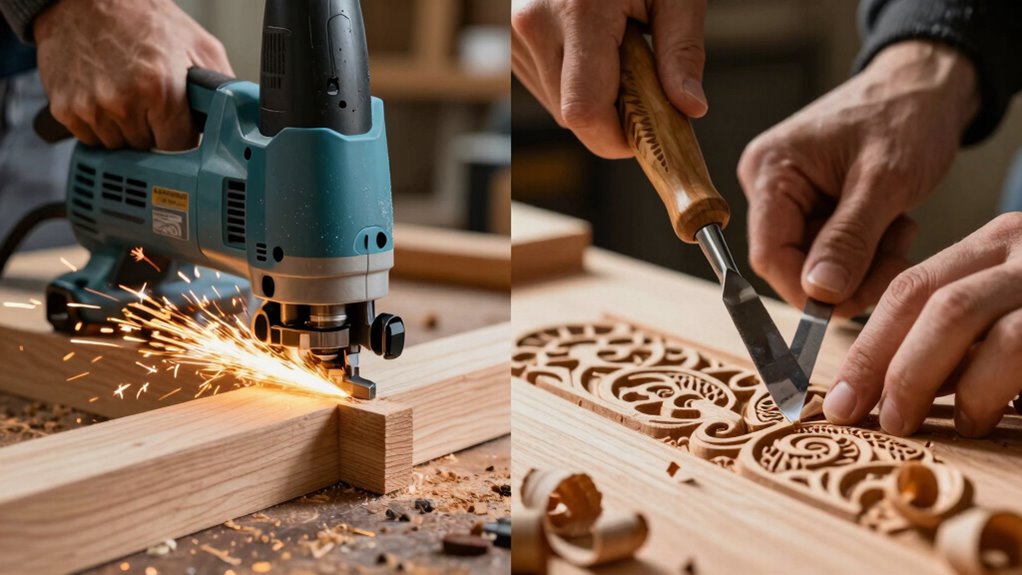

Choosing between power carving and hand carving depends on your project size, desired detail, and personal style. If you want quick results and work on larger or tougher wood, power carving might suit you best. If you prefer control, fine detail, and a close connection with the wood, hand carving is ideal. Both methods need good tool maintenance and understanding of wood grain to succeed. Stick around, and you’ll learn tips to help you choose your perfect carving path.

Get business pricing on tools and workshop supplies
- Business-only prices and quantity discounts
- Tax-exempt purchasing
- Multiple users, one account, clear invoices
Key Takeaways
- Choose power carving for speed and large projects; hand carving for detailed, refined finishes.
- Consider your patience and skill level; hand carving demands patience and craftsmanship.
- Evaluate project complexity; dense or resistant wood may require power tools for efficiency.
- Match your style: control and texture favor hand carving; bold, rapid shaping suits power carving.
- Prioritize tool maintenance and understanding wood grain to achieve quality results with either method.

Have you ever wondered whether power carving or hand carving is better for your project? Choosing between the two depends on your style, goals, and the kind of finish you want to achieve. Power carving uses electric tools like rotary tools, which make quick work of shaping and detailing. Hand carving, on the other hand, relies on traditional chisels and knives, giving you more control and a closer connection to the wood. Both methods can produce stunning results, but understanding their differences helps you decide which suits your approach best.
Choosing between power carving and hand carving depends on your style, goals, and desired finish.
When considering power carving, one advantage is speed. If you’re working on a large project or need to meet a tight deadline, power tools can substantially cut down your work time. They also allow you to easily remove material and work through tough sections of wood. However, it’s important to pay attention to the wood grain. Power tools can sometimes struggle with the grain’s direction, leading to splintering or uneven cuts if you’re not careful. Proper tool maintenance is essential here—keeping your bits sharp and well-maintained ensures cleaner cuts and reduces the risk of damaging the wood. Regularly cleaning and lubricating your tools prolong their lifespan and help maintain their performance, making your power carving experience smoother and more precise. Additionally, understanding the wood grain is crucial for achieving optimal results with either method. Developing a good understanding of the wood grain can significantly influence the outcome of your project and is vital for both power and hand carving. To further improve your technique, exploring techniques for working with wood grain can be highly beneficial.
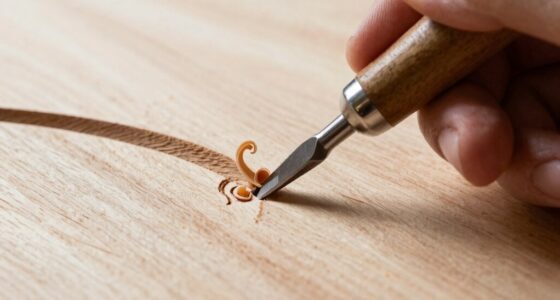
With hand carving, you gain a deeper understanding of the wood’s characteristics. You can feel the grain’s direction and adjust your cuts accordingly, which often results in a more refined, textured finish. This method demands patience and skill, but it encourages a closer connection to your material. Since you’re working more slowly and deliberately, you can better appreciate the wood’s natural beauty. Tool maintenance is just as essential here—sharpening your chisels and knives keeps your cuts clean and effortless. Dull tools can cause splits in the wood or require excessive force, which might ruin your project. By maintaining your tools properly, you guarantee precise control over each cut and preserve the integrity of the wood grain. Proper tool maintenance not only extends the life of your tools but also ensures your work remains consistent and accurate. In addition, understanding wood characteristics can help you select the right tools and techniques for each type of wood. Ultimately, your choice hinges on your project needs and personal style. Power carving is perfect if you value efficiency and large-scale work, while hand carving suits those who prefer craftsmanship and fine detail. Whichever route you choose, remember that good tool maintenance and an understanding of the wood grain are indispensable for achieving professional results. Both methods have their unique advantages, and mastering either will expand your skills and bring your creative visions to life.
electric rotary tool for wood carving
As an affiliate, we earn on qualifying purchases.
As an affiliate, we earn on qualifying purchases.
Frequently Asked Questions
What Safety Gear Is Recommended for Power Carving?
When power carving, you should always wear protective eyewear to guard against flying debris and a respirator mask to avoid inhaling dust particles. These safety gears help keep your eyes safe and protect your lungs during intense carving sessions. Never skip these essentials, even if you’re experienced. Prioritizing safety makes sure you enjoy your craft without risking injuries or respiratory issues.
Can Hand Carving Techniques Be Learned Online?
Yes, you can definitely learn hand carving techniques online. Research shows that over 60% of skill development happens through online tutorials, making it accessible and convenient. With clear step-by-step videos and expert tips, you can develop your hand carving skills at your own pace. Just guarantee you follow reputable sources, practice consistently, and stay patient — slow progress is part of mastering this art form.
How Long Does It Take to Master Power Carving?
It typically takes several months to a few years to master power carving, depending on your skill development and practice routines. Consistent practice helps you refine your technique and develop control. You’ll notice progress as you dedicate regular time to carving, experimenting with different tools and styles. Patience and persistence are key, so stick with it, and over time, you’ll see your skills improve markedly.
Is Power Carving Suitable for Detailed, Delicate Work?
Power carving isn’t ideal for highly detailed, delicate work because it lacks the precision techniques you need for fine detail. You might find it challenging to control the tool’s force, risking mistakes. To improve your results, focus on proper tool maintenance, ensuring blades stay sharp and well-adjusted. For intricate projects, hand carving offers better control, allowing you to achieve delicate, precise details with more finesse.
What Are the Environmental Impacts of Each Method?
Imagine you choose hand carving with eco-friendly tools, reducing your carbon footprint considerably. Hand carving generally has a lower environmental impact because it uses less energy and produces fewer emissions. Power carving, while faster, often relies on electric tools that may contribute to higher emissions unless powered by renewable energy. Your choice influences the environment, so consider sustainability alongside your artistic preferences when selecting your carving method.
As an affiliate, we earn on qualifying purchases.
Conclusion
Ultimately, whether you choose the gentle dance of hand carving or the swift rhythm of power carving, it’s about finding your groove. Each path offers its own subtle charms and quiet joys, inviting you to explore your craft with patience or speed. Embrace the journey, and let your unique style unfold naturally—sometimes, a softer touch reveals more beauty than a rush ever could. Trust your instincts, and carve your story with passion.
wood carving tool maintenance kit
As an affiliate, we earn on qualifying purchases.
As an affiliate, we earn on qualifying purchases.
As an affiliate, we earn on qualifying purchases.
Fall Picks
fall essentials
As an affiliate, we earn on qualifying purchases.