
TL;DR

Get business pricing on tools and workshop supplies
- Business-only prices and quantity discounts
- Tax-exempt purchasing
- Multiple users, one account, clear invoices
Ryobi has announced the PCL750B 18V One+ Window Vacuum, scheduled to launch at Home Depot in November 2026 for $69.97 as a bare tool. It pairs an 11-inch squeegee with a separate spray bottle and microfiber pad; a reviewer expects it to clean well but says they have not tested Ryobi’s model.
Ryobi has announced the PCL750B 18V One+ Window Vacuum, a glass-cleaning tool scheduled to go on sale at Home Depot in November 2026 for $69.97 as a bare tool. The product is designed to collect cleaning liquid after a separate pad loosens dirt, and its use of Ryobi’s 18V One+ battery platform may appeal to customers who already own compatible batteries.
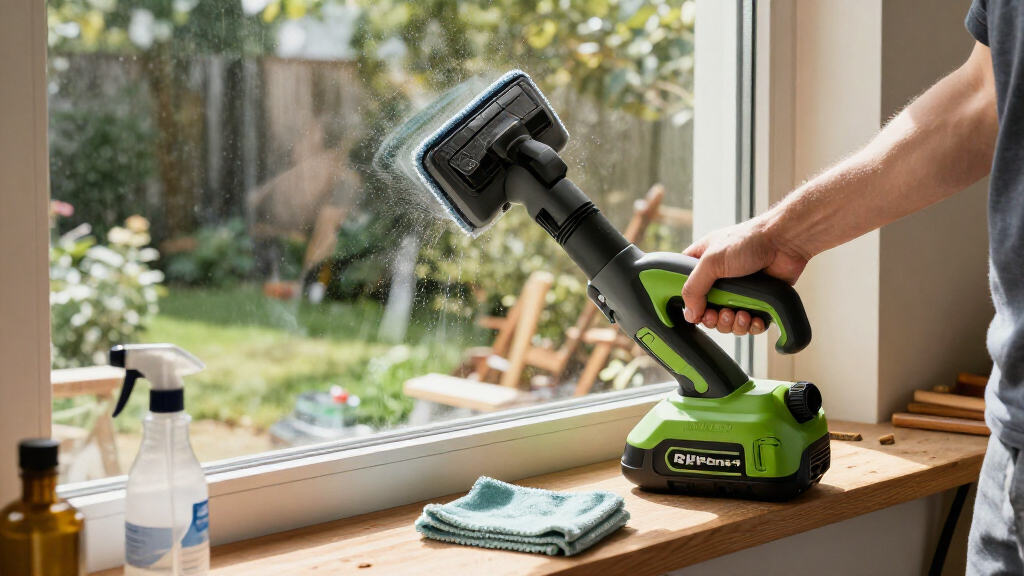
The vacuum uses an 11-inch squeegee to guide liquid toward vents, where suction draws it into a holding container. Ryobi’s system also includes a spray bottle with a microfiber cleaning pad: users spray the glass, wipe it to loosen debris, then pass the vacuum over the wet surface. The collected liquid can be emptied and the container rinsed.
The product is listed as a bare tool, so a battery and charger are not included in the stated $69.97 price. The source report says it accepts Ryobi 18V One+ battery packs up to 6.0Ah and has an IPX4-rated battery door intended to protect the battery area from water and cleaning solution. Ryobi lists a two-year warranty, with availability online and in select local Home Depot stores as well as through the retailer’s broader sales channel.
Pro Tool Reviews reported the specifications and launch details after reviewing Ryobi’s images, videos and press information. Its reviewer said they had used a Karcher window vacuum but had not yet tested Ryobi’s model. The reviewer’s expectation that it will perform similarly is an assessment, not a reported test result.
A Cordless Option for Routine Glass
The announcement gives Ryobi 18V One+ users another potential use for batteries they may already own. For households with several smooth glass surfaces, or buildings where windows and doors are cleaned regularly, a cordless vacuum could reduce the effort of collecting wash water by hand. The shared battery platform also lets users swap packs rather than pause to recharge, though actual runtime will depend on the battery and how the tool is used.
The tool’s likely usefulness is narrower than a general-purpose cleaner. The source report identifies windows, mirrors, shower doors, glass stovetops and tile as possible applications, while emphasizing that flat, accessible surfaces are the best fit. It cautions against vehicle glass, where curves and tight areas around mirrors can make it hard for the pad and squeegee to reach. Heavily soiled exterior windows may also need scrubbing and rinsing first.
That distinction matters for buyers weighing the price against existing cleaning methods. The vacuum is intended to pick up liquid from a surface after it has been cleaned, not replace the first stage of washing or tackle every kind of grime. Its value will depend on whether users regularly clean suitable surfaces and already have, or are willing to buy, a compatible battery.
Popular right now

Shark HydroVac MessMaster Cordless Wet Dry Vacuum and Mop Combo, AW261

Dyson W1 PencilWash Cordless Wet and Dry Floor Cleaner with Dock

Shark HydroVac MessMaster Corded Wet Dry Vacuum and Mop (WD161)
As an affiliate, we earn on qualifying purchases.
How the Two-Part System Works
A window vacuum is a two-stage cleaning system. First, the user wets the surface and loosens dirt with a cleaning pad; then the squeegee and vacuum remove the liquid. The source report’s author says that, based on experience with a different brand, leaving the glass wet for the vacuum pass can help produce a clean finish. That account is personal experience with another model, not independent evidence of how the Ryobi PCL750B performs.
The Ryobi model’s main design distinction is its use of removable 18V One+ packs, rather than an integrated battery, according to the report. The reviewer considers this useful for larger cleaning jobs, where a spare pack could be swapped in. The reported IPX4 rating applies to the battery door’s protection against water exposure; it does not establish that the whole tool can be submerged or used without following its instructions.
The reviewer also draws a line between regularly maintained commercial glass and outdoor home windows that may collect heavier dirt, mildew and insects between cleanings. They say such buildup may call for a scrubber and hose rinse instead. These are recommendations based on the reviewer’s experience and product assessment, rather than limitations confirmed by a Ryobi performance test.
“A window vacuum can genuinely save time and effort in your cleaning chores.”
— Pro Tool Reviews reviewer
Ryobi’s Cleaning Results Remain Untested
The source material does not include hands-on results for the PCL750B, independent measurements of cleaning performance, battery runtime figures or a detailed account of how its suction compares with competing models. Claims that it will produce a streak-free finish or perform as well as another brand remain expectations until the Ryobi unit is tested.
The report gives a planned November 2026 launch, a $69.97 bare-tool price and a two-year warranty, but does not specify an exact on-sale date, the price of any battery-and-charger bundle, or whether those items will be sold together. It also does not provide detailed dimensions, weight, included accessories beyond the described spray bottle and pad, or the capacity of the liquid container. Availability may vary because the product is described as online and in select local stores.
November Retail Launch Ahead
The next stated milestone is the PCL750B’s planned November 2026 launch at Home Depot. Buyers can check the retailer’s listing as the date approaches for local availability, final product details and whether battery or charger bundles are offered. Hands-on testing after release should help establish how the Ryobi model handles streaks, runtime and different glass surfaces compared with the reviewer’s expectations.
Until then, the confirmed information is the announced tool design, compatibility details, planned price, warranty and launch window as reported by Pro Tool Reviews. Ryobi’s real-world cleaning results and the exact availability date remain unconfirmed in the source material.
Key Questions
When will the Ryobi 18V One+ Window Vacuum be available?
Pro Tool Reviews reports that the Ryobi PCL750B is scheduled to launch at Home Depot in November 2026. An exact sale date was not provided.
How much will the PCL750B cost?
The reported price is $69.97 as a bare tool. The source does not say whether battery-and-charger bundles will be available or what they might cost.
Does the window vacuum include a battery?
No battery is included in the reported bare-tool configuration. The vacuum uses Ryobi 18V One+ battery packs, with packs up to 6.0Ah reported as compatible.
What surfaces is it intended to clean?
The system is designed for smooth, accessible surfaces such as windows, mirrors, shower doors and glass stovetops. The reviewer cautions that vehicle glass and heavily soiled exterior windows may be poor fits.
Has Ryobi’s model been tested for streak-free results?
The Pro Tool Reviews author says they had not tested Ryobi’s version when writing the report. Their positive comments about streak removal are based on experience with another window vacuum, so the PCL750B’s results remain to be verified.
Source: protoolreviews.com