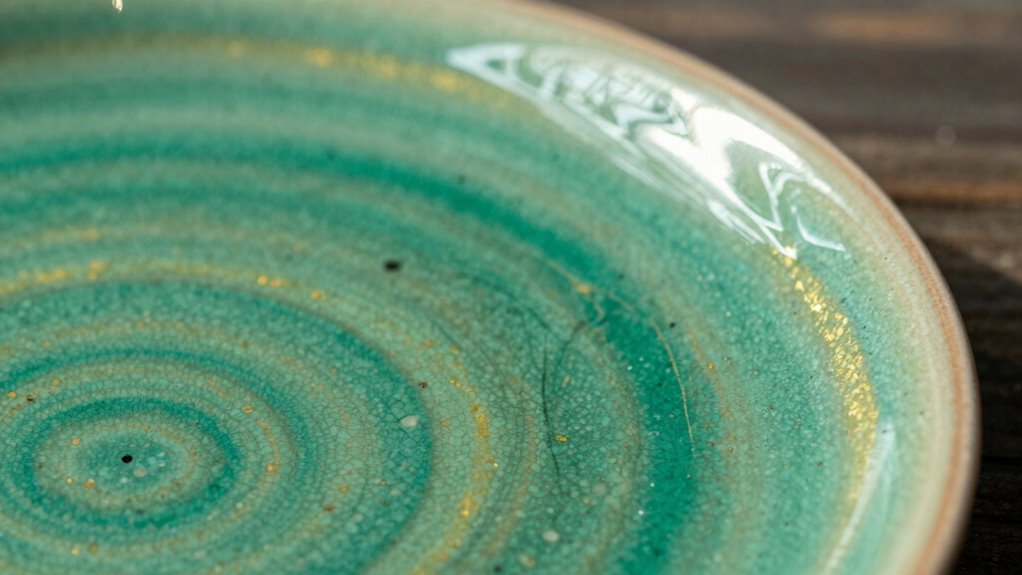

Many myths about food-safe ceramic glazes circulate, leading you to believe that appearance or labels guarantee safety. But visual appeal doesn’t guarantee safety, and “food-safe” labels can be misleading without proper testing. Firing once isn’t enough—testing for leachates and understanding your glaze’s chemistry are essential steps. If you want to avoid common pitfalls and verify your ware is truly safe, discover what to check instead.

Get business pricing on tools and workshop supplies
- Business-only prices and quantity discounts
- Tax-exempt purchasing
- Multiple users, one account, clear invoices
Key Takeaways
- Visual appeal of a glaze does not confirm its safety; testing for leachates is essential.
- “Food-safe” labels can be misleading; verify through independent testing or certification.
- Firing process alone does not guarantee safety; proper testing of finished ware is necessary.
- Toxic elements like lead or cadmium can be present regardless of glaze appearance; do not assume safety visually.
- Using certified products requires correct application and firing; understand glaze chemistry and perform leach tests for true safety.
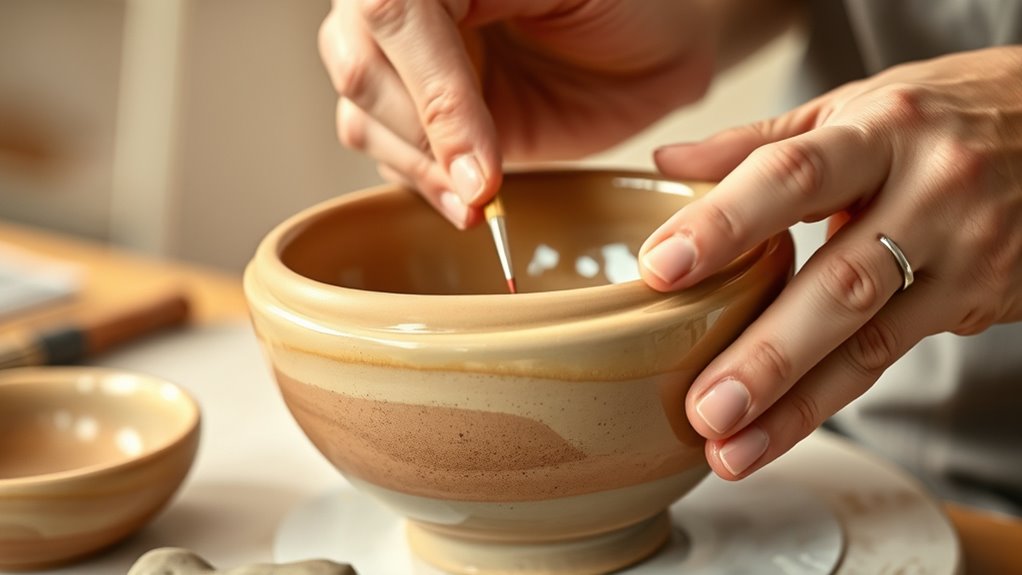
Many people believe that all ceramic glazes are inherently food-safe, but this is a common misconception. Just because a glaze looks beautiful on your pottery doesn’t mean it’s safe to eat from. Ceramic safety depends on more than aesthetics; it requires proper testing and understanding of the materials involved. Glaze testing is essential to guarantee that your finished piece won’t leach harmful substances into food or drinks, especially when used regularly. Relying solely on appearance or generic labels can be risky, as not all glazes are formulated with food safety in mind, and some may contain toxic elements like lead or cadmium that can leach out over time.
Many artists and hobbyists assume that if a glaze is marketed as “food-safe,” it’s automatically safe for all uses. However, these claims can be misleading unless backed by proper glaze testing conducted under standardized conditions. The safety of a ceramic piece depends on how the glaze interacts with your firing process, the firing temperature, and the specific ingredients used. Even glazes labeled as non-toxic may not be suitable for dishware that holds acidic foods or beverages. Consequently, it’s vital to verify the safety of your glazes through independent testing or by using products that have been tested and certified by reputable laboratories. Remember, ceramic safety isn’t a one-size-fits-all matter; it’s a process that involves understanding the specific glaze chemistry and testing for leachates.
You should also consider the firing temperature, as some glazes become more stable and less likely to leach harmful substances when fired at higher temperatures. Many misconceptions stem from the idea that once a glaze is fired, it’s permanently safe. In reality, proper glaze testing involves checking the finished piece for safety by conducting leach tests, especially if you’re making functional ware. These tests simulate real-world conditions, like storing acidic foods or liquids, helping you confirm that no unsafe elements will leach into your food. Additionally, understanding the glaze chemistry involved can help prevent potential safety issues from the outset.
In short, don’t assume that a beautiful glaze automatically equals food safety. Instead, prioritize ceramic safety by conducting thorough glaze testing and understanding the chemistry behind your glazes. When in doubt, use tested and certified products designed specifically for functional ware. This approach guarantees that your pottery isn’t just attractive but genuinely safe for everyday use, giving you peace of mind every time you serve or store food in your ceramic creations.
food-safe ceramic glaze testing kit
As an affiliate, we earn on qualifying purchases.
As an affiliate, we earn on qualifying purchases.
Frequently Asked Questions
How Can I Identify Truly Food-Safe Glazes?
To identify truly food-safe glazes, check their composition for non-toxic ingredients like low-lead or lead-free formulations. Verify that the glaze has been fired at the appropriate temperature for its type—high-fire glazes require higher temperatures to become fully vitrified and safe. Always ask for safety data sheets or certification from the manufacturer, and avoid glazes with unknown ingredients or unclear firing instructions.
Are All Ceramic Glazes Labeled Food-Safe Reliable?
Not all ceramic glazes labeled food-safe are reliable because labeling accuracy varies. You should check the glaze composition carefully, ensuring it’s free from harmful substances like lead or cadmium. Just because a glaze has a food-safe label doesn’t guarantee safety, so verify the supplier’s credibility and look for third-party testing or certifications. Always ask for detailed information about the glaze’s ingredients before using it on food-contact surfaces.
What Testing Methods Confirm Glaze Safety?
Testing glaze safety is like using a thermometer to check water temperature; it’s precise. You should look for tests aligned with recognized standards, such as ASTM or FDA guidelines, to assess glaze toxicity. Laboratory tests like leach tests or specific chemical analysis confirm if harmful substances leach into food. Always verify your glaze has passed these rigorous testing standards to guarantee it’s safe for food contact.
Can Homemade Glazes Be Food-Safe?
Yes, homemade glazes can be food-safe if you follow proper glaze recipes and safety guidelines. You should use non-toxic ingredients, avoid lead or cadmium, and test your glazes with appropriate methods like leach testing. Always guarantee your glaze is fully mature during firing, and check for any signs of defects. By prioritizing homemade safety, you can confidently enjoy your pottery without health risks.
How Often Should Glazed Ware Be Tested for Safety?
You should test glazed ware for safety at least once a year to verify glaze durability. Studies show that improper firing temperature can compromise the glaze’s safety over time. Regular testing helps identify any deterioration or leaching risks. Check your kiln’s firing temperature consistently, and perform simple tests like lead or cadmium swab tests to confirm the glaze remains food-safe, especially if you notice chips or cracks.
As an affiliate, we earn on qualifying purchases.
Conclusion
So, next time you’re browsing pottery stalls or digging through old boxes, remember that many glaze myths are just like finding a forgotten spoon—initially reassuring but often misleading. Trust your instincts, check reliable sources, and don’t let misconceptions cloud your judgment. Like catching a glimpse of sunlight through a crack in a ceramic piece, clarity comes when you separate fact from fiction. Stay curious, stay safe, and enjoy your pottery journey with confidence.
certified food-safe pottery glaze
As an affiliate, we earn on qualifying purchases.
As an affiliate, we earn on qualifying purchases.
glaze safety testing for ceramics
As an affiliate, we earn on qualifying purchases.
As an affiliate, we earn on qualifying purchases.
Fall yard work Picks
leaf blowers
As an affiliate, we earn on qualifying purchases.