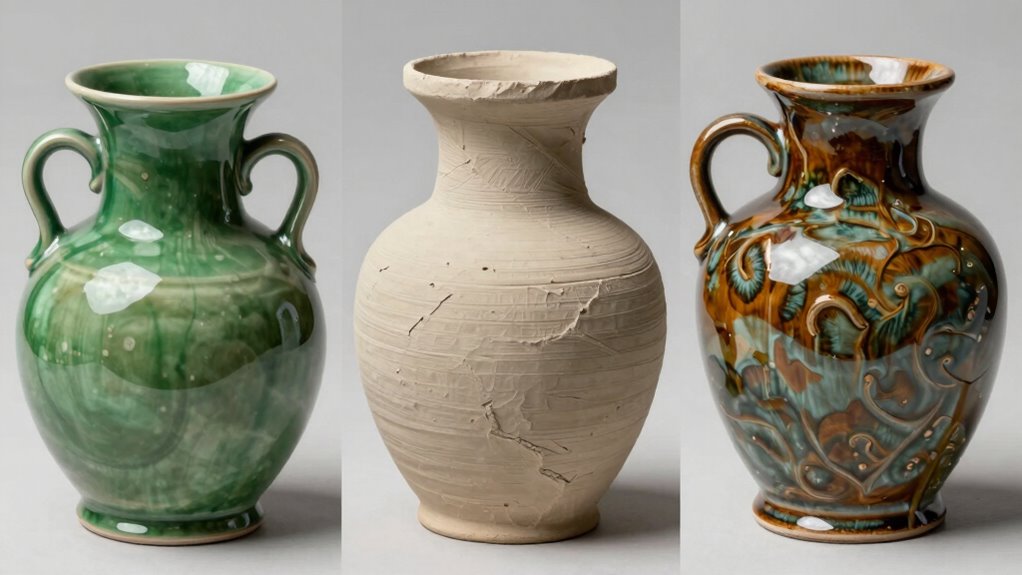

Pottery stages begin with greenware, which is soft, unfired clay you shape and refine carefully to prevent warping. It’s then fired once at a controlled kiln temperature to become bisqueware, which is durable, porous, and ideal for glazing. After glazing, the piece undergoes a final high-temperature firing to turn it into stoneware—a strong, vitrified ceramic. Each stage has unique characteristics and uses; exploring further reveals how these transformations bring your pottery to life.

Get tools and workshop supplies delivered free — and shop member deals
- Fast, free delivery on millions of items
- Access to Prime Big Deal Days deals on October 6–7
- Prime Video, Amazon Music and more included
Key Takeaways
- Greenware is the unfired, shaped clay stage that is dried carefully to prevent cracks.
- Bisqueware is the first fired, durable stage with a matte surface, ready for glazing.
- Stoneware is a vitrified, dense final product fired at high temperatures, suitable for functional ware.
- Proper firing transforms greenware into bisqueware and then into durable stoneware through controlled kiln temperatures.
- Each stage has distinct clay textures, surface qualities, and uses, important for pottery durability and finish.
As an affiliate, we earn on qualifying purchases.
Understanding Greenware: The First Stage of Pottery
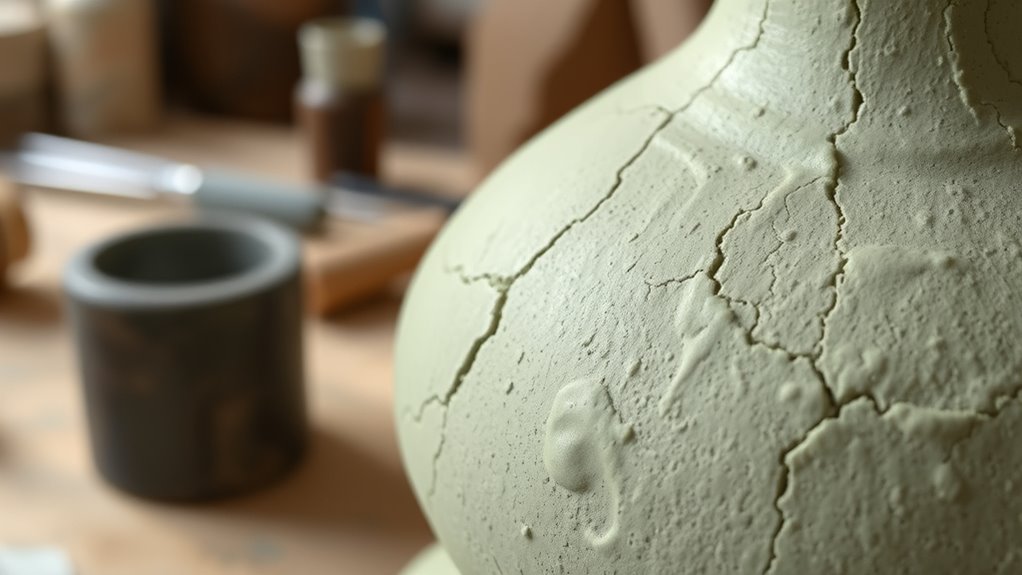
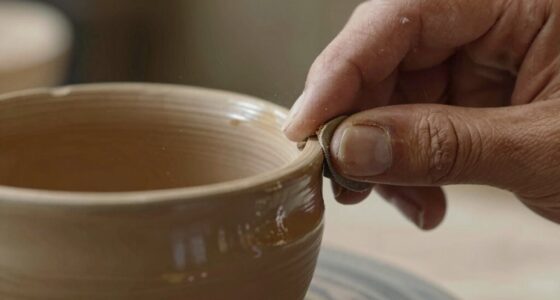
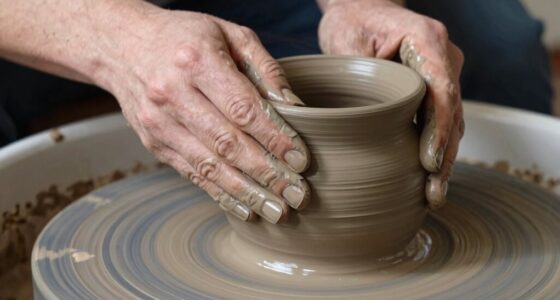
Understanding greenware is essential because it represents the very first stage of pottery before firing. At this point, you focus on clay preparation, ensuring your clay is properly wedged to remove air bubbles and achieve a consistent texture. This step is crucial for smooth shaping and avoiding cracks later. Surface treatment during this stage involves refining your piece’s surface, smoothing out imperfections, and adding textures or details as desired. You may use tools or your fingers to create patterns or clean edges. Once your greenware is shaped and surface-treated, it’s left to dry carefully, avoiding warping or cracking. Proper color accuracy during this stage helps ensure the final appearance matches your artistic vision. Understanding the clay preparation process and its importance helps in producing durable and well-finished pottery. Mastering these early steps sets a solid foundation for successful firing and final glazing, making greenware a vital stage in your pottery journey.
As an affiliate, we earn on qualifying purchases.
The Firing Process: Transforming Greenware Into Bisqueware
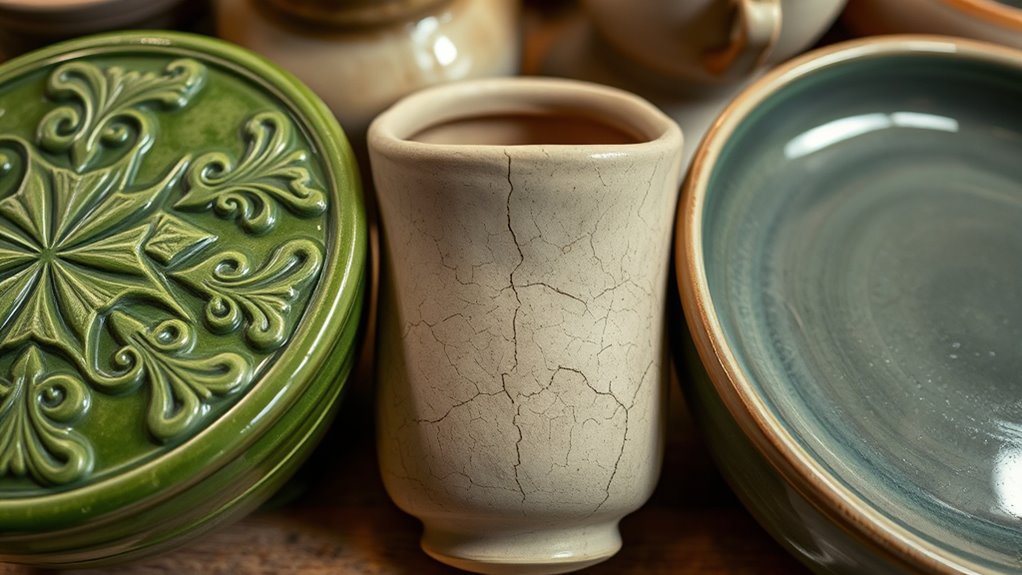
Firing is the crucial process that transforms your dry greenware into durable bisqueware. During firing, you carefully control the kiln temperature to guarantee proper vitrification without melting the clay. Typically, this process occurs at around bisque temperature, usually between bisque firing temperature ranges. Proper kiln temperature is essential to strengthen your piece and prepare it for glaze application.
| Firing Stage | Key Focus |
|---|---|
| Drying | Avoid cracking and warping |
| Bisque Firing | Achieve hardness & porosity |
| Glaze Firing | Final surface & color |
As an affiliate, we earn on qualifying purchases.
What Makes Bisqueware Unique and Ready for Glazing
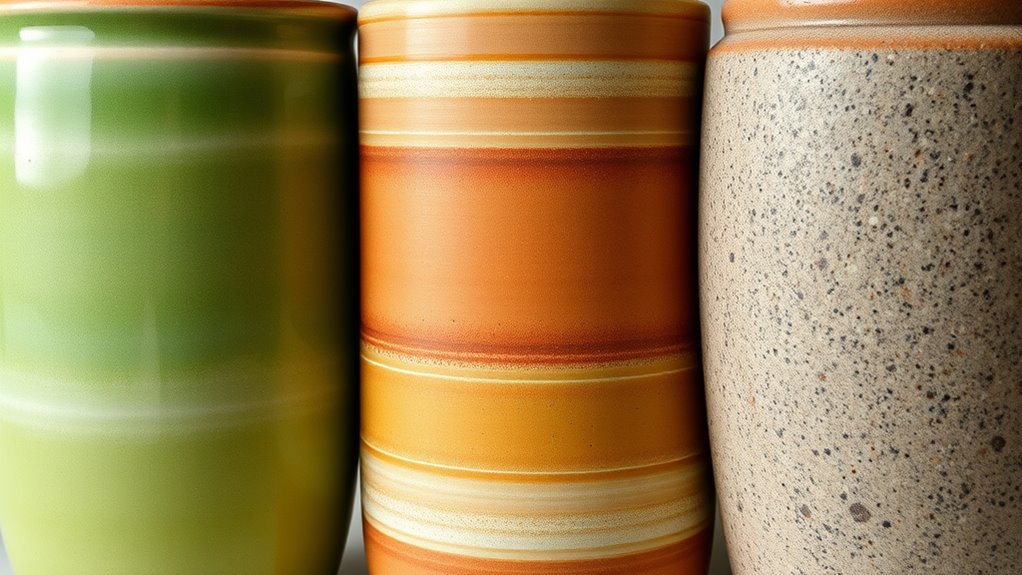
Once your greenware has been properly bisque fired, it takes on qualities that make it uniquely suited for glazing. Bisqueware has a porous, matte surface that enhances glaze adhesion, guaranteeing compatibility and a smooth, even finish. Its strength allows you to handle it confidently during surface preparation, making it easier to clean and remove dust or oils. Here’s what makes bisqueware ready for glazing:
- Enhanced glaze compatibility ensures your designs stay vibrant and durable.
- Porous surface absorbs glaze, resulting in better adhesion and color intensity.
- Prepped surface allows for smooth, even application, preventing drips or flaws.
- Strength and stability mean you can work confidently without damaging your piece before final firing.
As an affiliate, we earn on qualifying purchases.
The Final Firing: Turning Bisqueware Into Durable Stoneware
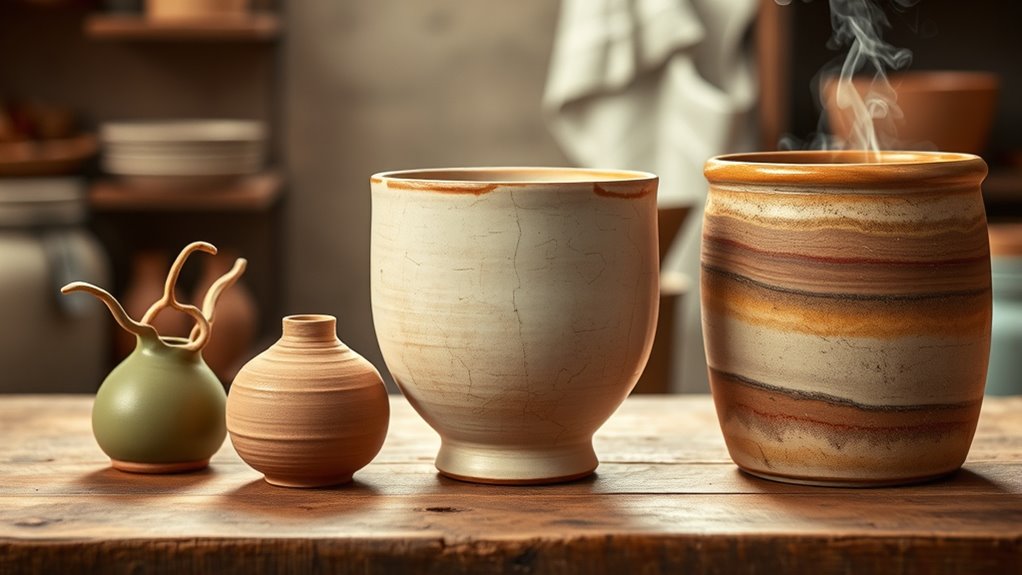
The final firing transforms your bisqueware into durable stoneware, locking in your glaze and strengthening the piece for everyday use. To guarantee success, you must carefully consider glaze compatibility; not all glazes withstand high kiln temperatures. Before firing, check the glaze’s specified temperature range to avoid melting or defects. The kiln temperature for stoneware typically ranges between 1200°C and 1300°C (around cone 5-10). Achieving the right temperature ensures the clay body vitrifies properly, making it non-porous and robust. Too low, and the piece remains porous and weak; too high, and it risks warping or glaze crawling. Monitor your kiln closely and follow firing schedules precisely. This final step seals your work, creating a resilient piece suitable for daily use. Natural ingredients in your clay and glaze can influence how well your piece withstands the firing process and its durability afterward. Additionally, understanding firing schedules and how they impact the final outcome can help prevent common issues such as cracking or glaze defects. Properly managing firing parameters is essential to achieving a successful and durable stoneware piece.
Characteristics and Uses of Each Pottery Stage

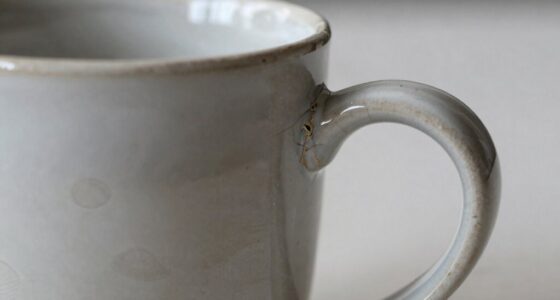
Each stage of pottery has distinct characteristics that determine its strength, appearance, and suitability for different uses. Greenware features a soft, porous clay consistency with a smooth or slightly rough surface texture, making it ideal for detailed shaping and decoration. Bisqueware has a firmer, more stable clay consistency with a matte surface texture, providing durability for handling and glazing. Stoneware boasts a dense, vitrified clay consistency with a smooth, often glossy surface texture, perfect for functional ware that withstands daily use. Recognizing the clay consistency and surface textures that suit each stage’s purpose is essential for successful pottery making. Understanding the firing process is also crucial, as it transforms the clay’s properties and final appearance. The firing temperature influences the final characteristics of each stage, especially in achieving the desired durability and surface finish. Additionally, the thermal expansion of the clay during firing affects how well the final piece holds together and resists cracking.
How to Recognize and Care for Each Stage of Pottery

Recognizing and caring for each stage of pottery involves paying close attention to its unique visual and tactile qualities. For greenware, the clay moisture is low, making it dry and fragile; handle it gently to prevent cracks. The surface texture is often smooth or slightly rough, depending on your finishing technique. When working with bisqueware, the clay moisture is minimal, and the surface texture becomes porous and matte. Store it in a dry environment to prevent moisture absorption. Stoneware, being fully fired, is sturdy, with a smooth or textured surface, and requires minimal care. To maintain each stage, keep greenware protected from humidity, handle bisqueware carefully to avoid chipping, and clean stoneware gently to preserve its surface. Recognizing these qualities helps you care for your pottery at every stage. Additionally, understanding auditory processing challenges can enhance your appreciation of sensory sensitivities that may impact your work environment and techniques. Being aware of clay moisture content at each stage can also help you achieve better results in your pottery projects.
Frequently Asked Questions
How Long Does Each Pottery Stage Typically Take to Complete?
You typically spend a few days to a week on each pottery stage. Greenware can dry for several days to guarantee it’s thoroughly dry before firing. The firing duration, depending on the kiln and piece size, usually lasts from 8 to 12 hours. Bisqueware might need a few days to cool down before glazing. Stoneware firing can take longer, often requiring specific temperature holds. Always check your clay and kiln instructions for precise timing.
Can I Reuse Pottery at Different Stages or Is It Discarded?
Think of pottery like a modern-day recycling project—you can reuse pieces at different stages, but only if they’re still intact. Greenware and bisqueware have substantial reuse potential if you decide to reshape or re-fire them, saving time and materials. However, once stoneware is fired, it’s typically discarded because reusing it isn’t practical. So, handle each stage carefully to maximize your pottery’s recycling potential!
What Safety Precautions Should I Follow During Firing Processes?
During firing processes, you should prioritize fire safety and proper kiln handling. Always wear heat-resistant gloves and safety goggles to protect against burns and hot debris. Confirm your workspace is well-ventilated, and never leave the kiln unattended while firing. Check for cracks or damage before firing, and follow manufacturer instructions carefully to avoid accidents. Keeping these precautions in mind helps you stay safe and achieve successful firing results.
How Does Clay Composition Affect Each Stage’s Characteristics?
Clay’s composition acts like a symphony, where mineral content guides each stage’s melody. Higher clay mineral content creates a softer, more pliable greenware, while lower amounts yield a sturdier bisqueware. Firing temperature effects amplify these traits, causing expansion or vitrification. If your clay’s composition is balanced, your pottery will withstand the heat’s crescendo, resulting in resilient stoneware. Adjusting clay mix ensures each stage sings perfectly in harmony.
Are There Eco-Friendly Alternatives for Traditional Firing Methods?
Yes, you can opt for eco-friendly firing alternatives like biodegradable firing options or electric kiln choices. Biodegradable firing reduces environmental impact by using sustainable materials, while electric kilns are energy-efficient and produce fewer emissions compared to traditional gas or wood firings. These options help you create pottery responsibly, minimizing your carbon footprint and promoting sustainable practices in your art. Exploring these alternatives can make your pottery process greener and more eco-conscious.
Conclusion
Now that you know the stages of pottery, you can appreciate each step’s importance. From greenware to stoneware, every phase shapes your creation’s strength and beauty. Remember, Rome wasn’t built in a day, and neither is perfect pottery. With patience and care, you’ll master each stage and craft pieces that last. Keep practicing, stay curious, and enjoy the journey of turning clay into art.
Fall yard work Picks
leaf blowers
As an affiliate, we earn on qualifying purchases.