
To separate messy work from fine detail tasks in one room, create distinct zones using visual cues like rugs or different paint colors. Allocate specific storage solutions like labeled bins and wall-mounted racks to keep clutter out of sight. Set up ergonomic, organized spaces for detailed work with good lighting and comfortable furniture. Maintain boundaries by regularly tidying each area and using visual markers. Keep exploring ways to optimize your workspace for both efficiency and focus.

Get business pricing on tools and workshop supplies
- Business-only prices and quantity discounts
- Tax-exempt purchasing
- Multiple users, one account, clear invoices
Key Takeaways
- Designate distinct zones using visual cues like rugs, paint colors, or flooring to separate messy and detailed work areas.
- Use shelves, bins, and labels to organize supplies and keep clutter contained within each designated zone.
- Position ergonomic furniture and proper lighting to create focused environments for precise tasks.
- Establish clear physical boundaries with visual markers to reinforce task-specific zones.
- Regularly tidy and maintain each area to sustain organization and prevent workspace chaos reversion.

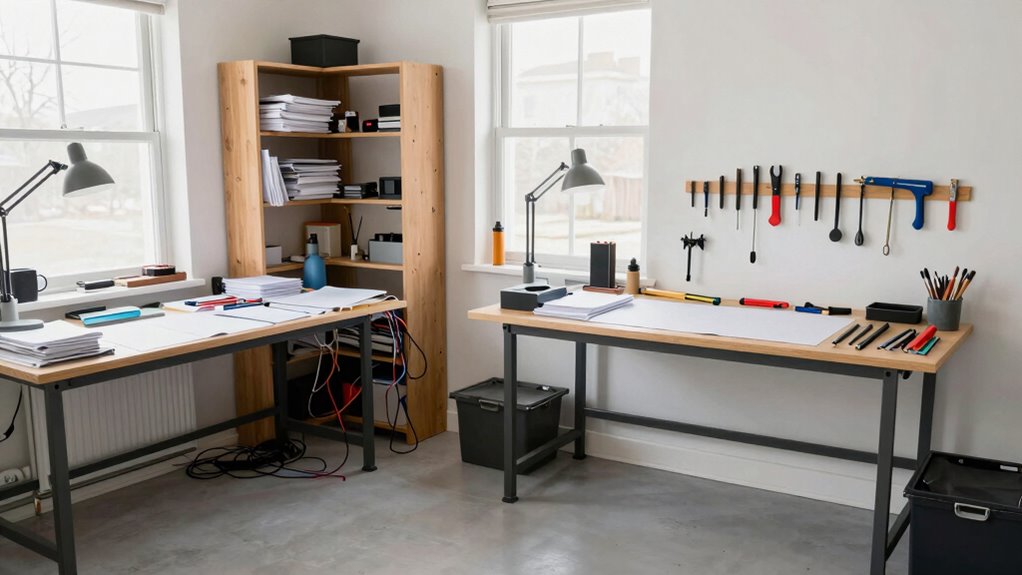
Managing a workspace that requires both messy and detailed tasks can be challenging, but separating these areas is key to maintaining productivity and focus. When you keep clutter confined to designated zones, you prevent distractions and create a more efficient environment. Start by evaluating your space and identifying the areas best suited for messy work—think of it as a dedicated zone for projects that involve materials, tools, or activities prone to clutter. Meanwhile, set up a clean, organized section for fine detail work, where precision and focus are essential.
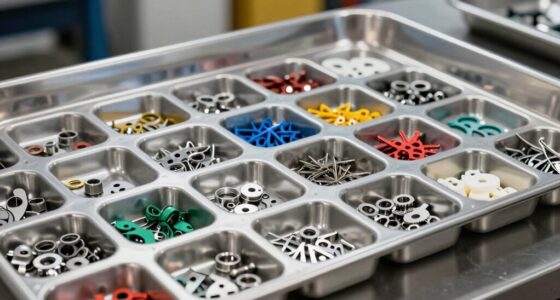
One effective way to separate these zones is through strategic storage solutions. Use shelves, bins, and drawers to keep messy supplies out of sight when they’re not in use. Clear containers help you quickly identify what’s inside, saving you time and reducing mess. Label everything clearly so you can grab what you need without rummaging through clutter. Incorporate storage solutions that fit your workflow—wall-mounted racks for tools, stackable bins for materials, or rolling carts for mobility. This way, your messy zone stays contained, and your detailed workspace remains pristine.
An ergonomic setup also plays a crucial role in maintaining focus in your detailed work area. Invest in a comfortable chair, a sturdy desk, and proper lighting to reduce strain and fatigue. Position your workspace to minimize distractions—keep your computer screen at eye level and ensure good posture. When your workspace feels comfortable, you’re less likely to become distracted, and your fine work becomes more precise and consistent. For the messy zone, ergonomic considerations might be less critical, but ensuring safe access to supplies and avoiding unnecessary strain when reaching for items helps keep the area functional and organized. Additionally, understanding workspace organization principles can help you design a more efficient division between areas. Developing a workflow strategy can further streamline your transition between messy and detailed tasks, making your workspace more adaptable to different project needs.
Creating clear boundaries visually can reinforce the separation. Use rugs, different flooring, or even paint colors to distinguish the messy and precise zones. These visual cues help your brain switch between tasks more smoothly and reinforce the division of workspaces. Regularly maintaining and tidying up each area ensures that your workspace doesn’t revert to chaos. Set aside a few minutes at the end of each day to put things in their designated storage solutions and wipe down your detailed workspace to sustain clarity and order. Furthermore, paying attention to productivity techniques can help you develop habits that support ongoing organization.
labeled storage bins for workspace
As an affiliate, we earn on qualifying purchases.
As an affiliate, we earn on qualifying purchases.
Frequently Asked Questions
How Do I Prevent Mess From Spreading Between Zones?
To prevent mess from spreading between zones, establish clear boundaries with physical barriers or rugs. Keep your creative zone organized with dedicated storage solutions, like labeled bins and shelves, to contain clutter. Regularly tidy each area and avoid crossing supplies between zones. By maintaining strict separation and using smart storage, you’ll keep messy work confined and fine detail work pristine, ensuring your workspace stays productive and clutter-free.
What Storage Solutions Work Best for Separating Tasks?
You should use creative storage solutions like labeled bins, shelves, and drawers to keep messy and fine work separate. Zoning techniques help define distinct areas, so mess stays contained. Incorporate mobile carts or stackable containers for flexibility, allowing you to easily move items between zones. This approach keeps your workspace organized, promotes efficiency, and prevents cross-contamination of clutter, ensuring each task stays in its designated area.
How Can I Organize Tools for Both Types of Work?
You should categorize your tools based on their use, creating clear tool categorization for messy versus fine detail work. Use labels and designated storage for each group, and set up workspace zoning to keep these areas separate. Keep messy tools in rugged containers or nearby stations, while fine detail tools stay in smaller, organized drawers or compartments. This approach helps you work efficiently without cross-contamination of tools or clutter.
What Lighting Is Ideal for Detailed Work Versus Messy Tasks?
For detailed work, you need focused task lighting like adjustable desk lamps or LED strip lights to reduce shadows and see fine details clearly. For messy tasks, ambient lighting works best, providing even illumination without glare, making cleanup easier and less stressful. Combining both types, such as overhead ambient lights with targeted task lighting, creates a versatile space that supports precision and messy activities comfortably.
How Often Should I Clean or Reorganize the Space?
You should clean and reorganize your workspace at least weekly to maintain clear workspace boundaries and prevent clutter from spilling into your detailed work area. Regular tidying helps control clutter, making it easier to switch between messy and fine detail tasks efficiently. Set a routine, like Sunday evenings, to reassess and reset your space, ensuring it promotes productivity and keeps your workspace boundaries intact.
As an affiliate, we earn on qualifying purchases.
Conclusion
So, next time you try juggling glitter and glue, remember: your workspace isn’t a battlefield—it’s a sanctuary. Keep the messy chaos on one side and the delicate detail work on the other, or risk turning your room into a tornado’s playground. With a little planning, you’ll avoid the dreaded “art explosion” and actually find your sanity… or at least your scissors. Happy organizing, and may your workspace stay as pristine as your reputation.
As an affiliate, we earn on qualifying purchases.
As an affiliate, we earn on qualifying purchases.
Halloween Picks
halloween
As an affiliate, we earn on qualifying purchases.