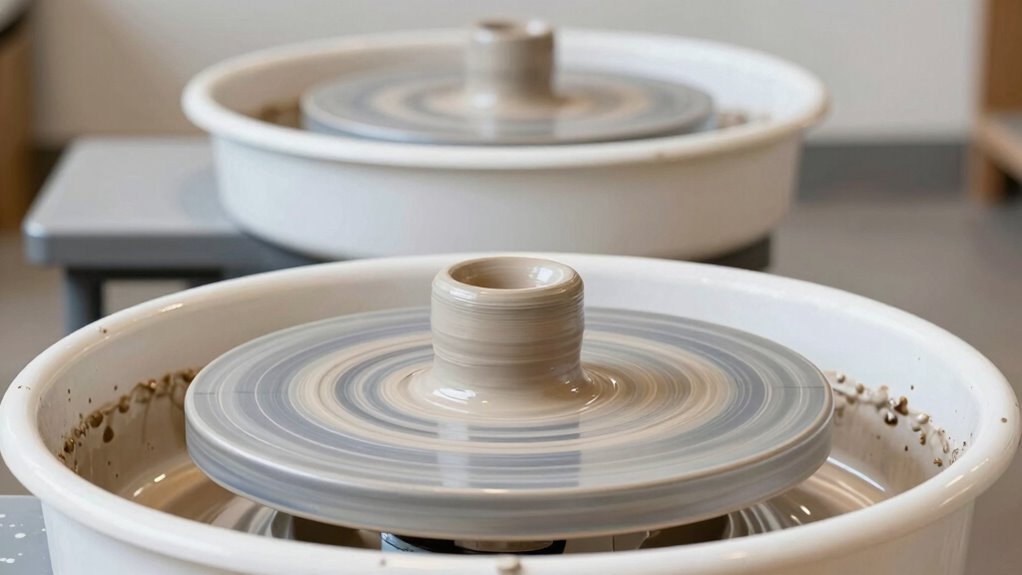
The main difference between a tabletop and full-size pottery wheel is size and workspace. Tabletop wheels are compact and lightweight, making them perfect for beginners or small studios, while full-size wheels offer more stability and larger work areas for advanced projects. Your choice depends on your space, skill level, and project ambitions. Want to discover which option fits your goals best? Keep exploring to find out more.

Get business pricing on tools and workshop supplies
- Business-only prices and quantity discounts
- Tax-exempt purchasing
- Multiple users, one account, clear invoices
Key Takeaways
- Tabletop wheels are compact, lightweight, and ideal for small spaces and beginners, while full-size wheels offer greater stability for advanced projects.
- Full-size wheels support larger, more complex pottery pieces, whereas tabletop wheels are suited for detailed, small-scale work.
- Compact wheels are typically paired with small kilns for home use, whereas full-size wheels accommodate larger kilns for bigger productions.
- Tabletop wheels promote an intimate, experimental workflow, while full-size wheels facilitate larger projects and refined craftsmanship.
- Size, workspace, and project scope are key factors in choosing between a tabletop and a full-size pottery wheel.
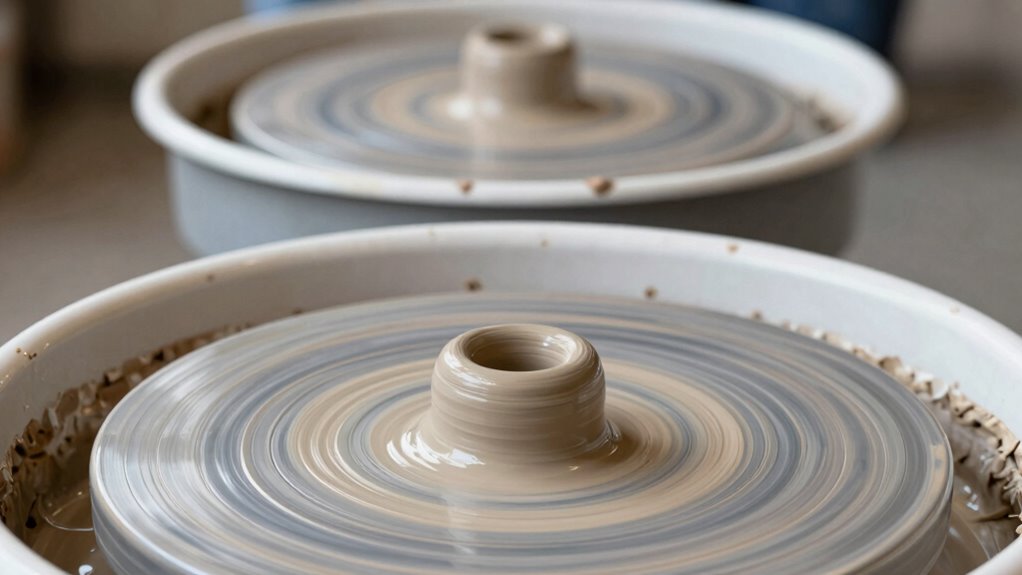
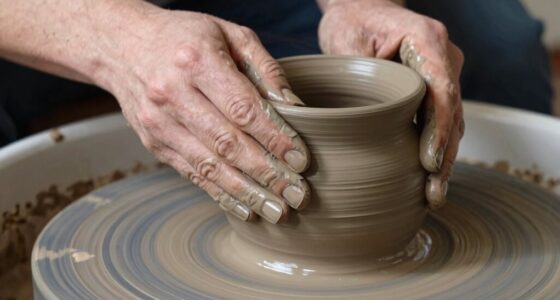
When choosing between a tabletop pottery wheel and a full-size wheel, understanding their differences can help you make the best decision for your skill level and workspace. A tabletop wheel is compact, lightweight, and designed for smaller studios or beginners. It’s perfect if you’re just starting out or have limited space, and it encourages you to explore handbuilding techniques alongside wheel-throwing. Because of its size, it often has fewer features, but it still allows for essential pottery skills. On the other hand, a full-size wheel offers greater stability and power, making it suitable for more serious or advanced potters. It provides a larger workspace, which is beneficial when working on bigger projects or refining your craftsmanship.
While both wheels are capable of producing beautiful pottery, the differences impact your approach to the craft. With a tabletop wheel, you’ll find it easier to experiment with handbuilding techniques, like coil building or slab construction, since the smaller size makes it more manageable for detailed work. When it comes to kiln firing methods, a compact wheel often pairs with smaller, personal kilns that are suitable for firing smaller pieces at home. This setup is ideal if you want to have more control over your firing process without investing in large, commercial kilns. Conversely, a full-size wheel typically accompanies larger kilns capable of firing bigger or more numerous pieces simultaneously, which is advantageous if you plan to produce pottery on a larger scale.
Tabletop wheels suit small-scale, detailed work and home firing setups for hobbyists and beginners.
Your choice also influences your workflow. A tabletop wheel encourages a more intimate approach to pottery, allowing you to focus on the nuances of your technique without feeling overwhelmed by size or power. This can be especially helpful when mastering wheel-throwing fundamentals or refining your skills. Additionally, understanding the size and power differences helps in selecting equipment that matches your long-term goals. It’s also important to consider the workspace available, as larger wheels require more room for safe and comfortable operation. Furthermore, considering the durability and maintenance of the wheels can help ensure your investment remains functional over time. Recognizing the variety of features available can also guide you in choosing a wheel that offers the right tools for your current and future projects.
In the end, your decision hinges on your goals, workspace, and how you prefer to work. If you’re exploring pottery as a hobby or just starting out, a tabletop wheel offers flexibility and convenience. If you’re committed to developing a serious practice or planning to produce larger, more detailed work, a full-size wheel provides the power and capacity you need. Both setups can work with various kiln firing methods, but your specific choices will shape your overall pottery journey.
tabletop pottery wheel for beginners
As an affiliate, we earn on qualifying purchases.
As an affiliate, we earn on qualifying purchases.
Frequently Asked Questions
Which Wheel Is Better for Beginner Ceramic Artists?
For beginner ceramic artists, a tabletop pottery wheel is better because of its portable convenience and space efficiency. It’s lightweight and easy to set up, so you can practice anywhere without hassle. Plus, it fits comfortably in small spaces, making it perfect for beginners who might not have a dedicated studio. Its simple design helps you focus on learning the basics without feeling overwhelmed by larger, full-size wheels.
How Does Wheel Size Affect Pottery Quality?
You’ll find that larger wheels generally offer better wheel stability, which helps maintain consistent clay throughout your project. A bigger wheel provides more control over clay consistency, making it easier to shape detailed or symmetrical pieces. Notably, studies show that pottery made on full-size wheels tends to have smoother surfaces and more uniform walls, enhancing overall quality. So, choosing a bigger wheel can substantially improve your pottery’s finish and structural integrity.
Are Tabletop Wheels Suitable for Professional Use?
Tabletop wheels aren’t typically suitable for professional use because they often lack the professional durability necessary for constant, high-volume work. However, they do offer portable convenience, making them ideal for beginners, hobbyists, or those with limited space. If you’re aiming for professional-quality pieces, a full-size wheel provides the durability and power needed for consistent, high-quality pottery production.
What’s the Typical Cost Difference Between the Two?
Imagine stepping into a studio where your workspace is filled with glistening pottery wheels. The cost comparison shows tabletop wheels are usually more affordable, often costing between $100 and $500, while full-size wheels can range from $500 to over $2,000. An affordability analysis reveals that tabletop options suit hobbyists or beginners, whereas full-size wheels are more suitable for professional artists aiming for larger, more intricate creations.
Can a Tabletop Wheel Handle Large Pottery Projects?
A tabletop wheel generally can’t handle large pottery projects as well as a full-size wheel. Its limited wheel horsepower means it struggles with the weight and size of bigger pieces. Plus, you’ll need to pay closer attention to pottery wheel maintenance to keep it running smoothly. For larger projects, investing in a full-size wheel is better, offering the power and stability needed for bigger, more complex pottery pieces.
full-size pottery wheel with large workspace
As an affiliate, we earn on qualifying purchases.
As an affiliate, we earn on qualifying purchases.
Conclusion
Choosing between a tabletop pottery wheel and a full-size wheel ultimately depends on your space, budget, and goals. For example, if you’re a hobbyist with limited space, a tabletop wheel might be perfect for experimenting without cluttering your home. On the other hand, if you’re aiming for professional-level pottery, investing in a full-size wheel could enhance your skills and workflow. Whatever you choose, remember it’s all about what best supports your creative journey.
compact ceramic kiln for home use
As an affiliate, we earn on qualifying purchases.
As an affiliate, we earn on qualifying purchases.
professional pottery wheel for advanced artists
As an affiliate, we earn on qualifying purchases.
As an affiliate, we earn on qualifying purchases.
Fall Picks
fall essentials
As an affiliate, we earn on qualifying purchases.