
To repair small dents in wood without filling, start by wiping a damp cloth over the dent to add moisture. Set a household iron to low without steam and gently press it over the cloth for about 10-15 seconds, moving slowly along the grain. Let the area cool and dry, then repeat if needed. Finish by lightly buffing the surface to blend the repair—more tips follow for seamless results.
Key Takeaways
- Use a damp cloth and a warm iron gently applied along the wood grain to swell the dent fibers.
- Repeat the moistening and heating process carefully until the dent diminishes.
- Allow the area to cool and dry naturally between treatments to prevent damage.
- Lightly buff the repaired spot with a soft cloth and matching polish to blend with the surrounding surface.
- Always work in the direction of the wood grain to ensure a seamless and safe repair.

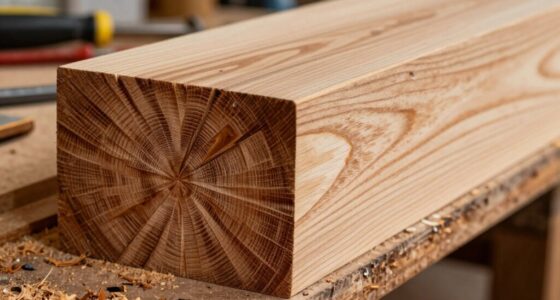
Small dents in wood can be unsightly, but fixing them is often straightforward. When you notice a dent, it’s important to understand that the wood’s grain and surface finish play key roles in how easily you can restore the surface without filling. The grain direction influences how the wood reacts to moisture and heat, so aligning your repair efforts with the grain can yield better results. Additionally, the surface finish determines how smooth or glossy the wood appears, so your goal is to blend the repair seamlessly into the existing look.
Start by evaluating the dent’s depth and the type of wood finish. For shallow dents, the simplest method involves using moisture and heat. Lightly dampen a clean cloth with water—just enough to create some moisture without soaking the wood. Place the damp cloth over the dent, then apply gentle heat with a household iron set to a low, no-steam setting. Keep the iron moving slowly over the cloth for about 10-15 seconds. This process causes the wood fibers to swell, filling in the dent as the fibers expand along the wood grain. Be cautious to avoid overheating, which can damage the surface finish or cause discoloration.
To fix shallow dents, dampen a cloth, then gently heat with an iron to swell the wood fibers along the grain.
Once you’ve treated the dent with moisture and heat, let the area cool and dry naturally. If the dent still persists, repeat the process once or twice, but avoid excessive heat or moisture, as this could alter the surface finish or cause uneven expansion. After the dent has been minimized, you might notice a slight difference in sheen or texture. To restore the surface finish, lightly buff the area with a soft cloth and a bit of furniture polish or wax that matches the surrounding finish. This helps blend the repaired spot with the rest of the surface, making the dent less noticeable.
It’s important to work in the direction of the wood grain throughout this process. Going against the grain can cause scratches or uneven expansion, which could make the repair more noticeable. If the surface finish is matte or satin, aim for a gentle touch to avoid altering the sheen. For glossy finishes, a light polish after the repair can help restore the original luster. Keep in mind, the goal is to encourage the wood fibers to expand naturally, blending the dent into the surrounding surface without the need for filling or sanding. Consistent feedback and patience are key to achieving a seamless repair. With patience and careful technique, you can repair small dents effectively while maintaining the integrity of the wood’s grain and surface finish.
wood dent repair kit
As an affiliate, we earn on qualifying purchases.
As an affiliate, we earn on qualifying purchases.
Frequently Asked Questions
Can I Fix Dents on All Types of Wood Surfaces?
Yes, you can fix dents on most wood surfaces, but results vary depending on the wood grain and surface texture. For smooth, fine-grain woods, applying heat or steam helps lift dents without filling. For rougher textures, gentle methods like using a damp cloth and iron work well. Always match your repair method to the wood’s unique surface texture and grain pattern to achieve the best results.
Will This Method Affect the Wood’s Finish or Color?
No, this method won’t ruin your wood’s finish or color; it’s like gently coaxing the wood’s natural beauty back to life. When you use steam or heat, it softly interacts with the wood grain, restoring the dent without disturbing the surface sheen. You’ll see the color and finish stay vibrant and intact, as if the dent was never there—preserving your wood’s flawless look effortlessly.
How Long Does It Take for the Dent to Fully Recover?
It usually takes about 24 to 48 hours for the dent to fully recover. During this time, the wood grain absorbs moisture, which helps swell the wood back into place. You should notice the dent gradually diminish as the moisture penetrates and the wood expands. Keep the area covered with a damp cloth to maintain consistent moisture absorption, ensuring the dent’s smooth recovery without affecting the finish or color.
Is Special Equipment Needed for Repairing Small Dents?
Did you know that most small dents can be fixed with common household items? You don’t need special equipment; for dents less than a few inches, simple tools like a damp cloth and a hot iron usually suffice. The dent size determines the tools needed—larger dents might require a specialized dent puller, but for small ones, your hands and everyday items are enough. No expensive tools necessary!
Can I Use This Technique on Painted or Stained Wood?
You can use this technique on painted surfaces or stained finishes, but be cautious. For painted wood, avoid damaging the paint by gently applying heat and pressure. With stained finishes, test on a hidden area first to verify the stain won’t lift or discolor. Keep the process gentle, and if you’re unsure, consider consulting a professional to prevent any damage to the finish.
wood furniture touch up polish
As an affiliate, we earn on qualifying purchases.
As an affiliate, we earn on qualifying purchases.
Conclusion
Now that you know how to tackle small dents without filling, you’re better equipped to handle minor wood imperfections on your own. With a little patience and the right techniques, you can make your furniture look as good as new. Remember, sometimes you’ve got to roll with the punches and work with what you’ve got. Don’t let small dents get the best of you—by taking action, you’ll keep your wood looking its best, no matter what life throws at it.
small dent repair tools for wood
As an affiliate, we earn on qualifying purchases.
As an affiliate, we earn on qualifying purchases.
furniture polishing and buffing cloth
As an affiliate, we earn on qualifying purchases.
As an affiliate, we earn on qualifying purchases.