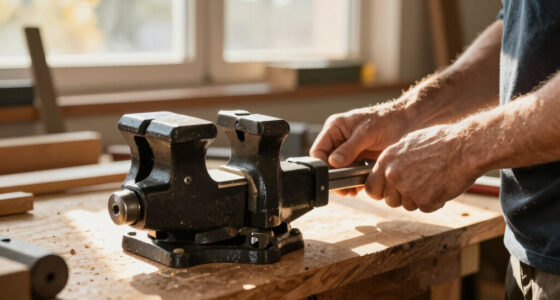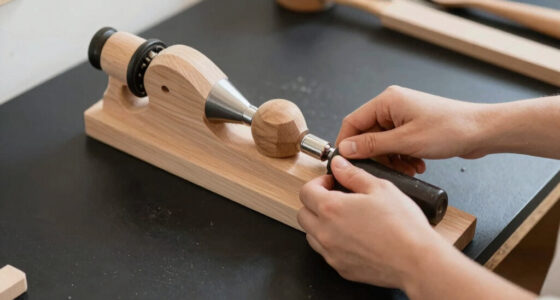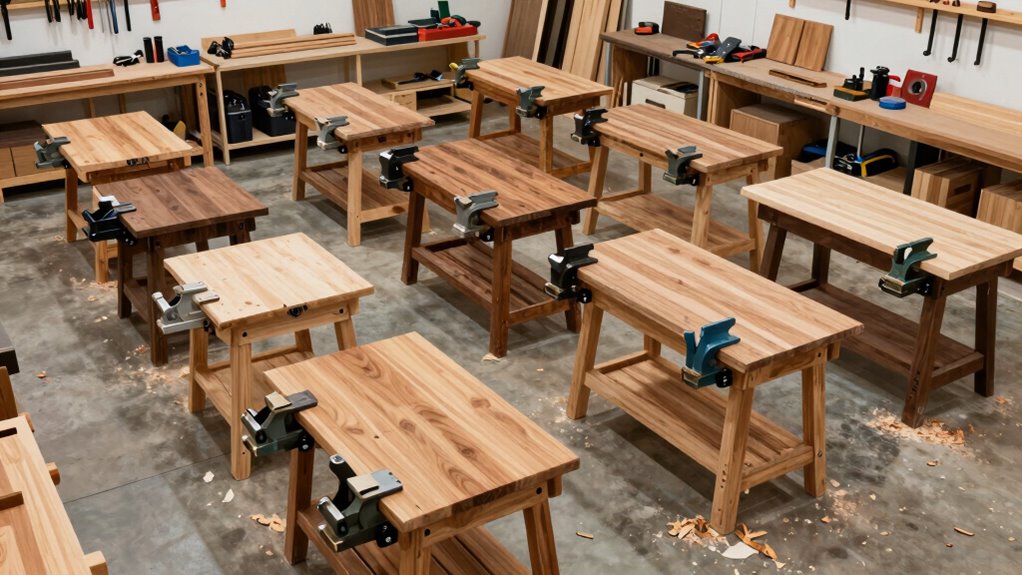

A woodworking workbench with vise can mean a complete bench ready for a shop or a standalone vise to fit a bench you already own. My best overall pick is the WEN 60-Inch Hardwood Workbench, which pairs a full-size work surface with built-in clamping and drawer storage. For smaller spaces, the POWERTEC Portable Bamboo Workbench adds bench dogs and a vise in a compact format, while the Magshion 60-Inch Work Bench brings a solid-oak vise and storage to a larger setup. The main tradeoff is between a stable, spacious bench and a portable or more affordable setup that may need extra support or assembly. Read on for the full breakdown of which option fits your shop, projects, and available space.

Get business pricing on tools and workshop supplies
- Business-only prices and quantity discounts
- Tax-exempt purchasing
- Multiple users, one account, clear invoices
Complete the kit


Key Takeaways
- The WEN WB6020 is the strongest all-around package in this lineup because it combines a 60-inch work surface, an integrated vise, and four drawers rather than requiring a separate bench and vise purchase.
- Portable benches trade work area for flexibility. The POWERTEC bamboo model and OCASAMI beech model suit constrained spaces or on-site tasks, but they cannot match the working footprint of the 60-inch benches.
- A vise-only purchase makes sense when your bench is already solid. The Pony Jorgensen, IRWIN, Adjustable Woodworking Vise 33302, and 11-inch front-mounted vise let buyers choose clamping hardware without replacing their work surface.
- Storage and clamping solve different problems. The Olympia provides a large bench and two shelves, while WEN and Magshion pair storage with built-in vise features; buyers should choose based on whether tool access or workholding matters more.
- Mounting compatibility can decide the purchase. Standalone vises need a suitable bench edge, adequate thickness, and room for their mounting hardware, while a complete bench avoids that matching task but takes more space.


More Details on Our Top Picks
WEN 60-Inch Hardwood Workbench with Four Drawers and Vise (WB6020)
The WEN makes the strongest case as a complete woodworking station: its 60 × 20-inch rubberwood top, built-in vise, dog holes, and included pegs give you several ways to secure a workpiece without buying a separate vise first. Compared with the Olympia Tools 60-Inch Rubberwood Workbench, it trades some top capacity and a protective varnish for four drawers, which are more useful for keeping hand tools and small hardware sorted than open shelves alone. The lower shelf adds room for larger supplies, though each drawer is limited to 25 pounds. Its unfinished surface also calls for your own finish if you want added protection. I’d choose it for a general-purpose shop where integrated clamping and enclosed storage matter more than a ready-finished top.
Pros:- Built-in vise, 3/4-inch holes, and included wooden and metal pegs offer flexible workholding.
- Four drawers and a lower shelf separate small tools from bulkier supplies.
- The 2.5-inch rubberwood top supports up to 300 pounds.
- The 60-inch worktop provides more room than compact portable benches.
Cons:- The unfinished worktop needs a protective finish if the bench will face spills or shop wear.
- Each drawer is rated for only 25 pounds.
- The top is narrower than some benches designed for larger assemblies.
Best for: Woodworkers setting up a general-purpose shop who want an integrated vise, multiple clamping options, and drawers for organizing tools.
Not ideal for: Buyers who want a protected, ready-to-use finish or need to place heavy equipment in the drawers.
- Worktop dimensions:60 × 20 inches
- Workbench height:34 inches
- Worktop material and thickness:Rubberwood; 2.5 inches
- Worktop capacity:300 pounds
- Total capacity:600 pounds
- Vise clamping capacity:7.5 inches
- Storage:Four drawers and a lower shelf
- Finish and warranty:Unfinished; two years
Our verdict“Choose the WEN if you want a full-size bench that combines an integrated vise and flexible clamping with more organized storage than the Olympia Tools model.”
Adjustable Woodworking Vise 33302 for Custom Benchtops, Suitable for Workbenches up to 23″ Thickness, Vise with Wooden Handle
This vise is the lineup’s clearest choice for a custom benchtop: it is a separate mounting component rather than a complete workbench, so you can build around your preferred height, top, and vise position. Its fixed adjustment screws are intended to reduce racking, helping jaws stay more even when clamping. The 5-3/4-inch maximum opening is smaller than the 7.5-inch vise on the WEN WB6020, so it is better suited to typical boards than wide stock or bulky assemblies. It also needs a clear mounting area of at least 13.5 × 12 inches, and installation accessories are not included. I’d pick it when fitting out a shop-made bench; buyers seeking a ready-made station should compare it with the WEN or Olympia Tools bench instead.
Pros:- Separate vise design suits custom bench layouts and retrofit projects.
- Fixed adjustment screws are intended to limit jaw racking.
- Wooden handle provides a direct manual adjustment point.
- Fits workbenches up to 23 inches thick according to the product data.
Cons:- Maximum jaw opening of 5-3/4 inches is narrower than the WEN WB6020’s stated vise capacity.
- Installation requires at least 13.5 × 12 inches of clear space.
- Installation accessories are excluded.
Best for: Woodworkers building or modifying a bench who want to choose their own top and mount a dedicated vise.
Not ideal for: Buyers who need a complete workbench, included mounting hardware, or a vise with a wider jaw opening for large workpieces.
- Model:33302
- Maximum jaw opening:5-3/4 inches
- Suitable workbench thickness:Up to 23 inches
- Vise width:12.5 to 17 inches
- Material:Metal with wooden handle
- Minimum installation space:13.5 × 12 inches
- Item weight:16 ounces
Our verdict“Choose this vise for a custom-built bench when you value mounting flexibility over the larger integrated clamping capacity of the WEN WB6020.”
OCASAMI Portable Beech Wood Workbench with Clamps and Limit Blocks
The OCASAMI is a portable, small-scale work surface, not a substitute for a full-size bench with a conventional vise. Its beech top measures just 20.8 × 11 inches, and four metal limit block retainers provide a basic way to hold smaller pieces for chiseling, planing, or sawing. That compact footprint makes it easier to fit into a limited workspace or move between jobs, but it also constrains the size of the workpiece and the room available for tools. Unlike the WEN WB6020, it has no drawers or built-in vise; its clamping approach is simpler and its stated load capacity is 100 pounds. Assembly is required. I’d select it for detail work and occasional projects where portability matters more than a broad, permanently installed work surface.
Pros:- Compact work surface is easier to place or move than the 60-inch WEN and Olympia Tools benches.
- Beech wood surface suits small chiseling, planing, and sawing tasks.
- Four metal limit block retainers provide basic workholding.
- Stated 100-pound load capacity offers a defined limit for light-duty work.
Cons:- The 20.8 × 11-inch surface sharply limits workpiece size and working room.
- It does not provide a conventional built-in vise like the WEN WB6020.
- Assembly is required.
Best for: Apartment hobbyists, makers with limited shop space, and woodworkers who need a portable surface for small hand-tool projects.
Not ideal for: Users working with large boards, heavy assemblies, or jobs that call for a full-size bench and conventional vise.
- Work surface dimensions:20.8 × 11 × 2.7 inches
- Material:Beech wood and metal
- Item weight:6.35 kg
- Load capacity:100 pounds
- Base type:Trestle
- Finish:Polished
- Assembly:Required
- Included clamping components:Four metal limit block retainers
Our verdict“Choose the OCASAMI for portable, small-piece woodworking, but pick a full-size bench if you need a traditional vise or room for larger projects.”
Pony Jorgensen Medium Duty Woodworker’s Vise, 9-Inch x 7-Inch, Orange and Grey
The Pony Jorgensen is a standalone face-mounted vise for shoppers who already have a workbench and want to add or replace its clamping hardware. Its 9 × 7-inch jaw size gives it a larger stated jaw face than the 5-3/4-inch-opening custom vise, though the product data does not specify its maximum opening or adjustment features. That limited detail makes it harder to match to unusually thick stock or a specific mounting setup. Compared with the WEN WB6020, this option leaves the bench and workholding layout in your hands; it does not arrive as part of a complete station with a top, dog holes, and storage. The medium-duty positioning suits routine home-shop tasks, but I would not choose it for heavy clamping demands without more capacity information.
Pros:- Designed for mounting on the face of a wood workbench.
- 9 × 7-inch jaw size provides a broad stated clamping face.
- Medium-duty positioning suits a range of home and shop woodworking tasks.
Cons:- The product data does not state maximum jaw opening or adjustment mechanisms.
- Medium-duty designation may not suit heavy clamping work.
- It is a vise only, unlike the integrated WEN WB6020 workbench.
Best for: Woodworkers with an existing bench who need a medium-duty, face-mounted vise for regular home-shop projects.
Not ideal for: Buyers starting from scratch or those who need published jaw-opening and adjustment details before planning a specific installation.
- Jaw size:9 × 7 inches
- Duty class:Medium duty
- Mounting style:Face-mounted on wood workbenches
- Package weight:5.96 pounds
- Country of origin:China
- Color:Orange and grey
Our verdict“Choose the Pony Jorgensen as a replacement or add-on vise for an existing bench when medium-duty work fits and the available specifications meet your mounting needs.”
Olympia Tools 60-Inch Rubberwood Workbench with Two Storage Shelves
The Olympia Tools is the stronger fit for buyers who want a finished, full-size bench with clamping features already laid out. Its varnished rubberwood top includes a 7-inch vise slot and 16 bench dog holes, giving you several ways to secure work without the separate-vise installation required by the Pony Jorgensen. Compared with the WEN WB6020, Olympia trades four enclosed drawers for two open shelves and pegs, while its top capacity is 250 pounds rather than the WEN’s 300. The protective varnish is a practical advantage if you prefer not to finish the top yourself, but the 20-inch width still limits space for large assemblies. I’d choose this model for an organized shop that favors open-access storage and a ready-finished surface over drawer storage or a higher top capacity.
Pros:- Protective varnish means the rubberwood top is finished rather than unfinished like the WEN WB6020.
- A 7-inch vise slot and 16 dog holes support varied workholding setups.
- Two shelves and included metal and wooden pegs keep supplies within reach.
- Reinforced frame is rated for 450 pounds total.
Cons:- The 20-inch-wide top can constrain larger workpieces and assemblies.
- The worktop capacity is 250 pounds, below the WEN WB6020’s 300-pound rating.
- Open shelves do not organize small tools as neatly as the WEN’s drawers.
Best for: Home woodworkers who want a 60-inch bench with a varnished top, multiple clamping points, and open storage for frequently used supplies.
Not ideal for: Buyers who need enclosed drawers, a wider work surface, or a top rated above 250 pounds.
- Overall dimensions:60 × 20 × 34 inches
- Work surface material:Solid rubberwood
- Finish:Protective varnish
- Vise slot:7 inches
- Bench dog holes:16
- Storage:Two lower shelves; four metal pegs and four wooden pegs
- Capacity:450 pounds total; 250 pounds on top and 200 pounds on shelf
- Shelf dimensions:47.25 × 14.25 inches
Our verdict“Choose Olympia Tools if you want a ready-finished 60-inch bench with flexible clamping and open storage, and can work within its 250-pound top limit.”
IRWIN Tools Woodworker’s Vise, 6 1/2″
The IRWIN Woodworker’s Vise is a focused choice for a fixed woodworking bench when you want a vise without buying an entire workbench. Its forged-iron body and under-bench mounting suit straightforward holding tasks, while the toe-in jaws and provision for wooden cheeks help protect finished or delicate stock. The 4.5-inch jaw capacity keeps its role narrow: it is better suited to small parts and light-duty work than wide boards or forceful clamping. Compared with the POWERTEC Portable Bamboo Workbench, this vise takes up less of a shop’s floor space once installed, but it does not provide a tabletop, portability, or included bench dogs. Choose it when you already have a sturdy bench and want a simple add-on; skip it if you need broad capacity or a complete portable workstation.
Pros:- Forged-iron construction suits regular light-duty clamping
- Under-bench mounting leaves the bench surface available for work
- Toe-in jaws help grip workpieces
- Provision for wooden cheeks can protect delicate stock
Cons:- 4.5-inch jaw capacity is restrictive for larger workpieces
- Not intended for heavy-duty clamping
- Requires a suitable bench and installation; it is not a standalone workbench
Best for: Woodworkers with an existing sturdy bench who mainly clamp small parts for light-duty tasks
Not ideal for: Builders handling wide panels or heavy stock, since its 4.5-inch jaw capacity and light-duty design limit its reach
- Brand:IRWIN
- Model:226361
- Type:Woodworker’s vise
- Jaw capacity:4.5 inches
- Material:Forged iron
- Mounting:Under-bench
Our verdict“Choose this vise for a fixed bench and small woodworking jobs, but pick a wider-capacity option for larger stock.”
POWERTEC Portable Bamboo Workbench with Vise and 4 Bench Dogs
The POWERTEC MT4006V makes the most sense when the workbench itself needs to move: its folding design and 11-pound weight make it easier to store or carry than the fixed 60-inch Magshion Rubber Hardwood Work Bench. Adjustable vise panels and four bench dogs offer flexible ways to hold work for cutting, painting, and light assembly, while the bamboo top gives you a ready work surface without a permanent bench installation. Printed metric and imperial scales and a protractor add useful references for quick layout. The tradeoff is capacity: a 220-pound limit and compact work area are not a substitute for a heavy, spacious shop bench. Choose it for flexible home or job-site tasks; skip it for large panels or workloads that need a rigid, full-size station.
Pros:- Folding, 11-pound design is easy to move and store
- Adjustable vise panels and four bench dogs support varied clamping setups
- Bamboo tabletop and steel frame provide a ready-to-use work surface
- Built-in storage and printed measurement scales add convenience
Cons:- Work surface may be too small for larger projects
- 220-pound weight capacity limits heavy workloads
- Portable format offers less substantial support than a full-size fixed bench
Best for: Renters, mobile repairers, and hobbyists who need a fold-away clamping station for smaller projects
Not ideal for: Woodworkers processing large panels or applying substantial force, since the compact surface and 220-pound capacity limit heavier work
- Brand:POWERTEC
- Model:MT4006V
- Tabletop:Bamboo
- Frame:Heavy-duty steel
- Weight:11 lbs
- Weight capacity:220 lbs
- Included:4 bench dogs
- Design:Folding and portable
Our verdict“Pick the POWERTEC when portability and quick setup matter more than a large, heavy-duty work surface.”
Magshion 60″ Rubber Hardwood Work Bench with Solid Oak Vise, Removable Stop Block, and Storage
The Magshion 60-inch workbench pairs a full-length work surface with a solid oak vise, removable stop block, and storage, making it a more complete fixed-shop option than the standalone IRWIN vise. Its stated 500-pound load capacity gives it a stronger case for general garage and DIY work than the portable POWERTEC, whose lighter capacity favors mobility over substantial workloads. A drawer and lower shelf also help keep frequently used tools close at hand. The tradeoffs are its fixed 60-inch footprint and limited adjustment details: the supplied information does not specify adjustable height or advanced bench features. It is a practical pick for buyers who want an all-in-one bench and vise for mixed projects, but woodworkers with a tight shop or specialized bench requirements may prefer a more tailored setup.
Pros:- 60-inch work surface provides more room than the POWERTEC portable bench
- Solid oak vise and removable stop block support workholding and cutting
- 500-pound load capacity suits general workshop and DIY tasks
- Drawer and lower shelf provide integrated tool storage
Cons:- Fixed 60-inch size may not fit compact work areas
- Adjustable height is not specified
- Basic feature set may not suit specialized or advanced woodworking setups
Best for: Garage woodworkers and DIYers who want a fixed 60-inch bench with an included vise and basic storage
Not ideal for: Small-shop owners who cannot spare a 60-inch footprint, or advanced woodworkers seeking detailed height adjustment and specialized bench features
- Length:60 inches
- Workbench material:Rubberwood and steel
- Vise material:Solid oak
- Load capacity:500 lbs
- Storage:Drawer and lower shelf
- Stop block:Removable
- Assembly:Hardware and instructions included
Our verdict“Choose the Magshion for a roomy fixed bench with an included oak vise and storage, provided your shop has space for it.”
11-Inch Front-Mounted Woodworking Vise, CNC-Machined Precision Bench Vise for Woodworking Workbenches
This front-mounted woodworking vise stands out for its 11-inch maximum opening, giving it a wider stated reach than the IRWIN vise’s 4.5-inch jaw capacity. That makes it a more suitable add-on for workpieces that need broader clamping access, while its CNC-machined aluminum body is lightweight and corrosion-resistant. Mounting hardware and tools are included, and the 2-year replacement warranty adds a defined support period. It remains a vise, not a bench: unlike the Magshion 60-inch workbench, it does not supply a work surface, storage, or a stated load capacity. Its 18-inch length also calls for enough room at the front of the bench, and careful installation matters for reliable clamping. This is a good fit for upgrading a compatible bench, but not for buyers seeking a complete station or a compact vise.
Pros:- 11-inch maximum opening accommodates broader workpieces than the IRWIN vise
- CNC-machined aluminum body is lightweight and corrosion-resistant
- Mounting screws, openers, and wrenches are included
- Backed by a 2-year replacement warranty
Cons:- 18-inch length may be too large for a small bench
- Requires correct installation for dependable clamping
- Does not include a workbench or provide a stated load capacity
Best for: Woodworkers upgrading a sturdy existing bench who need a vise with a wide opening for varied stock
Not ideal for: Buyers without a compatible bench or with very limited front-edge space, since this is a sizable vise that requires proper installation
- Length:18 inches
- Width:7 inches
- Thickness:1.9 inches
- Maximum opening:11 inches
- Material:Aluminum
- Corrosion resistance:Yes
- Bench mounting screw length:2.95 inches
- Warranty:2-year replacement warranty
Our verdict“Choose this vise to add wide-opening clamping to a suitable existing bench, not as a standalone workbench solution.”

How We Picked
I compared the nine options by how directly they answer the search for a woodworking workbench with vise: whether each is a complete bench or vise-only hardware, how much usable work area and clamping flexibility it offers, and how readily it fits a home shop or portable setup. I also weighed practical details such as storage, portability, materials, and the work required to mount or assemble each option. Product descriptions do not establish identical capacities or performance, so I avoid treating unlike vise formats as interchangeable.
The ranking favors complete, versatile benches first because they address the bench-and-vise need in one purchase. The WEN leads for its combination of full-size surface, integrated vise, and drawers; Magshion and Olympia follow as larger bench choices with different strengths in built-in clamping and storage. Portable benches rank for space-conscious work, while standalone vises rank as targeted upgrades for buyers with a bench already in place. That means a vise-only option may be the better choice for an existing shop even when it appears lower in an overall roundup.
Factors to Consider When Choosing Woodworking Workbench With Vise
Before choosing, decide whether you need a whole workstation or only better workholding. A vise’s mounting arrangement, the bench’s stability, and the kinds of projects you make can matter more than a headline dimension. These checks help avoid buying a bench that does not suit your shop or a vise that cannot be mounted securely.
Choose a Complete Bench or a Standalone Vise
Start by checking what you already own: a usable bench may only need a better vise, while a new shop may benefit from a matched bench-and-vise setup. A standalone vise can let you choose its location and preserve a familiar work surface, but it shifts responsibility for fit, mounting, and bench strength to you. A complete bench simplifies that decision, though its vise placement and features are fixed. Avoid buying a vise before measuring the bench edge and checking whether its mounting hardware has clear space underneath. If you expect to change your setup, a separate vise may offer more flexibility; if you want fewer compatibility decisions, a complete bench is simpler.
Match the Clamping Layout to Your Work
Different vise positions serve different tasks: a front-mounted vise is useful for holding boards at the bench edge, while bench dogs and movable stops can support longer pieces across the surface. Think about whether you mostly work on narrow boards, panels, small parts, or stock that needs support along its length. A wide jaw opening is not the only useful measure; jaw depth, clamping reach, and the ability to add protective liners also affect control. Do not assume a vise and bench dogs will work together unless their spacing and layout suit the bench. For delicate or finished stock, plan for soft jaw covers so clamping pressure does not leave marks.
Prioritize Stability Before Extra Features
A large surface is less useful if the bench shifts when you plane or apply lateral force. Check the bench’s overall construction, leg support, assembly requirements, and whether it can be secured to a wall or floor if needed. Heavier, fixed benches generally suit forceful handwork better; portable models are easier to store or move but may need a stable support surface or added restraint. A common mistake is judging a bench by its top alone and overlooking how its base handles sideways force. If you work with hand planes or chisels, favor rigidity; if you mainly do light assembly, portability may be the better trade.
Measure Your Shop and the Work You Make
Measure the planned footprint, including room to stand at the front and move stock around the bench. A 60-inch bench can provide useful working room, but it also needs space for drawers or shelves to open and for long boards to extend beyond the top. Compact workbenches are easier to store, although their smaller surfaces can limit support for wide panels. Check the bench height against your posture and typical tasks rather than assuming one height suits every user. If your projects vary, prioritize a layout that leaves clear approach space over unused built-in features.
Treat Storage as a Workflow Choice
Drawers and shelves can keep tools close, but storage only helps when it fits the tools and materials you reach for during a project. Drawers protect smaller items and reduce surface clutter; open shelves are easier to access for bulkier supplies but can collect dust. A vise-only purchase may leave more room for a custom cabinet or tool storage beneath an existing bench. Consider how storage affects access to vise mounting bolts and how much clearance you need to clamp long pieces. Do not trade away legroom or mounting access just to gain storage capacity.
Plan for Assembly, Mounting, and Future Changes
Complete benches may need assembly and adjustment before they are ready for careful work, while standalone vises require drilling, hardware, and a suitable mounting surface. Read the product details for included components rather than assuming every clamp, stop, or fastener is supplied. A secure vise installation needs a bench strong enough to handle repeated clamping, not just a top that is thick enough to accept bolts. If you may replace the bench later, think about whether the vise can be removed without damaging a custom top. Leaving room for future stops, dog holes, or a second clamping point can keep a basic setup useful as your projects change.
Frequently Asked Questions
Should I buy a complete workbench or add a vise to the bench I already have?
Keep your current bench if it is stable, has a suitable mounting edge, and gives you enough room for your projects. A standalone vise can be a focused upgrade without taking up the floor space needed by another bench. Choose a complete model if your current surface is too small, unstable, or awkward to clamp work to. Before ordering a vise, check the bench thickness, underside clearance, mounting pattern, and the space needed for the handle to turn. If any of those details are uncertain, a complete bench may reduce fit problems.
Can a portable woodworking bench replace a full-size shop bench?
It can serve as a main station for light work, small parts, or a shop where space must be reclaimed after each project. Its smaller footprint and lower weight make it easier to move, but they also limit support for long or wide stock and may reduce stability under forceful hand-tool work. Think about the largest piece you regularly handle, not just the work you do most often. A portable bench can also complement a larger bench as a dedicated assembly or on-site station. For repeated planing or heavy chopping, a fixed, well-supported bench is generally the safer bet.
How do I know whether a standalone vise will fit my workbench?
Compare the vise’s mounting requirements with your bench’s thickness, edge shape, and underside clearance. Check whether the mounting hardware can be installed without hitting a stretcher, drawer, or shelf, and verify that the vise handle has room to rotate. Also consider how far the jaws will sit below or beyond the bench edge, since that affects the stock you can clamp. A vise that physically bolts on may still be poorly placed for your usual work. If product details do not provide a mounting dimension you need, confirm it before buying rather than relying on a rough visual match.
Is a built-in vise enough, or should I look for bench dogs and stops too?
A built-in vise can handle many edge-clamping jobs, but dogs and stops make it easier to support work across the bench surface. They are especially useful for holding longer boards or panels during tasks where a front vise alone leaves the piece unsupported. If your projects mostly involve small parts or occasional assembly, a basic vise may be sufficient. Check that the bench has compatible holes or a stop system before assuming accessories can be added later. Buyers who work with varied stock should value a flexible clamping layout over a single vise feature.
What should I prioritize if I use hand planes and chisels?
Put stability and a secure clamping position ahead of drawers, shelves, or easy portability. Planing and chopping can push a workpiece sideways, so both the bench base and vise mounting need to resist movement. Consider whether the vise can hold the stock at a useful height and whether the bench offers support for longer boards. A compact bench may still work if it can be firmly secured, but a lightweight setup often needs extra restraint for demanding handwork. If you cannot verify how a bench handles force, allow room in your plan for anchoring it or choosing a more substantial station.
Conclusion
For most buyers seeking a ready-to-use woodworking workbench with vise, I recommend the WEN WB6020 as the best overall because its 60-inch surface, integrated vise, and drawers cover several shop needs in one setup. The Olympia 60-Inch Rubberwood Workbench is my best value-style choice for buyers who prioritize a roomy bench and open storage, while the Magshion 60-Inch Work Bench suits shoppers seeking a larger bench with a solid-oak vise and storage. For beginners setting up a compact workspace, the POWERTEC Portable Bamboo Workbench offers a more approachable footprint and a vise with bench dogs; the OCASAMI is another portable choice when a beech work surface and clamps fit the task. If you already own a strong bench, choose a standalone option such as the Pony Jorgensen, IRWIN, Adjustable Woodworking Vise 33302, or 11-inch front-mounted vise based on mounting fit and the clamping style you need. I would treat those vise-only models as the premium or specialized route only when their specific mounting and jaw format match your bench; otherwise, a complete bench is the easier decision.