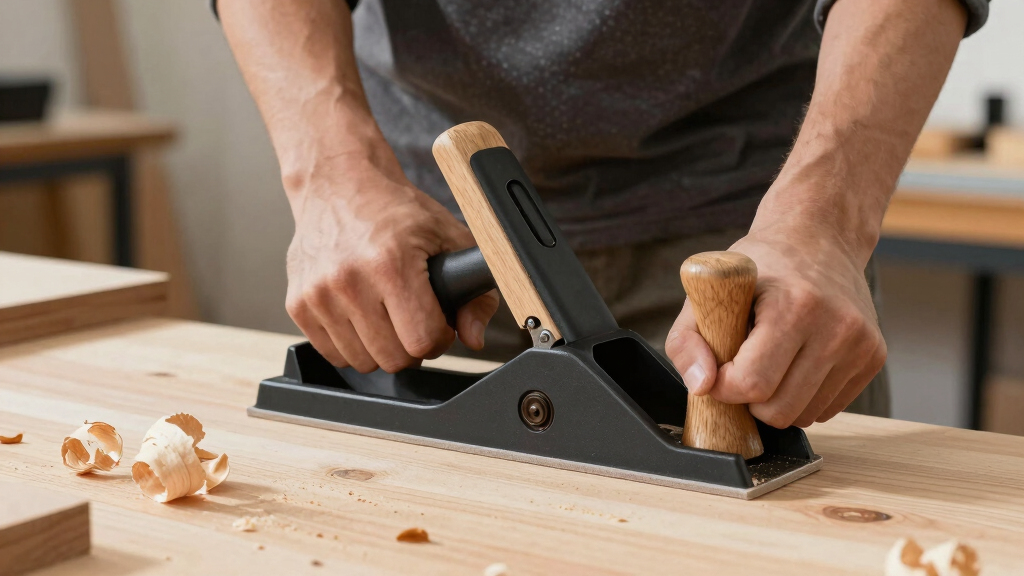
Choosing the right thickness planer for a hobby shop involves balancing power, size, and ease of use. The Dewalt DW735X stands out for its robust 15 Amp motor and two-speed gearboxes, making it ideal for handling larger projects. Meanwhile, the Benchtop Thickness Planer with 2000W motor offers exceptional power for dense hardwoods but is heavier and more complex to operate. The VEVOR models provide versatile features like extended infeeding tables and dust collection, perfect for those wanting high precision without breaking the bank. Each option presents tradeoffs between size, power, and user-friendliness, so understanding your specific needs helps narrow down the best fit.

Get tools and workshop supplies delivered free — and shop member deals
- Fast, free delivery on millions of items
- Access to Prime Big Deal Days deals on October 6–7
- Prime Video, Amazon Music and more included
Complete the kit


Key Takeaways
- Powerful motors (2000W and 15 Amp) are essential for dense hardwoods but increase weight and complexity.
- Extra features like extended infeeding tables and dust collection improve usability but add cost and bulk.
- Two-speed gearboxes and high-precision cutter heads deliver smoother finishes, crucial for hobby projects.
- Weight and size vary significantly, influencing portability and workspace requirements.
- Price ranges from moderate to premium, with more features generally demanding higher investment.
| Dewalt 13-inch Thickness Planer, 3-Knife, Two-Speed, 15 Amp (DW735X) |  | Best Overall for Power and Versatility | Brand: Dewalt | Model Number: DW735X | Power: 15 Amp | VIEW LATEST PRICE | See Our Full Breakdown |
| 13-Inch Benchtop Thickness Planer with 15A Motor and Dual-Blade System |  | Best Power for Dense Woods and Ergonomics | Motor Power: 2000W | Blade Type: HSS double-edged blades | Max Width: 13 inches | VIEW LATEST PRICE | See Our Full Breakdown |
| VEVOR Thickness Planer, 13-Inch Width, 15-Amp 2000W Motor, Two-Blade, Benchtop with Extended Infeeding Table |  | Best for Extended Capacity and Precision | Worktable Width: 13 inches | Maximum Board Thickness: 6 inches | Motor Power: 2000W | VIEW LATEST PRICE | See Our Full Breakdown |
| VEVOR 13-Inch Thickness Planer with Dual Rollers and 1800W Motor |  | Best for Dual-Roller Precision and Adjustability | Worktable Width: 13 inches | Worktable Height: 6 inches | Worktable Length: 28.2 inches | VIEW LATEST PRICE | See Our Full Breakdown |
| Dewalt Benchtop Planer, 15-Amp, 12-1/2-Inch, 3-Knife Cutter, 20,000 RPM (DW734) |  | Best for Fine Finishing and Compact Size | Motor Power: 15 Amp | Cutting Width: 12-1/2 inches | RPM: 20,000 RPM | VIEW LATEST PRICE | See Our Full Breakdown |
| thickness planer for hobby shop | Motor Power | RPM |
|---|---|---|
| Dewalt 13-inch Thickness Plane | — | 20,000 |
| 13-Inch Benchtop Thickness Pla | 2000W | 10,000 |
| VEVOR Thickness Planer | 2000W | — |
| VEVOR 13-Inch Thickness Planer | 1800W | — |
| Dewalt Benchtop Planer | 15 Amp | 20,000 RPM |
More Details on Our Top Picks
Dewalt 13-inch Thickness Planer, 3-Knife, Two-Speed, 15 Amp (DW735X)
The Dewalt DW735X offers a powerhouse of a motor combined with a versatile two-speed gearbox, making it a top pick for hobbyists who want professional results. Its 13-inch capacity is sufficient for most hobby projects, and the three-knife cutter head provides long-lasting sharpness and smooth cuts. Compared to smaller benchtop models, this machine handles larger stock with ease, especially due to its robust construction and automatic carriage lock. However, its weight and price might be a deterrent for hobbyists with limited space or tight budgets. This model excels when you need consistent, high-quality finishes on larger or denser woods, though setup complexity can be a hurdle for beginners.
Pros:- Powerful 15 Amp motor handles large cuts effortlessly.
- Three-knife cutter head extends knife life and improves finish quality.
- Includes infeed/outfeed tables and extra knives for convenience.
- Two-speed gearbox optimizes cut quality for different materials.
Cons:- Heavy and bulky, requiring assistance for movement.
- Higher price point may be prohibitive for casual hobbyists.
- Setup can be complex for those unfamiliar with machinery.
Best for: Hobbyists who prioritize power, durability, and professional-grade finish in their projects.
Not ideal for: Casual users or those with limited space and budget, due to weight and cost.
- Brand:Dewalt
- Model Number:DW735X
- Power:15 Amp
- Cutting Width:13 inches
- Number of Knives:3
- RPM:20,000
- Cutterhead Speed:10,000 rpm
- Feed Speed Options:96 or 179 CPI
- Base Material:Cast aluminum
- Included Components:Dust hose adapter, dust-ejection chute, extra knives
- Warranty:3 years
Our verdict“A versatile, high-performance machine ideal for serious hobbyists who need power and precision.”
13-Inch Benchtop Thickness Planer with 15A Motor and Dual-Blade System
This 13-inch benchtop model stands out for its robust 2000W copper motor, making it capable of tackling dense hardwoods and softwoods alike. Its dual-blade system minimizes snipe and ensures flat, consistent surfaces—crucial for hobby projects that demand precision. The ergonomic design reduces strain during long sessions, and the dust port keeps the workspace cleaner. Compared with smaller or less powerful units, this model offers more raw power, but its weight and size mean it’s less portable and may require a dedicated workbench. Beginners might find its setup and operation slightly more involved, but experienced hobbyists will appreciate its durability and cutting accuracy.
Pros:- Powerful 2000W motor for dense and hard woods.
- Dual-blade system reduces snipe and improves flatness.
- Ergonomic design minimizes fatigue during extended use.
- Includes dust port for cleaner operation.
Cons:- Heavy and requires a sturdy work surface.
- More complex setup may challenge beginners.
Best for: Hobbyists needing a powerful, ergonomic machine for dense hardwoods and long sessions.
Not ideal for: Casual users or those with limited space, due to weight and complexity.
- Motor Power:2000W
- Blade Type:HSS double-edged blades
- Max Width:13 inches
- Height Range:1/4 to 6.3 inches
- RPM:10,000
- Overload Protection:Yes
- Dust Port:Yes
- Included Components:2 extra blades, lifting handle
Our verdict“A high-powered, precise machine suited for serious hobbyists who need durability and comfort.”
VEVOR Thickness Planer, 13-Inch Width, 15-Amp 2000W Motor, Two-Blade, Benchtop with Extended Infeeding Table
The VEVOR thickness planer offers a 13-inch worktable supporting boards up to 6 inches thick, ideal for larger or warped stock. Its high-precision, steel, two-knife cutter head ensures consistent, smooth finishes, while the extended infeeding table simplifies handling longer pieces. The 2000W motor provides ample power for both soft and hardwoods, and the dust collection port helps keep the workspace tidy. Compared to smaller units, this model emphasizes capacity and precision, but its weight and setup complexity could challenge beginners. It’s best suited for hobbyists who often work with larger or more irregular stock.”
Pros:- Powerful 2000W motor for smooth, high-quality finishes.
- Extended infeeding table supports longer and warped boards.
- High-precision cutter head ensures durability and consistent cuts.
- Includes dust collection port for cleaner workspace.
Cons:- Heavy and bulky, requiring a dedicated setup space.
- Setup can be complex for beginners.
- Price might be higher than smaller, less capable models.
Best for: Hobbyists needing capacity and accuracy for larger projects.
Not ideal for: Users with limited space or those seeking a lightweight, portable machine.
- Worktable Width:13 inches
- Maximum Board Thickness:6 inches
- Motor Power:2000W
- Amperage:15A
- Extended Infeeding Table:12 inches
- Cutting Head:Two-knife, high-precision, steel, HRC55-60
- Dust Collection:Vacuum port included
Our verdict“A robust, precise machine for hobbyists working with larger or challenging stock materials.”
VEVOR 13-Inch Thickness Planer with Dual Rollers and 1800W Motor
This VEVOR model features a 13-inch worktable with dual rollers that ensure straight, consistent feeding, minimizing snipe and irregularities. Its 1800W motor handles hardwoods well, and the adjustable depth control in 1/8-inch increments allows for precise material removal. Its large work surface supports long and warped boards, making it suitable for complex hobby projects. The dust hose compatibility adds to its convenience, but the absence of variable speed control and its weight could limit flexibility. This machine appeals to hobbyists who prioritize accuracy and capacity but may not be ideal for those seeking lightweight or highly adaptable options.
Pros:- Dual roller system enhances feeding accuracy.
- Powerful 1800W motor handles hardwoods efficiently.
- Adjustable depth control for precise material removal.
- Large worktable supports long and warped boards.
Cons:- No variable speed feature.
- Heavy and may require a dedicated workspace.
- Limited to single-speed operation.
Best for: Hobbyists focused on precision, capacity, and versatility.
Not ideal for: Casual or beginner users who prefer lightweight or simple machines.
- Worktable Width:13 inches
- Worktable Height:6 inches
- Worktable Length:28.2 inches
- Motor Power:1800W
- Maximum RPM:23,500 RPM
- Cutting Speed:16,000 CPM
- Depth Adjustment:1/8 inch increments
- Dust Hose Compatibility:2-inch and 4-inch
Our verdict“A highly accurate, capacity-oriented machine that balances power and precision for dedicated hobbyists.”
Dewalt Benchtop Planer, 15-Amp, 12-1/2-Inch, 3-Knife Cutter, 20,000 RPM (DW734)
The Dewalt DW734 offers a slightly smaller capacity at 12-1/2 inches but compensates with a powerful 15 Amp motor and a three-knife cutter head that delivers a fine finish with 96 cuts per inch. Its adjustable infeed/outfeed tables, material removal gauge, and turret depth stop make it straightforward to achieve consistent results. Compared with larger machines, this model is more portable and easier to set up, making it suitable for hobbyists with limited space. However, it lacks a dust collection system and has a lower maximum capacity, limiting its use for larger, more demanding projects. It’s a great choice for hobbyists focused on detail work and finishing.
Pros:- Powerful 15 Amp motor for handling deep cuts.
- Fine finish with 96 cuts per inch and reversible knives.
- Adjustable support tables and material removal gauge.
- Easy knife changes with reversible blades.
Cons:- Heavy and bulky for small workshops.
- No dust collection system included.
- Limited capacity for larger projects.
Best for: Hobbyists needing a compact, easy-to-use machine for detailed or smaller-scale projects.
Not ideal for: Those requiring large capacity or working with very dense hardwoods regularly.
- Motor Power:15 Amp
- Cutting Width:12-1/2 inches
- RPM:20,000 RPM
- Knife Type:Three-knife cutter head
- Cutting Speed:10,000 RPM
- Additional Features:Four-column carriage lock, extra-long support tables, material removal gauge, adjustable depth stop
- Warranty:Three-year limited
Our verdict“A solid, space-saving choice for hobbyists who focus on detailed work and finishing touches.”

How We Picked
Our selections are based on comprehensive reviews of performance, build quality, and user feedback, focusing on machines suited for hobby shop use. I prioritized models with at least 13-inch capacity, reliable motors, and features that enhance precision and ease of operation. We balanced power and features against value, considering how each machine’s tradeoffs impact hobbyists. Safety features, setup complexity, and customer support also factored into our choices, ensuring each option is practical for non-professional woodworking spaces.
Factors to Consider When Choosing Best Thickness Planer For Hobby Shop
When selecting a thickness planer for a hobby shop, key considerations include power, capacity, and ease of use. Power determines how well the machine can handle dense hardwoods, while capacity influences the size of stock you can process. Features like extended infeeding tables, dust collection, and adjustable depth controls enhance usability and finish quality. Budget also plays a role, as higher-end models tend to offer more durability and precision but at a higher cost. Understanding your typical projects and workspace helps identify which features matter most and which tradeoffs are acceptable.
Power and Motor Size
For hobbyists working with dense hardwoods or larger stock, a motor of at least 15 amps or 2000W is advisable. More power translates into smoother cuts and less strain on the machine, but it also adds weight and cost. If your projects are mostly softwoods or smaller stock, a less powerful model may suffice, saving you money and reducing weight. Always match your machine’s power to the scale and type of your projects to avoid frustration and ensure reliable operation.
Capacity and Size
The width and maximum thickness capacity are critical. Most hobbyists will find 13 inches wide sufficient, but if you plan to work on larger or wider boards, look for models that support at least 6 inches of thickness. Larger capacity machines tend to be heavier and more expensive, so consider your storage space and mobility needs. Compact models are easier to handle but may limit your project size.
Ease of Use and Features
Features like adjustable infeed/outfeed tables, material removal gauges, and quick knife changes improve user experience. Dust collection ports help maintain a cleaner workspace, especially if you don’t have dedicated dust extraction systems. For beginners, models with straightforward controls and clear instructions reduce setup frustration. Experienced hobbyists may prioritize precision features like extended tables and high-quality cutter heads to get professional finishes.
Price and Value
Expect to pay more for machines with higher power, larger capacity, and advanced features. However, investing in a slightly more expensive model with durable components can save money over time by reducing maintenance and improving finish quality. Balance your budget with your project needs, aiming to get the best value for your specific woodworking goals.
Frequently Asked Questions
What size thickness planer is best for a hobby shop?
A 13-inch capacity is generally sufficient for most hobby projects, providing enough width for typical furniture and small cabinetry work. If you often work with larger or wider stock, consider models that support 15 inches or more. Remember, larger machines tend to be heavier and more expensive, so balance your project scope with your workspace and budget.
Do I need a dual-blade or three-knife cutter head?
Three-knife cutter heads typically provide a finer finish and longer knife life, especially useful for hobbyists aiming for smooth surfaces. Dual-blade systems are often more affordable and easier to maintain but may produce slightly rougher finishes. Your choice depends on your finish quality requirements and willingness to perform blade maintenance.
Is higher wattage always better?
Higher wattage generally means more power and better ability to handle dense hardwoods, but it also results in a heavier machine and possibly higher cost. For hobby use, a machine with 15 amps or 2000W usually strikes a good balance between power and portability, ensuring reliable performance without excessive weight.
How important is dust collection?
Dust collection is vital for maintaining a clean and safe workspace. Machines with built-in ports or compatibility with dust extractors reduce airborne particles and improve visibility during work. For hobbyists working in small shops, investing in a machine with dust collection can significantly enhance comfort and safety.
Can I use these planers for professional projects?
While these models are designed primarily for hobbyist use, many offer features close to professional machines, especially those with powerful motors, large capacities, and high-quality cutter heads. However, for continuous heavy-duty use, professional-grade equipment may be more durable and efficient. For occasional hobby projects, these models provide excellent performance and value.
Halloween Picks
halloween
As an affiliate, we earn on qualifying purchases.