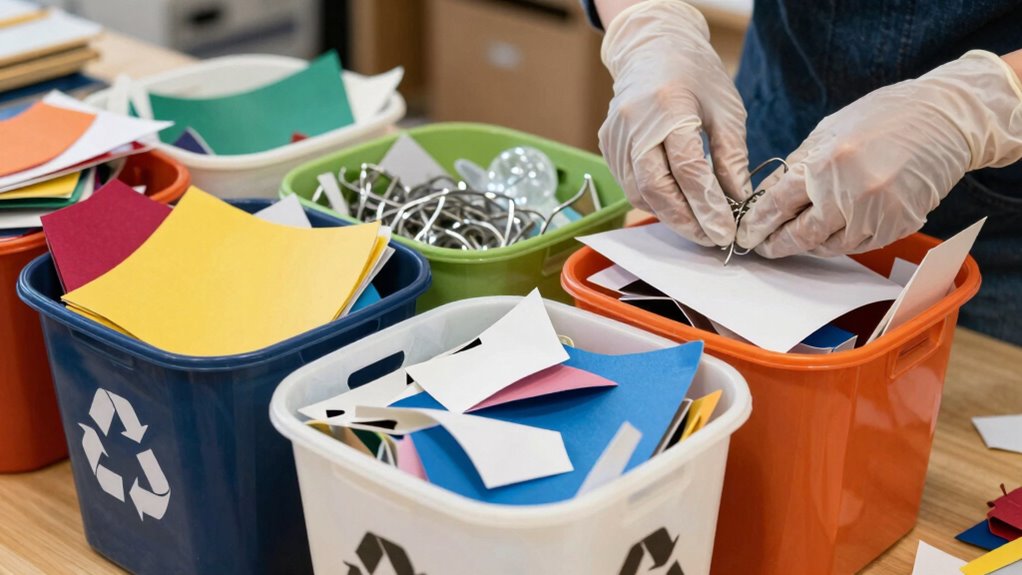

To dispose of mixed-material craft waste responsibly, sort recyclable items like paper, plastics, and metals from non-recyclables, ensuring they’re clean first. Check your local guidelines for accepting plastics and consider donating fabric scraps or reusable materials. Use curbside programs or local drop-off centers for proper recycling. Reduce waste by purchasing sustainable supplies and reusing scraps for future projects. Keep waste management practices in mind—continuing will help you discover more ways to minimize environmental impact.

Get business pricing on tools and workshop supplies
- Business-only prices and quantity discounts
- Tax-exempt purchasing
- Multiple users, one account, clear invoices
Key Takeaways
- Separate and sort different materials to ensure proper recycling or disposal according to local guidelines.
- Clean recyclable items to prevent contamination and facilitate recycling processes.
- Reuse or donate craft scraps, especially natural fibers, for future projects or community programs.
- Use specialized collection services or recycling centers for materials like craft foam or mixed waste.
- Practice mindful purchasing and waste reduction to minimize future mixed-material craft waste.

Have you ever wondered how to handle craft waste that includes a mix of different materials? When you’re working on creative projects, it’s common to produce waste that’s a confusing jumble of paper, plastic, fabric, metal, and other materials. Instead of tossing everything into the trash, it’s important to consider recycling options and waste reduction strategies to dispose of your craft waste more responsibly. Proper disposal not only helps protect the environment but also encourages mindful consumption and waste management.
First, you need to identify the types of materials in your craft waste. Separate recyclable items from those that are non-recyclable. For example, paper and cardboard can often be recycled through curbside programs, provided they are clean and free of paint or glue. Plastic containers and bottles are usually recyclable, but check local guidelines to ensure they’re accepted. Metal parts, such as aluminum foil or tin cans, can often be recycled as well. Fabric scraps, however, are more complex—they might be reusable for future projects, donated for craft reuse programs, or composted if they’re natural fibers. Enhanced awareness of recycling programs can help you determine the best disposal method for each material. Additionally, some communities offer specialized collection services for certain materials, making responsible disposal easier. It’s also helpful to keep in mind that waste sorting can significantly improve recycling efficiency. Non-recyclable waste, like certain plastics or contaminated materials, should go into the trash.
Exploring recycling options is vital for waste reduction. Many communities now have specific recycling centers or drop-off points for mixed materials or specialty items, like craft plastics or textiles. Before discarding, research your local recycling policies or visit recycling centers’ websites to see what’s accepted. Some craft stores or community programs also offer recycling initiatives for specific materials, such as fabric or craft foam. If you can’t recycle certain items, consider repurposing or donating them to schools, community centers, or art programs. This helps extend the life of your materials and keeps them out of landfills.
Waste reduction is an ongoing process that starts with thoughtful planning. Try to minimize waste by purchasing only what you need and choosing sustainable or recyclable materials whenever possible. Use up leftover scraps in future projects, and encourage others to do the same. When cleaning up, focus on sorting waste properly to ensure recyclable materials are processed correctly. This proactive approach decreases the overall volume of waste you generate and supports environmentally responsible practices. Developing a habit of mindful purchasing also contributes significantly to waste reduction and sustainability efforts.
Additionally, understanding and utilizing recycling guidelines can significantly improve your waste management efforts by ensuring proper disposal methods. In the end, handling mixed-material craft waste responsibly involves awareness and effort. By understanding your local recycling options and committing to waste reduction, you can markedly diminish your environmental footprint. This conscientious approach not only benefits the planet but also sets a positive example for others engaging in creative pursuits. Remember, even small steps toward better waste management make a meaningful difference in creating a sustainable future.
reusable craft scrap storage containers
As an affiliate, we earn on qualifying purchases.
As an affiliate, we earn on qualifying purchases.
Frequently Asked Questions
Can Mixed-Material Waste Be Recycled Together?
No, mixed-material waste can’t usually be recycled together because of material separation issues. Recycling challenges arise when different materials like plastic, paper, and metal are combined, making it hard to process them efficiently. To recycle responsibly, you should separate materials before disposal. Doing so helps guarantee each type is correctly processed, reducing waste and supporting sustainable recycling practices. Always check local guidelines for specific separation instructions.
Are There Special Disposal Methods for Hazardous Craft Waste?
Like a tech-whiz from the 1980s, you need to handle hazardous craft waste with care. Yes, there are special disposal methods for hazardous materials, and you must follow strict disposal regulations. Use designated containers, label them properly, and don’t mix hazardous waste with regular trash. Contact local hazardous waste facilities for collection. Ignoring these guidelines can harm the environment and your health, so always prioritize safety and compliance.
How Can I Reduce the Amount of Mixed Craft Waste?
To reduce the amount of mixed craft waste, you can adopt eco-friendly disposal and waste reduction strategies. Plan your projects carefully to minimize excess materials, reuse scraps whenever possible, and select environmentally friendly supplies. Opt for digital patterns instead of printed ones, and buy only what you’ll use. These steps help cut down waste, promote sustainability, and make your crafting more eco-conscious.
What Local Facilities Accept Mixed-Material Craft Waste?
You should check with your local waste management or recycling centers for eco-friendly disposal options. Many communities offer collection events or drop-off sites specifically for mixed-material craft waste. Look for community collection programs that accept diverse materials, ensuring you’re disposing of your waste responsibly. These facilities help recycle or safely dispose of various craft leftovers, reducing environmental impact and promoting sustainable practices in your area.
Is It Safe to Burn Mixed Craft Waste?
Burning mixed craft waste isn’t safe because it can release harmful fumes. Instead, practice waste segregation by separating materials before disposal. Safe burning requires understanding local regulations, and often, burning is prohibited altogether due to environmental and health risks. Always check with local authorities or waste management services before considering burning, and opt for recycling or proper disposal methods to protect your health and the environment.
recycling bins for mixed materials
As an affiliate, we earn on qualifying purchases.
As an affiliate, we earn on qualifying purchases.
Conclusion
By taking these responsible steps, you turn waste into a lesson in sustainability. Remember, every piece of craft waste you dispose of thoughtfully is a seed for a greener future. Don’t let your creative spirit be overshadowed by careless disposal—choose wisely and act consciously. After all, isn’t it our shared craft to nurture the planet that inspires our art? Your mindful actions echo beyond the bin, shaping a more sustainable world.
natural fiber fabric scraps for crafts
As an affiliate, we earn on qualifying purchases.
As an affiliate, we earn on qualifying purchases.
craft waste recycling center collection
As an affiliate, we earn on qualifying purchases.
As an affiliate, we earn on qualifying purchases.
Halloween Picks
halloween
As an affiliate, we earn on qualifying purchases.