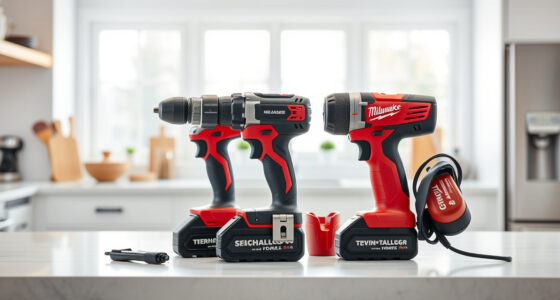
If your craft goals focus on detailed engraving, marking, or small-scale projects, a diode laser is your best choice because of its precision and energy efficiency. For larger projects that require shaping, 3D work, or processing bigger materials, a CNC router offers versatility and power. Consider your material needs, scale, and budget to choose wisely. Stay with us to explore how each tool can best suit your specific craft ambitions and projects.

Get business pricing on tools and workshop supplies
- Business-only prices and quantity discounts
- Tax-exempt purchasing
- Multiple users, one account, clear invoices
Key Takeaways
- Choose a diode laser for high-precision, detailed engraving on small-scale projects and delicate materials.
- Opt for a CNC router when working with larger sheets, complex 3D shapes, or broader material versatility.
- Consider diode lasers for energy efficiency and lower maintenance with minimal heat generation.
- Use CNC routers for processing diverse materials and creating larger, more intricate physical structures.
- Match your craft goals—detailed artwork or large-scale fabrication—to the tool’s strengths and project scale.
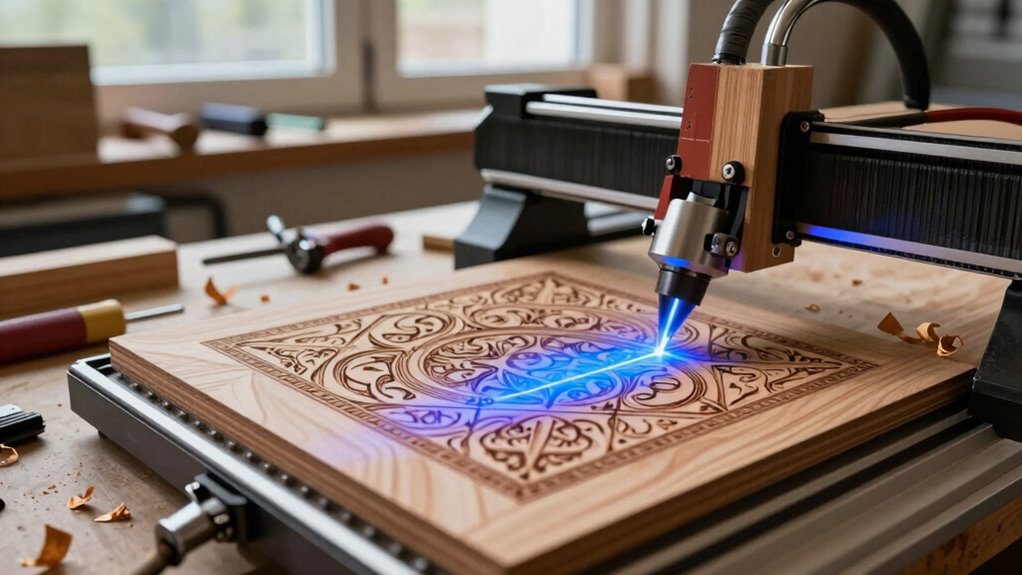
When choosing between a diode laser and a CNC router, understanding their differences is essential to making the right decision for your projects. Both tools serve unique purposes and excel in different areas, so your choice depends heavily on your specific craft goals. One of the key factors to weigh is material versatility. A CNC router is highly adaptable; it can cut, carve, and shape a wide range of materials including wood, acrylic, foam, and softer metals. This makes it ideal if your projects involve multiple materials or require complex three-dimensional work. In contrast, a diode laser’s material versatility is more limited but still substantial; it’s excellent for engraving, marking, and cutting materials like wood, leather, acrylic, and certain plastics. If your focus is primarily on detailed engraving or precise marking, a diode laser could be the better fit. Additionally, considering the power consumption of each tool can help you choose a more energy-efficient option that aligns with your workspace constraints. Power efficiency is another critical aspect to evaluate. Diode lasers generally consume less power than CNC routers, which makes them more economical to operate over time. They also tend to generate less heat during operation, reducing the need for extensive cooling systems and lowering your energy costs. This efficiency not only translates to lower utility bills but also means less wear and tear on the machine, potentially extending its lifespan. Conversely, CNC routers, especially larger or more industrial models, often require significant power and cooling systems to handle their more robust cutting capabilities. While they can handle thicker and denser materials, their higher energy consumption can be a drawback if your workspace has limited power resources or if you’re aiming for a more energy-conscious setup. Moreover, the cost of maintenance for each device varies, with diode lasers generally requiring less frequent upkeep due to fewer moving parts. The initial investment for each tool can also differ significantly, influencing your decision based on your budget and long-term goals. When considering long-term operational costs, it’s essential to evaluate not only the purchase price but also the availability of replacement parts and support services, which can impact your machine’s longevity. Your decision should also consider the scale and precision needs of your projects. If you prioritize high-precision, detailed work with minimal material waste, a diode laser’s fine control and quick setup might serve you better. On the other hand, if you need to process larger sheets of material or create three-dimensional shapes, a CNC router’s robust build and larger working area could be more advantageous. Think about the types of projects you want to complete and how each tool’s strengths align with those goals. Ultimately, evaluating your material versatility requirements and power efficiency considerations will guide you toward the right tool to match your craft ambitions.
As an affiliate, we earn on qualifying purchases.
Frequently Asked Questions
What Safety Precautions Are Necessary for Diode Laser Use?
To guarantee safe diode laser use, prioritize laser safety by wearing appropriate eye protection and working in well-ventilated areas. Be aware of material hazards, as some materials release harmful fumes or residues when laser-cut. Keep a fire extinguisher nearby, and never leave the laser unattended during operation. Regularly inspect your equipment for damage, and follow all manufacturer safety guidelines to prevent accidents and health risks.
Can Both Tools Work With Different Material Thicknesses?
Yes, both tools can handle different material thicknesses, offering good material adaptability and thickness versatility. A diode laser works well with thinner materials like paper and acrylic, but it might struggle with thicker woods. A CNC router, however, excels at working with a broader range of thicknesses, from thin veneers to thick hardwoods. Your choice depends on your specific project needs and the materials you plan to use.
How Do Maintenance Requirements Differ Between the Two Tools?
You might be surprised, but maintenance requirements differ quite a bit. The diode laser demands less maintenance, focusing mainly on cleaning optics and ensuring proper cooling, which helps extend its tool longevity. Meanwhile, the CNC router involves more complex maintenance, including lubrication, belt adjustments, and spindle care. This complexity can impact your overall downtime, so consider which level of upkeep fits your schedule and skill level before making your choice.
Are There Specific Design Limitations for Each Tool?
You’ll find that diode lasers have limited design flexibility because they can’t easily cut thick or complex materials, and they’re mainly suited for engraving. CNC routers, on the other hand, offer greater design flexibility, handling intricate cuts and a variety of materials like wood, plastics, and soft metals. Material compatibility varies, so if you want to work with thicker or tougher materials, a CNC router’s your best bet.
What Is the Typical Learning Curve for Beginners?
Think of learning your tool as nurturing a delicate plant. With a diode laser, skill development is quick, like watering often; you’ll see progress fast, but mastering nuances takes time. CNC routers need a longer time investment, akin to tending a tree—initially slow but rewarding. Overall, beginners can expect a gentle learning curve, with steady growth in proficiency as they invest time and practice.
As an affiliate, we earn on qualifying purchases.
Conclusion
Choosing between a diode laser and a CNC router is like selecting the right brush for your masterpiece. I once watched a hobbyist transform a simple wooden plaque with a laser’s precision, much like a painter adding delicate details. The data shows lasers excel at fine, intricate work, while routers handle larger, rougher cuts. Your craft goals shape your tool, so pick what feels right—your creative journey is the true masterpiece in the making.
As an affiliate, we earn on qualifying purchases.
As an affiliate, we earn on qualifying purchases.
Fall yard work Picks
leaf blowers
As an affiliate, we earn on qualifying purchases.