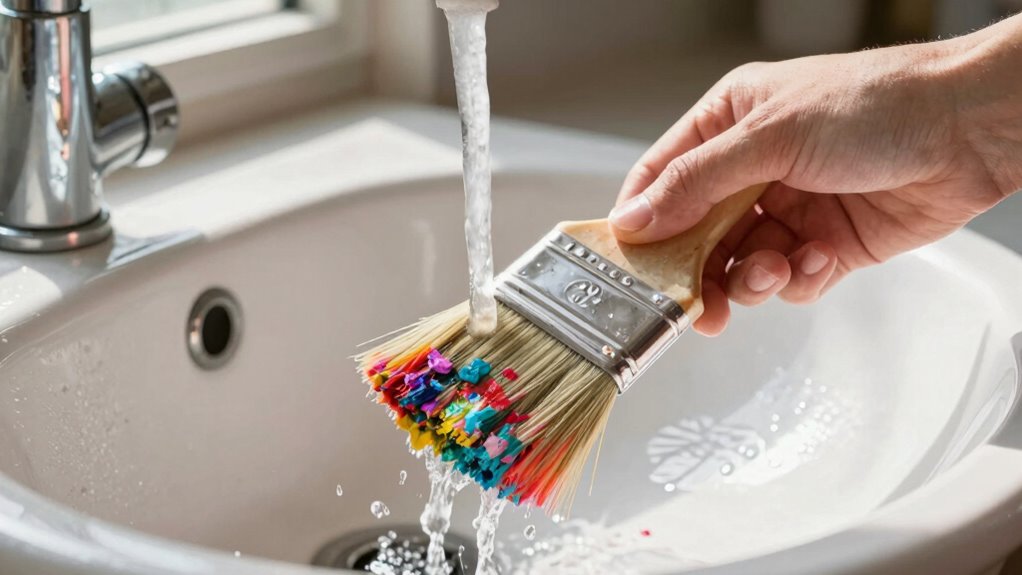

To prevent your paint brushes from turning rock-hard, rinse them immediately after use with the appropriate solvent—water for latex or mineral spirits for oil paints. Gently work the solvent into the bristles and remove excess paint before rinsing until clear. After cleaning, reshape the brush tips with your fingers and hang or lay them flat to dry in a well-ventilated area, ensuring they stay flexible and maintain their shape for next time. Keep going to learn more tips.
Key Takeaways
- Rinse brushes immediately after painting with the appropriate solvent to prevent paint from drying and hardening.
- Gently work the solvent into bristles using fingers or a brush comb to loosen dried paint.
- Properly reshape and dry brushes with bristles downward to maintain flexibility and prevent stiffness.
- Avoid pressing or twisting bristles during cleaning; handle gently to preserve brush integrity.
- Store brushes in a dry, well-ventilated area, preferably hanging or flat, to prevent moisture buildup and bristle damage.
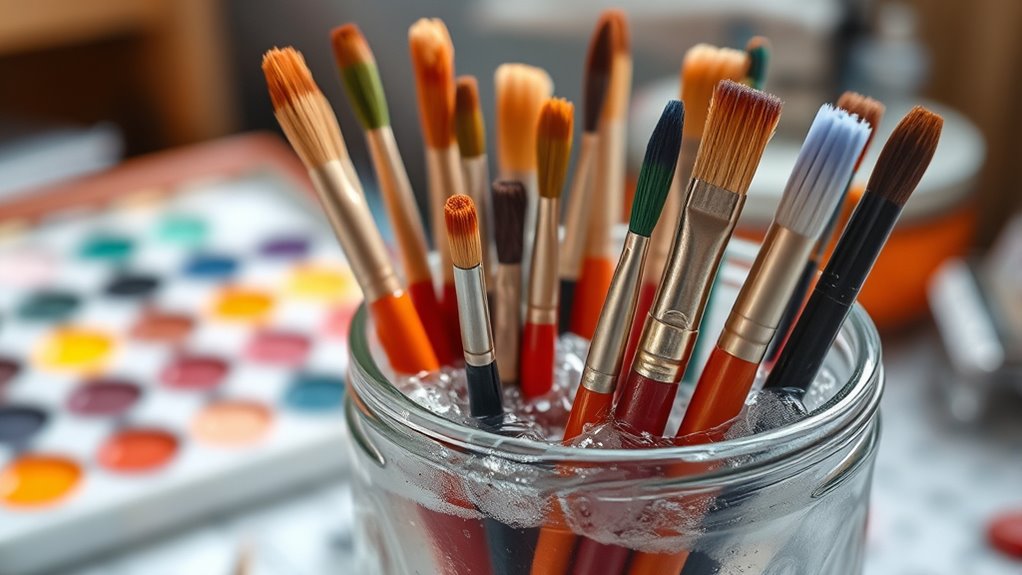
Cleaning your paint brushes properly is essential to keep them in good condition and guarantee they last longer. When you take the time to care for your brushes, you prevent the bristles from becoming stiff, misshapen, or rock-hard, which makes future painting sessions much easier and more enjoyable. The key to effective brush maintenance starts with understanding how to clean your brushes thoroughly and how to dry them correctly. Proper drying techniques are just as important as cleaning because they help preserve the shape and flexibility of your brushes, ensuring they’re ready for your next project.
Proper brush care preserves shape, flexibility, and longevity for a more enjoyable painting experience.
After finishing your painting, rinse your brushes immediately with the appropriate solvent—water for latex paints or mineral spirits for oil-based paints. Gently work the solvent into the bristles using your fingers or a brush comb, removing excess paint. Don’t rush this step; thorough cleaning prevents paint buildup that can damage the brush fibers over time. Once the paint is mostly gone, rinse the brush with clean water or solvent until it runs clear. This initial cleaning is crucial for maintaining good brush maintenance and avoiding the need for aggressive scrubbing later, which can damage the bristles. Additionally, understanding the different paint types helps tailor your cleaning process for optimal results.
When it’s time to dry your brushes, the drying techniques you choose will influence their lifespan. To prevent the bristles from becoming misshapen or stiff, you should gently reshape the brush tips with your fingers after rinsing. Avoid squeezing or twisting the bristles, as this can distort their shape. Instead, gently squeeze out excess water or solvent without pulling on the bristles. Then, hang your brushes with the bristles pointing downward—this allows water to drain away from the ferrule and prevents moisture from seeping into the handle, which can cause loosening or warping.
Using a brush holder or clip can help keep the shape intact during drying. If you prefer to lay your brushes flat, do so on a clean towel in a well-ventilated area, ensuring the bristles are not pressed against any surface that might deform them. Never dry brushes upright with the bristles facing up, as water can seep into the ferrule and damage the glue holding the bristles. Proper drying techniques preserve the flexibility and shape of your brushes, making them easier to use in future projects and extending their life.
Frequently Asked Questions
Can I Reuse Paint Brushes for Different Paint Types?
Yes, you can reuse paint brushes for different paint types if you consider brush material compatibility and paint type separation. Use separate brushes for oil-based and water-based paints to prevent contamination. Clean brushes thoroughly after each use, ensuring no residual paint remains. Proper cleaning and storage help maintain brush quality, so they stay effective for future projects. Always check manufacturer recommendations for specific brush and paint compatibility.
How Often Should I Clean My Paint Brushes During a Project?
You should clean your paint brushes regularly during a project, ideally after finishing each painting session or switching colors. This helps maintain proper brush maintenance and prevents paint buildup. Follow a consistent cleaning schedule to keep your brushes in good shape and avoid them turning rock-hard. By cleaning thoroughly and promptly, you prolong their lifespan and ensure smooth application for future projects.
What Are the Best Storage Methods for Cleaned Brushes?
To store your cleaned brushes, use proper brush storage solutions like hanging them with bristles pointing down or placing them flat in a jar. After cleaning, employ effective brush drying techniques, such as gently shaping the bristles and letting them air dry in a well-ventilated area. This prevents mold and keeps your brushes in prime condition. Proper storage guarantees your brushes stay soft, ready for your next project.
How Do I Prevent Brush Bristles From Shedding After Cleaning?
Your brushes’ bristle shedding can seem like a never-ending hair loss crisis! To prevent this, focus on proper brush hair maintenance and bristle preservation techniques. Always avoid harsh scrubbing, gently wash and rinse, and reshape the bristles after cleaning. Use lukewarm water and brush cleaner, then store flat or hanging. This careful approach keeps bristles intact, minimizes shedding, and prolongs your brush’s lifespan so you can paint smoothly without losing bristles every stroke.
Can I Clean Oil-Based Paint Brushes With Water?
You can’t effectively clean oil-based paint brushes with water because water isn’t a paint removal method for oil paints. Instead, use brush cleaning techniques like mineral spirits or paint thinner to break down the oil-based paints. First, soak the brush in the solvent, then gently work out the paint with a brush comb or your fingers. Rinse with soap and water afterward to remove residue, ensuring your brushes stay in good shape.
Conclusion
So, next time you think neglecting your brushes won’t matter, remember—they’ll end up just as useless as that old, dried-up paint. Taking a minute to clean them properly now saves you the frustration of tossing out ruined tools later. Ironically, a little care keeps your brushes fresh and your projects smoother. So don’t be that person who neglects cleanup—your brushes and your wallet will thank you in the long run.