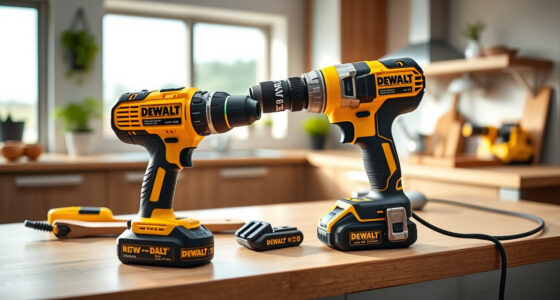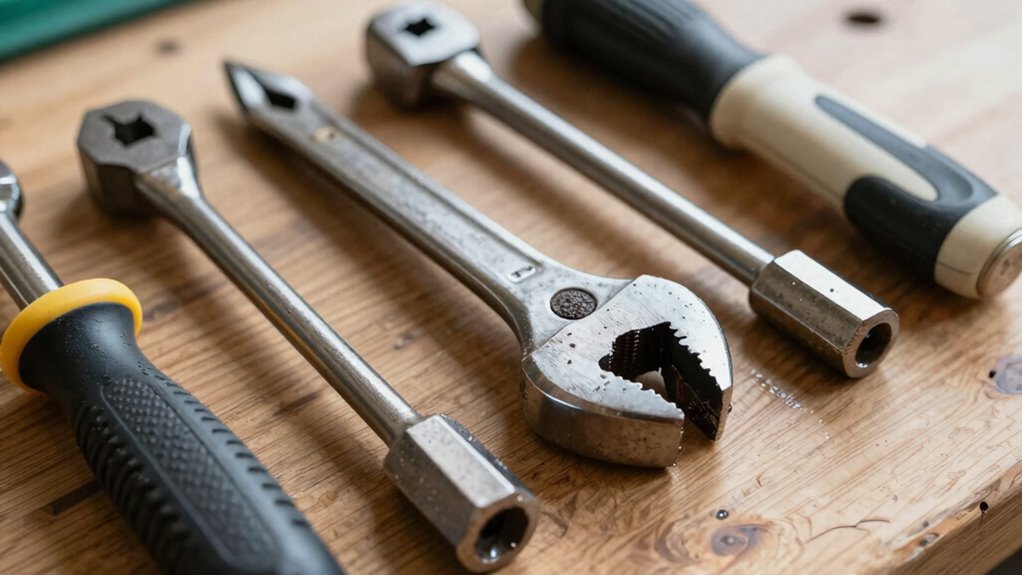

To keep your tools in top shape, regularly clean them after use and inspect for rust, residue, or loose handles. Remove rust with vinegar, baking soda, or commercial rust removers, then dry thoroughly and apply a protective coating. Clean sticky handles with soap and water, using non-slip grips if needed. Store tools in dry, organized spaces and replace damaged parts promptly. For detailed tips on maintaining and repairing your tools, discover more to guarantee their longevity and safety.

Get business pricing on tools and workshop supplies
- Business-only prices and quantity discounts
- Tax-exempt purchasing
- Multiple users, one account, clear invoices
Key Takeaways
- Use vinegar, baking soda, or commercial rust removers to effectively eliminate rust, then dry and apply protective oil.
- Clean handles with warm, soapy water and dry thoroughly; use grip-enhancing sprays or non-slip tapes to improve grip.
- Store tools in dry, organized spaces and regularly inspect for rust, residue, or damage to prevent deterioration.
- Remove sticky residues from handles with gentle cleaning, and use lubricants or ergonomic grips to restore comfort and safety.
- Replace or repair damaged tools with severe rust, cracks, or dull blades promptly to ensure safety and optimal performance.
As an affiliate, we earn on qualifying purchases.
Identifying Common Tool Problems

Tools can sometimes malfunction or underperform, making it essential to recognize common problems early. One issue to watch for is discomfort caused by poor tool handle ergonomics. If a handle feels awkward or causes hand fatigue, it might lead to less precise work or even injury. Another common problem is miscommunication due to inadequate tool color coding. Without proper color coding, you risk picking the wrong tool for the job, which can cause delays or damage. Keep an eye out for handles that are worn, cracked, or loose, as these can compromise safety and efficiency. Recognizing these signs early helps you address issues before they worsen, ensuring your tools remain effective and safe to use. Proper tool maintenance and awareness are key to avoiding larger problems down the line. Regularly inspecting your tools for signs of wear and tear, including corrosion and residue buildup, can help prevent unexpected failures and maintain safe operation. Additionally, understanding ergonomic design principles can help in selecting tools that reduce fatigue and improve comfort during use. Furthermore, utilizing proper storage techniques can slow down deterioration and prolong the lifespan of your tools.
As an affiliate, we earn on qualifying purchases.
Removing Rust Safely and Effectively

Rust can weaken tools and compromise safety, but you can remove it effectively with the right approach. Start by choosing your rust removal method, such as using vinegar, baking soda, or commercial rust removers. Next, follow these steps:
Rust damages tools and safety—choose your removal method and follow simple steps to restore and protect your tools effectively.
- Apply the chosen rust remover and let it sit for the recommended time.
- Use a wire brush or steel wool to scrub away rust flakes gently.
- Rinse thoroughly and dry completely to prevent future corrosion.
- For long-term protection, consider applying coatings that prevent rust to keep tools in top condition.
These steps ensure thorough rust removal while protecting your tools. Remember, after removing rust, apply a light coat of oil to create a barrier against moisture, aiding in corrosion prevention. Regular maintenance helps keep your tools in top shape and safe to use.
As an affiliate, we earn on qualifying purchases.
Cleaning and Preventing Residue Build-Up
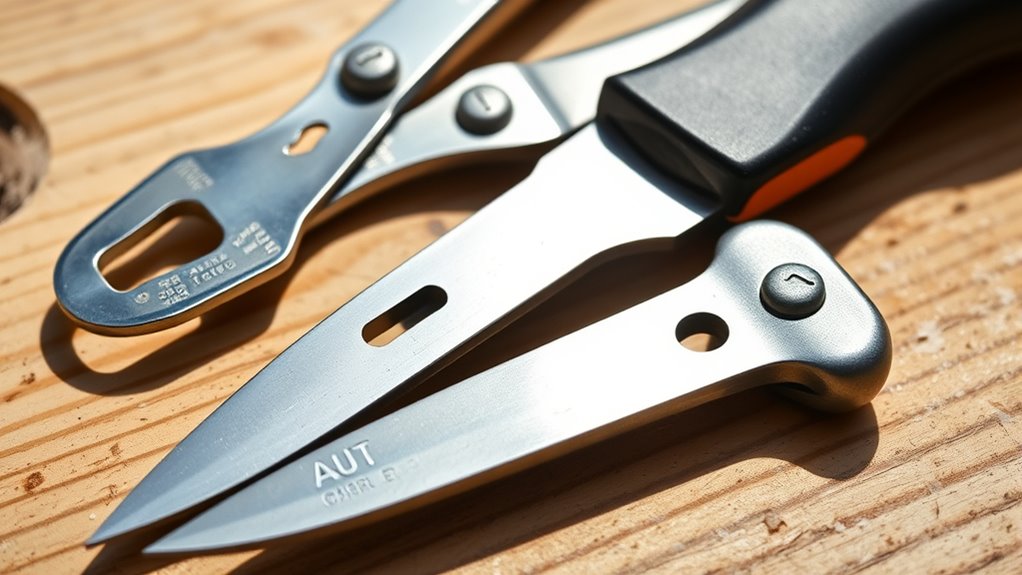
Keeping your tools clean regularly prevents residue from building up and causing damage. Make it a habit to wipe down tools after each use and use protective coatings when needed. These simple steps will extend their lifespan and guarantee peak performance. Regular maintenance also helps prevent the accumulation of residue build-up, which can impact the effectiveness of your tools over time. Additionally, maintaining your tools in accordance with air purifier maintenance dos and don’ts ensures they stay in optimal condition and avoid unnecessary wear. Incorporating proper cleaning techniques into your routine can further reduce the likelihood of residue accumulation and prolong tool life.
Regular Cleaning Practices
Regular cleaning is essential to prevent residue build-up that can impair your tools’ performance. Depending on the tool material and how often you use it, your cleaning frequency will vary. To keep tools in top shape:
- Clean after each use, especially if they’ve been exposed to dirt or moisture.
- Use appropriate cleaners based on the tool material—metal tools may need oil, while plastic handles require gentle soap.
- Store tools in a dry, organized space to minimize residue accumulation and protect against rust.
- Regular maintenance of your tools, including cleaning and proper storage, helps preserve their performance and longevity. Consistent cleaning removes debris before it hardens or causes corrosion. Adjust your cleaning routine to match your tools’ material and usage, ensuring they stay functional and safe over time. Proper tool maintenance is key to extending their lifespan and performance, especially considering residue build-up can significantly impact tool efficiency over time. Incorporating preventive measures such as rust inhibitors and moisture control can further safeguard your tools from deterioration.
Protective Maintenance Tips
To effectively protect your tools from residue build-up, you need to adopt proper cleaning and maintenance habits. Regularly wiping down tools after use helps prevent grime from accumulating and ensures their ergonomic design remains comfortable and efficient. Use appropriate cleaning agents suited for your tool’s material durability to remove stubborn residues without causing damage. Applying a light coating of protective oil can prevent rust and keep moving parts functioning smoothly. Store tools in a dry, organized space to reduce exposure to moisture and debris. Inspect handles and joints for signs of wear or sticky residue, and address issues promptly. Proper maintenance not only prolongs the lifespan of your tools but also maintains their ergonomic benefits, making your work safer and more comfortable over time. Additionally, understanding the importance of filtration systems can further enhance your tools’ longevity by reducing dust and debris exposure during use.
As an affiliate, we earn on qualifying purchases.
Tackling Sticky Handles and Grip Issues
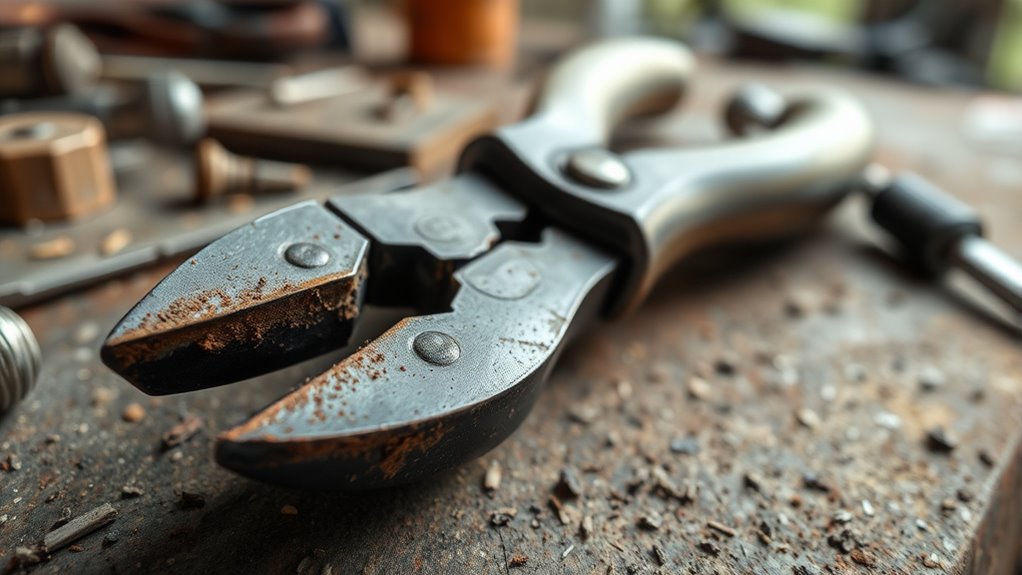
If your tool handles have become sticky or hard to grip, addressing the issue promptly can restore control and safety. Sticky handles can compromise grip enhancement and handle ergonomics, making your work more difficult. To fix this:
- Clean the handles thoroughly with warm, soapy water to remove residue and stickiness.
- Dry completely and apply a light coating of grip-enhancing spray or silicone lubricant.
- Consider wrapping handles with non-slip tape or adding ergonomic grips for better handle ergonomics.
- Regular maintenance and proper tool storage help prevent grip deterioration and keep your tools in top condition.
- Using appropriate cleaning methods for Free Floating components can help maintain the integrity and functionality of your tools over time.
- Incorporating Essential Oils for Grip Maintenance can also provide natural solutions to reduce stickiness and improve grip quality.
- Implementing proper ventilation during cleaning and storage can prevent moisture buildup that contributes to handle stickiness.
- Staying informed about innovative tool materials can help select handles less prone to stickiness and degradation.
These steps improve grip and comfort, reducing fatigue and increasing safety. Proper handling and grip enhancement are essential for effective, safe tool use.
Choosing the Right Cleaning Supplies
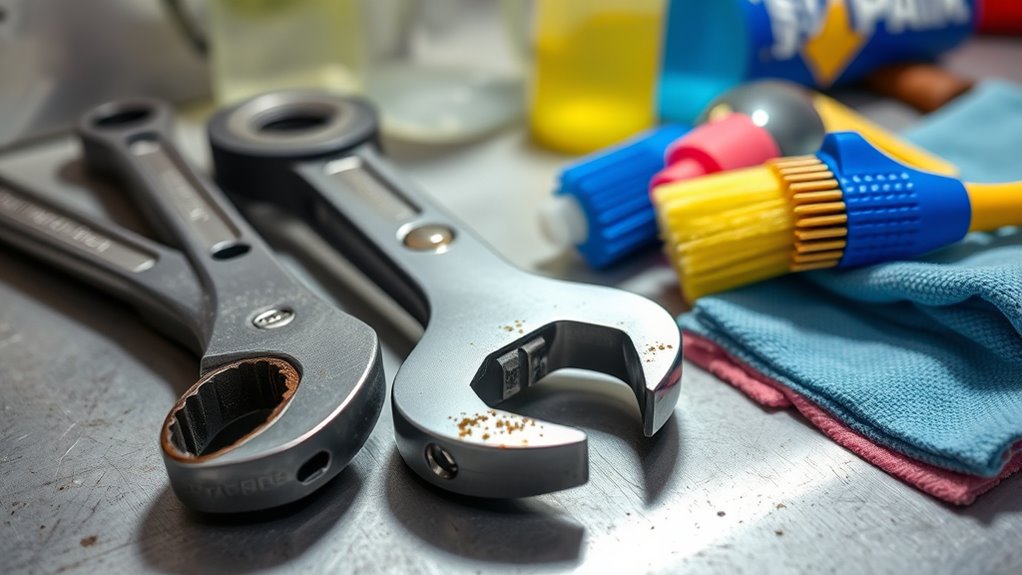
Choosing the right cleaning supplies is key to maintaining your tools’ performance and longevity after fixing grip issues. Using appropriate products guarantees effective tool cleaning while preventing damage. For example, mild detergents work well for general cleaning, but heavy grease might require degreasers. Always observe safety precautions, such as wearing gloves and working in well-ventilated areas. Here’s a quick reference:
| Cleaning Supplies | Best Uses |
|---|---|
| Mild Detergents | Light dirt, general tool cleaning |
| Degreasers | Heavy grease, stubborn residue |
| Rust Removers | Rusted parts |
| Lubricants | Protecting tools after cleaning |
Choosing the proper cleaning supplies can also prevent corrosion and maintain the tools’ electrical properties, especially for tools used in networking environments. Choose wisely to keep your tools in top shape and ensure safe tool cleaning practices. Proper maintenance procedures can extend the lifespan of your tools and improve their overall efficiency.
Preventative Maintenance for Longevity

Maintaining your tools through regular cleaning, proper storage, and protective lubrication helps extend their lifespan. By establishing simple routines, you prevent rust and damage before they start. Taking these small steps now saves you time and money in the long run. Incorporating local craftsmanship techniques can also add unique character and durability to your tools. Additionally, understanding and applying traditional Italian tool maintenance methods can further enhance their resilience and performance. Consistent preventative care practices are key to keeping your tools in optimal condition over the years.
Regular Cleaning Routines
Regular cleaning is essential for keeping your tools in top condition and preventing unnecessary wear. Regularly wiping your tools removes dirt and moisture that can cause tool corrosion and weaken handle grips. To maintain your tools effectively:
- Clean after each use with a dry cloth or brush to prevent residue buildup.
- Apply a light coat of oil to metal parts to inhibit rust and tool corrosion.
- Check handle grips for damage and clean them gently to maintain a secure grip.
Consistent cleaning prevents rust formation and keeps handle grips comfortable and secure. Neglecting this routine can lead to corrosion, making tools harder to work with and shortening their lifespan. Make cleaning a quick, regular habit to preserve your tools’ performance and longevity.
Proper Storage Techniques
Proper storage techniques are essential for protecting your tools from damage and ensuring they last longer. By using proper storage, you prevent rust, corrosion, and unnecessary wear. Keep your tools in an organized shelving system where each item has a designated spot. This helps prevent clutter and makes it easier to find what you need quickly. Store sharp tools with blades covered or in protective cases to avoid accidents. Dry your tools thoroughly before storing to prevent moisture buildup. Consider using silica gel packs or rust inhibitors in your storage area for extra protection. Regularly inspect your organized shelving to ensure tools remain in good condition. Proper storage isn’t just about safety; it’s a key step in maintaining your tools’ longevity and performance.
Protective Lubrication Practices
Applying protective lubrication is a crucial step in preventing tool wear and extending their lifespan. Proper tool lubrication creates a barrier against moisture and reduces friction, helping prevent rust and corrosion. To get the most out of your tools, follow these practices:
- Regularly apply a thin layer of lubricant after each use to keep metal surfaces protected.
- Use rust prevention sprays or oils on areas prone to moisture buildup, especially if stored in humid environments.
- Clean tools thoroughly before lubrication to remove dirt and residue that can trap moisture.
These simple steps ensure your tools stay smooth, rust-free, and ready for your next project. Consistent protective lubrication is key to maintaining their performance and longevity.
Proper Storage Techniques

Storing your tools correctly is essential to keep them in good condition and ready for use. Proper storage ensures safety and maintains tool longevity. To improve storage safety and tool organization, consider using designated spaces for different tools. Keep sharp or heavy tools separate to prevent accidents. Use pegboards, shelves, or toolboxes to organize tools effectively.
| Storage Tip | Benefit | Example |
|---|---|---|
| Use protective covers | Prevent rust and damage | Cover blades with sheaths |
| Store in dry areas | Avoid moisture and corrosion | Keep tools in a climate-controlled space |
| Keep tools labeled | Easy to find and return | Label drawers and containers |
Good organization streamlines your workflow and keeps your workspace safe.
When to Repair or Replace Tools
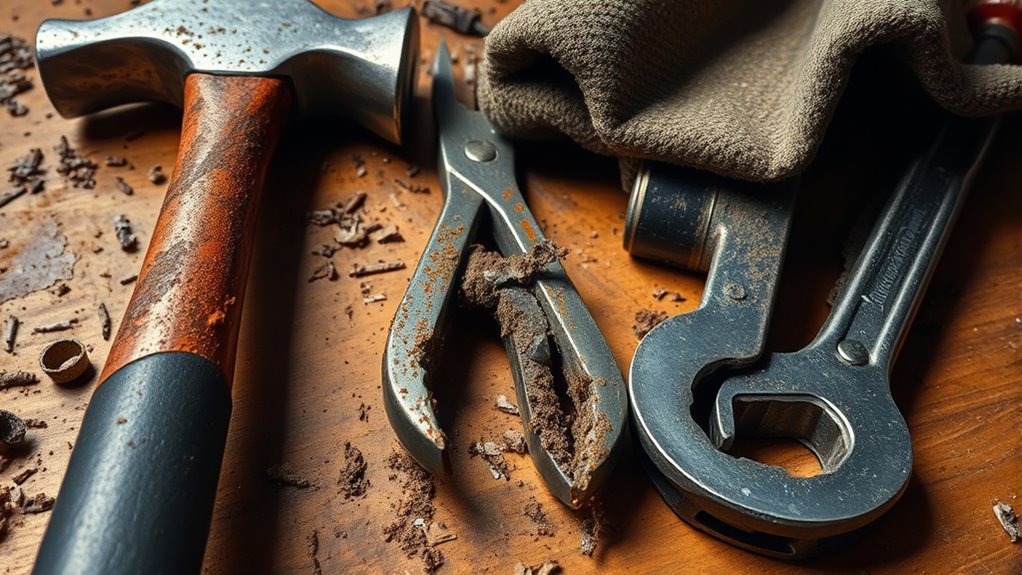
Knowing when to repair or replace your tools is essential to maintaining safety and efficiency in your work. If a tool is dull, consider tool sharpening to restore effectiveness. When handles are cracked, splintered, or loose, handle replacement is necessary to prevent accidents. Also, evaluate the overall condition—if rust or residue has compromised the blade or working parts beyond cleaning, replacement might be the best option.
Here are key indicators:
- Dull blades or edges that can’t be sharpened effectively
- Damaged or loose handles that compromise safety
- Excessive rust or residue affecting performance
Deciding between repair and replacement depends on the severity of damage and cost-effectiveness. Prioritize safety and precision to keep your tools in top shape.
DIY Tips for Quick Fixes
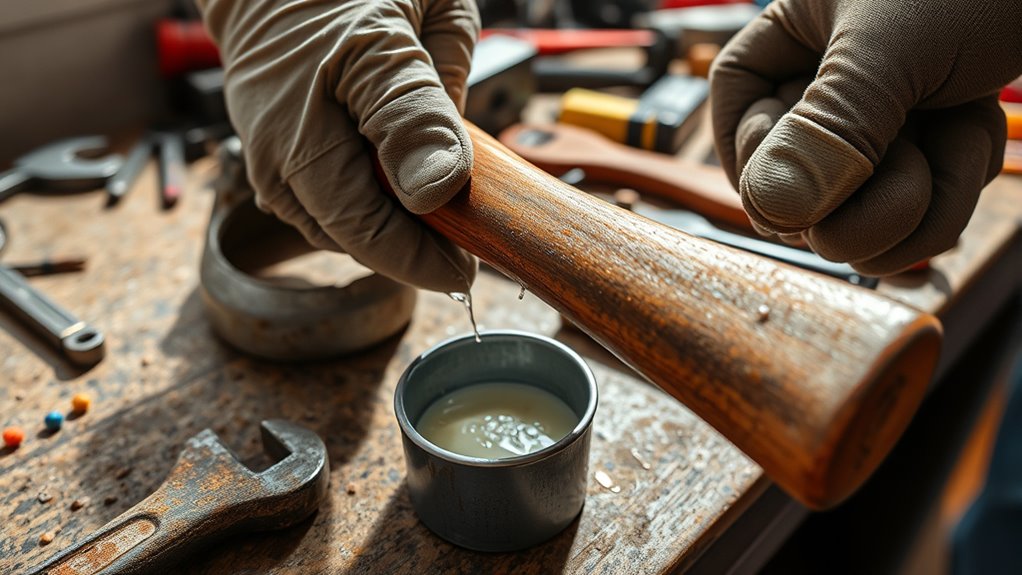
When you need a quick fix for your tools, simple adjustments can save you time and prevent costly replacements. For hand tools, check the grip and handle ergonomics—tighten loose screws or replace worn grips to improve comfort and control. If your tools feel awkward or slip during use, adjusting their alignment can boost efficiency. For power tools, regular calibration ensures accuracy; use manufacturer guidelines to recalibrate blades or settings. Keep blades sharp and replace worn parts promptly. Lubricate moving components to prevent sticking and ensure smooth operation. Simple maintenance like cleaning residue and tightening loose parts can drastically improve performance. These quick fixes help maintain your tools’ reliability, extend their lifespan, and keep your work efficient without needing advanced repairs.
Expert Tips for Tool Care Mastery
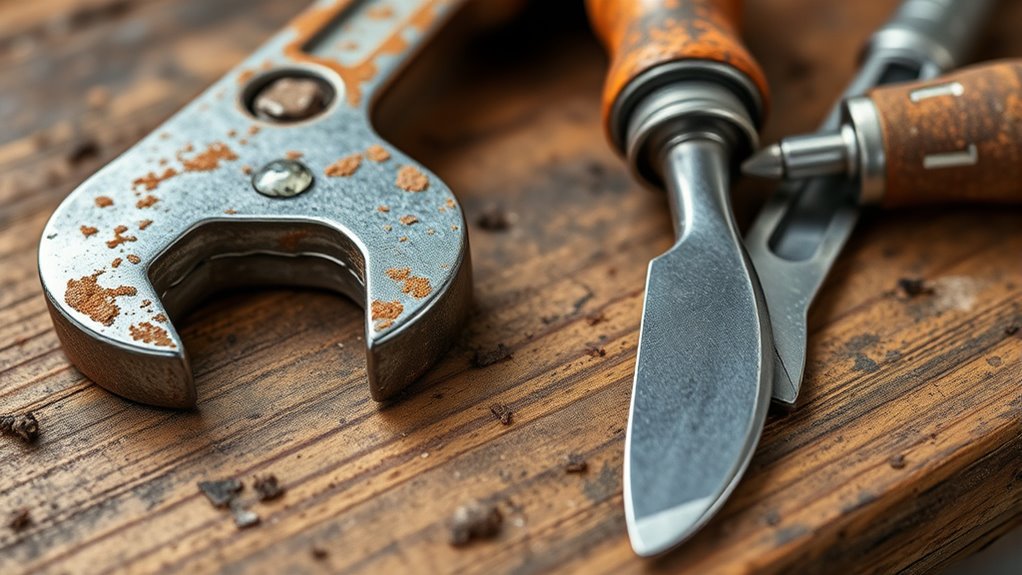
Mastering tool care requires consistent attention and adopting proven techniques that extend their lifespan and guarantee ideal performance. To do this effectively, focus on these expert tips:
Consistent tool care extends lifespan and ensures optimal performance with expert maintenance and safety practices.
- Always prioritize power tool safety by unplugging or turning off tools before cleaning or maintenance, preventing accidents.
- Regularly inspect and clean tools to remove rust and residue, ensuring smooth operation and reducing handle sticky issues.
- Choose ergonomic tool design when selecting new tools, as they reduce fatigue and improve control, prolonging their usability.
Frequently Asked Questions
How Often Should I Inspect My Tools for Rust or Damage?
You should inspect your tools for rust or damage every time you use or store them. Regular checks help prevent issues from worsening. When storing tools, make sure they’re dry and properly cleaned to reduce rust risk. Also, include tool sharpening in your routine maintenance to keep blades and edges effective. Frequent inspections guarantee your tools stay in good condition, making your work safer and more efficient.
Are There Eco-Friendly Options for Rust Removal?
Think of eco-friendly rust removers as gentle giants fighting grime without harming Mother Earth. You can opt for natural cleaning solutions like vinegar, lemon juice, or baking soda, which are effective and safe. These natural options break down rust just as powerfully as chemical ones but leave no toxic footprints. By choosing eco-friendly rust removers, you protect the environment and keep your tools in top shape, naturally.
Can Homemade Solutions Damage My Tools?
Yes, homemade solutions can damage your tools if not used carefully. DIY rust removers like vinegar or baking soda are generally safe when applied correctly, but overexposure or improper dilution can cause corrosion or degrade the metal. Follow proper tool maintenance tips to avoid damage, such as rinsing thoroughly and drying completely. Always test a small area first and stick to eco-friendly DIY rust removers to protect your tools and the environment.
What Signs Indicate a Tool Needs Replacing Rather Than Repairing?
You’ll want to take into account replacing your tool when signs of wear point to a limited tool lifespan. Look for cracks, rust, or significant bending, which indicate it’s no longer safe or effective. If repairs don’t restore functionality or if the tool’s performance continues to decline, it’s time for a replacement. Recognizing these replacement indicators helps ensure safety and efficiency in your work, preventing further damage or injury.
How Do I Prevent Handles From Becoming Sticky Over Time?
To prevent handles from becoming sticky over time, regularly apply handle lubrication to keep the material smooth and prevent residue buildup. Consider using handle wrapping with rubber or grip tape, which adds a barrier against dirt and moisture. Make it a habit to clean your tools after each use and reapply lubrication as needed. These steps help maintain a comfortable grip and extend your tools’ lifespan.
Conclusion
With these tips, your tools will stay in peak condition, ready to conquer any project like superheroes in a toolbox army. Say goodbye to rust storms, residue monsters, and sticky handle nightmares—your tools will glide, grip, and shine like they’re brand new. Mastering tool care isn’t just maintenance; it’s releasing a powerhouse of performance. Get ready to turn your toolbox into a fortress of flawless, unstoppable tools that never quit!
Fall Picks
fall essentials
As an affiliate, we earn on qualifying purchases.