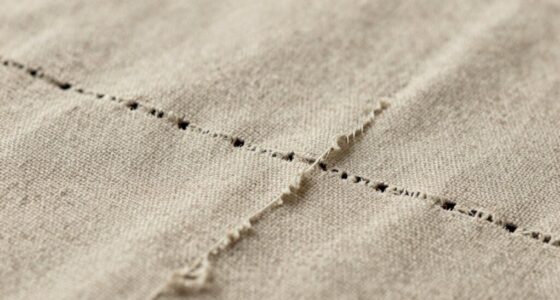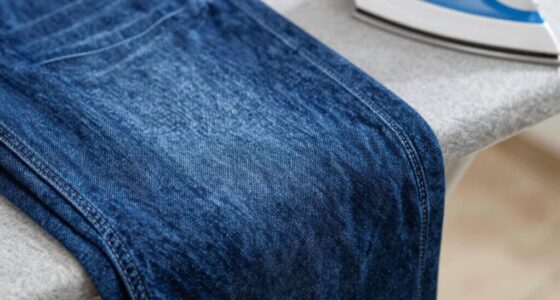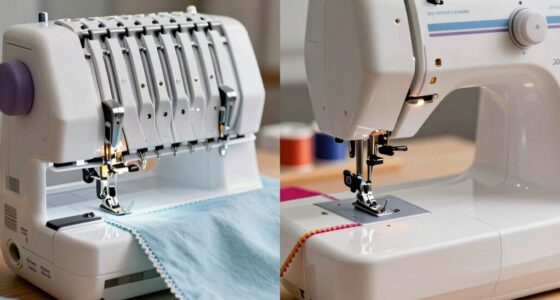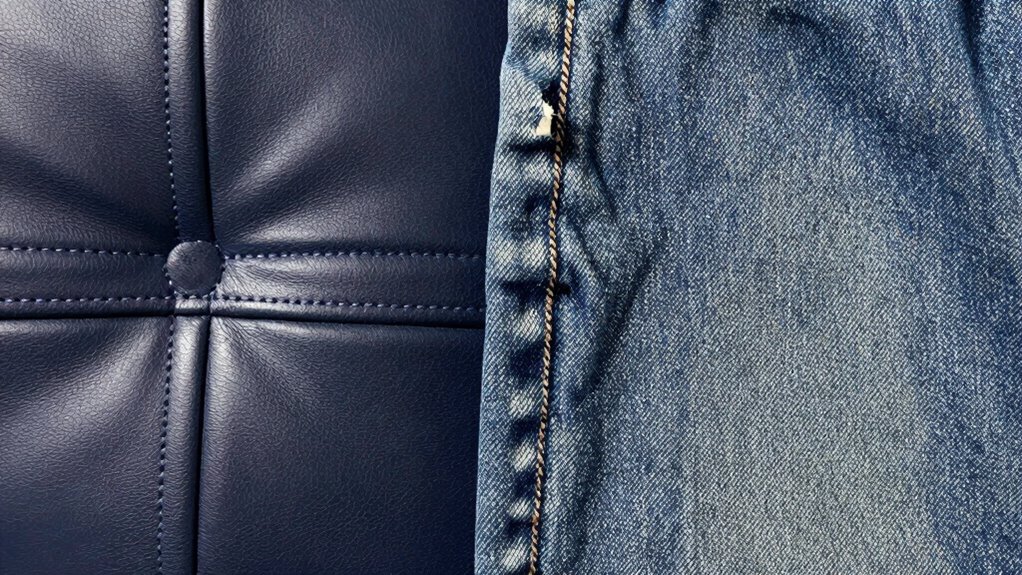

Your topstitching looks great on one project and terrible on another because it all comes down to machine settings, tension, thread choice, and needle size. When you don’t adjust these properly for each fabric, stitches can become puckered, loose, or uneven. Consistency is key, and testing on scrap fabric helps you get it just right. Keep exploring these factors, and you’ll find ways to achieve flawless topstitching every time.

Get tools and workshop supplies delivered free — and shop member deals
- Fast, free delivery on millions of items
- Access to Prime Big Deal Days deals on October 6–7
- Prime Video, Amazon Music and more included
Key Takeaways
- Inconsistent machine settings, such as stitch length and tension, cause uneven topstitching quality.
- Using incompatible or improperly matched thread and needle affects stitch appearance.
- Variations in fabric type and thickness influence how topstitching looks and holds.
- Lack of practice or testing on scrap fabric leads to unpredictable, uneven results.
- Poorly maintained or improperly adjusted equipment results in inconsistent stitch regulation.
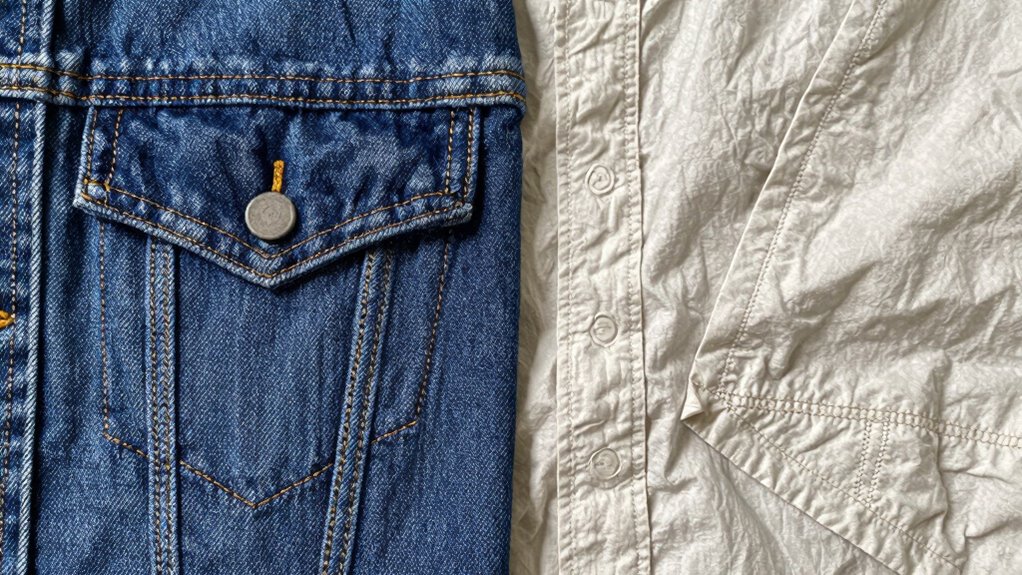
Are you looking to elevate your sewing projects with polished, professional-looking details? Topstitching can make a big difference, but it’s not always as straightforward as it seems. Sometimes, your topstitching looks crisp and clean, and other times, it appears uneven or sloppy. The key to consistent, attractive topstitching lies in understanding your machine settings and thread selection. These elements are the foundation of a good topstitch, and getting them right makes all the difference.
First, consider your machine settings. The stitch length is crucial—generally, a slightly longer stitch, around 3.0 to 3.5 mm, works well for topstitching because it provides a visible, even line. Too short, and the stitches might look crowded or puckered; too long, and they can appear loose or uneven. Also, pay attention to your tension. Proper tension ensures the stitches sit flat and don’t pucker or skip. If your tension is too tight, the fabric will draw up, creating a puckered look. Too loose, and the stitches may look loose or uneven. Practice on scrap fabric to dial in these settings before working on your actual project. Additionally, understanding your machine’s stitch regulation can help you maintain consistent stitch length throughout your project.
Adjust stitch length to 3.0–3.5 mm for neat, even topstitching; fine-tune tension for flat, professional results.
Thread selection plays a significant role in how your topstitching turns out. Using a heavier or contrasting thread can add a professional touch, but it also requires careful consideration of your machine’s capabilities. For instance, a thicker thread might need a larger needle size to prevent breakage or skipped stitches. Conversely, if you want a subtle finish, choose a thread that closely matches your fabric color. The type of thread matters, too—polyester or cotton threads are common choices for topstitching because they’re durable and easy to work with. Make sure you’re using a thread that feeds smoothly through your machine without tangling or breaking.
When both your machine settings and thread selection are optimized, your topstitching will look more consistent and polished. If your topstitching looks terrible on one project but great on another, it’s often because of these factors. Maybe you’re using the wrong thread weight, or your tension isn’t balanced. Perhaps your stitch length is inconsistent, or you haven’t tested your settings on scrap fabric first. Small adjustments can make a huge difference, so don’t be afraid to experiment. Take the time to set up your machine properly and choose the right thread, and you’ll find that topstitching becomes one of your favorite finishing touches rather than a frustrating task.
topstitching sewing machine foot
As an affiliate, we earn on qualifying purchases.
As an affiliate, we earn on qualifying purchases.
Frequently Asked Questions
Can Topstitching Be Done With a Regular Sewing Machine?
Yes, you can do topstitching with a regular sewing machine. To get professional results, adjust your fabric tension so the stitches stay even, and choose a thread color that complements or contrasts your fabric for the desired effect. Keep your machine’s stitch length slightly longer, and test on scrap fabric first. This guarantees your topstitching looks polished, whether you’re adding detail or reinforcement.
What Types of Threads Work Best for Visible Topstitching?
They say, “You get what you pay for,” and that’s true for topstitching threads. For visible topstitching, choose a thread color that complements or boldly contrasts your fabric. Opt for a thicker thread for a more prominent look, but make sure your machine can handle it without skipping stitches. Polyester or heavy-duty cotton threads work best—they’re durable, smooth, and provide a professional finish.
How Do I Fix Uneven Topstitching?
To fix uneven topstitching, start by checking your sewing machine calibration to guarantee even tension and stitch length. Then, prepare your fabric by pressing it thoroughly to prevent shifting. Use pins or clips to stabilize your fabric as you sew. Adjust your sewing speed if needed, and sew slowly along the edge for control. Regularly inspect your stitches and make small adjustments to achieve smooth, even topstitching.
Is Topstitching Suitable for All Fabric Types?
Topstitching isn’t suitable for all fabric types because fabric compatibility varies. Light and delicate fabrics like silk or chiffon may get damaged or look bulky when topstitched, while denim or heavy cotton generally work well. You should adjust your topstitching techniques based on the fabric you’re using. Test on a scrap first to make certain the stitches look neat and lay flat, preventing puckering or damage.
How Does Stitch Length Affect Topstitching Appearance?
Ever wonder why your topstitching looks uneven? Stitch length directly impacts its appearance, affecting fabric tension and stitch density. A shorter stitch length creates a dense, precise look, while a longer length can appear loose and uneven. Adjusting stitch length helps you balance tension and density, ensuring your topstitching is neat and professional. Experiment with different lengths to see what works best for your fabric and project.
adjustable sewing machine tension dial
As an affiliate, we earn on qualifying purchases.
As an affiliate, we earn on qualifying purchases.
Conclusion
So, next time your topstitching doesn’t turn out as planned, remember it’s all about the fabric, tension, and technique. Don’t believe the myth that topstitching is always tricky—practice makes perfect, and it’s worth experimenting. With a little patience, you’ll see how small adjustments can make a big difference. Trust your instincts, learn from each project, and soon, topstitching will be your favorite finishing touch that truly elevates your work.
As an affiliate, we earn on qualifying purchases.
sewing machine needle size for topstitching
As an affiliate, we earn on qualifying purchases.
As an affiliate, we earn on qualifying purchases.
Fall yard work Picks
leaf blowers
As an affiliate, we earn on qualifying purchases.