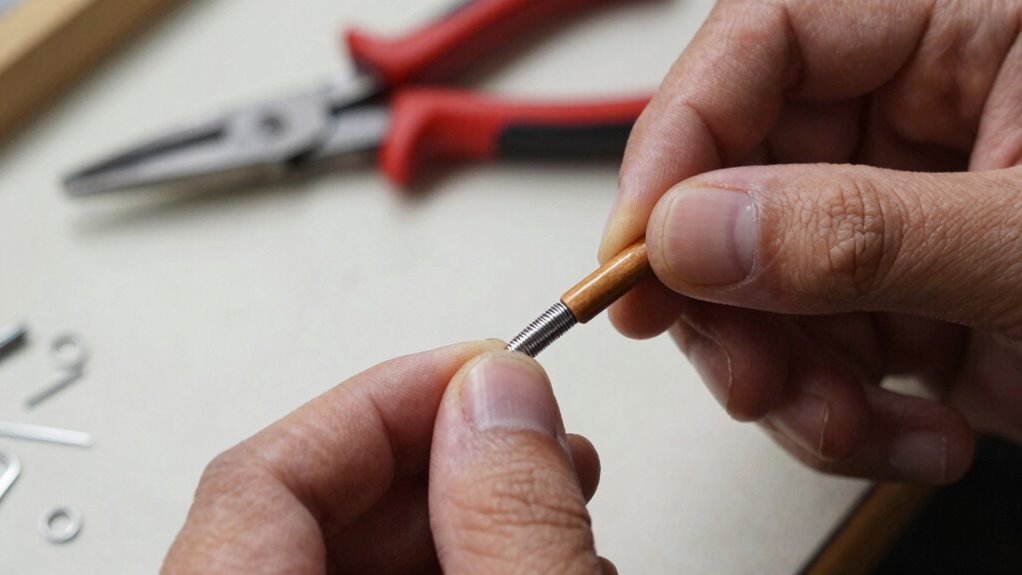

To create cleaner wrapped loops and connections, focus on precise organization and consistent techniques. Plan your layout carefully to minimize crossing lines and keep related elements close. Use smooth, logical curves and maintain uniform coil sizes for wrapping loops. Reroute connections to avoid overlaps and break long paths into segments for clarity. Regularly review and adjust your work, applying visualization methods to improve spatial understanding. Keep practicing these habits to develop professional-looking, streamlined diagrams—there’s more to master in the details.

Get business pricing on tools and workshop supplies
- Business-only prices and quantity discounts
- Tax-exempt purchasing
- Multiple users, one account, clear invoices
Key Takeaways
- Use consistent coil sizes and uniform wrapping techniques to enhance visual clarity.
- Reroute connections to avoid overlaps and unnecessary twists.
- Keep loops close to connection points with small gaps for better readability.
- Break long or complex connections into segments for a tidy appearance.
- Regularly review and adjust wire paths for optimal organization and minimal clutter.
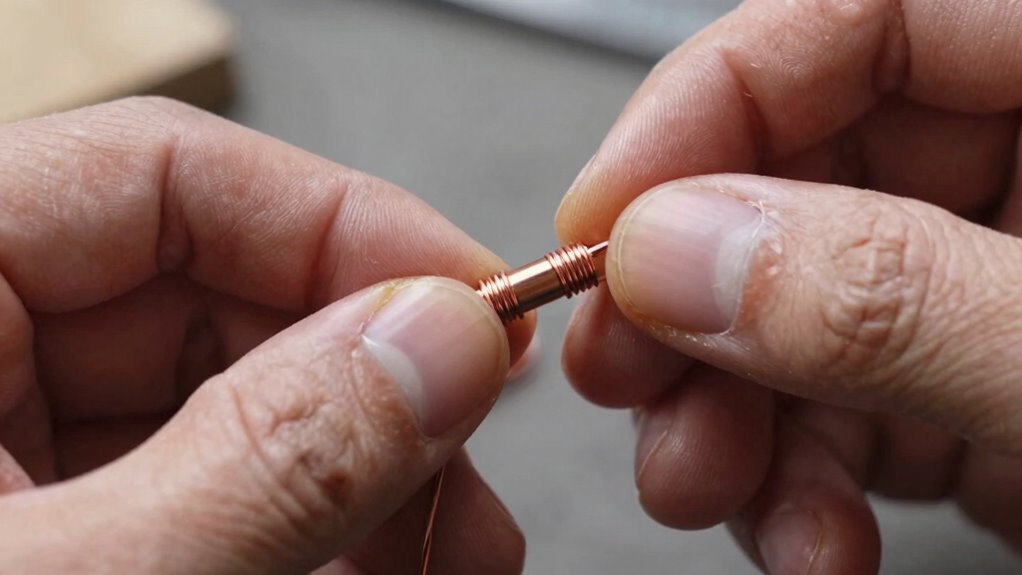
Have you ever struggled with messy loops and tangled connections that make your projects look cluttered and hard to follow? If so, you’re not alone. Untidy connections can quickly turn an otherwise clean design into a confusing jumble. To improve the overall look and functionality of your work, focus on wireframe optimization and connection readability. These two elements are key to creating cleaner wrapped loops and connections that are both visually appealing and easy to interpret.
First, consider how you organize your wireframe. Clear, logical pathways make a huge difference. When you plan your layout, think about the flow of connections—try to minimize crossing lines and keep related elements close together. Using a grid or snapping features can help align your connections precisely, reducing unnecessary bends and overlaps. When you optimize your wireframe, you’re effectively streamlining the path your connections follow, which results in a neater, more structured appearance. This process not only enhances visual clarity but also makes troubleshooting and future edits much easier. Incorporating principles of wireframe organization can significantly enhance the clarity of your design, especially when you pay attention to the visual hierarchy. Paying attention to connection flow can further improve the overall readability of your design. Additionally, establishing consistent spacing and alignment techniques ensures your connections remain tidy and easy to follow. Maintaining a clear connection structure helps prevent the buildup of visual clutter and makes your diagram more intuitive.
Organize your wireframe with clear paths, minimize crossings, and use grids for precise, tidy connections.
Connection readability is another critical factor. To achieve this, aim for consistency in how you wrap your loops. Avoid overly tight or loose wraps, as they can create unnecessary clutter. Instead, use uniform coil sizes and smooth curves that follow a logical direction. When wrapping, keep loops close to the connection points without crowding them. Adding small gaps between loops can improve clarity and prevent the design from looking congested. Color-coding or varying line weights can also help distinguish different connection types, making the entire diagram easier to understand at a glance. By paying attention to connection readability, you make your design accessible not just for yourself but for anyone else who needs to interpret or modify it later. Regularly reviewing your work helps identify areas where connections can be simplified or rerouted for better clarity.
Furthermore, always review your work from multiple angles. Rotate your view to spot tangled sections or overlapping loops that might be hidden from a straight-on perspective. Don’t hesitate to simplify complex areas by breaking long connections into smaller segments or rerouting them entirely. This approach keeps your loops clean and prevents the buildup of unnecessary twists, resulting in a more elegant overall design. Incorporating visualization techniques can help you better understand the spatial relationships within your wireframe.
In essence, creating cleaner wrapped loops and connections hinges on a combination of wireframe optimization and connection readability. When you plan your layout carefully, maintain consistent wrapping techniques, and review your work thoroughly, you can markedly improve the clarity and professionalism of your projects. With practice, these habits become second nature, transforming cluttered, confusing designs into streamlined, easy-to-follow diagrams that stand out for their precision and neatness.
As an affiliate, we earn on qualifying purchases.
Frequently Asked Questions
How Do I Troubleshoot Tangled or Overlapping Loops?
To troubleshoot tangled or overlapping loops, start by simplifying your loops to improve connection clarity. Use loop simplification techniques like straightening or rerouting lines to reduce overlaps. You can also break complex loops into smaller sections, making each connection clearer. Adjust the positioning of your loops to prevent overlaps, and guarantee your connections follow a logical flow. These steps will make your diagram more organized and easier to understand.
What Tools Can Help Visualize Cleaner Connections?
You can’t miss the power of visualization software when it comes to creating cleaner connections; it’s like a superhero tool for your workflow! Use it for connection mapping, which clearly shows how everything links together, making tangled loops a thing of the past. These tools help you see overlaps and overlaps, so you can easily untangle and optimize. Embrace visualization software and watch your connections become crystal clear and expertly organized.
How Can I Optimize Loops for Complex Projects?
To optimize loops for complex projects, focus on loop simplification and establishing a clear connection hierarchy. Break down large loops into smaller, manageable ones, reducing clutter and improving readability. Use consistent naming conventions and organize connections logically, which clarifies data flow. This approach makes debugging easier and enhances overall project efficiency, ensuring your loops remain structured and easy to follow as your project scales.
Are There Best Practices for Naming Connections?
For connection naming, you should be consistent and descriptive, making it easier to identify each connection’s purpose. Use clear, concise names that reflect their role within your loop organization, such as “Input_A” or “Output_B.” Avoid overly generic names. Keep your naming conventions uniform across your project. This practice guarantees quick understanding and efficient troubleshooting, especially in complex projects where multiple connections intertwine.
How Do I Prevent Loops From Becoming Too Cluttered?
Imagine a tangled web of vines, each representing a connection. To prevent your loops from becoming cluttered, prioritize loop organization by grouping related connections and using clear, consistent naming conventions. Keep connections minimal and direct, avoiding unnecessary crossings. Visual cues like color coding or labels enhance connection clarity, making it easier to trace paths. Regularly review and untangle your connections to maintain a clean, manageable workflow, much like pruning a garden.
As an affiliate, we earn on qualifying purchases.
Conclusion
Mastering cleaner loops and connections isn’t just a skill—it’s the secret sauce to transforming your entire workflow into a symphony of efficiency. When you refine your technique, you’ll gain access to a level of clarity so profound that even the most tangled projects will seem like a breeze. Embrace these practices, and watch your creations evolve from chaotic chaos into sleek, seamless masterpieces—so polished, so flawless, they’ll make perfection itself look like average!
As an affiliate, we earn on qualifying purchases.
professional wiring diagram pens
As an affiliate, we earn on qualifying purchases.
As an affiliate, we earn on qualifying purchases.
Fall Picks
fall essentials
As an affiliate, we earn on qualifying purchases.