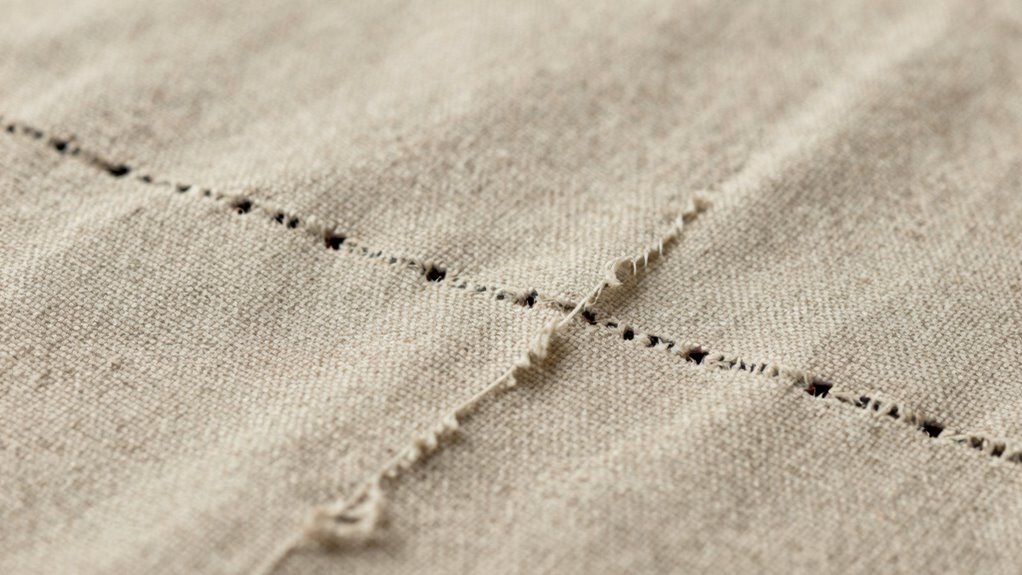

Your needle holes reveal important tension clues that affect stitch quality. Tight, puckered holes indicate high tension, while loose or stretched holes suggest tension is too low. Irregular or distorted holes mean your tension needs adjusting. The size of the needle eye also impacts hole shape and thread flow, affecting tension. Paying attention to these patterns helps you troubleshoot quickly. If you keep exploring, you’ll discover how to fine-tune your tension for perfect stitches every time.

Get business pricing on tools and workshop supplies
- Business-only prices and quantity discounts
- Tax-exempt purchasing
- Multiple users, one account, clear invoices
Key Takeaways
- Irregular or distorted needle holes indicate improper tension adjustments needing correction.
- Tight, puckered holes suggest too high tension, while loose, stretched holes show low tension.
- Consistent, evenly spaced needle holes reflect optimal tension and proper machine settings.
- Needle eye size affects thread tension, influencing hole shape and stitch quality.
- Observing needle hole patterns helps diagnose tension issues for improved sewing results.
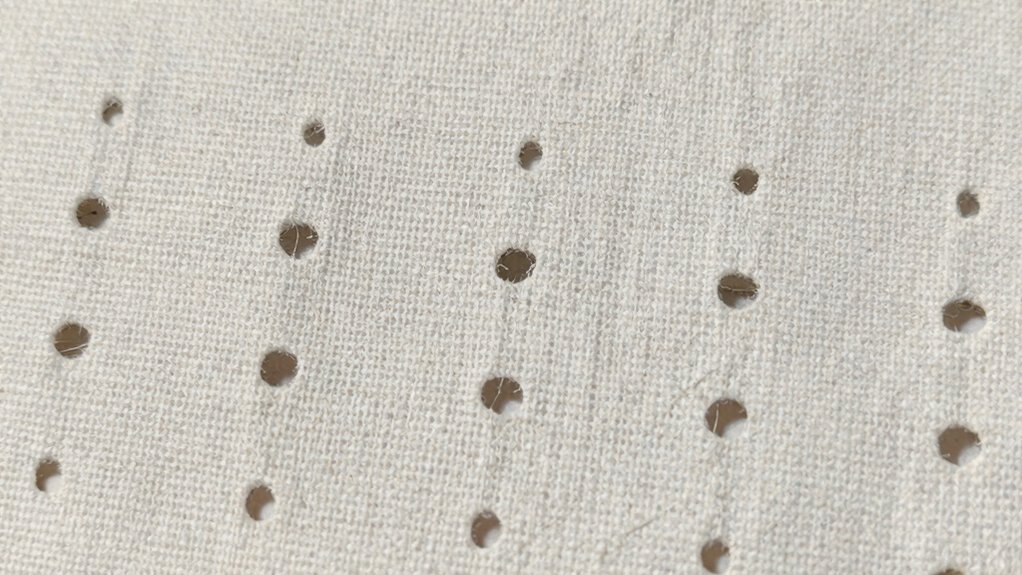
When examining fabric or paper, the pattern of needle holes can reveal more than just the intended stitching. It often provides clues about the tension in your fabric and the settings of your sewing machine. Pay close attention to how the holes are formed—this can tell you whether your fabric tension is too tight, too loose, or just right. When fabric tension is uneven or improperly set, it affects how the needle interacts with the material, resulting in irregular or distorted holes. If the needle holes look tight and puckered, it usually indicates that your tension is too high. Conversely, if the holes are loose or stretched out, your tension might be too low. Recognizing these signs helps you make immediate adjustments, ensuring your stitches are smooth and even.
Another critical factor is the needle eye size. The size of the needle eye directly influences how the thread passes through the fabric, impacting the appearance of the needle holes. A needle with a small eye can restrict thread movement, causing more tension on the thread, which may lead to tighter, more puckered holes. On the other hand, a larger eye allows for smoother thread flow, reducing unnecessary tension and creating more uniformly spaced holes. When inspecting the needle holes, consider whether the holes are consistent with the needle size you’re using. If you notice irregular or misshapen holes that don’t match your needle’s specifications, it might be time to switch to a different needle size. Proper needle eye size ensures the thread moves freely, decreasing tension-related issues and preventing damage to delicate fabrics. Proper needle selection plays a vital role in achieving consistent stitch quality. Additionally, understanding how different thread types behave can help you better control tension and improve overall stitch appearance.
It’s also worth noting that the pattern of needle holes can reveal the quality of your stitching overall. If the holes are consistently aligned and evenly spaced, your tension and needle size are likely appropriate. If the pattern shows irregularities, then tension adjustments or changing the needle might be necessary. Adjusting tension settings slightly can often resolve issues seen in the needle holes, leading to cleaner, more professional-looking stitches. Additionally, understanding thread tension and how it interacts with fabric and thread can help prevent common sewing problems before they occur. Proper tension control is essential for sewing consistency, especially when working with different fabrics and threads. Remember, different fabrics and threads require different tension levels and needle sizes, so don’t hesitate to experiment until you find the perfect setup. By paying close attention to the pattern of needle holes, you gain a simple yet powerful tool for diagnosing and fixing tension issues, ultimately improving your sewing results and prolonging the life of your needle and fabric.
As an affiliate, we earn on qualifying purchases.
Frequently Asked Questions
How Can Tension Affect Sewing Needle Holes?
Tension affects sewing needle holes by influencing how your stitches form and how neat they look. If your thread tension is too tight, it pulls the fabric and creates puckering or enlarged needle holes, reducing sewing precision. Conversely, if tension’s too loose, stitches may become uneven or loose, also harming the overall quality. Adjusting your thread tension properly guarantees cleaner, more precise stitches and minimizes the appearance of unwanted needle holes.
Are Tension Issues Visible in the Fabric?
Yes, tension issues are visible in the fabric, especially through uneven thread smoothness and inconsistent needle penetration. When tension is too tight or too loose, the stitches may look puckered or loose, revealing irregularities. You can often see these signs around the needle holes, as poor tension causes the stitches to pull or gather fabric. Adjusting your machine’s tension settings can help achieve even stitches and hide these tension-related imperfections.
Can Tension Problems Cause Fabric Puckering?
Yes, tension problems can cause fabric puckering. When your tension isn’t balanced, it affects fabric stretch, leading to uneven stitches and puckers. Sewing speed also plays a role—if you sew too fast, tension may become inconsistent, worsening puckering. To fix this, check your tension settings and adjust them for your fabric type. Slowing down your sewing speed helps maintain even tension, reducing puckering and creating smooth, professional-looking seams.
How Do I Identify Tension Problems Early?
You can identify tension problems early by paying close attention to your stitches. If you notice uneven thread tension, skipped stitches, or puckering, check your sewing machine calibration and adjust the thread tension accordingly. Regularly test stitches on scrap fabric, especially before starting a project, to guarantee the tension is balanced. Staying vigilant helps catch issues early, preventing more significant problems like fabric puckering or broken threads later on.
Does Thread Tension Influence Needle Hole Appearance?
Thread tension influences needle hole appearance like a painter’s brushstroke, affecting how neat or puckered your stitches look. When you choose the right thread and adjust stitch length, the holes become less noticeable, creating a cleaner finish. Too tight tension causes puckering, while too loose results in loose stitches. Proper thread choice and stitch length help you achieve balanced tension, making needle holes look smooth and professional.
adjustable sewing machine tension dial
As an affiliate, we earn on qualifying purchases.
As an affiliate, we earn on qualifying purchases.
Conclusion
Next time you notice tiny holes in your fabric or thread, remember they’re more than just imperfections—they’re whispers of tension. Like cracks in a mirror revealing hidden truths, these needle holes hint at unseen pressures beneath the surface. Embrace them as clues, guiding you to better understand your craft and yourself. In the delicate dance of stitches, every tiny hole tells a story—listen closely, and you’ll unravel the secrets woven into your work.
As an affiliate, we earn on qualifying purchases.
As an affiliate, we earn on qualifying purchases.
Fall yard work Picks
leaf blowers
As an affiliate, we earn on qualifying purchases.