To pick better lighting for color-accurate craft work, choose high-CRI LED bulbs with a color temperature around 5000K to mimic natural daylight. Position your lights to minimize shadows and glare, ensuring even illumination across your workspace. Supplement natural light with artificial lighting if needed, but avoid relying solely on incandescent bulbs, which can distort colors. Properly balanced lighting helps you see true, vibrant colors and precise details—keep exploring to discover even more helpful tips.

Get business pricing on tools and workshop supplies
- Business-only prices and quantity discounts
- Tax-exempt purchasing
- Multiple users, one account, clear invoices
Key Takeaways
- Choose high-CRI LED bulbs around 5000K for true, vibrant color rendering.
- Position lighting to minimize shadows and glare, ensuring even illumination.
- Incorporate natural daylight when possible for the most accurate color perception.
- Avoid incandescent bulbs for color-critical tasks due to their lower CRI and warmer tone.
- Balance artificial and natural light to maintain consistent, true color viewing conditions.
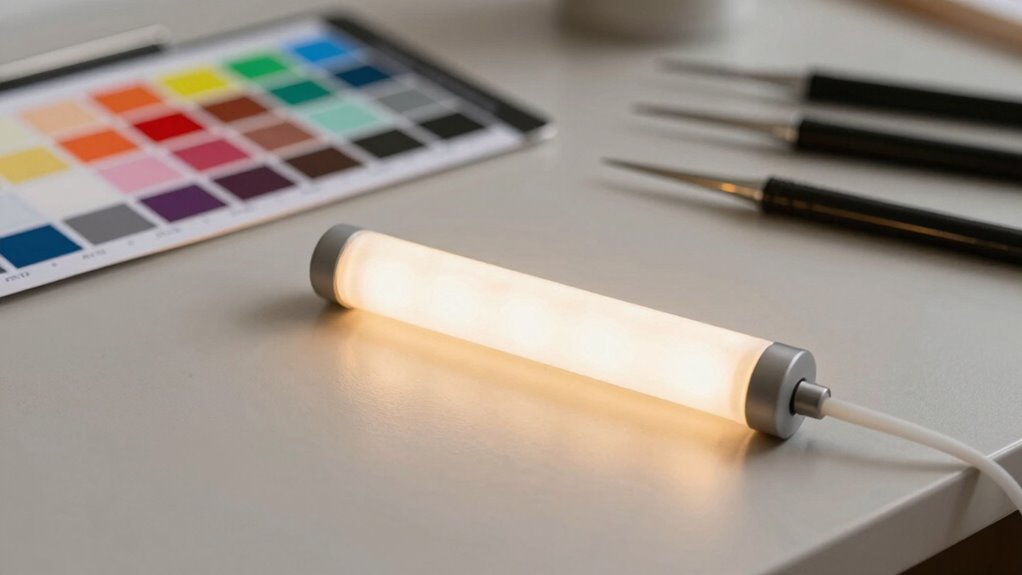
Good lighting is crucial for guaranteeing your craft work displays true, accurate colors. When you’re working on projects that demand color precision, the type of light you choose can make a significant difference. Two common options are LED and incandescent lights, each with their own advantages and drawbacks. LED lights are energy-efficient, long-lasting, and produce minimal heat, making them a popular choice among crafters. They also tend to have a higher color rendering index (CRI), which means they show colors more vividly and accurately. Incandescent bulbs, on the other hand, emit a warm, soft glow that many find comfortable for extended work sessions, but they often have a lower CRI and can distort colors, especially in delicate projects.
Good lighting ensures your craft colors are true and vibrant, with LED and incandescent options offering distinct advantages and challenges.
While LED lighting offers a more consistent and true-to-life representation of colors, it’s important to contemplate the light’s color temperature. Look for LED bulbs with a color temperature around 5000K, which closely mimics natural daylight and enhances color accuracy. Incandescent bulbs usually have a warmer color temperature, around 2700K to 3000K, which can cast a yellowish hue over your work, making it harder to judge the true colors of your craft materials. This is where understanding natural light benefits becomes crucial. Natural daylight provides the most accurate color rendering because it contains all visible wavelengths evenly. Whenever possible, position your workspace near a window or in a room that receives ample daylight to see your colors in their true form.
If natural light isn’t an option, choosing the right artificial light becomes essential. LED lights with a high CRI and a daylight color temperature will closely replicate natural light, helping you distinguish subtle color differences and avoid misjudging hues. Incandescent bulbs, while pleasant, may not serve well for color-sensitive tasks because their warm glow can skew your perception of colors. Using natural light benefits include better color differentiation and less fatigue on your eyes, so it’s worth optimizing your workspace to maximize its presence. Additionally, being aware of the color rendering index (CRI) can help you select lights that offer the most accurate color representation for your craft projects.
Furthermore, considering the placement of lighting in your workspace can significantly impact how well you see colors, so aim to position lights to minimize shadows and glare. Ultimately, balancing artificial lighting with natural light whenever possible will give you the best results. Opt for high-CRI LED bulbs with a daylight color temperature to see your craft materials accurately. If natural light is limited, supplement with LED lighting designed for color accuracy. Avoid relying solely on incandescent bulbs for tasks where color precision is critical, as their warm glow can distort your view. By carefully selecting lighting that mimics natural daylight, you’ll guarantee your craft work looks vibrant, true to color, and professional every time.
As an affiliate, we earn on qualifying purchases.
Frequently Asked Questions
What Type of Light Bulb Is Best for Color Accuracy?
You should choose LED bulbs with a high Color Rendering Index (CRI) of 90 or above for color accuracy. Opt for bulbs with a color temperature around 5000K to 6500K, mimicking natural daylight. Also, look for fixtures that provide good light diffusion to minimize glare and shadows. This combination guarantees your craft work’s colors appear true and consistent under your lighting, helping you produce precise, vibrant results.
How Does Ambient Lighting Affect Craft Color Perception?
Like a painter’s sky, ambient lighting sets the mood for your craft’s true colors. It influences how you perceive color temperature and affects light diffusion, which can distort or enhance your work’s hues. Poor ambient lighting creates shadows and color shifts, making it harder to judge accurate shades. To achieve better color perception, guarantee your environment has consistent, neutral lighting that minimizes glare and promotes even light diffusion.
Can Natural Light Be Consistently Used for Color-Critical Work?
Natural light can be challenging for consistent color-critical work because of its variability. Its consistency depends on weather, time of day, and season. To guarantee accurate colors, you might use daylight simulation bulbs or light fixtures that mimic natural daylight. These provide a steady, controllable source, reducing the impact of natural light fluctuations. Relying on consistent daylight simulation helps you achieve precise, reliable craft work regardless of outdoor conditions.
How Often Should I Replace My Craft Lighting Bulbs?
You should replace your craft lighting bulbs every 15 to 20 months, as LED longevity varies but typically lasts longer than traditional bulbs. An interesting statistic is that LEDs maintain about 70% of their brightness after this period. Keep an eye on bulb color temperature; if it shifts, it’s time for a replacement. Regularly updating your bulbs guarantees consistent color accuracy for your craft work.
Are There Specific Brands Recommended for Color-Accurate Lighting?
You should look for brands like OttLite, Daylight, or Verilux, known for their color-accurate lighting. Choose lights with a high Color Rendering Index (CRI) and a color temperature around 5000K to mimic natural daylight. Opt for fixtures with good light diffusion to avoid harsh shadows and guarantee even illumination. These features help you see true colors and details, making your craft work more precise and enjoyable.
As an affiliate, we earn on qualifying purchases.
Conclusion
Choosing the right lighting isn’t just about brightness; it’s about revealing true colors in a world often filled with shadows and distortions. When you select lighting that mimics natural daylight, you create a space where your craft’s details shine with authenticity. Just as a painter needs the perfect light to see their masterpiece clearly, your craft work demands the right illumination to truly come alive. Brighten your workspace, and let your projects speak their true colors.
color-accurate task lighting for crafts
As an affiliate, we earn on qualifying purchases.
As an affiliate, we earn on qualifying purchases.
As an affiliate, we earn on qualifying purchases.
Fall yard work Picks
leaf blowers
As an affiliate, we earn on qualifying purchases.