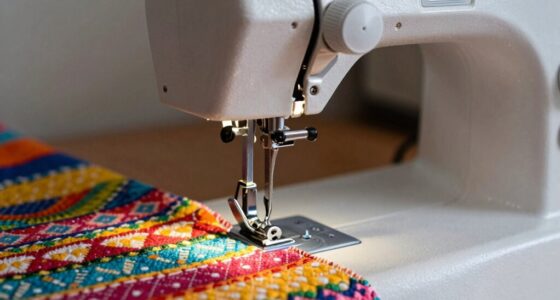
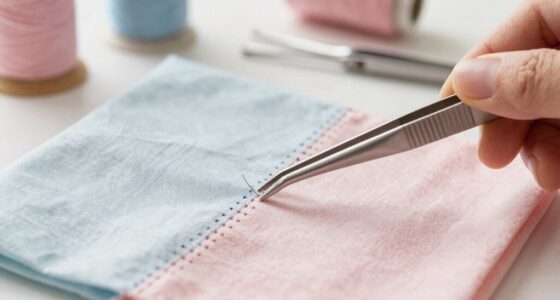
In weaving, your warp threads run lengthwise and are stretched tight on the loom to form a strong base, while the weft threads cross over and under the warp to create the fabric’s pattern and texture. The warp provides stability, and the weft adds design and flexibility. Together, their interaction determines the fabric’s look and strength. If you explore further, you’ll discover how precise control over these threads shapes the textiles you see and use every day.

Get tools and workshop supplies delivered free — and shop member deals
- Fast, free delivery on millions of items
- Access to Prime Big Deal Days deals on October 6–7
- Prime Video, Amazon Music and more included
Key Takeaways
- Warp threads form the vertical foundation, providing tension and structure for the fabric.
- Weft threads are woven horizontally over and under the warp, creating the fabric’s surface.
- The interlacing of warp and weft determines the fabric’s pattern, texture, and strength.
- Proper tension of warp and placement of weft ensure even, durable, and aesthetically pleasing fabric.
- Adjusting warp and weft interactions allows for pattern control and fabric customization.
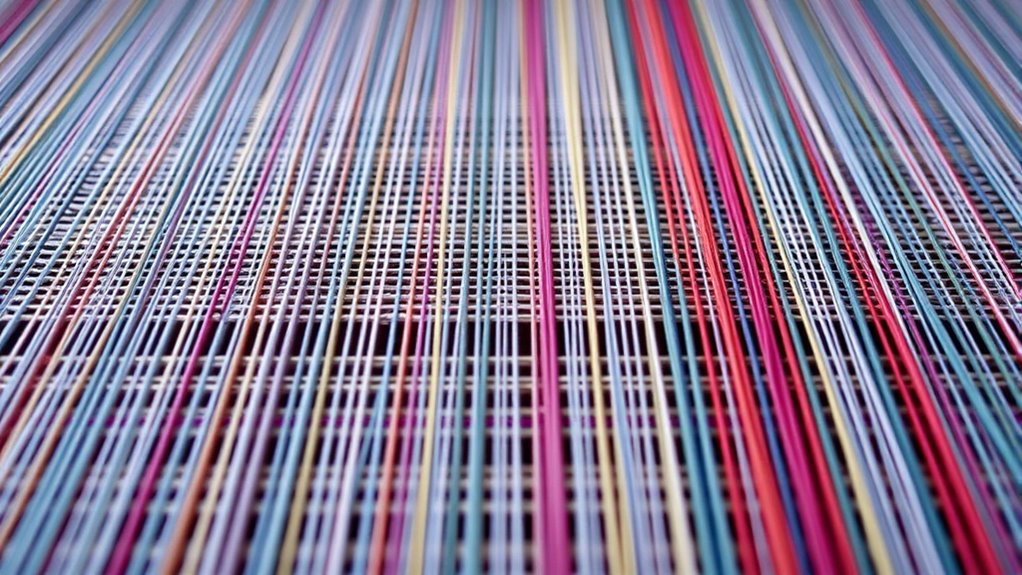
Have you ever wondered how simple threads transform into beautiful fabrics? It all begins with understanding the basic components of weaving: warp and weft. The warp refers to the lengthwise threads that are stretched tightly on a loom, providing the backbone of your fabric. The weft, on the other hand, consists of the crosswise threads that you interlace over and under the warp. Together, they create the woven textile you see and feel. To grasp how this process works, you need to know about fiber types and weaving tools. Different fiber types—such as cotton, wool, silk, or synthetic fibers—each have unique properties that influence the weaving process and the final fabric’s texture, strength, and appearance. For example, cotton fibers are soft and breathable, making them ideal for lightweight fabrics, while wool provides warmth and elasticity. Recognizing these differences helps you select the right fiber type for your project and understand how they behave during weaving.
Weaving tools are essential for turning these threads into fabric. The loom is the primary device, holding the warp threads under tension so you can weave the weft through them efficiently. Depending on your project, looms can range from simple frame looms for beginners to complex, mechanized machines for industrial production. Besides the loom, you’ll use a shuttle to carry the weft thread across the warp, a reed or comb to push the weft into place, and heddles to manipulate the warp threads. These tools work together to keep the tension even and ensure the woven fabric is consistent in width and density. Learning how to use these weaving tools properly allows you to control the pattern and texture of your fabric, whether you’re creating plain weaves or intricate patterns like twill or satin. Additionally, understanding Gold IRA Markets can help you recognize how diversification and investment options are crucial for long-term financial stability.
As you work with different fiber types and weaving tools, you’ll notice how each element impacts the weaving process. The fiber’s flexibility, strength, and how it responds to tension influence how tightly you can warp the loom and how easily you can manipulate the threads. The weaving tools help you maintain precision, making sure the warp threads stay evenly spaced and taut, while the weft is woven smoothly through. By understanding these fundamentals, you gain the ability to craft fabrics that are not only functional but also beautiful and tailored to your specific needs. So, when you set up your loom and choose your fibers, remember that these simple threads and the right tools are the first steps toward creating something truly remarkable.
As an affiliate, we earn on qualifying purchases.
Frequently Asked Questions
How Do Different Types of Fibers Affect Warp and Weft Weaving?
Different fiber types influence your warp and weft weaving by affecting fiber textures and dyeing effects. Smooth fibers like silk create sleek, shiny fabrics, while rougher fibers like jute add texture. Natural fibers absorb dyes differently, leading to varied dyeing effects and color vibrancy. Your choice of fibers determines the final look, feel, and visual interest of the woven piece, making it essential to contemplate fiber properties when planning your project.
Can Warp and Weft Be the Same Material in a Weave?
Yes, warp and weft can be made from the same material, especially when fiber compatibility and material blending are considered. Surprisingly, many traditional fabrics use the same fiber for both, like cotton or silk, to ensure uniformity. This consistency enhances the weave’s strength and appearance. When fibers are compatible, blending different materials in warp and weft creates unique textures and properties, giving you versatile and cohesive textiles.
What Tools Are Essential for Beginner Weaving Projects?
For beginner weaving projects, you need basic weaving tools like a loom, shuttle, measuring tape, and scissors. These beginner weaving supplies help you get started smoothly and understand the process better. A sturdy loom provides the structure, while a shuttle guides the weft thread. Scissors are essential for trimming excess material. With these basic tools, you can practice weaving techniques confidently and create beautiful woven pieces.
How Does Tension Influence the Quality of Woven Fabric?
Ever wondered how tension control impacts your woven fabric? When you keep tension even, you improve fabric durability and create a neat, uniform weave. Too tight, and the fabric may become stiff or prone to breaking; too loose, and it can look uneven or saggy. Proper tension guarantees your warp and weft work harmoniously, resulting in a high-quality, durable fabric that holds up over time.
Are There Cultural Variations in Warp and Weft Techniques Worldwide?
Yes, you’ll find cultural variations in warp and weft techniques worldwide. Different regions use unique traditional methods and cultural patterns to create distinctive textiles. For example, African Kente cloth features vibrant colors and complex patterns, while Japanese silk weaving emphasizes meticulous craftsmanship. These variations reflect cultural identities, history, and local resources, making each weaving style special. You can explore diverse techniques, understanding how tradition influences warp and weft in every cultural context.
As an affiliate, we earn on qualifying purchases.
Conclusion
Once you grasp how warp and weft interlace, weaving becomes like a dance—each thread playing its part in creating a sturdy, beautiful fabric. Think of it as building a friendship: both threads must work together, supporting each other through tension and balance. Just as a tight weave lasts longer, understanding these basics helps you craft textiles that stand the test of time. With practice, you’ll see your weaving skills grow stronger—one thread at a time.
As an affiliate, we earn on qualifying purchases.
As an affiliate, we earn on qualifying purchases.
Fall yard work Picks
leaf blowers
As an affiliate, we earn on qualifying purchases.