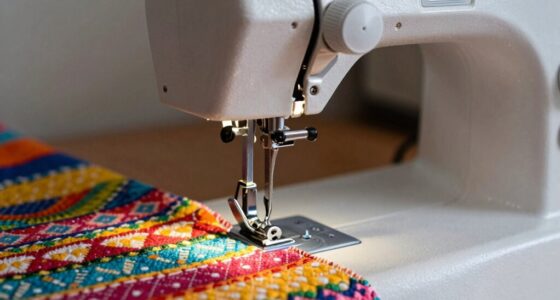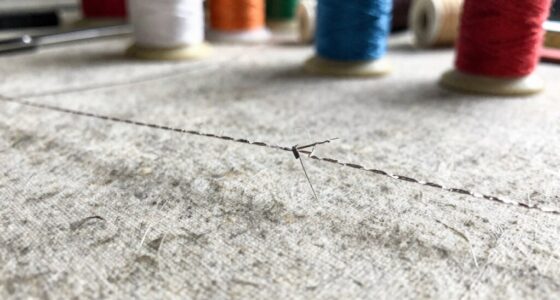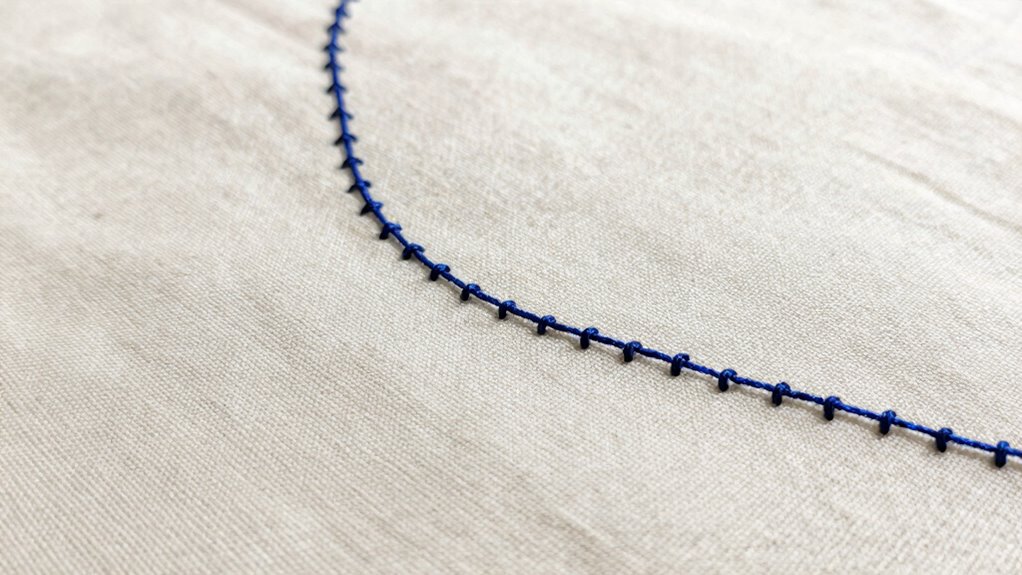
To achieve better hand-stitched curves, you need to focus on controlling your thread tension and choosing the right fabric. Keep your tension balanced—too tight causes puckering, while too loose leads to uneven stitches. Use small, consistent stitches and guide the fabric gently for smooth, precise curves. Understanding fabric behavior and practicing patience will naturally improve your results. Keep exploring these techniques, and you’ll discover even more tips to perfect your curves.

Get tools and workshop supplies delivered free — and shop member deals
- Fast, free delivery on millions of items
- Access to Prime Big Deal Days deals on October 6–7
- Prime Video, Amazon Music and more included
Key Takeaways
- Maintain consistent thread tension to create smooth, even curves and prevent puckering or gaps.
- Use small, deliberate stitches for better control along curved edges.
- Select fabrics suitable for hand-stitching, like tightly woven cotton or linen, and stabilize challenging fabrics.
- Gently guide and manipulate fabric, adjusting tension and technique based on fabric response.
- Practice patience and develop awareness of fabric behavior to refine stitch quality over time.
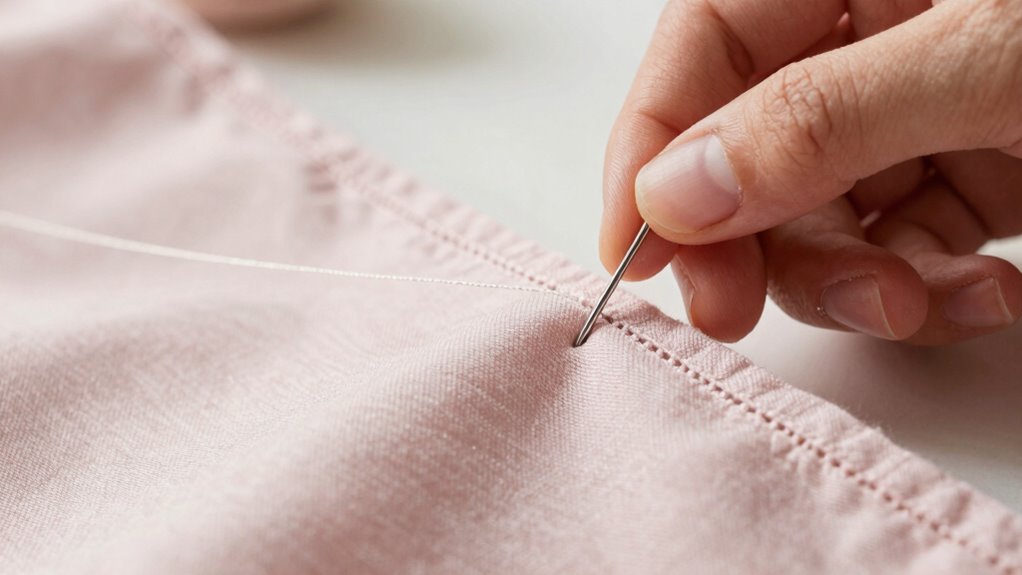
Mastering smooth, even curves in hand-stitching can substantially elevate your sewing projects, but achieving consistent results often feels elusive. The key lies in understanding how to manage your thread tension and make smart fabric selections. When you’re working on curves, loose or uneven stitches can ruin the overall look, so paying attention to these details makes all the difference.
First, thread tension plays a vital role in creating uniform curves. If your tension is too tight, your stitches will pull the fabric and cause puckering, making your curves look jagged or distorted. Conversely, if it’s too loose, your stitches will be loose and uneven, creating gaps that spoil the smooth flow of your design. To find the perfect balance, test your tension on scrap fabric before starting your project. Adjust the tension gradually, observing how the stitches settle—aim for stitches that sit flat and evenly on both sides of the fabric. Consistent thread tension is the foundation for curves that look clean and professional.
Consistent thread tension ensures smooth, professional-looking curves in hand-stitching projects.
Fabric selection is equally important. Not all fabrics behave the same when stitched by hand. Lightweight, tightly woven fabrics like cotton or linen are easier to manipulate into smooth curves because they hold shape well and don’t shift easily. Thicker or stretchy fabrics, such as denim or jersey, can be trickier—they tend to bunch or stretch, making it harder to keep your stitches even and your curves precise. When working with tricky fabrics, consider stabilizing your material with a light interfacing or a layer of tissue paper that can be removed later. This extra support helps you guide the fabric smoothly along your stitching line without puckering or distortion. Understanding fabric behavior can help you choose the right stabilizers or techniques for challenging materials.
Additionally, understanding how fabric responds to tension and manipulation can greatly improve your results, especially when working with more challenging materials. As you stitch along curves, keep your stitches small and consistent. Take deliberate, even stitches, and don’t rush—this helps maintain control and prevents uneven tension. Use your fingers to gently guide the fabric, keeping it flat and smooth as you sew. If you notice the fabric puckering or the stitches becoming uneven, pause and readjust your tension or reposition the fabric. Over time, as you become more familiar with how your chosen fabric responds and how to set your thread tension, your curves will improve dramatically. Developing this fabric response awareness is essential for mastering hand-stitching techniques.
In the end, mastering hand-stitched curves boils down to patience, practice, and understanding your materials. Paying close attention to thread tension and choosing the right fabric will help you achieve those flawlessly smooth, even curves that elevate your sewing projects from good to stunning.
As an affiliate, we earn on qualifying purchases.
Frequently Asked Questions
What Tools Are Best for Hand-Stitched Curves?
For hand-stitched curves, you’ll want sharp, fine needles like embroidery or quilting needles to navigate fabric smoothly. Use small, sharp scissors to trim excess fabric neatly. Choosing the right fabric, like lightweight cotton or linen, makes curves easier to control. Maintain even stitch tension for smooth, consistent curves, and consider using a curved embroidery hoop to keep fabric taut. These tools help you achieve precise, beautiful hand-stitched curves every time.
How Do I Fix Uneven Curves Quickly?
To fix uneven curves quickly, first gently adjust your fabric tension by loosening or tightening your stitches. Then, reinforce the curve by carefully sewing a second, overlapping seam along the uneven area. This curve reinforcement stabilizes the fabric, making it easier to reshape smoothly. Take your time, and use small, even stitches to guarantee the correction blends seamlessly with your original work, resulting in a more even, professional-looking curve.
What Thread Type Produces the Smoothest Curves?
For the smoothest curves, use a fine, high-quality polyester or silk thread. These threads glide easily and create less tension, helping you maintain consistent thread tension and fabric stability. Keep your tension slightly looser than usual to prevent puckering, especially on delicate fabrics. This combination guarantees even, smooth curves, making your hand-stitching look professional and polished. Adjust tension as needed, and choose threads suited for your fabric for best results.
Can Hand-Stitched Curves Be Machine-Stitched Later?
Yes, you can machine-stitched curves after hand-stitching, especially if you use proper embellishment techniques. To do this effectively, choose fabrics that are stable and easy to sew, like quilting cotton or silk. Carefully align your hand-stitched curves, then set your machine to a suitable stitch length. This approach guarantees smooth, professional-looking curves, combining the charm of hand work with the precision of machine sewing for a polished finish.
How Do I Choose the Right Needle for Curved Stitches?
To choose the right needle for curved stitches, consider your fabric type and thread tension. Use a smaller needle size (like 70/10 or 75/11) for delicate fabrics, ensuring smooth curved stitches, while thicker fabrics need larger needles. The right needle reduces skipped stitches and maintains consistent tension, helping your curves stay neat and even. Test different sizes on scrap fabric to find the perfect match before working on your project.
fabric stabilizer for hand stitching
As an affiliate, we earn on qualifying purchases.
As an affiliate, we earn on qualifying purchases.
Conclusion
Mastering hand-stitched curves takes patience and practice, but don’t get discouraged—you’re honing a skill that’s timeless. Remember, even the most seasoned seamstresses of yore faced similar challenges, and their secret was persistence. Keep at it, and soon your stitches will flow as smoothly as a well-conducted symphony. With each curve you perfect, you’re weaving a piece of history into your craft—just like those old-world artisans, you’re creating art one stitch at a time.
small hand sewing needles for curves
As an affiliate, we earn on qualifying purchases.
As an affiliate, we earn on qualifying purchases.
tightly woven cotton fabric for sewing
As an affiliate, we earn on qualifying purchases.
As an affiliate, we earn on qualifying purchases.
Halloween Picks
halloween
As an affiliate, we earn on qualifying purchases.