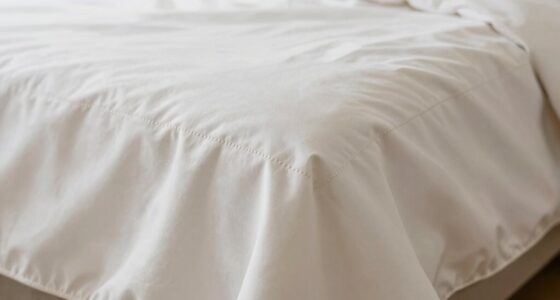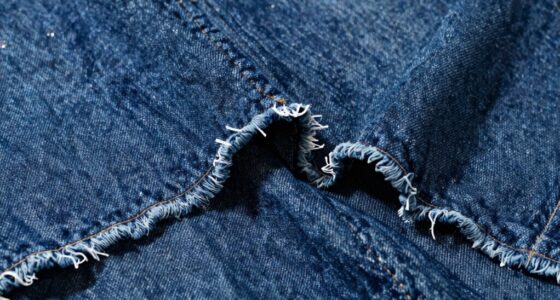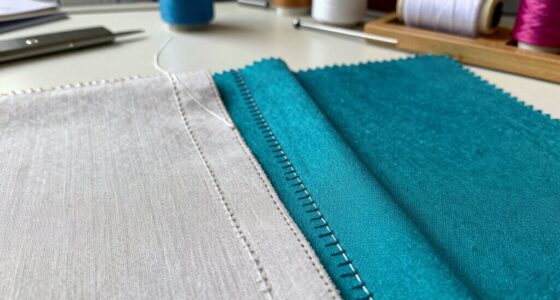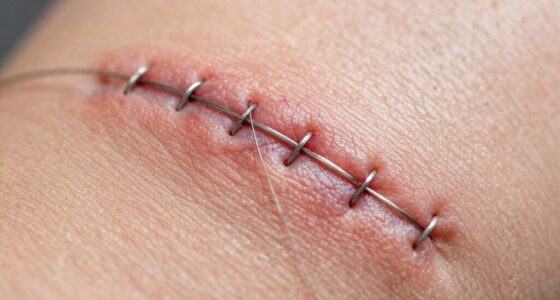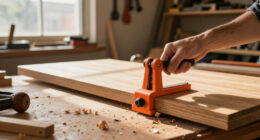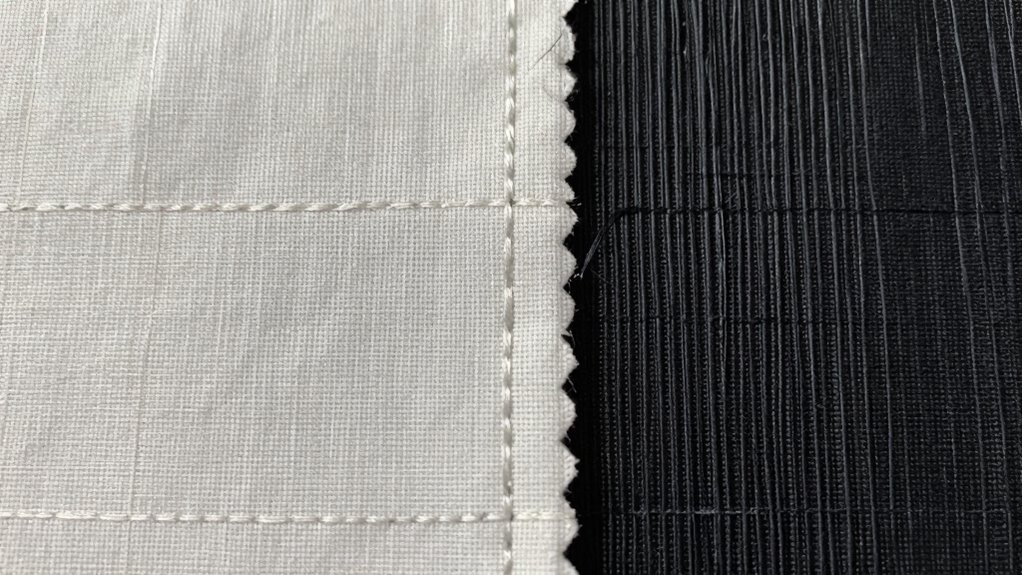

Neat stitching focuses on making your stitches look clean, even, and visually appealing, often using finer threads and gentle tension for a polished finish. Strong stitching, on the other hand, emphasizes durability and resistance to stress, often requiring thicker, more resistant threads and careful tension adjustments. While neat stitches enhance appearance, strong stitches ensure longevity and resilience. To master both, understanding how thread type and fabric influence your stitches is key—there’s much more to uncover below.

Get business pricing on tools and workshop supplies
- Business-only prices and quantity discounts
- Tax-exempt purchasing
- Multiple users, one account, clear invoices
Key Takeaways
- Neat stitching focuses on even, visually appealing stitches, while strong stitching prioritizes durability and tension resistance.
- Thread choice affects both; fine threads for neatness, thicker heavy-duty threads for strength.
- Matching thread type and tension to fabric ensures stitches are both tidy and resilient.
- Neat stitches minimize puckering and bunching; strong stitches withstand stress and tension.
- Balancing aesthetics and durability requires understanding fabric and thread compatibility.

Have you ever wondered what truly sets neat stitching apart from strong stitching? It’s a question that often comes to mind when you’re working on a sewing project, trying to balance appearance with durability. The key lies in understanding that neat stitching primarily focuses on how the stitches look, while strong stitching emphasizes how well they hold under stress. To achieve both, you need to take into account different factors, especially thread types and fabric compatibility. These elements are fundamental because they directly influence the quality of your stitches, whether your goal is a polished finish or a resilient seam.
When it comes to thread types, choosing the right one is vital. For neat stitching, you want a thread that produces even, smooth stitches with minimal puckering or bunching. Polyester threads, for example, are popular because they’re available in many colors, are smooth, and tend to create clean-looking seams. On the other hand, for strong stitching, durability takes precedence. Heavy-duty polyester or nylon threads are ideal because they’re designed to withstand tension and wear over time. They’re thicker and more resistant to breaking, which makes them perfect for seams that need to hold up under stress, such as in upholstery or denim projects. The choice of thread type directly affects fabric compatibility as well. Some fabrics, like lightweight silk or delicate chiffon, require fine, smooth threads to prevent damage and keep neatness. Conversely, heavy fabrics like canvas or leather demand thicker, stronger threads that can support the material’s weight without compromising strength or appearance.
Additionally, understanding the differences in thread strength can help you select the appropriate thread for any project, ensuring your stitches are both neat and durable. Properly matching thread types to fabric weight and texture ensures that your stitches are both neat and strong. Using the correct thread tension also plays a crucial role in achieving a balanced stitch, whether neat or strong. When you’re precise with this pairing, your finished project not only looks professional but also holds up over time. It’s also important to consider how fabric characteristics influence your choice of thread, as different textures and weights can significantly impact stitch quality. Remember, neatness is about precision and aesthetics, while strength is about resilience and function. By understanding the nuances of thread types and fabric compatibility, you can make informed choices that serve both purposes seamlessly, leading to sewing results that are both beautiful and durable.
As an affiliate, we earn on qualifying purchases.
Frequently Asked Questions
Which Stitching Type Is More Cost-Effective for Large Projects?
For large projects, neat stitching often proves more cost-effective because it requires less thread tension adjustment and maintains consistent stitch density, reducing waste. When you focus on maintaining proper thread tension and appropriate stitch density, you minimize thread consumption and rework, saving money. Strong stitching might use more thread and time to ensure durability, which increases costs. So, prioritize neat, well-structured stitches to keep your project economical.
How Do Stitching Techniques Vary Across Different Fabrics?
Imagine your fabric as a flowing river, each with unique flexibility. You adjust your stitching technique accordingly; for delicate silk, you loosen stitch tension to prevent puckering, while sturdy denim demands tighter tension for durability. Different fabrics respond differently to stitching, so you tailor your approach based on fabric flexibility and stitch tension. This guarantees your sewing is both neat and strong, perfectly suited to each material’s nature.
Can Neat and Strong Stitching Be Combined in One Project?
Yes, you can combine neat and strong stitching in one project. To do this, verify your sewing machine is well-maintained and perform regular sewing machine maintenance. Adjust your thread tension correctly for a balanced stitch that’s both neat and durable. Use high-quality thread suited for your fabric, and practice consistent stitching techniques. This way, your project will look tidy and hold together firmly, meeting both aesthetic and strength needs.
What Tools Are Best for Achieving Neat or Strong Stitches?
To achieve neat or strong stitches, you’ll want to use the right tools. Adjust your thread tension for smooth, even stitches, which helps make your work look neat. Choose a needle size appropriate for your fabric—smaller needles for delicate fabrics, larger for thicker materials. Using quality thread and a sharp, compatible needle ensures your stitches are strong and tidy, giving your project a professional finish.
How Does Stitching Impact Garment Durability Over Time?
You might not realize it, but your stitching directly impacts your garment’s durability over time. When fabric has elasticity, if your stitches aren’t strong enough or tension is off, the fabric can tear or fray easier. Proper thread tension ensures stitches hold even with movement, preventing unraveling. So, paying attention to these factors helps your clothes last longer, maintaining both their appearance and structural integrity through repeated wear and washing.
As an affiliate, we earn on qualifying purchases.
Conclusion
Just like the tale of the tortoise and the hare, choosing between neat and strong stitching comes down to your priorities. If you want a polished look, neat stitching is your champion. But if durability’s the goal, strong stitching takes the crown. Remember, every stitch tells a story—so pick wisely, for your craft’s legacy depends on it. After all, in the world of sewing, balance is the true art of mastery.
sewing thread for delicate fabrics
As an affiliate, we earn on qualifying purchases.
As an affiliate, we earn on qualifying purchases.
professional sewing machine needles
As an affiliate, we earn on qualifying purchases.
As an affiliate, we earn on qualifying purchases.
Halloween Picks
halloween
As an affiliate, we earn on qualifying purchases.