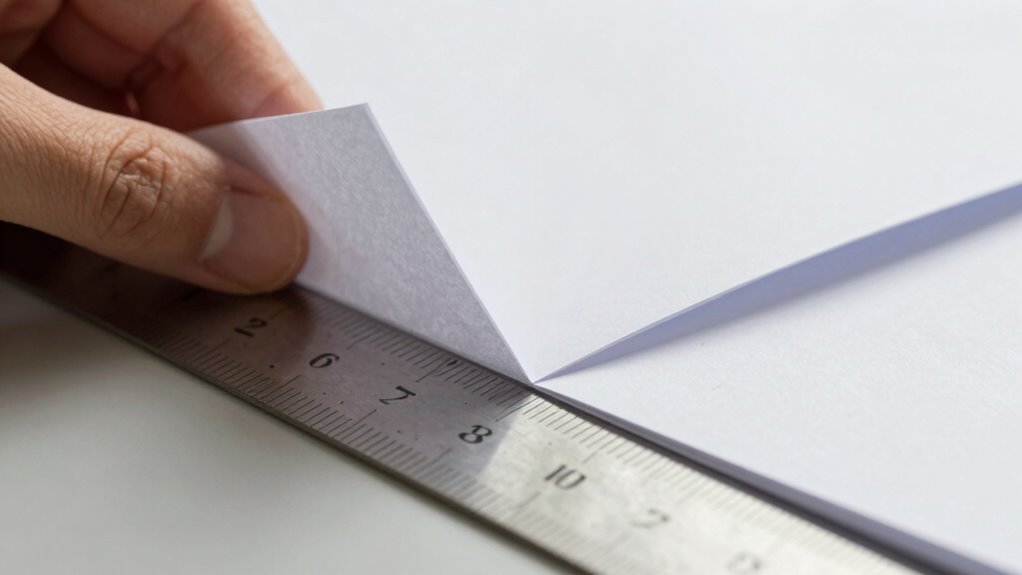

To get sharp, crack-free creases, choose smooth, flexible paper like origami or cardstock, and guarantee your workspace is well-lit and organized. Fold along the paper grain carefully, using your fingers or a bone folder for even pressure. Score the paper with a scoring tool before folding for cleaner lines. Reinforce creases regularly and store your paper flat in stable conditions. Mastering these techniques will help you achieve perfect folds every time; there’s more to discover below.
Key Takeaways
- Use smooth, textured paper like cardstock or origami paper for better crease control and durability.
- Score fold lines with a bone folder or scoring board before pressing to prevent tearing.
- Fold along the paper grain and apply gentle, even pressure with fingertips or a bone folder for crisp edges.
- Keep the paper environment stable, dry, and at consistent temperature to prevent warping and cracking.
- Reinforce creases regularly and store folded paper flat in a controlled environment to maintain sharpness over time.
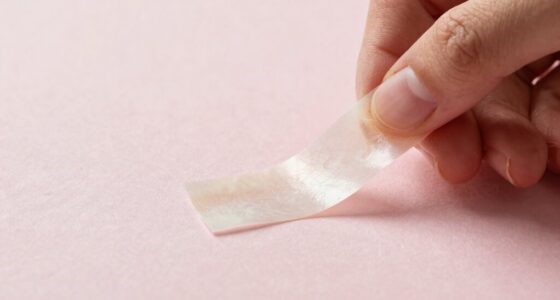
origami paper with sharp creases
As an affiliate, we earn on qualifying purchases.
As an affiliate, we earn on qualifying purchases.
Choosing the Right Paper for Sharp Folds
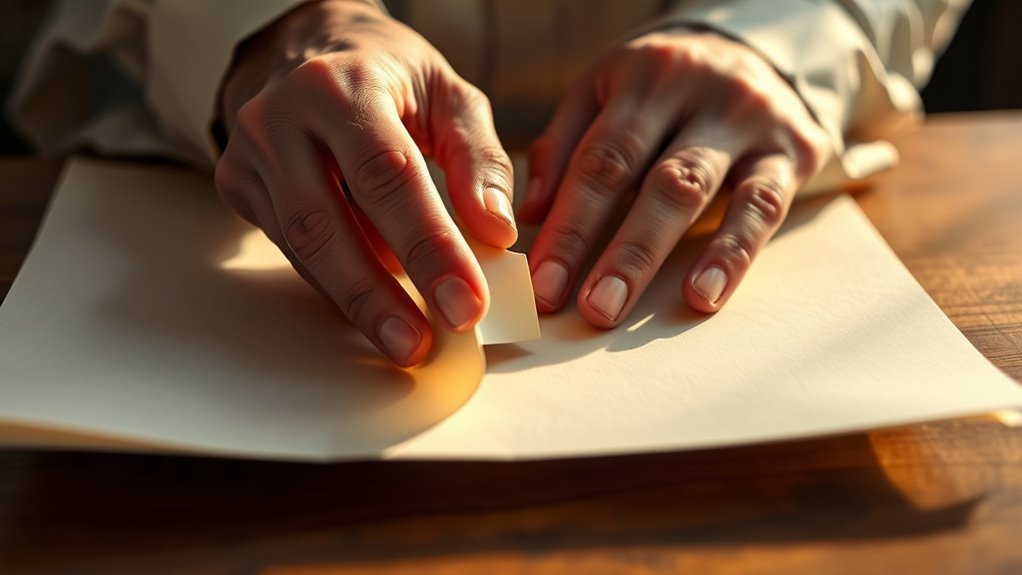
Choosing the right paper is essential if you want sharp, precise folds. Start by considering the paper’s texture; smoother surfaces, like cardstock or high-quality origami paper, hold creases better than rougher options. A paper with a consistent texture guarantees your folds stay crisp and clean. Next, think about color selection—bright or contrasting colors can make your folds stand out, especially if you’re showcasing intricate designs. Avoid thin, flimsy paper that tears easily or thick, stiff paper that’s hard to fold precisely. The ideal paper provides enough firmness without cracking, allowing you to achieve sharp, professional-looking creases. Additionally, selecting energy-efficient materials can contribute to more sustainable crafting practices. Selecting the right paper from the start sets a solid foundation for successful folding and helps you avoid frustrations down the line.
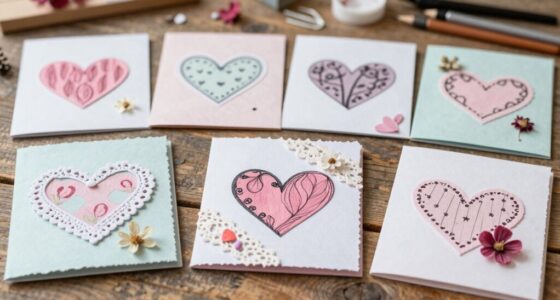
bone folder for paper folding
As an affiliate, we earn on qualifying purchases.
As an affiliate, we earn on qualifying purchases.
Preparing Your Workspace for Precise Creases
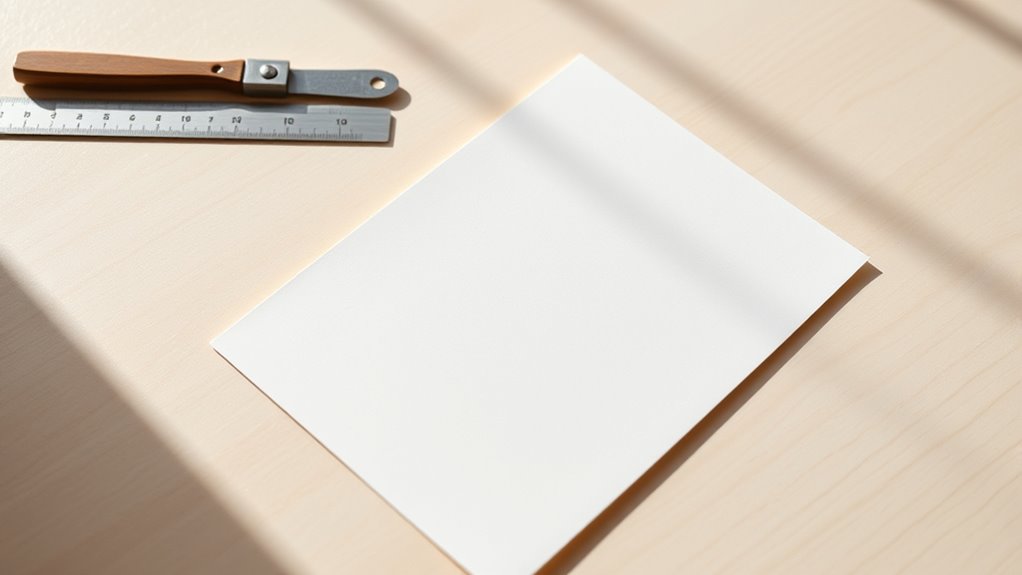
To achieve precise creases, setting up your workspace properly is essential. Start by organizing your workspace to keep your tools, papers, and folding guides within easy reach. A clutter-free environment helps you focus and prevents accidental slips. Lighting optimization is equally important; make sure your area is well-lit with natural light or bright, even artificial lighting. Good lighting reduces shadows and highlights the paper’s surface, making it easier to see where you need to crease. Use a flat, stable surface to support your work and avoid uneven folds. Maintaining an orderly and well-lit workspace minimizes distractions and allows you to concentrate on creating sharp, accurate creases without excess effort or risk of mistakes. Additionally, ensuring your workspace has proper lighting conditions similar to those needed for high-quality home cinema projectors can significantly improve your ability to see fine details and achieve professional-looking folds. For optimal results, consider the ergonomics of your setup to prevent fatigue during detailed folding tasks. Making sure your workspace is properly ventilated can also help keep your environment comfortable during extended folding sessions. Incorporating precise measurements into your setup can further enhance the accuracy of your creases. Moreover, paying attention to the ambient temperature can help maintain consistent paper behavior, leading to cleaner folds and sharper creases.
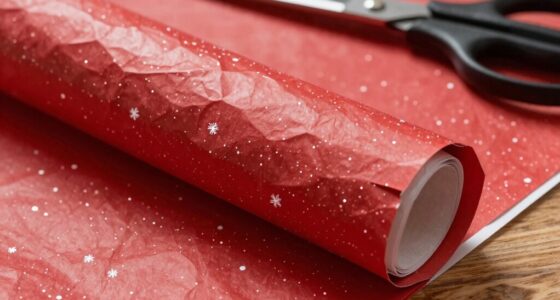
scoring tools for paper crafts
As an affiliate, we earn on qualifying purchases.
As an affiliate, we earn on qualifying purchases.
Using Proper Folding Techniques to Prevent Cracks
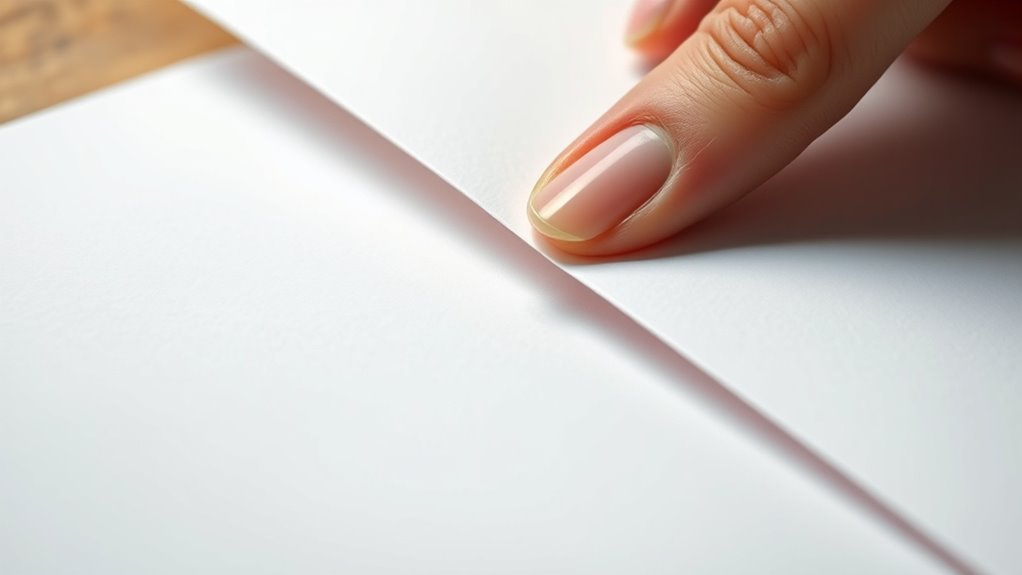
Using proper folding techniques is essential to prevent cracks in your paper. First, always pay attention to the paper grain, which runs parallel to the fibers. Folding along the grain makes the paper more flexible and less prone to cracking. Avoid folding against the grain, as this creates unnecessary stress on the fibers. Additionally, consider the fold direction; don’t press too hard or fold sharply at awkward angles. Instead, gently align the edges, ensuring the fold follows the natural grain direction. Use your fingers or a bone folder to create a clean, smooth crease without forcing the paper. Proper technique reduces tension, minimizes cracks, and results in sharp, professional-looking folds that last. Recognizing the importance of interior design basics, such as preparing your materials properly, can significantly improve your folding results. Paying attention to the paper grain ensures your folds remain durable and crack-free over time, especially when incorporating material handling techniques that preserve integrity.
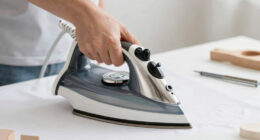
high-quality cardstock paper
As an affiliate, we earn on qualifying purchases.
As an affiliate, we earn on qualifying purchases.
The Importance of Scoring Before Folding

Scoring your paper before folding helps prevent tearing and makes your creases look sharp and professional. It also diminishes the stress on the material, making folds easier and more accurate. Additionally, Proper technique can be employed to achieve seamless and natural-looking creases, especially in delicate or flexible materials. Using the right support tools, such as a bone folder or scoring board, can further enhance the precision of your creases and reduce the risk of damage. By taking this simple step, you guarantee cleaner, more precise results every time.
Prevents Paper Tearing
When you fold paper without scoring, it’s easy to end up with tears or jagged edges that ruin your project. Scoring creates a controlled fold line, reducing stress on the paper fibers and preventing tearing. Thicker paper is more prone to cracking if not scored properly, so scoring helps distribute the pressure evenly. Additionally, scoring minimizes ink absorption along the fold, which can cause smudging or uneven lines if the paper tears. By pre-creasing, you weaken the paper’s internal structure just enough to guide a clean fold without damaging the surface. This process is especially important for delicate or heavy-weight paper, ensuring your project stays intact and looks professional. Proper scoring ultimately preserves your paper’s integrity and avoids frustrating tears. Using the right scoring tools can further enhance your results and make the process smoother.
Ensures Precise Creases
Have you ever struggled to make a clean, straight fold without the crease drifting off course? Scoring helps guarantee precise creases by creating a controlled fold line. Pay attention to your paper texture, as rough surfaces may resist scoring, while smooth ones respond better. To improve accuracy:
- Use a bone folder or a blunt tool to score along the fold line.
- Apply gentle pressure to avoid damaging delicate paper.
- For extra control, secure the paper with adhesive tapes on the edges to prevent slipping.
- Always test your scoring technique on scrap paper first.
Reduces Folding Stress
Properly scoring your paper before folding considerably reduces the stress on the material, making the process smoother and more controlled. When you score, you’re creating a weak point aligned with the paper’s texture, allowing for easier, cleaner folds. This minimizes tearing and cracking, especially with delicate or textured paper. The key is to adjust your folding speed; slower folds put less pressure on the fibers, preventing cracks. Visualize the paper’s surface as a grid:
| Paper Texture | Folding Speed | Result |
|---|---|---|
| Smooth | Fast | Cracks or tears emerge |
| Textured | Slow | Sharp, clean creases |
| Rough | Moderate | Slight stress, slight rip |
| Fine | Slow | Perfect fold, no damage |
Applying Correct Pressure for Crisp Edges
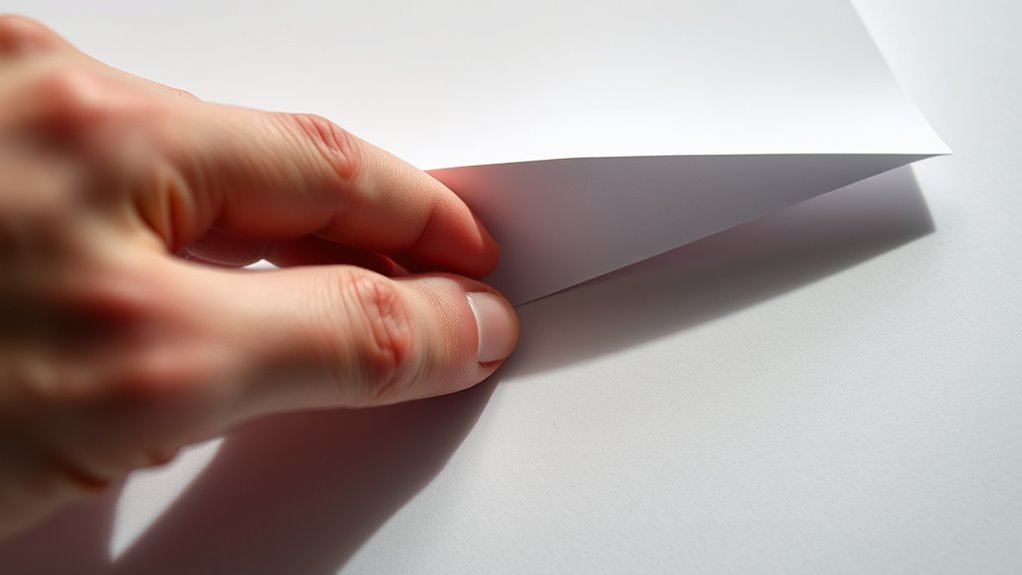
Applying the right amount of pressure is key to achieving crisp, clean edges in your folds. Proper pressure control guarantees your creases are firm without cracking the paper. To master this, consider these steps:
- Use your fingertip or a bone folder to apply even, gentle pressure along the fold.
- Adjust pressure based on paper thickness—lighter for delicate sheets, firmer for thicker stock.
- Keep your hand steady to avoid uneven creases, maintaining crease firmness throughout.
- Practice gradual pressure increases to prevent tearing or cracking, ensuring a sharp, precise fold.
How to Use Tools to Achieve Perfect Folds

Using the right tools can make a significant difference in achieving precise, professional-looking folds. Folding tools like bone folders, scoring boards, and metal rulers help you create clean, sharp creases with crease accuracy. A bone folder, for example, applies even pressure, reducing the risk of tears or cracks. Scoring boards guide your fold lines, ensuring consistent results every time. Metal rulers provide a straight edge for aligning paper precisely before pressing down. These tools help you control pressure and angle, minimizing errors and uneven edges. With proper use, they transform a simple fold into a crisp, polished finish. Incorporate these tools into your folding routine to elevate your projects and achieve flawless, durable creases effortlessly.
Tips for Maintaining Sharpness Over Time

To keep your folds sharp over time, you need to use proper folding techniques and handle your paper carefully. Store your papers in a stable environment to prevent warping or damage. Regularly reinforce creases to maintain their crispness and prevent them from softening. Using correct storage methods can also help preserve the quality of your folds longer. Additionally, maintaining an organized document management system can reduce unnecessary handling and stress on your papers, helping to keep your folds pristine. Employing proper tool maintenance for any folding tools or accessories you use can further improve the longevity of your creases. Incorporating environmental controls similar to those used in astronomical setups can also help preserve paper quality by minimizing fluctuations that cause warping or degradation.
Use Proper Folding Techniques
Proper folding techniques are essential for maintaining the sharpness of your knives over time. When folding paper, pay attention to paper textures, as smoother surfaces respond better to precise folds. To guarantee clean, lasting creases, follow these key tips:
- Maintain consistent folding angles to prevent uneven stress on the paper.
- Use gentle pressure along the fold to avoid cracking or damaging delicate textures.
- Align edges carefully before pressing down to create sharp, accurate lines.
- Avoid over-folding; multiple small creases weaken the paper’s integrity.
Store in Correct Environment
Storing your folded paper in the right environment helps preserve its sharpness and prevents damage over time. Maintaining proper climate control is essential; avoid high humidity or extreme temperatures, which can cause warping or weakening of the paper. Keep your folded items in a stable environment with consistent temperature and humidity levels. Using appropriate storage containers, such as acid-free boxes or portfolios, provides added protection from dust, light, and physical wear. Avoid direct sunlight, as UV rays can fade or weaken the paper’s fibers. Store your creased paper flat or upright in these containers, ensuring they aren’t tightly compressed. Proper environmental control and quality storage containers are key to keeping your sharp creases intact for years to come.
Regularly Reinforce Creases
Over time, even well-made creases can lose their sharpness, but you can maintain their crispness by regularly reinforcing them. To enhance crease durability and adapt to varied paper textures, follow these steps:
- Reapply gentle pressure with a bone folder or fingernail along the crease to restore sharpness.
- Use a light, evenly distributed heat source, like an iron on low, to re-set the crease without damaging the paper.
- Reinforce creases after each fold by pressing firmly, ensuring the paper texture remains smooth and consistent.
- Store folded paper in a way that minimizes stress on the creases, preventing weakening over time. Regular reinforcement keeps your creases sharp and durable.
Frequently Asked Questions
How Can Humidity Affect Paper Folding Quality?
Humidity effects can substantially impact your paper folding quality. When the air is humid, the moisture causes paper deformation, making it softer and more prone to ripples or tears. This can prevent you from achieving sharp, precise creases. To avoid this, work in a dry environment or use a dehumidifier. Keeping humidity levels low helps maintain the paper’s integrity, ensuring your folds stay crisp and clean without cracking.
What Types of Adhesives Can Help Reinforce Folded Edges?
You can reinforce folded edges using adhesives like double-sided tape or fabric glue. Double-sided tape provides a quick, clean way to secure folds without excess mess, making it ideal for delicate paper. Fabric glue, when used sparingly, offers a flexible hold that prevents cracking and adds durability. Apply these adhesives precisely along the fold line and press firmly to make certain a smooth, reinforced crease that lasts.
Are There Eco-Friendly Alternatives to Traditional Scoring Tools?
Yes, you can use eco-friendly alternatives like biodegradable tools and recycled scoring methods. These options are gentle on the environment and effective for creating precise folds. Biodegradable scoring tools are made from sustainable materials that break down naturally, while recycled methods involve repurposing items like cardboard or plastic scraps for scoring. By choosing these eco-conscious options, you help reduce waste and still achieve sharp, clean creases.
How Do Different Paper Textures Impact Fold Sharpness?
Different paper textures considerably impact fold sharpness. Smooth surface finishes, like coated or glossy paper, allow your folds to be crisper because their surface minimizes resistance, while paper fiber density influences flexibility. Thinner, less fibrous papers fold more sharply, but textured or rough surfaces can cause uneven creases and cracking. To achieve sharp folds, choose papers with a consistent fiber structure and smooth finish, ensuring easier, cleaner creases.
Can Folding Techniques Vary for Large-Scale Origami Projects?
Yes, folding techniques do vary for large-scale origami projects. You should focus on scaling techniques that accommodate bigger sizes, ensuring your folds remain precise and sharp. Material selection becomes vital; choose sturdier, thicker papers or lightweight cardstocks to prevent tearing or cracking. Use strong, clean creases, and consider tools like bone folders to help maintain sharp edges, making your large-scale origami stable and visually impressive.
Conclusion
Mastering sharp creases is like sculpting with precision—you need the right tools and techniques. By choosing suitable paper, preparing your workspace, and scoring before folding, you’ll prevent cracks and achieve crisp edges every time. Use gentle, consistent pressure and leverage tools for perfection. With practice, your folds will stay sharp longer, transforming your projects from good to stunning. Remember, a neat fold is the foundation of beautiful paper art—so keep these secrets in mind!