In bookbinding, signatures are groups of pages folded together to form the book’s core, while the spine connects these signatures and supports the cover. Grain direction refers to how the paper fibers run, affecting the book’s strength and durability; aligning it properly prevents warping and cracking. Understanding these terms helps you see how a sturdy, long-lasting book is made. Keep exploring to discover more about each element’s role in craftsmanship.
Key Takeaways
- Signatures are groups of folded pages forming the core structure of a book, assembled in patterns like saddle-stitched or sewn for strength.
- The spine connects signatures and covers, providing support; proper construction prevents warping and enhances durability.
- Grain direction refers to the alignment of paper fibers; matching it with the spine improves book longevity and resistance to tearing.
- Recognizing and applying correct grain orientation ensures structural integrity, reduces cracking, and maintains a professional appearance.
- Ignoring grain can cause warping and damage; proper grain use preserves the book’s durability, craftsmanship, and long-term functionality.
Understanding Signatures in Bookbinding

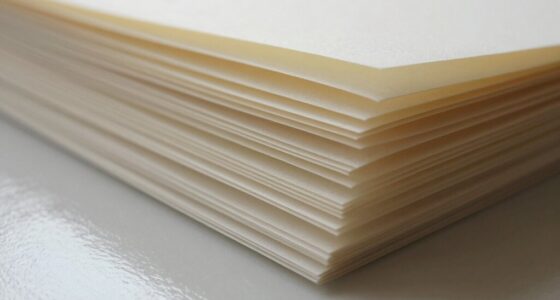
In bookbinding, signatures are the building blocks that hold a book together. They are groups of pages folded and assembled, forming the core structure. To secure signatures, you might use binding tape, which reinforces the connection and guarantees durability. The choice of cover materials also plays a vital role in protecting signatures and giving the book its final appearance. Strong cover materials like cloth, leather, or heavy paper help shield the signatures from wear and tear. When assembling, you align signatures carefully to maintain proper grain direction and flexibility. Understanding how signatures fit within the overall binding process helps you appreciate the craftsmanship involved in creating sturdy, long-lasting books. Proper use of binding tape and cover materials ensures your finished book remains intact and attractive over time. Additionally, Free Floating techniques can be employed to allow for more flexible and durable bindings, especially in fine craftsmanship, where precision and quality are paramount.
The Role of the Spine in a Book’s Structure

The spine is an essential component that connects the signatures and covers, providing structural support for the entire book. Its strength depends heavily on proper spine reinforcement, which helps prevent tearing and damage over time. You’ll notice that the spine often has a gentle curvature, known as spine curvature, which allows the book to open smoothly and close securely. Reinforcing the spine with materials like glue or cloth adds durability, ensuring the signatures stay intact. The curvature also plays a critical role in how the book opens and closes, affecting its usability and lifespan. A well-constructed spine maintains the book’s integrity, prevents warping, and supports the weight of the pages, making it necessary for a sturdy, long-lasting book. Proper binding techniques contribute significantly to the overall durability and longevity of the book. Additionally, understanding the grain direction during binding can further improve the flexibility and strength of the spine, enhancing the book’s lifespan. Recognizing the importance of grain alignment can help ensure that the pages move more smoothly and reduce the risk of tears along the edges.
DEWALT 20V Max Cordless Drill Driver Set, 2 Speed, High Performance Motor, Includes 2 XR 1.3Ah Li-Ion Batteries, Charger and Contractor Bag (DCD771C2)
- Compact and lightweight design: Fits into tight spaces
- High performance motor: Delivers 300 UWO power
- Two-speed transmission: 0-450 and 1,500 rpm
As an affiliate, we earn on qualifying purchases.
Grain Direction and Its Impact on Book Durability

Grain direction plays a crucial role in the durability of a book, as it determines how the paper responds to handling and stress. If you align the paper grain with the book’s spine, you’ll notice improved longevity and resistance to tearing. Incorrect grain direction can cause pages to warp, split, or become fragile over time. To maximize book durability, consider these key points:
- Align paper grain with the spine for stronger, more flexible pages.
- Avoid folding against the grain, which weakens the paper structure.
- Choose high-quality paper with consistent grain direction to ensure a long-lasting book.
Understanding paper grain helps you make smarter choices in bookbinding, ensuring your books withstand frequent use and last for years.
Different Types of Signatures and Their Uses

Have you ever wondered how books stay together during printing and binding? It all comes down to binding patterns and signature types. Signatures are groups of folded pages that are assembled in specific arrangements. Different signature types include saddle-stitched, where pages are stapled through the fold, and case-bound, which use multiple signatures sewn together for durability. Some books, like magazines, use simpler patterns, while hardcover books employ more complex signatures for added strength. Selecting the right signature type depends on the book’s purpose, durability needs, and production costs. Understanding these signature types helps you appreciate how books are constructed and why certain binding patterns are chosen for different publications. Additionally, the choice of signature and binding method can influence the exfoliation process and the overall longevity of the book, especially when considering factors like grain direction and material quality. Proper signature assembly also plays a crucial role in maintaining the grain direction to ensure the book’s durability and ease of use over time.
How the Spine Is Constructed and Reinforced

Understanding how signatures are assembled provides insight into the significance of the spine in bookbinding. The spine’s construction involves multiple steps to guarantee durability and strength. First, you’ll see that spine reinforcement uses materials like mull or cloth to strengthen the area where signatures are glued. Second, adhesive bonding is vital; high-quality glue secures signatures together and adheres them firmly to the cover. Third, the spine is shaped and reinforced with endbands or backings to prevent splitting and damage over time. These techniques create a resilient spine that holds the pages securely. Additionally, modern reinforcement methods incorporate advanced materials and techniques to further enhance the spine’s durability, ensuring the book can withstand frequent handling and long-term use. Proper construction and reinforcement not only protect the book’s structure but also enhance its longevity and ability to withstand frequent use, especially when combined with proper ventilation considerations to prevent warping and deterioration over time. Proper grain direction during paper selection also plays a crucial role in maintaining the book’s overall integrity and flexibility over its lifespan. Understanding the importance of adhesive quality can significantly impact the durability of the binding over time.
Recognizing Grain Direction in Paper and Its Importance

Understanding the grain direction in paper is essential for a strong, durable book. When you identify the grain, you can prevent warping and cracking during binding and folding. Recognizing this detail guarantees your finished book maintains its shape and longevity. Support Breakfast options, such as choosing the right materials, can also contribute to the durability of the binding process. Being aware of paper grain can help you select the most suitable paper for your project.
Grain Direction in Paper
Ever wonder how to tell which way the paper’s fibers run? Recognizing the paper grain helps you understand fiber alignment, essential for quality bookbinding. To identify grain direction:
- Feel the paper’s surface for a slight bend or bend it gently; the grain runs parallel to the fold.
- Look at the cut edges; fibers tend to run along the length of the paper.
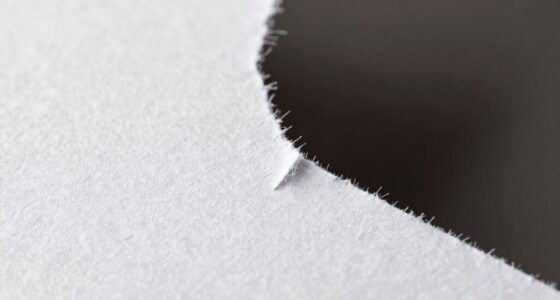
- Check for ease of tearing; tearing along the grain is cleaner and easier than across it.
Knowing the paper grain ensures proper folding, minimizes warping, and enhances durability. When you align fiber direction correctly, your bookbinding results stay smooth and stable. Respecting the paper’s natural grain is a simple but important step for professional-quality work.
Impact on Bookbinding
Recognizing the paper’s grain direction directly influences the quality and durability of your finished book. When you align the grain correctly, your binding maintains its integrity, reducing warping or cracking over time. Proper grain orientation enhances binding aesthetics, giving your book a smoother, more professional appearance. Historically, binding methods like hand-sewn or wooden covers relied heavily on understanding paper grain to ensure longevity. If you ignore grain direction, the book may suffer from uneven tension, causing pages to loosen or split. By paying attention to grain, you also preserve the craftsmanship’s authenticity, respecting traditional binding techniques. Ultimately, understanding and correctly applying grain direction protects your work’s structural and visual integrity, ensuring your book remains durable and attractive for years to come.
Common Bookbinding Techniques and Their Terminology

Have you ever wondered how different bookbinding techniques shape the look and durability of a finished book? Knowing the terms behind these methods helps you appreciate craftsmanship. Here are three common techniques:
Exploring bookbinding techniques reveals how craftsmanship influences a book’s look and durability.
- Case binding: This involves attaching pages to a hardcover with strong binding adhesives, often reinforced with decorative endpapers for aesthetic appeal.
- Saddle stitching: Pages are folded and stapled along the spine, ideal for booklets and catalogs.
- Perfect binding: Pages are glued directly to a flexible spine, creating a sleek look but requiring quality binding adhesives for durability.
Understanding these methods helps you identify how each technique influences a book’s strength and appearance, especially through features like decorative endpapers and the choice of binding adhesives.
Frequently Asked Questions
How Does Signature Folding Affect Overall Book Quality?
Signature folding greatly impacts your book’s quality by ensuring signature stability and proper folding precision. When folds are accurately made, pages align perfectly, reducing the risk of misprints or weak spines. Precise folding also maintains the integrity of the paper’s grain, preventing warping or cracking over time. Overall, careful signature folding results in a durable, professional-looking book that offers a better reading experience.
What Materials Are Best for Reinforcing the Spine?
Ever wondered how to strengthen your book’s spine effectively? The best materials for reinforcement include linen or cloth tape combined with high-quality adhesive. These materials work well with spine reinforcement techniques like applying a flexible, durable adhesive to secure the lining and prevent tears. Choosing the right adhesive guarantees flexibility and longevity, making your book more resilient while maintaining a professional appearance. Wouldn’t you want your book to last longer?
Can Grain Direction Influence Printing Quality?
Yes, grain direction can influence printing quality. When you align the paper’s grain orientation with the printing press, you guarantee better paper strength, reducing warping or tearing during printing. Proper grain orientation also results in sharper images and clearer text, as the paper responds more consistently to ink. By paying attention to grain direction, you can achieve a smoother, more professional finish in your printed materials.
How Do Different Binding Styles Impact Book Longevity?
Different binding styles drastically impact your book’s lifespan, like choosing between a fragile glass and a steel vault. For example, hardcover bindings offer unmatched archival preservation, shielding pages from wear and tear, while perfect bindings might bend or detach over time. Your choice affects not just binding aesthetics but also durability, ensuring your treasured book stays intact for generations. So, pick wisely—your book’s future depends on it!
What Tools Are Essential for Identifying Grain in Paper?
To identify grain in paper, you need a few essential tools. First, use your fingers to feel the paper’s texture and notice the grain orientation, which usually runs parallel to the long side. You can also gently bend the paper; it will fold more easily along the grain. A magnifying glass helps examine the fiber direction closely. These tools help you determine the paper’s grain for better binding results.
Conclusion
Understanding signatures, spines, and grain direction helps you appreciate a book’s craftsmanship. Many believe that proper grain alignment prevents warping and extends durability, which is true—grain direction profoundly impacts longevity. When you recognize these terms, you connect more deeply with the art of bookbinding. So, next time you hold a book, remember it’s not just pages—it’s a carefully constructed masterpiece built on precise techniques that stand the test of time.