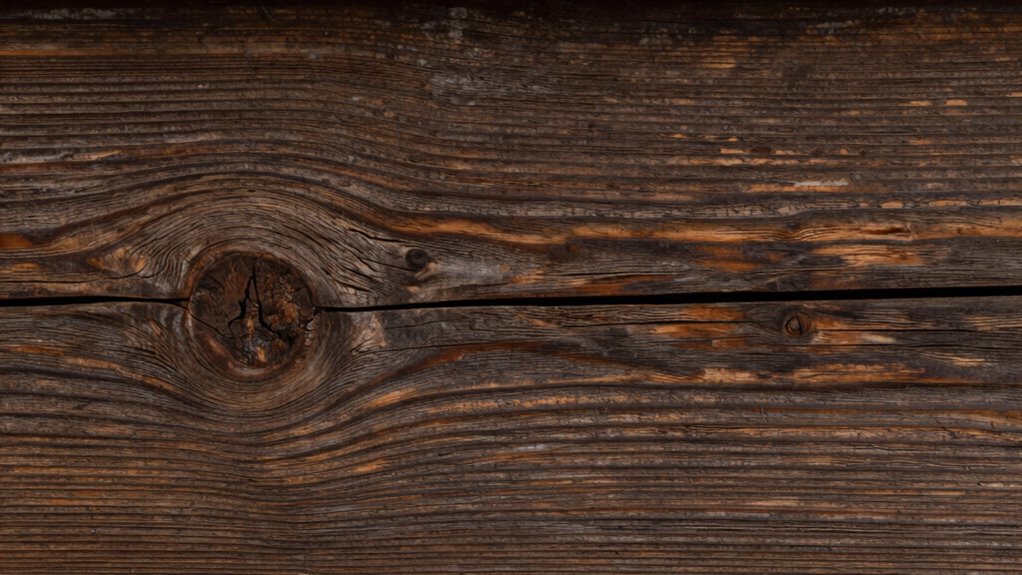

Wood darkens over time because exposure to light, air, and moisture causes chemical changes, especially breaking down lignin, a key component affecting color. This natural process creates a rich, warm patina that adds character and depth to your wood, making it uniquely beautiful. Different woods age differently—some darken quickly, others take decades. If you want to manage or embrace this transformation, understanding how to plan for it can help you achieve your desired aesthetic over time.

Get business pricing on tools and workshop supplies
- Business-only prices and quantity discounts
- Tax-exempt purchasing
- Multiple users, one account, clear invoices
Key Takeaways
- Wood darkens naturally over time due to exposure to UV light and oxygen, which cause chemical changes in lignin.
- The aging process develops a unique patina that enhances aesthetic appeal and adds depth to the wood’s appearance.
- Different wood species darken at varying rates; for example, cherry and walnut develop deep tones quickly, while oak takes decades.
- Planning involves choosing finishes or environmental controls to slow, accelerate, or preserve the wood’s natural color over time.
- Protecting wood from direct sunlight and using sealants or oils helps manage darkening and maintain desired visual qualities.
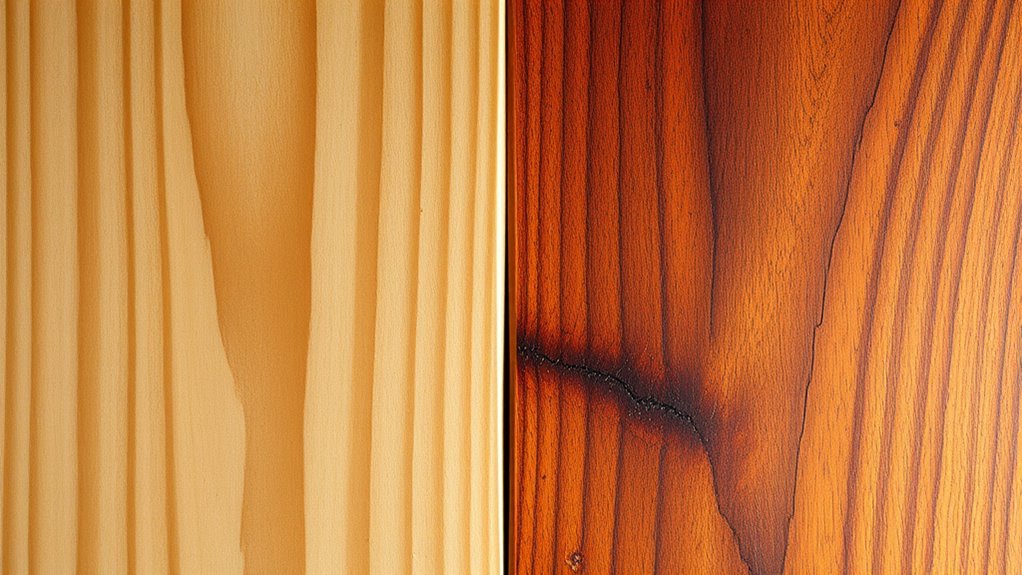
Over time, wood naturally darkens as a result of exposure to light, air, and moisture. This process, known as the wood aging process, is a natural progression that many wood enthusiasts and craftsmen embrace. As your wood ages, it develops a unique character that cannot be replicated by staining or finishing. The gradual darkening isn’t just a change in color; it’s a sign of the wood’s natural patina development, which enhances its aesthetic appeal and adds depth to its appearance. When you understand this process, you can better plan for how your wood will look years down the line and make informed decisions about finishes and treatments to either preserve or accentuate this natural transformation.
The wood aging process occurs because of chemical changes inside the wood fibers, primarily caused by exposure to UV light and oxygen. As sunlight hits the surface, it triggers a breakdown of lignin, a key component that holds the wood’s color. This breakdown results in a richer, darker hue that’s often associated with aged, well-loved wood. The natural patina development is a slow, deliberate process that occurs evenly over time, giving your wood a distinguished look. It’s important to note that not all woods darken at the same rate or to the same extent. For example, cherry and walnut tend to develop a deep, warm tone relatively quickly, while oak might take decades to reach a darker shade. Understanding these differences allows you to choose the right wood for your project based on how you want it to age.
If you’re planning a project, consider how the natural aging process will influence your choice of wood. Some prefer the look of freshly finished wood, while others want their wood to develop a rich patina over the years. To manage this, you can use finishes that either slow down or accelerate the darkening process. Applying a clear finish or sealant can help preserve the original color longer, while oils or waxes can enhance the natural patina as it develops. Keep in mind that environmental conditions—such as light exposure, humidity, and air quality—will also impact how quickly your wood darkens. If you want to maintain a consistent look, position your wood away from direct sunlight or use protective coatings. Conversely, if you welcome the natural transformation, let your wood age openly and enjoy its evolving beauty. Understanding the wood aging process enables you to plan for a timeless, beautifully aged piece tailored to your aesthetic preferences.
Frequently Asked Questions
Can I Reverse the Darkening Process on My Wood Furniture?
You can reverse some darkening effects on your wood furniture with restoration techniques like gentle sanding to remove surface stains or discoloration. Applying protective coatings, such as a fresh layer of clear polyurethane or varnish, can also brighten and restore its original look. However, deep or uneven darkening might require professional restoration. Always test any method on a small area first to avoid damaging the wood further.
Which Wood Types Are Most Resistant to Darkening?
You’ll find that woods like cedar, teak, and cherry are most resistant to darkening because their natural finish and inherent properties slow the oxidation process. These wood species maintain their lighter hues longer, making them great choices if you want to preserve a fresh, natural finish. Keep in mind, even resistant woods can darken over time, but selecting these options helps you minimize the change and enjoy your furniture’s original look longer.
Does Exposure to Sunlight Affect Wood Darkening?
Yes, sunlight impacts wood darkening by causing UV exposure, which accelerates the natural aging process. When your wood furniture or flooring is exposed to direct sunlight, UV rays break down lignin in the wood, leading to a richer, darker patina over time. To manage this, consider using UV-protective finishes or placing your wood in shaded areas to slow down the darkening process and maintain its original appearance longer.
How Long Does It Typically Take for Wood to Darken?
Wood typically darkens within months to a year, depending on exposure and type. As it ages, you’ll notice stain development and color shifts that deepen over time. Sunlight accelerates this process, making the change more rapid, while indoor conditions slow it down. You can expect visible darkening to start within a few months, with the full development of its aged look appearing over one to two years.
Are There Treatments to Prevent Wood From Darkening?
Yes, you can use wood treatment options and preventative coatings to slow down darkening. Applying sealants, polyurethane, or specialized clear finishes creates a barrier that minimizes exposure to sunlight and moisture, which cause darkening. Regular maintenance with these coatings helps preserve the wood’s original color. Keep in mind, no treatment completely stops darkening, but routine application of protective coatings greatly extends the wood’s vibrant appearance over time.
Conclusion
Understanding why wood darkens helps you plan for its aging process. Did you know that oak wood can darken by up to 30% within just a few years? By considering this natural change, you can choose finishes or treatments that enhance your wood’s beauty over time. Embrace the character that develops with age, and remember, slight darkening adds warmth and depth to your space, making it uniquely yours. Planning ahead guarantees your wood looks stunning for years to come.
Fall yard work Picks
leaf blowers
As an affiliate, we earn on qualifying purchases.