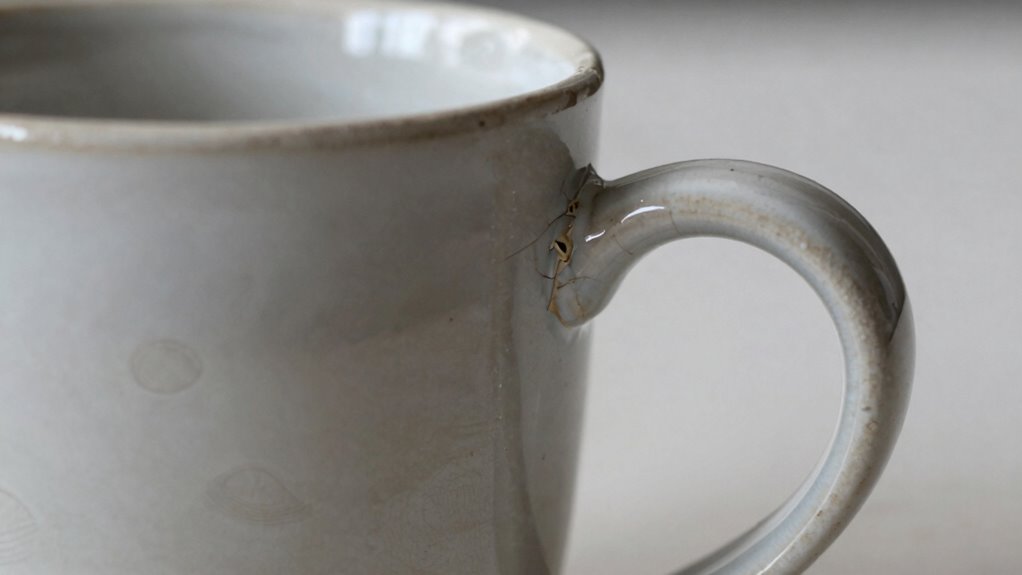

Pottery handles often fail due to hidden structural weaknesses rooted in poor material choice, design flaws, or inadequate firing, rather than just accidents. When handles are poorly shaped or improperly attached, stress concentrates and leads to cracks. Subpar ceramic materials with internal flaws or improper firing increase vulnerability over time. Understanding these hidden factors can help you craft more durable pottery. Keep exploring to discover how these issues can be prevented and your pieces strengthened.
Key Takeaways
- Structural flaws in the ceramic material, such as internal stresses from improper firing, often cause handle failure.
- Poor handle design, including thin or uneven shapes, leads to stress concentration and eventual breakage.
- Inadequate attachment techniques can create weak points susceptible to cracking under use.
- Internal air pockets or inconsistencies in the clay increase vulnerability to sudden handle failure.
- Rapid cooling or incorrect firing temperatures induce internal stresses, weakening the handle over time.
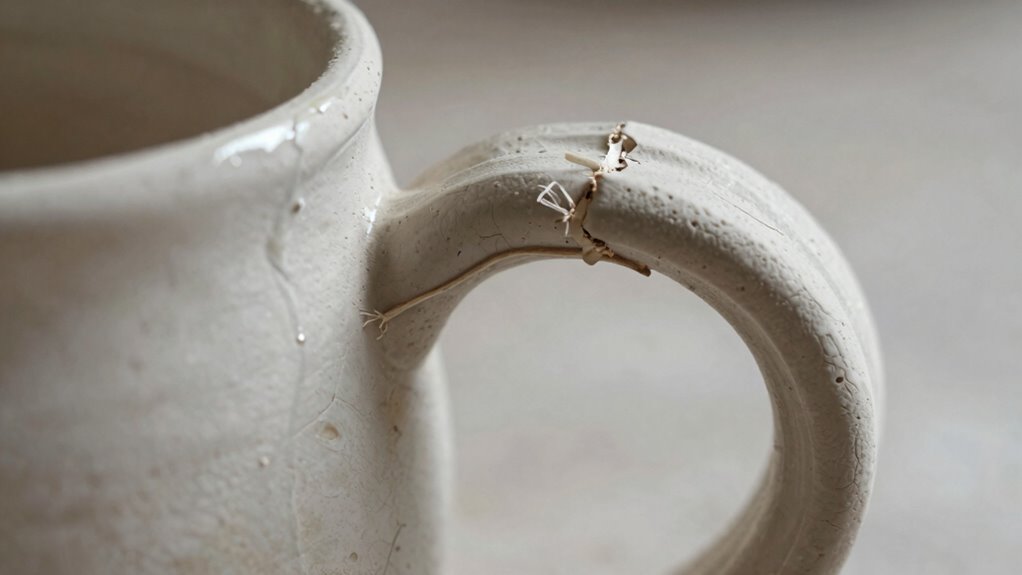
Pottery handles often break unexpectedly, but the real cause is rarely what it seems. When you pick up your mug or pitcher and feel that sudden snap or crack, it’s tempting to blame everyday wear or accidental drops. However, the underlying issues often go deeper, rooted in the way the handle was crafted and the materials used. Understanding the role of ceramic material and handle design can help you avoid these frustrating failures and create more durable pieces.
Handle failures often stem from craftsmanship and material choices, not just accidents.
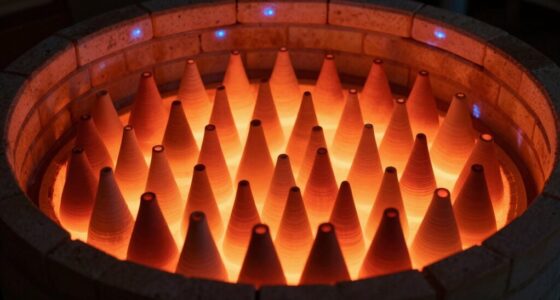
The ceramic material itself plays an essential part in handle longevity. Not all clays are created equal; some are more prone to cracking under stress due to their composition. For example, if the clay body has high shrinkage during firing, it creates internal stresses that weaken the handle over time. Low-quality clay or improperly prepared ceramic material can also introduce tiny air pockets or inconsistencies that compromise strength. When you handle a piece made with subpar ceramic material, even a slight tug or bump can cause the handle to separate unexpectedly. Additionally, understanding the properties of ceramic material can guide you in selecting or crafting more durable pottery. Using proper firing techniques is equally important to ensure the ceramic’s strength and stability. Proper material selection and firing methods are crucial for minimizing internal stresses that lead to handle failure. Moreover, the firing temperature and cooling rate can significantly influence the final strength of the ceramic.
Handle design is another vital factor that often gets overlooked. A handle that’s poorly shaped or improperly attached isn’t just an aesthetic issue—it’s a structural weakness waiting to fail. Handles that are too thin or narrow won’t distribute stress evenly when you lift the piece, making them more susceptible to breaking. Conversely, overly large or awkward handles might look appealing but can create stress concentration points that weaken over time. The shape and placement of the handle influence how stress is distributed during use, so a well-designed handle should balance comfort with structural integrity. Proper handle shaping can also prevent discomfort during use, which contributes to better overall durability. When designing or selecting pottery, considering the handle design ensures it withstands daily handling without unexpected failure. A thoughtful design that accounts for stress distribution can greatly extend the life of a pottery piece.
As an affiliate, we earn on qualifying purchases.
Frequently Asked Questions
Can Handle Failure Be Completely Prevented With Proper Glazing?
Handle failure can’t be completely prevented with proper glazing alone. While glazing techniques help seal and strengthen the handle and improve adhesion, material compatibility plays a vital role. You need to choose the right clay and glaze combination to guarantee they expand and contract uniformly during firing. Proper preparation, application, and firing processes are essential, but some factors like material flaws or design issues can still cause handle failure.
How Long Do Pottery Handles Typically Last Before Failing?
Handles can last for years if you reinforce them properly, but there’s no guarantee they’ll never fail. You might think handles are like ironclad, but they’re vulnerable if you skip handle reinforcement or use poor glazing techniques. Regular use, temperature changes, and stress can wear them down over time. With proper glazing techniques and reinforcement, you could extend their life, but always watch for signs of wear—nothing lasts forever.
Do Certain Clay Types Affect Handle Durability?
Yes, certain clay types do affect handle durability. Clay composition influences strength; for example, stoneware is more durable than earthenware. Firing temperature also plays a role—higher temperatures create stronger, more vitrified pottery, reducing handle failure chances. If you choose clay with suitable composition and fire it at the right temperature, your handles will last longer and withstand daily use better.
Is Handle Failure More Common in Handmade or Machine-Made Pottery?
Handle failure is more common in handmade pottery because of less consistent manufacturing and handle design. Handcrafted pieces often have variations in thickness, attachment, and shape, which can weaken the handle over time. Machine-made pottery, however, benefits from precise manufacturing consistency, ensuring handles are uniformly attached and stronger. So, if durability’s your goal, machine-made pottery generally offers more reliable handles due to its consistent handle design and production quality.
What Environmental Factors Accelerate Handle Deterioration?
Think of your pottery handle as a fragile bridge, vulnerable to environmental stress. When exposed to moisture, it’s like water seeping into cracks, weakening the structure. Environmental factors like humidity, temperature fluctuations, and direct moisture exposure accelerate handle deterioration, much like rust chips away at metal. To keep your pottery intact, avoid prolonged moisture contact and keep it in stable conditions, shielding it from these harsh environmental stressors.
As an affiliate, we earn on qualifying purchases.
Conclusion
So, next time a pottery handle snaps, remember it’s not just about bad clay or poor design. It’s likely a hidden flaw lurking beneath the surface, waiting to release a disaster that could rival a volcano eruption on your favorite mug. By understanding the unseen stress points and practicing better techniques, you can save your pottery from a catastrophic fall. Don’t let hidden flaws turn your masterpieces into tragic, broken ruins—stay vigilant, and craft with care.
firing temperature thermometer for ceramics
As an affiliate, we earn on qualifying purchases.
As an affiliate, we earn on qualifying purchases.
As an affiliate, we earn on qualifying purchases.