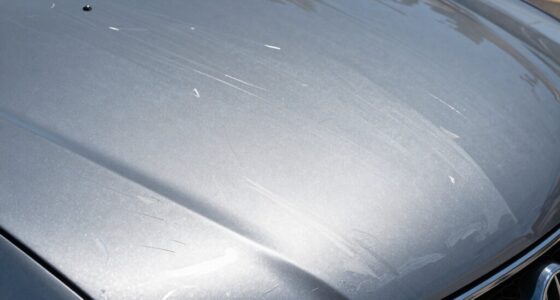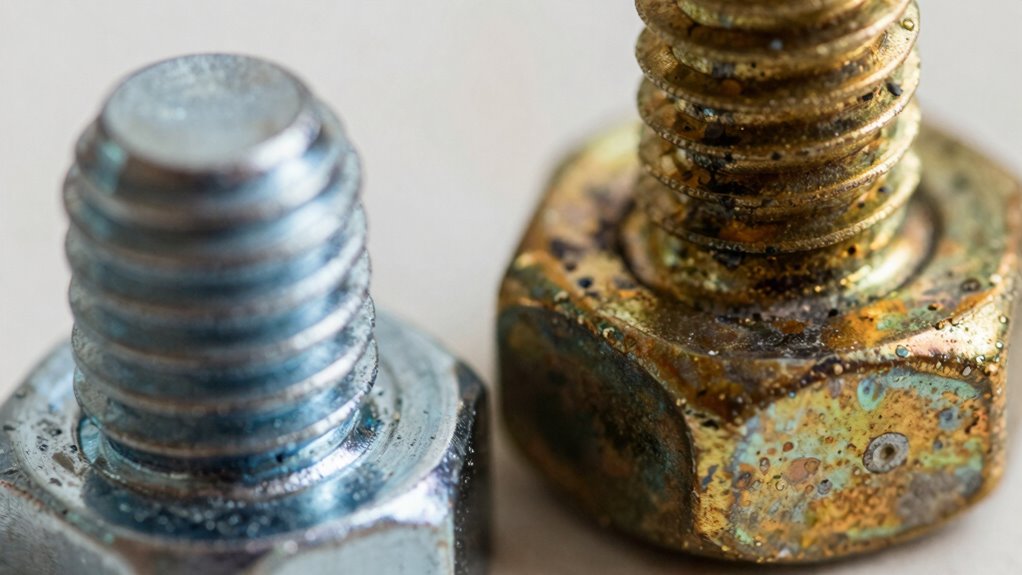

You’ll notice some metal components tarnish faster because their chemical reactivity varies; more reactive metals like silver and copper react quickly with pollutants, moisture, and environmental factors such as sulfur or salt. Factors like high humidity, pollution, and temperature fluctuations accelerate tarnishing. Less reactive metals like stainless steel resist corrosion longer. Understanding these differences can help you care for your metals better. Keep exploring to discover how environmental conditions and protective measures influence tarnish effects even more.

Get business pricing on tools and workshop supplies
- Business-only prices and quantity discounts
- Tax-exempt purchasing
- Multiple users, one account, clear invoices
Key Takeaways
- Different metals have varying reactivity levels, influencing how quickly they oxidize and tarnish.
- Environmental exposure, such as humidity and pollutants, accelerates tarnishing more on susceptible metals.
- Metals like silver and copper tarnish faster due to their higher chemical reactivity.
- Protective coatings and controlled storage can slow tarnishing, especially on vulnerable metals.
- Temperature fluctuations and salinity increase reaction rates, leading to quicker tarnish formation on certain metals.
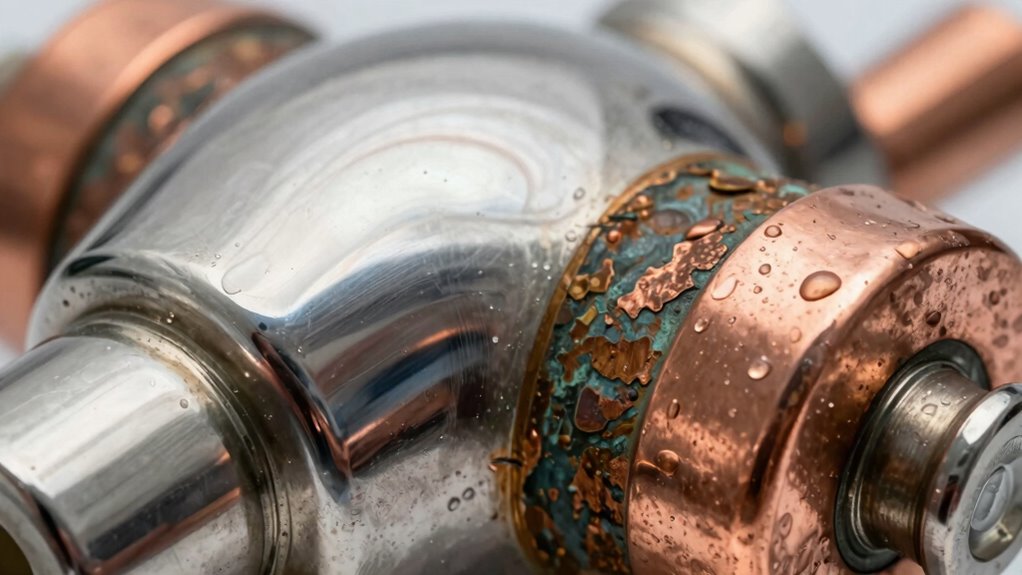
Have you ever noticed how certain metal components quickly lose their shine and develop tarnish? It’s frustrating, especially when you’ve invested time and effort into maintaining them. The main reason behind this rapid tarnishing lies in the way chemical reactions occur on the metal’s surface, often accelerated by environmental factors. When metals are exposed to air and moisture, they undergo chemical reactions that form corrosion products, which appear as tarnish or discoloration. These reactions are influenced by the metal’s composition, but environmental factors play a significant role in speeding up or slowing down the process.
Chemical reactions occur when the metal interacts with substances in its environment. For example, when copper comes into contact with sulfur compounds, it forms copper sulfide, which appears as a tarnish. Similarly, silver reacts with sulfur-containing gases, creating a black layer of silver sulfide. These reactions are natural, but their speed depends on external conditions. Factors like humidity, temperature, and the presence of pollutants can dramatically influence how quickly these reactions happen. In humid environments, water acts as an electrolyte, facilitating the transfer of electrons during oxidation. This accelerates tarnishing, especially if the air contains pollutants like sulfur dioxide or hydrogen sulfide. Conversely, dry environments tend to slow down the process, allowing your metal components to keep their shine longer. Additionally, understanding the chemical reactivity of different metals can help predict their susceptibility to tarnish under various conditions. The oxidation process is also crucial, as it explains how metals lose electrons and form corrosion layers more rapidly under certain environmental influences.
Humidity and pollutants accelerate tarnishing by facilitating oxidation and corrosion on metal surfaces.
Environmental factors don’t just influence the rate of chemical reactions; they can also determine how severe the tarnish becomes. For instance, exposure to salty air near the coast introduces chloride ions that can intensify corrosion. Similarly, industrial areas with high levels of pollutants can cause faster deterioration. Temperature fluctuations also matter—hotter conditions speed up chemical reactions, resulting in quicker tarnish formation. That’s why you might notice a piece of jewelry tarnishing faster in the summer than in the winter. Moreover, the environmental conditions surrounding your metal components can either accelerate or inhibit these processes, emphasizing the importance of proper storage and maintenance. Using protective coatings or storing metals in controlled environments can significantly reduce tarnish. Proper sealing or coating can act as a barrier, preventing pollutants and moisture from reaching the metal surface, thereby slowing the tarnishing process.
Understanding the interplay between chemical reactions and environmental factors helps you grasp why some metals tarnish faster than others. Metals like silver and copper are more reactive, so they’re more susceptible to environmental influences. Less reactive metals, such as stainless steel, tend to resist tarnish longer. When you want to preserve the appearance of your metal components, it’s essential to keep them in controlled environments, use protective coatings, or store them properly to minimize exposure to harmful environmental factors. Recognizing these underlying causes enables you to take better care of your valuable metal items and keep their shine intact for longer.
anti-tarnish silver polishing cloth
As an affiliate, we earn on qualifying purchases.
As an affiliate, we earn on qualifying purchases.
Frequently Asked Questions
How Does Humidity Affect Metal Tarnishing Rates?
Humidity effects profoundly influence tarnish speed on metal components. When humidity is high, moisture in the air accelerates oxidation, causing metals to tarnish faster. You might notice quicker discoloration or dulling in humid environments because water reacts with metal surfaces, forming corrosion. To slow tarnishing, keep metal components in low-humidity settings or use protective coatings. Managing humidity levels is essential for maintaining the appearance and longevity of your metal items.
Can Protective Coatings Completely Prevent Tarnishing?
A stitch in time saves nine, and protective coatings can considerably delay tarnishing, but they can’t completely prevent it. They rely on surface adhesion to form a barrier, reducing chemical reactions with pollutants and moisture. However, over time, wear or damage can compromise this protection, allowing tarnishing to occur. So, while coatings help, regular maintenance and choosing the right protective layer are key to keeping your metal components looking new longer.
Are Certain Metals More Resistant to Tarnishing?
Yes, certain metals are more resistant to tarnishing due to their superior corrosion resistance and metal oxidation properties. Metals like gold, platinum, and stainless steel naturally resist tarnish because they form a protective oxide layer that slows down oxidation. You’ll notice these metals tarnish less over time, unlike copper or silver, which oxidize more quickly. Choosing metals with high corrosion resistance helps guarantee your components stay shiny longer.
How Does Alloy Composition Influence Tarnish Speed?
Alloy composition considerably influences tarnish speed because it affects alloy durability. You’ll find that certain elements, like copper or sulfur, accelerate tarnishing by reacting easily with air and moisture. Composition effects determine how resistant an alloy is to corrosion; for example, alloys with higher nickel or chromium content tend to resist tarnish better. By adjusting the alloy’s makeup, you can improve its durability and slow down tarnish formation.
Does Cleaning Frequency Impact Tarnish Development?
Imagine your metal surface as a mirror reflecting your habits—cleaning habits act like a shield, slowing surface oxidation. The more frequently you clean, the less time tarnish has to settle and deepen. Skipping regular cleaning allows oxidation to build, forming dull, stubborn layers. So, staying consistent with cleaning helps maintain the metal’s shine longer, preventing tarnish from taking hold and preserving its original luster.
As an affiliate, we earn on qualifying purchases.
Conclusion
So, next time you notice some metal components tarnishing faster, ask yourself—are you giving them the care they deserve? Remember, factors like moisture, exposure, and composition play a big role in how quickly they fade. Don’t let neglect steal their shine. By understanding these differences, you can protect your valuable items longer and keep them looking their best. Isn’t it worth taking a little extra effort to preserve their beauty?
As an affiliate, we earn on qualifying purchases.
As an affiliate, we earn on qualifying purchases.
Columbus Day / Indigenous Peoples' Day Picks
long weekend sales
As an affiliate, we earn on qualifying purchases.