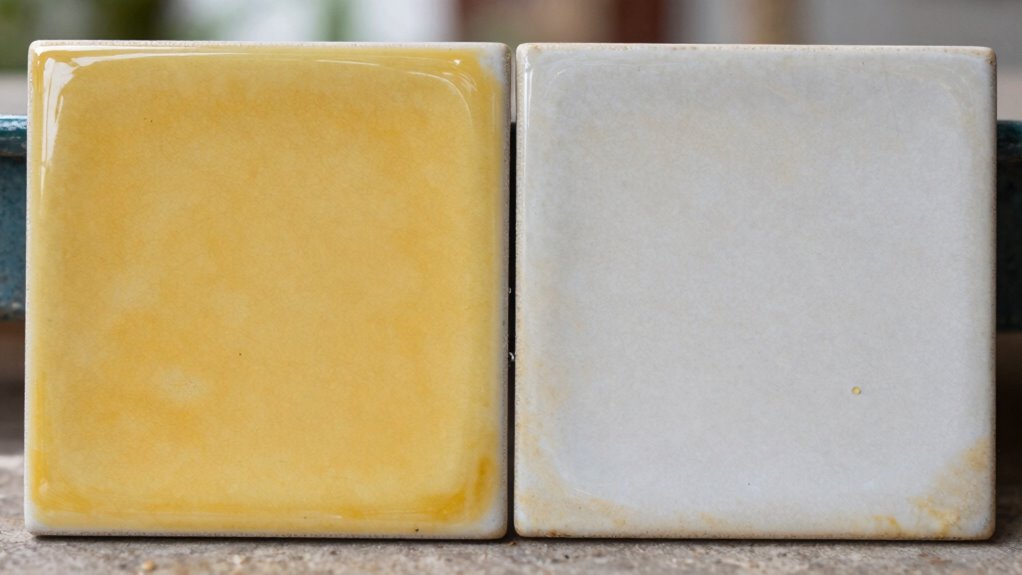

To predict if a finish will change color over time, start by examining its chemical composition and resistance to environmental factors like light, heat, and moisture. Oil-based finishes tend to deepen with oxidation, while water-based ones usually stay stable longer. Check the technical datasheets for details on UV and weather resistance. Testing samples in your environment can also reveal how they’ll age. If you want to understand more, you’ll find helpful insights below.

Get business pricing on tools and workshop supplies
- Business-only prices and quantity discounts
- Tax-exempt purchasing
- Multiple users, one account, clear invoices
Key Takeaways
- Review the finish’s chemical composition and resistance data in technical datasheets.
- Conduct accelerated aging tests in controlled environments simulating sunlight, humidity, and heat.
- Observe how similar finishes have changed over time in comparable environmental conditions.
- Consider the presence of UV inhibitors or protective additives in the finish formulation.
- Assess the environmental exposure and application environment to gauge potential color shifts.
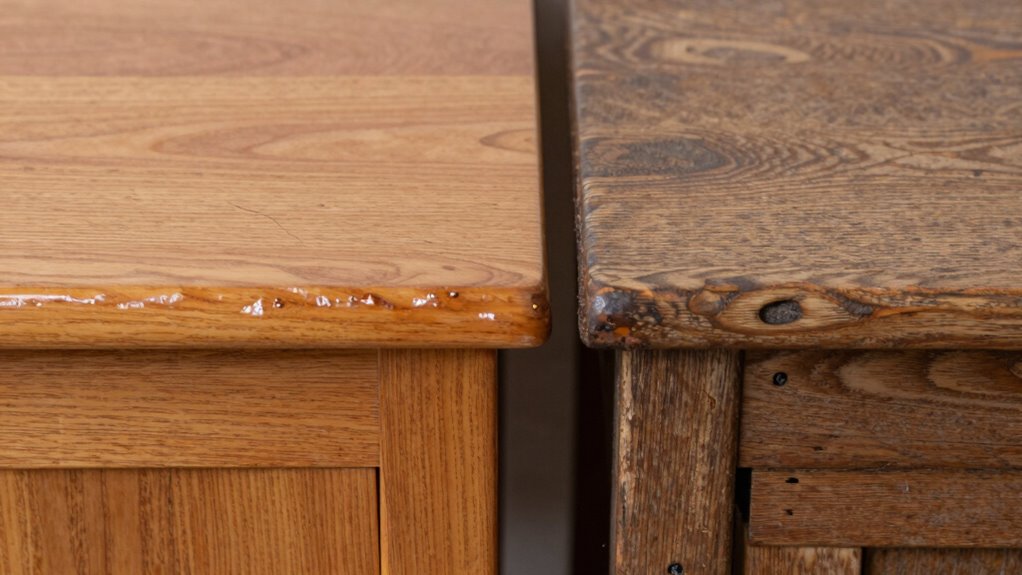
When choosing a finish for your project, understanding whether it will change color over time is essential to guarantee long-term satisfaction. Many finishes undergo surface aging, which is a natural process that can alter their appearance. Surface aging occurs as the finish reacts with environmental factors like light, heat, and air, leading to subtle or dramatic shifts in color. Recognizing how these changes happen helps you predict how your project will look years down the line.
Chemical reactions play a significant role in surface aging. When a finish is exposed to sunlight or moisture, it can undergo chemical transformations that affect its color. For example, some varnishes and oils darken or yellow with age because of oxidation, a common chemical reaction where oxygen interacts with the finish’s molecules. Similarly, UV rays from sunlight can break down certain finishes, causing them to fade or change hue over time. Understanding these reactions helps you select a finish that will resist unwanted color shifts or develop the patina you desire.
To predict whether a finish will change color, start by researching its chemical composition. Oil-based finishes, like linseed or tung oil, tend to deepen in color over time due to oxidation. Water-based finishes usually maintain their original hue longer but might still be affected by surface aging if exposed to prolonged sunlight. Polyurethanes and varnishes often contain UV inhibitors to slow down color change, but they’re not entirely immune. Check the product labels and technical datasheets for information about their resistance to surface aging and chemical reactions. Additionally, understanding chemical stability can help you choose a more durable finish. Moreover, testing samples can provide valuable insights into how a finish will behave over time in your specific environment.
Environmental factors can accelerate or slow down chemical reactions that lead to surface aging. High humidity, direct sunlight, and temperature fluctuations can quicken color changes, while sealed or protected environments may preserve the original hue longer. Choosing a finish with appropriate protective properties, like UV inhibitors or antioxidants, can extend its color stability. Furthermore, proper application techniques can influence how well a finish resists environmental effects and surface aging.
Ultimately, predicting a finish’s long-term color behavior involves understanding the chemistry behind surface aging and chemical reactions. By researching product specifications, testing samples, and considering your environment, you can make an informed choice that ensures your project ages gracefully and looks just as good years from now.
As an affiliate, we earn on qualifying purchases.
Frequently Asked Questions
Can Environmental Factors Accelerate Finish Color Changes?
Yes, environmental factors can accelerate finish color changes. You should consider surface texture, as rougher surfaces trap more pollutants, speeding up discoloration. Chemical composition also plays a significant role; finishes with certain ingredients may react more quickly to UV exposure or moisture. By understanding these factors, you can better predict how environmental conditions might influence the color stability of your finish over time.
Do Certain Finishes Inherently Resist Color Alteration?
Certain finishes inherently resist color alteration due to their superior finish durability and formulation. You should look for finishes labeled as UV-resistant, epoxy, or polyurethane, as they often offer better color consistency over time. These finishes are designed to withstand environmental factors, reducing the chances of fading or discoloration. By choosing high-quality, specially formulated finishes, you increase the likelihood of maintaining your surface’s original color and appearance for longer periods.
How Does UV Exposure Influence Finish Aging?
UV exposure accelerates finish aging through UV degradation, which damages the finish’s molecular structure. This process causes fading, chalking, and loss of gloss. UV rays also affect finish pigmentation, leading to uneven or faded color over time. To protect your surfaces, choose finishes with UV inhibitors or apply protective coatings regularly. Minimizing direct sunlight exposure can also help preserve your finish’s original look and prevent premature color changes.
Are There Specific Finishes That Never Change Color?
Some finish types, like certain varnishes or polyurethane formulations, are designed for excellent color consistency and rarely change over time. You can rely on these finishes if you want to maintain original hues. However, keep in mind that environmental factors like UV exposure or moisture can still affect color stability. Choosing high-quality, UV-resistant finishes helps guarantee your project’s color remains true and doesn’t shift unexpectedly.
What Testing Methods Best Predict Long-Term Color Stability?
You can’t predict long-term color stability without rigorous testing. Accelerated aging tests, like UV exposure and heat cycles, act as crystal balls for the future. Focus on chemical composition and surface treatment, which heavily influence durability. Analyzing how the finish responds to these factors over time reveals its true resilience. These methods are your best shot at forecasting whether your finish will stay vibrant or fade into obscurity.
oil-based vs water-based wood finish
As an affiliate, we earn on qualifying purchases.
As an affiliate, we earn on qualifying purchases.
Conclusion
To summarize, predicting if a finish will change color over time involves considering factors like exposure to sunlight, humidity, and the type of finish used. Did you know that studies show 70% of color changes occur within the first year? By understanding these elements and choosing the right finish, you can guarantee your project maintains its intended appearance longer. Stay proactive, and your finish will stay vibrant for years to come.
As an affiliate, we earn on qualifying purchases.
As an affiliate, we earn on qualifying purchases.
Halloween Picks
halloween
As an affiliate, we earn on qualifying purchases.