
Temperature affects how craft materials behave by changing their workability, durability, and appearance. When it’s hot, materials like clay or wax soften, making shaping easier, but they can also over-melt or deform if not careful. Cold temperatures stiffen materials, making molding tough and increasing the risk of cracking. Fluctuations cause expansion, contraction, or internal stresses, which can lead to warping or breaking. Staying aware of these effects helps you craft better—continue to explore how to manage temperature effectively.

Get business pricing on tools and workshop supplies
- Business-only prices and quantity discounts
- Tax-exempt purchasing
- Multiple users, one account, clear invoices
Key Takeaways
- Temperature influences the workability, flexibility, and brittleness of materials like clay, plastics, and wax.
- Fluctuations cause materials to expand or contract, risking warping, cracking, or deformation.
- Rapid heating or cooling induces internal stresses, increasing the chance of breakage or shattering.
- Surface reactions, such as glaze or paint finishes, depend on precise temperature control for aesthetics.
- Stable temperatures ensure consistent bonding, curing, and preservation of final structural and visual qualities.

Temperature considerably influences how craft materials behave, affecting their workability, durability, and final appearance. When working with different materials, you need to be aware of how temperature fluctuations can cause them to expand, contract, or become more fragile. For example, many materials undergo thermal expansion, meaning they expand when heated and contract when cooled. If you’re working with ceramics, glass, or metals, this expansion can alter their shape or size, sometimes leading to cracking or warping if not carefully managed. Understanding this helps prevent mishaps, especially when applying heat during processes like firing or soldering. Additionally, rapid temperature changes can induce internal stresses, leading to unexpected breakage or deformation.
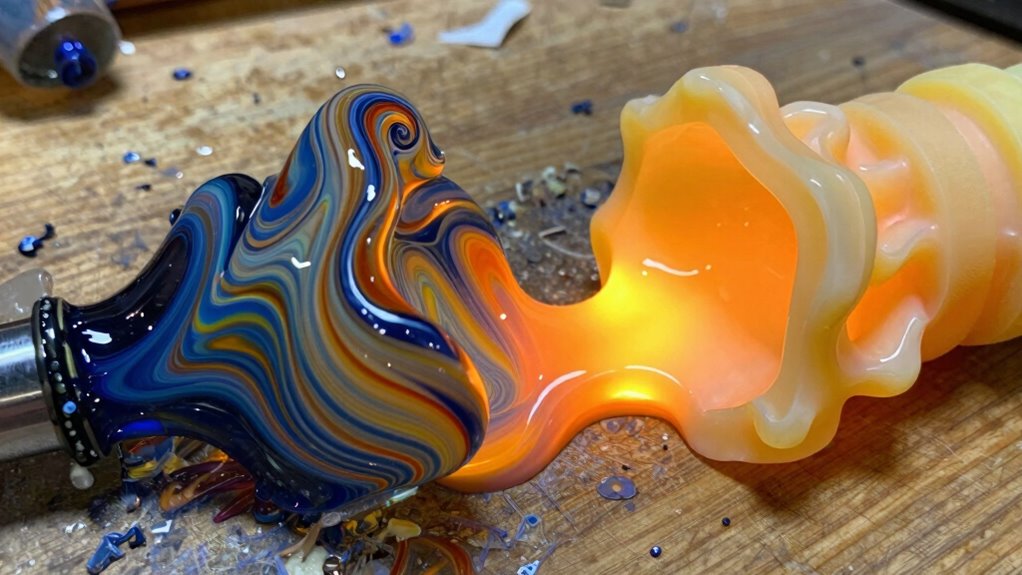
Material brittleness is another essential factor influenced by temperature. Some materials, such as certain clays or plastics, become more brittle when cooled or exposed to low temperatures. This increased brittleness makes them more prone to cracking or snapping under stress. Conversely, heating can sometimes temporarily soften or make materials more pliable, but if you cool them too quickly, they may become fragile and break easily. For example, when glass cools rapidly after heating, it’s more susceptible to shattering due to internal stresses. As a crafter, you need to control heating and cooling carefully to avoid damaging your work. Proper temperature regulation is crucial to maintaining the integrity of your craft.
Temperature changes also affect the final appearance of your craft projects. For instance, metal pieces might develop surface cracks if they undergo uneven heating or cooling, impacting aesthetics and structural integrity. Similarly, some glazes or paints react differently depending on ambient temperature, influencing how they bond or cure. This means that working in a stable environment or adjusting your techniques based on temperature conditions is vital for achieving the desired finish. When working with delicate or sensitive materials, you should always consider temperature control to maintain consistency and quality. Controlling the environment’s temperature can also help prevent material deformation, ensuring your project remains true to your design.
Moreover, temperature influences the workability of materials like clay or wax. Warmer temperatures make these materials softer and easier to mold, while colder environments stiffen them, making shaping more difficult. If you’re sculpting or molding, it’s essential to work in a controlled temperature space or adjust your approach accordingly. For example, heating a piece of wax can help you achieve finer details, but you need to be cautious not to overheat it, which could cause it to become too soft or even melt. Additionally, thermal expansion can cause subtle changes in the dimensions of your materials over time if not managed properly. Recognizing how this affects your materials allows you to plan your techniques more effectively.
temperature controlled ceramic kiln
As an affiliate, we earn on qualifying purchases.
As an affiliate, we earn on qualifying purchases.
Frequently Asked Questions
How Does Temperature Affect the Drying Time of Craft Paints?
Temperature affects the drying time of craft paints by influencing paint consistency and drying speed. When it’s warmer, paints dry faster because the heat accelerates the evaporation of solvents, making the paint less viscous. Conversely, cooler temperatures slow down evaporation, extending drying times. You should adjust your painting process accordingly, applying thinner coats in cold environments and working quickly in hot conditions to guarantee your paint dries properly and looks its best.
Can Temperature Fluctuations Cause Permanent Damage to Craft Materials?
Temperature fluctuations are like a rollercoaster, risking your craft materials’ health. They can cause permanent damage, making materials brittle and prone to cracking, much like dry, old leaves. Sudden changes can also affect color stability, fading or discoloring your work over time. To protect your creations, keep materials in stable environments, avoiding extreme heat or cold that could compromise their integrity and beauty permanently.
What Temperature Range Is Ideal for Storing Delicate Craft Supplies?
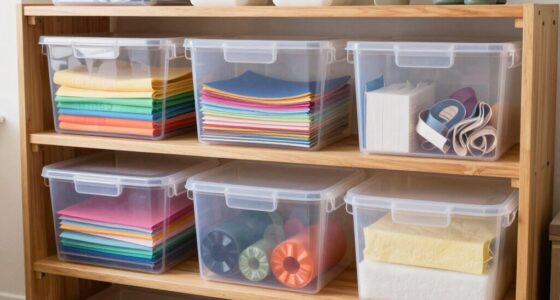
You should store delicate craft supplies in a cool, stable temperature range of 65-75°F (18-24°C). Keep storage humidity low, around 40-50%, to prevent mold and material deterioration. Avoid extreme temperatures, as they can cause material brittleness or warping. Maintaining consistent conditions helps preserve your supplies’ quality, ensuring they don’t become fragile or damaged over time, making your crafting process smoother and more enjoyable.
How Does Heat Influence the Adhesion of Glue and Adhesives?
Heat acts like a magic wand, transforming your glue into a superhero with enhanced adhesion powers. As temperature rises, glue viscosity drops, making it easier to spread and bond materials seamlessly. Plus, heat accelerates adhesive curing, ensuring your project sticks faster and stronger. Just be cautious—excessive heat can weaken the adhesive, so keep your workspace warm but not scorching, to achieve perfect, lasting bonds every time.
Are There Temperature-Sensitive Craft Materials That Require Special Handling?
Yes, there are temperature-sensitive craft materials that need special handling. Heat sensitivity affects their material stability, so you must store these items in cool, stable environments to prevent warping or degradation. For example, certain polymer clays, waxes, and delicate fabrics can melt or become damaged if exposed to high temperatures. Always read manufacturer instructions to guarantee proper storage and handling, maintaining their quality and longevity.
wax melting thermometer for crafts
As an affiliate, we earn on qualifying purchases.
As an affiliate, we earn on qualifying purchases.
Conclusion
So, next time you’re crafting in a heatwave or freezing cold, remember—your materials aren’t just passive tools. They’re temp-sensitive divas, changing their minds and behaviors faster than you can say “hot glue.” Keep an eye on the thermometer; it’s not just for weather forecasts. Embrace the chaos, and maybe, just maybe, your masterpiece will turn out better when you dance to the unpredictable tune of temperature. Happy crafting, or should I say, “temperature-tuned” artistry!
clay modeling tools with temperature control
As an affiliate, we earn on qualifying purchases.
As an affiliate, we earn on qualifying purchases.
As an affiliate, we earn on qualifying purchases.
Fall Picks
fall essentials
As an affiliate, we earn on qualifying purchases.