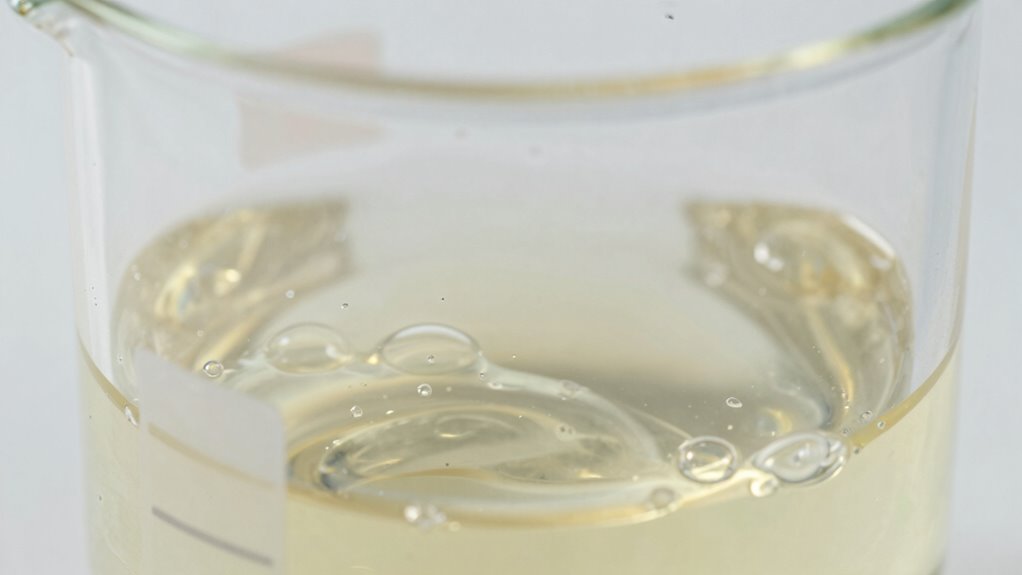

Your resin mixture’s ratios are vital for a clear, smooth finish. Even tiny errors—like adding too much or too little hardener—can cause cloudiness, fogging, or incomplete curing. Carefully measure each component using a digital scale or precise tools, and follow the manufacturer’s instructions closely. Properly mixed ratios guarantee the resin bonds well, cures evenly, and avoids surface issues. Want to discover how to perfect your mixing techniques and prevent these common problems? Keep going to find out more.
Key Takeaways
- Small inaccuracies in resin-to-hardener ratios can disrupt chemical bonding, leading to cloudiness and foggy surfaces.
- Over-adding hardener causes rapid curing, trapping air bubbles and resulting in a cloudy appearance.
- Under-measuring hardener results in incomplete curing, which can also cause a hazy or uneven finish.
- Precise measurement with a digital scale ensures correct ratios, preventing cloudiness caused by improper mixing.
- Consistently following brand-specific instructions and mixing thoroughly reduces the risk of cloudiness due to ratio errors.
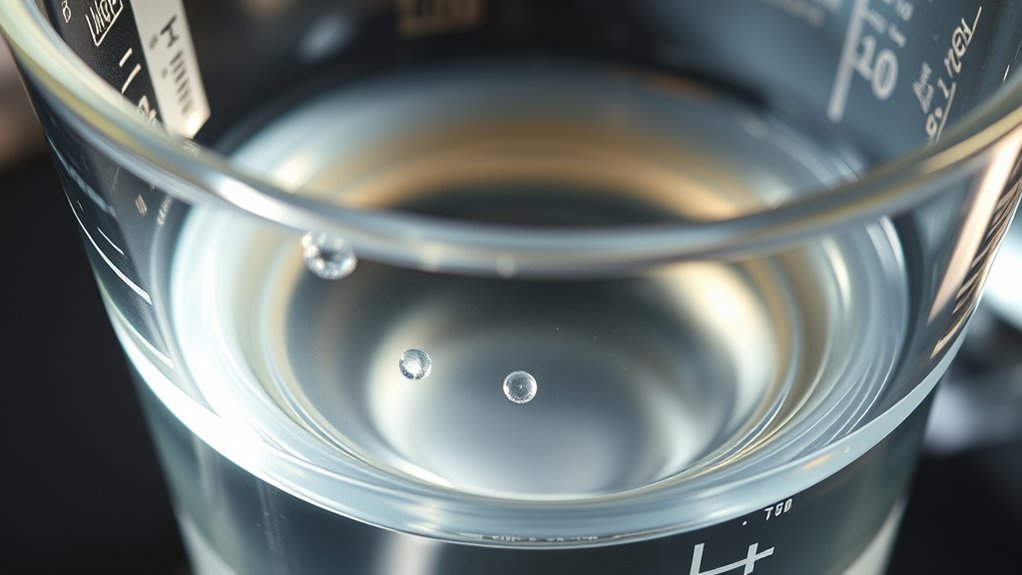
Understanding resin mixing ratios is essential for achieving the best results in your projects. When you get the ratios right, you guarantee the resin cures properly, leading to ideal resin durability and a clear, glossy finish. Conversely, even a small miscalculation can cause cloudiness, stickiness, or weak spots in your final piece. The curing process hinges on precise proportions because it determines how the resin molecules bond and harden. If you add too much hardener, the resin may cure too quickly, creating a brittle surface or uneven texture. Too little, and it may remain soft, tacky, or incomplete, which compromises both the appearance and longevity of your project.
To avoid this, always measure your resin and hardener carefully. Use a digital scale for accuracy, especially if you’re working with small quantities. Most resin brands specify a ratio—often 1:1 or 2:1—so follow those instructions strictly. Remember, the curing process is a chemical reaction that depends on exact proportions; any deviation can interfere with resin durability, resulting in a weaker, less resilient finish. Proper mixing ensures that the resin flows smoothly and bonds uniformly, which is critical for achieving a crystal-clear appearance free of cloudiness or fogging.
Mixing thoroughly is just as important as measuring correctly. You need to stir slowly and consistently, scraping the sides and bottom of your container to incorporate every bit of resin and hardener. Inadequate mixing can leave unreacted components, which may cause cloudiness or sticky patches. Patience is key—rushing through the process can introduce air bubbles or uneven curing, both of which compromise transparency and surface quality. Additionally, resin curing conditions such as ambient temperature and humidity can significantly influence the final outcome, so controlling these factors is essential for a flawless finish.
Temperature also plays a role in the curing process. Working in a controlled environment at the recommended temperature will help guarantee consistent curing and maximize resin durability. If it’s too cold, the resin may cure slowly or not at all, leading to incomplete hardening. Too hot, and it could cure too quickly, trapping air bubbles or causing cracks. By controlling these factors and adhering strictly to the recommended mixing ratios, you’ll promote a clean, durable finish that resists cloudiness over time.
In short, understanding and applying the correct resin mixing ratios is fundamental. It’s the foundation for a successful cure, high resin durability, and a clear, professional-looking result. Take your time, measure precisely, and follow the instructions carefully—your projects will thank you with a flawless, lasting finish.

Funshowcase Mini Electronic Scale for Resin Epoxy Measuring
- Compact digital pocket scale: Mini electronic digital scale
- Small size with clear display: Screen: 1.57×0.59 inches
- Weighing platform dimensions: Platform: 2.17×1.97 inches
As an affiliate, we earn on qualifying purchases.
As an affiliate, we earn on qualifying purchases.
Frequently Asked Questions
How Long Should I Mix Resin Before Pouring?
You should mix resin for about 2-3 minutes until it’s thoroughly combined and free of streaks. Proper mixing duration guarantees the resin’s components blend well, reducing cloudiness later. Be sure to scrape the sides and bottom of your container during this process. After mixing, allow the resin to sit for a few minutes to release bubbles before pouring. This helps improve curing time and results in a clear, smooth finish.
Can I Reuse Leftover Resin for Another Project?
You can’t reuse leftover resin for another project because it hardens once cured, making it unusable. Instead, consider proper resin disposal to avoid environmental harm. If you want to be eco-friendly, explore recycling resin options or find local disposal guidelines. Always work with fresh resin to guarantee quality, and avoid pouring leftover resin back into containers, as contamination can cause cloudiness or curing issues in future projects.
What’s the Best Way to Store Mixed Resin?
You’d think storing mixed resin is as simple as tossing it in a container, right? Ironically, if you want to avoid resin discoloration, use airtight storage containers and keep them in a cool, dark place. Seal them tightly to prevent air exposure, which can cause cloudiness. Proper storage keeps your leftover resin fresh, ready for the next project, instead of turning into a cloudy, unusable mess.
How Do Temperature Fluctuations Affect Resin Curing?
Temperature fluctuations can substantially impact your resin curing process by disrupting temperature stability, which in turn affects curing consistency. When temperatures vary, resin may cure unevenly, leading to cloudiness or weak spots. To guarantee proper curing, you should maintain a consistent temperature environment, ideally within the recommended range. Use a controlled workspace or heating/cooling devices to prevent sudden temperature changes, ensuring your resin cures smoothly and maintains clarity.
Are There Eco-Friendly Resin Mixing Alternatives?
You can choose eco-friendly resin mixing alternatives like biodegradable resins and plant-based alternatives. These options reduce environmental impact and often come from renewable resources, making them safer for the planet. When you opt for biodegradable resins, you support sustainable practices. Plant-based alternatives are a great choice if you want to minimize harmful chemicals and waste, helping you create eco-conscious projects without sacrificing quality or performance.

Silicone Resin Measuring Cups Tool Kit- Nicpro 250 & 100 ml Measure Cups, Silicone Popsicle Stir Sticks, Pipettes, Finger Cots for Epoxy Resin Mixing, Molds, Jewelry Making, Waxing, Easy Clean
- Complete Measuring Kit: Includes cups, sticks, pipettes, and finger cots
- Durable Silicone Cups: Flexible, non-toxic, and non-stick for easy pouring
- Precision Pouring Design: Angled diversion port for accurate and clean pouring
As an affiliate, we earn on qualifying purchases.
As an affiliate, we earn on qualifying purchases.
Conclusion
Remember, mastering resin mixing ratios is essential to creating clear, mesmerizing casts. Even a tiny tweak or tiptoe into trouble can turn your transparent triumph into cloudy chaos. Stay sharp, stick to the specified ratios, and avoid accidental errors. With careful calibration and consistent caution, you’ll craft crystal-clear creations that captivate and charm. Keep these keys in mind, and you’ll consistently conquer cloudy conundrums with confidence and creativity.

OFFNOVA Resin Heating Mat & Leveling Table, 2-in-1 Resin Tools for Epoxy Resin, Resin Curing Machine for Resin Molds, Undeformed Resin Dryer with Smart Timer & Temperature Control, Silicone Mat
- 2-in-1 Curing and Leveling: Combines fast curing and leveling functions
- Adjustable Feet and Bubble Level: Ensures an even surface for curing
- Fast Resin Curing: Cures resin in 2-3 hours
As an affiliate, we earn on qualifying purchases.
As an affiliate, we earn on qualifying purchases.

50PCS Resin Epoxy Mixing Cups, DQELFA 8oz Clear Plastic Paint Measuring Cups with 50pcs Wooden Stirring Sticks for Epoxy Resins, Mixing Paint, Pigments, Resins
- Complete Mixing Kit: Includes 50 cups and 50 sticks
- Clear Graduated Markings: Easy-to-read measurement lines
- Durable Plastic Material: Sturdy, crack-resistant, and leak-proof
As an affiliate, we earn on qualifying purchases.
As an affiliate, we earn on qualifying purchases.