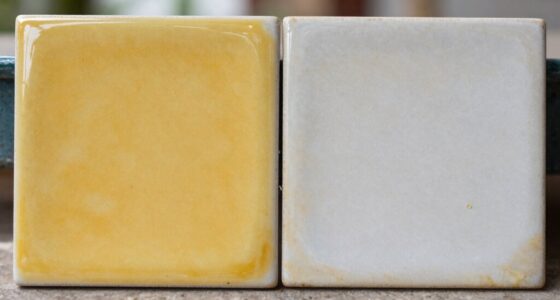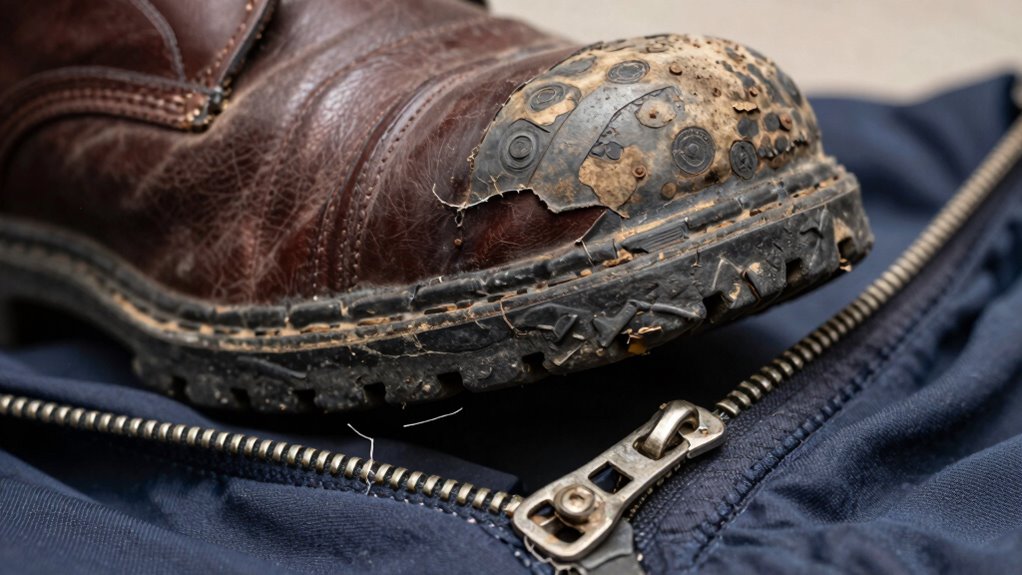

You’ll find that composite pairs like metal and glass tend to fail first, mainly because of their differing thermal expansion rates. When temperature changes, these materials expand or contract unevenly, creating stress that can cause warping, cracking, or delamination over time. Ignoring thermal compatibility in your design increases the risk of early failure. Keep exploring to discover how to select better material combinations and avoid these common pitfalls.

Get business pricing on tools and workshop supplies
- Business-only prices and quantity discounts
- Tax-exempt purchasing
- Multiple users, one account, clear invoices
Key Takeaways
- Glass and metal combinations often fail first due to mismatched thermal expansion rates.
- Organic materials bonded to inorganic substrates tend to delaminate under temperature changes.
- Thin-film coatings on substrates may crack or peel when thermal stresses exceed adhesion strength.
- Composite materials with incompatible thermal expansion coefficients are prone to warping or delamination.
- Materials with high moisture absorption can cause swelling and failure when paired with rigid, non-porous materials.
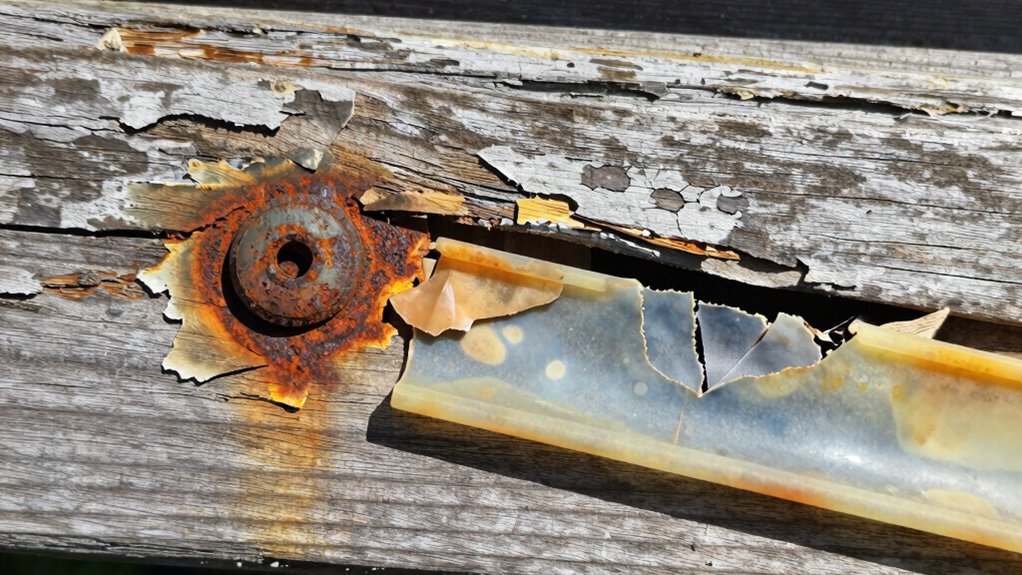
Thermal compatibility is just as critical. Different materials expand and contract at different rates when exposed to temperature fluctuations. If you combine materials with markedly mismatched coefficients of thermal expansion, you risk inducing stress that causes warping, cracking, or delamination over time. For instance, bonding glass to metal without considering their thermal properties can result in failure when exposed to temperature swings. To prevent this, you should select materials with similar thermal expansion rates or include buffers and flexible joints to absorb the stresses. Ignoring thermal compatibility often results in early failure, especially in applications exposed to varying environmental conditions. Additionally, understanding material compatibility helps in predicting how materials will behave together over extended periods and under different environmental stresses. Recognizing thermal stress mitigation techniques is essential for designing durable material pairings capable of withstanding environmental changes. Proper consideration of thermal expansion coefficients during the design phase can significantly enhance the longevity of the assembly. Incorporating thermal cycling testing into the development process can also reveal potential weaknesses before deployment. Being aware of environmental factors that influence material performance is crucial for ensuring long-term durability.
thermal expansion compatible glass and metal bonding
As an affiliate, we earn on qualifying purchases.
As an affiliate, we earn on qualifying purchases.
Frequently Asked Questions
What Environmental Factors Influence Early Material Pairing Failures?
Environmental factors like moisture, temperature fluctuations, and chemical exposure influence early material pairing failures. You’ll see corrosion susceptibility increase when materials are exposed to humid or salty environments, leading to faster degradation. Additionally, thermal expansion differences can cause stress at the interface, resulting in cracks or delamination. By understanding these factors, you can select more compatible materials, reducing early failure risks and improving the longevity of your assemblies.
How Can I Prevent These Common Material Pairing Issues?
You can prevent common material pairing issues by conducting thorough compatibility testing before combining materials. Investigate how different substances interact under various conditions to spot potential failures early. Focus on careful material selection, prioritizing those proven to work well together in similar environments. Regular testing and monitoring during implementation also help catch issues promptly, ensuring your pairings stay durable and reliable over time.
Are There Specific Industries Most Affected by These Failures?
Certain industries, like aerospace, automotive, and chemical processing, are most affected by material failure issues. You need to watch out for chemical incompatibility, which can cause corrosion or degradation, and fatigue-induced degradation, leading to cracks and failure over time. In these sectors, using compatible materials and regular inspections can considerably reduce risks, ensuring safety and longevity in your projects.
What Are the Signs Indicating a Material Pairing Is About to Fail?
Like warning bells ringing, signs of impending failure include corrosion resistance decreasing and thermal expansion mismatching. You’ll notice cracks, discoloration, or swelling where materials meet, indicating stress. Pay attention to unusual temperature changes or material deformation. These signs suggest the pairing is strained, much like a fragile friendship nearing its breaking point. Addressing these early helps prevent costly failures, ensuring your materials work together harmoniously instead of falling apart.
Do Material Pairings Fail Differently Under Extreme Conditions?
Yes, material pairings fail differently under extreme conditions. You’ll notice corrosion resistance decreases faster if one material isn’t suited for the environment, leading to quicker degradation. Thermal expansion differences can cause stress, cracking, or separation when temperatures fluctuate drastically. These factors make certain pairings more vulnerable under extreme conditions, emphasizing the importance of selecting materials with compatible corrosion resistance and thermal expansion properties to guarantee durability and longevity.
flexible joints for material stress absorption
As an affiliate, we earn on qualifying purchases.
As an affiliate, we earn on qualifying purchases.
Conclusion
So, next time you’re mixing metals or trying that trendy new combo, remember: some pairings are basically destined for a fiery breakup. Think of it like a bad dating app match—hot at first, then suddenly sparks fly, and everything melts down. Keep your material pairings sensible, or you’ll be the proud owner of a ruined masterpiece and a wallet crying for mercy. Sometimes, patience and proper pairings save you from a fiery, expensive disaster.
thermal cycling testing equipment
As an affiliate, we earn on qualifying purchases.
As an affiliate, we earn on qualifying purchases.
material compatibility testing kits
As an affiliate, we earn on qualifying purchases.
As an affiliate, we earn on qualifying purchases.
Halloween Picks
halloween
As an affiliate, we earn on qualifying purchases.