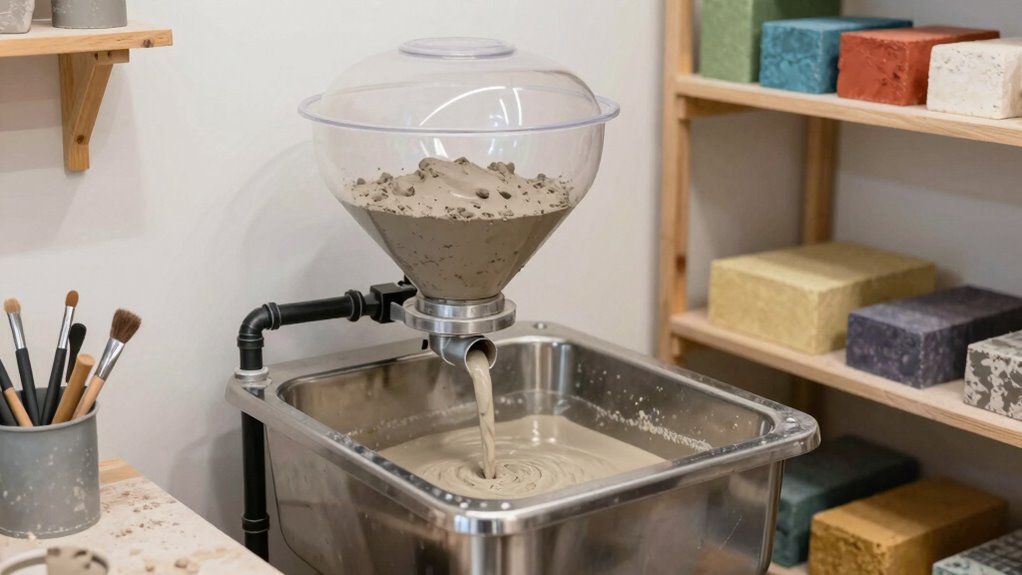

To choose a clay reclaim system for your small studio, focus on models with built-in filters or easy-clean access, ensuring it’s simple to maintain and lasts through regular use. Consider durability and compatibility with your space and budget, and look for features that prevent clogging. Routine cleaning and inspections will extend its lifespan and keep your water quality high. Staying mindful of these factors helps you pick an efficient, eco-friendly system—there’s more to know to make the best choice.

Get business pricing on tools and workshop supplies
- Business-only prices and quantity discounts
- Tax-exempt purchasing
- Multiple users, one account, clear invoices
Key Takeaways
- Select a system with easy-to-clean filters and accessible parts to simplify maintenance and prevent clogging.
- Ensure compatibility with your studio’s space, budget, and workflow requirements for efficient integration.
- Prioritize durable construction and simple operation to reduce downtime and long-term repair costs.
- Consider systems with built-in filtration or support for easy cleaning to maintain water quality.
- Evaluate long-term costs, including replacement parts and maintenance, to ensure sustainable, eco-friendly operation.
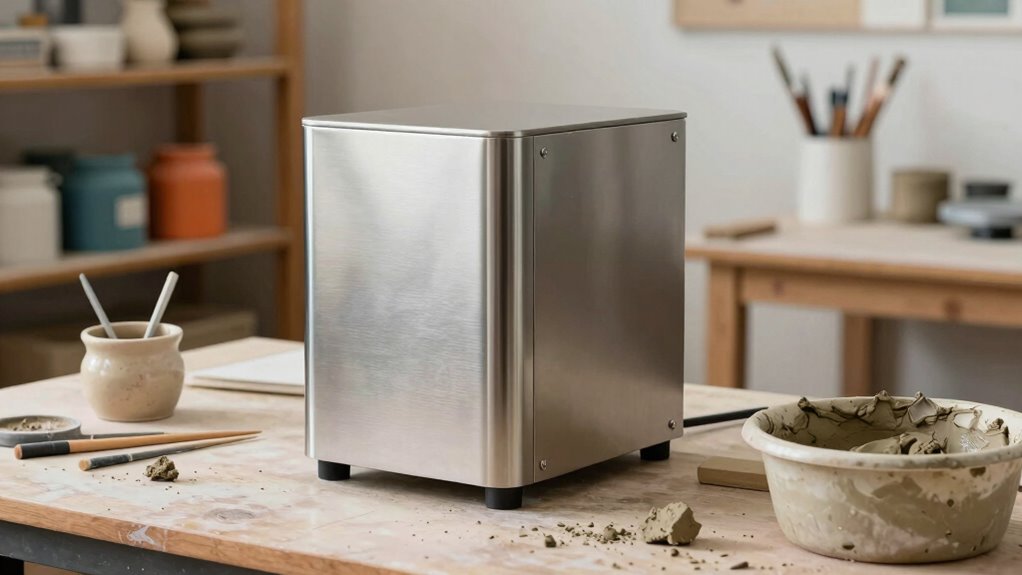
Selecting the right clay reclaim system is essential for maintaining efficient and sustainable pottery or ceramic production. As a small studio owner, you need a system that not only recycles your clay effectively but also fits within your space and budget. One of the most important factors to consider is how well the system handles water filtration. Since reclaimed clay often involves mixing with water, you want a setup that filters out debris, glazes, and other impurities to produce clean, reusable slip. Good water filtration extends the lifespan of your clay and reduces waste, making your studio more eco-friendly. When choosing a system, look for features like built-in filters or easy access for cleaning, so you can maintain consistent water quality without much hassle. Proper water filtration also minimizes the buildup of contaminants that could compromise your finished pieces or clog your equipment. Additionally, understanding the components of a well-designed water filtration system can help you select a unit that offers optimal performance and longevity. Regular inspecting and cleaning your system is vital to prevent clogging or breakdowns**, especially in small studios where resources are limited. Implementing a routine maintenance plan can further enhance the efficiency and lifespan of your reclaim system, ensuring consistent performance over time. When choosing a system, consider whether it features easy-to-clean parts and straightforward operation to reduce downtime. System maintenance is equally important. A reclaim system that’s complicated to clean or requires frequent repairs can quickly become a burden, especially in a small studio where time and resources are limited. You want a system that’s durable and simple to operate, with accessible parts for routine cleaning. Establishing a clear maintenance routine helps prevent issues like clogging or breakdowns, ensuring your system runs smoothly and efficiently**. Check if the manufacturer provides clear instructions or support for system upkeep. Also, consider whether replacement parts are readily available and affordable, as this can greatly influence your long-term costs. When you establish a routine for system maintenance, you’ll keep your reclaim process seamless, saving you time and effort in the long run.
clay reclaim system with built-in filters
As an affiliate, we earn on qualifying purchases.
As an affiliate, we earn on qualifying purchases.
Frequently Asked Questions
What Is the Typical Lifespan of a Clay Reclaim System?
A typical clay reclaim system lasts around 5 to 10 years, depending on its reclaim system durability and how well you maintain it. Proper cleaning and regular checks optimize your clay process, extending its lifespan. Investing in a high-quality system guarantees better durability and efficient clay reuse. Keep up with maintenance, and you’ll maximize your reclaim system’s longevity, saving money and improving your small studio’s overall clay process.
How Energy-Efficient Are Different Reclaim System Models?
Imagine you upgrade to a reclaim system with advanced filtration and insulated components; you’ll notice lower energy consumption. Modern models incorporate technological advancements like efficient motors and better insulation, making them more energy-efficient. For example, a small studio switching to a new system reduces energy use by up to 30%. Choosing a model with these features helps save on electricity costs, ensuring your studio stays sustainable and budget-friendly.
Are There Maintenance Costs Associated With Clay Reclaim Systems?
Yes, there are maintenance costs associated with clay reclaim systems. These costs include regular cleaning, filter replacements, and occasional repairs. When considering cost considerations, you should also check equipment compatibility to guarantee your system works smoothly with your existing setup. Proper maintenance helps extend your reclaim system’s lifespan, reduces downtime, and keeps your studio running efficiently. Budgeting for these ongoing expenses is essential for sustainable studio operations.
Can Reclaim Systems Be Integrated With Existing Studio Equipment?
Imagine your studio’s equipment working harmoniously like a well-tuned orchestra—reclaim systems can often integrate smoothly if you choose compatible models. Look for reclaim system compatibility with your existing equipment to avoid integration challenges. Some systems may require adapters or additional connections, but many modern reclaim units are designed for seamless equipment integration. Conduct thorough research and consult with manufacturers to verify your new reclaim system complements your studio setup perfectly.
What Safety Features Should I Look for in a Reclaim System?
You should look for reclaim systems with essential safety features like safety guards and secure covers to prevent accidents. Check for emergency features such as easily accessible stop buttons and shut-off switches that quickly halt operation if needed. Confirm the system complies with safety precautions like proper grounding and dust containment. These features protect you and your workspace, reducing risks and ensuring safe, efficient clay recycling in your studio.
easy-clean pottery clay reclaim system
As an affiliate, we earn on qualifying purchases.
As an affiliate, we earn on qualifying purchases.
Conclusion
Choosing the right clay reclaim system for your small studio doesn’t have to be overwhelming. By considering your space, budget, and specific needs, you can find a solution that keeps your workspace efficient and your clay fresh. Remember, investing in the right system isn’t just about saving time—it’s about enhancing your creative process. So, aren’t you ready to make a choice that will elevate your studio’s productivity and artistry?
small studio clay recycling system
As an affiliate, we earn on qualifying purchases.
As an affiliate, we earn on qualifying purchases.
durable water filtration system for ceramics
As an affiliate, we earn on qualifying purchases.
As an affiliate, we earn on qualifying purchases.
Fall yard work Picks
leaf blowers
As an affiliate, we earn on qualifying purchases.