

To build a material test library that saves time later, start by identifying your most-used materials and gathering detailed specifications, including test results and industry standards. Create a centralized database for quick access and develop standardized testing protocols to make certain of consistency. Regularly update the library with new data and review processes to keep everything current. Using organized, reliable information will speed up decision-making and reduce costly errors—continue to explore these steps for more detailed guidance.

Get tools and workshop supplies delivered free — and shop member deals
- Fast, free delivery on millions of items
- Access to Prime Big Deal Days deals on October 6–7
- Prime Video, Amazon Music and more included
Key Takeaways
- Standardize data entry by using consistent formats and terminology for materials, test methods, and results.
- Integrate recognized industry standards like ASTM or ISO into testing protocols for reliability.
- Regularly update the library with new materials, test results, and protocol revisions to maintain relevance.
- Link testing data directly to material selection processes to streamline decision-making.
- Use data analysis to identify trends, reducing redundant testing and guiding future material choices.
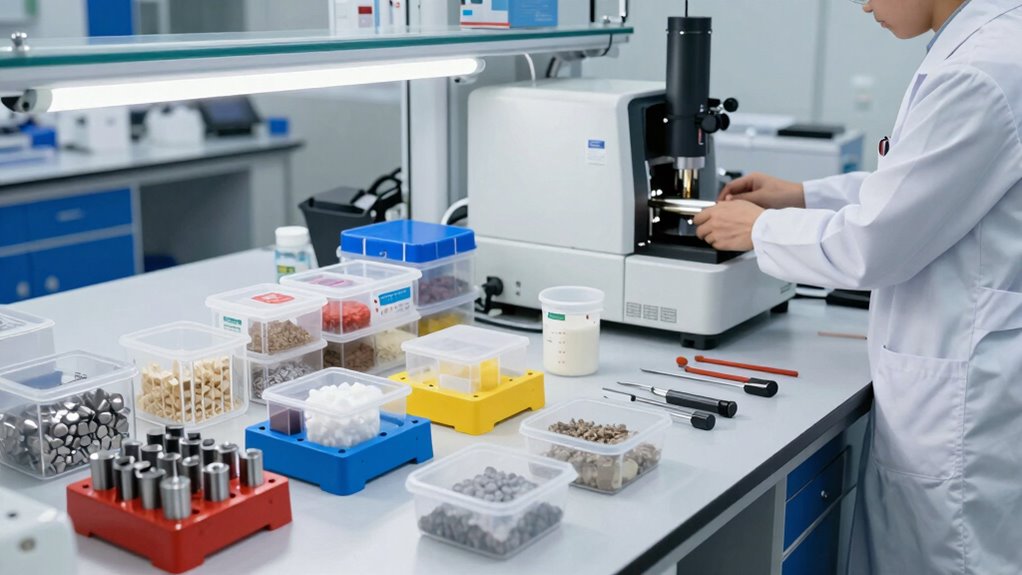
Creating an all-encompassing material test library is vital for guaranteeing your projects meet quality standards and performance expectations. When you focus on material selection, you’re laying the foundation for reliable testing and long-term success. Start by identifying the types of materials you frequently work with—metals, polymers, composites, or ceramics—and gather exhaustive data on each. This means collecting detailed specifications, chemical compositions, mechanical properties, and previous test results. Your goal is to create a centralized, organized repository so that when new projects arise, you can quickly access relevant material data without wasting time searching through scattered documents. Incorporating comprehensive data collection from industry standards and previous tests ensures your library remains a reliable resource. Developing effective testing protocols is the next step. These protocols serve as a roadmap for evaluating materials consistently and accurately. When you establish clear procedures—covering tensile tests, impact resistance, fatigue testing, and other relevant assessments—you guarantee reproducibility across different tests and personnel. Incorporate industry standards, like ASTM or ISO, into your protocols to align with recognized benchmarks, which simplifies validation and quality control. As you build your test library, document every test method, environmental conditions, sample preparation procedures, and acceptance criteria. This consistency minimizes errors and variability, making future evaluations more efficient. You’ll also want to integrate your testing protocols with your material selection process. When evaluating new materials, refer to your library to compare test results against your performance requirements. Having a ready reference accelerates decision-making, reduces guesswork, and helps you avoid redundant testing. Additionally, analyzing your accumulated data can reveal performance trends that inform future material choices. Incorporating advanced data analysis can further enhance your insights by identifying subtle correlations that might otherwise go unnoticed. Over time, as you accumulate data, you’ll identify trends and insights—such as which materials consistently perform well under specific conditions—guiding you toward better choices from the start. This proactive approach saves you time and costs associated with rework or material failures down the line. Maintaining your library is essential. Regular updates should include new materials, test results, and revised protocols based on technological advances or lessons learned from past projects. Establish a systematic review process to keep the data current and relevant. Consistent documentation also ensures that your team can easily follow protocols and replicate tests accurately. When you have an organized, up-to-date library, you eliminate the need to redo tests or search for outdated information, streamlining project timelines considerably. Ultimately, investing time in creating a comprehensive material test library focused on smart material selection and robust testing protocols will pay off by speeding up your development cycle, improving product quality, and reducing costly mistakes.
As an affiliate, we earn on qualifying purchases.
Frequently Asked Questions
How Often Should the Test Library Be Updated?
You should update your test library regularly, ideally every 6 to 12 months, depending on your industry standards and material changes. Consistent library maintenance guarantees your test data stays accurate and reliable. Keep an eye on new materials, regulations, and testing methods. Regular test update frequency helps prevent outdated information, streamlines project workflows, and maintains your library’s integrity, saving you time and effort in the long run.
What Software Tools Are Best for Managing the Library?
Think of your library as a well-tended garden; using robust software guarantees your data blooms. Digital cataloging tools like AASHTO’s Pavement Design Guide or Material Data Management Systems help organize and access data effortlessly. Look for options with strong data validation features, which keep your info accurate and reliable. These tools streamline updates, reduce errors, and make managing your material tests more efficient, saving you time and frustration.
How to Prioritize Materials for Testing?
You should prioritize materials based on their classification and impact on your projects. Start by categorizing materials according to their properties and usage, then develop specific testing protocols for each class. Focus on materials most critical to safety, performance, or cost early on. This approach guarantees efficient testing, reduces redundant efforts, and builds an extensive library that saves time and resources in future projects.
How to Ensure Data Accuracy and Consistency?
You guarantee data accuracy and consistency by implementing strict data validation processes, such as cross-checking test results and using automated tools to flag anomalies. Follow standardization procedures for data entry, including consistent units, formats, and terminology. Regularly review and update your protocols, train staff on best practices, and document procedures clearly. This approach minimizes errors, maintains high-quality data, and ensures your material test library remains reliable over time.
What Are Common Challenges in Building a Test Library?
Building a test library battles barriers like balancing baseline data and managing multiple library versions. You’ll face frequent flaws in test data validation and versioning chaos, making consistency challenging. Keeping data accurate while updating versions demands diligence. Disorganized documentation and inconsistent standards can derail progress. To overcome these hurdles, establish clear protocols, automate validation, and diligently track library updates, ensuring your library remains reliable, organized, and ready to support your testing needs.
As an affiliate, we earn on qualifying purchases.
Conclusion
Sure, here’s a concise, ironic conclusion in second person, active voice, using contractions:
So, after all this effort, building a material test library might seem like a waste of time—until you realize how much easier future projects become. Sure, it feels like a chore now, but who knew that saving a few minutes later would actually save you hours? Ironically, the more thorough you are now, the less you’ll curse yourself down the line. Guess it pays to think ahead—who would’ve guessed?
As an affiliate, we earn on qualifying purchases.
ASTM standard material test tools
As an affiliate, we earn on qualifying purchases.
As an affiliate, we earn on qualifying purchases.
Fall Picks
fall essentials
As an affiliate, we earn on qualifying purchases.