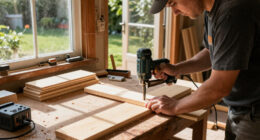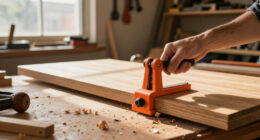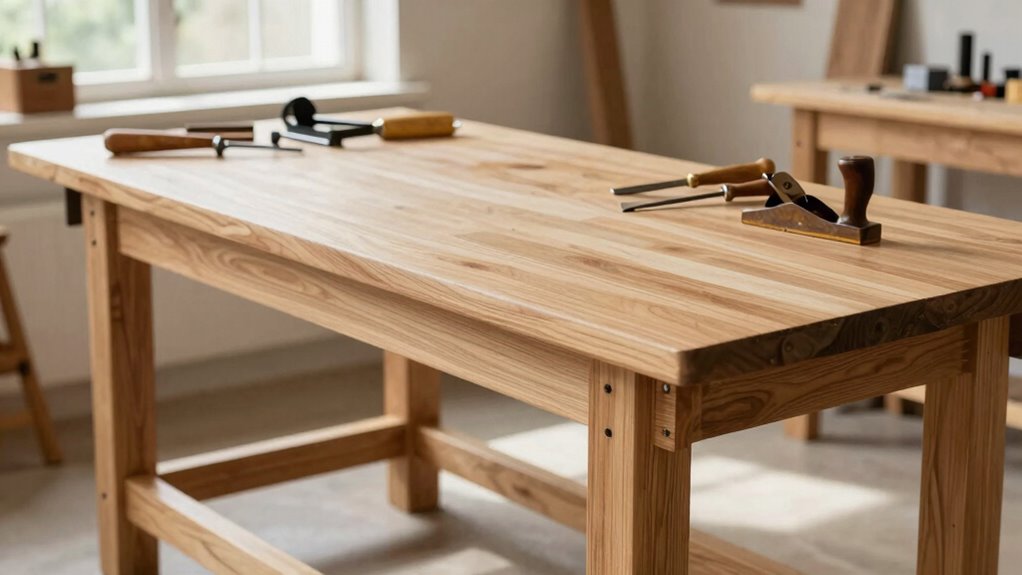

A good workbench for fine craft woodworking offers stability, durability, and organization to support precise joinery and detailed work. You should look for a sturdy surface made of hardwood, with features like bench dogs, clamping slots, and storage options to keep tools within reach. The height and ergonomics should suit your stature to reduce fatigue and improve accuracy. Mastering these elements can help you create flawless projects and elevate your craftsmanship—more tips await to enhance your workspace further.
Key Takeaways
- A sturdy, flat, hardwood surface that resists impact and maintains stability for precise joinery.
- Integrated features like bench dogs and clamping slots to support accuracy and efficiency in delicate cuts.
- Adequate storage solutions such as drawers and pegboards to keep tools organized and within reach.
- Ergonomically adjustable height to ensure comfort and reduce fatigue during long work sessions.
- Overall stability and support that enhance craftsmanship, ensuring consistent results in fine woodworking projects.
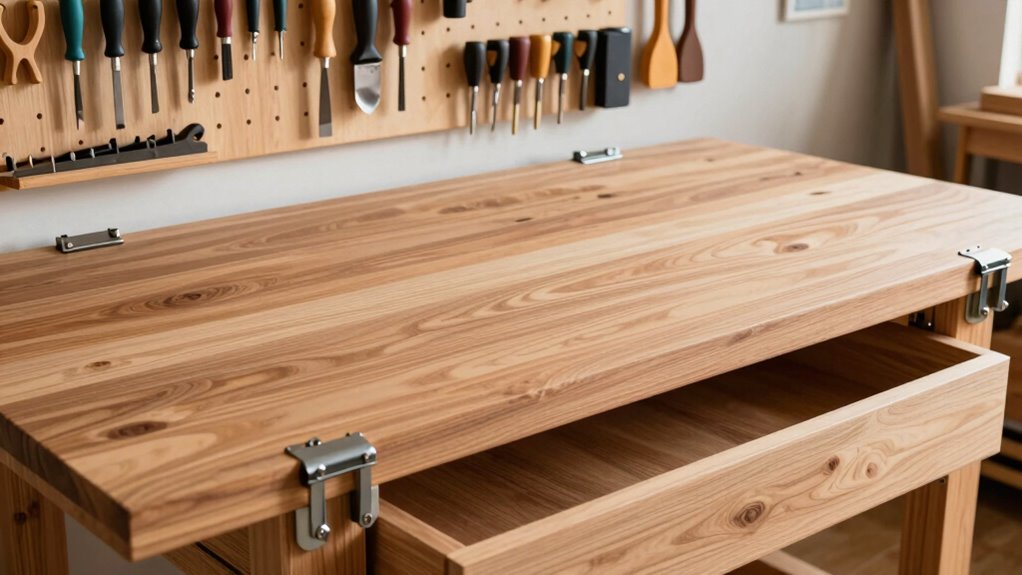
A well-designed workbench is the foundation of any successful fine craft woodworking shop. It’s where your skills come to life, where your projects take shape, and where precision matters most. To support your craftsmanship, your workbench needs to be sturdy, well-organized, and tailored to your workflow. One essential aspect is how it facilitates your joinery techniques, ensuring that your joints are tight and your pieces fit perfectly. A good workbench provides a flat, stable surface that withstands pressure and movement, helping you execute delicate dovetails, mortises, or box joints with confidence. Incorporating features like bench dogs, holdfasts, or clamping slots makes these techniques more efficient, allowing you to secure workpieces easily and maintain accuracy throughout the process. Additionally, selecting proper materials for your workbench ensures durability and longevity, essential for high-quality craftsmanship. Using the right materials, such as hardwoods, can significantly enhance the workbench’s ability to resist impacts and wear over time. Ensuring the workbench surface remains flat and level over years of use is also crucial to maintain consistent results in your projects. Regular maintenance and leveling can extend the lifespan of your workbench and keep it functioning optimally.
Beyond the surface, tool storage solutions are indispensable for maintaining a clean, efficient workspace. A cluttered bench hampers your ability to work precisely and increases the risk of mistakes or accidents. Look for workbenches that integrate drawers, shelves, or built-in cubbies, so your essential tools are always within reach but neatly stored when not in use. Pegboards or wall-mounted racks above or beside your workbench can keep chisels, hand planes, and measuring tools organized and accessible, saving you time searching for what you need. When your tools are well-organized, you can focus entirely on your craft, making your work more enjoyable and productive.
The height of your workbench also plays a fundamental role. It should be comfortable for your stature, allowing you to work with minimal fatigue. A workbench that’s too high or too low disrupts your joinery techniques and can lead to sloppy craftsmanship. Consider adjustable options if you frequently switch between different types of projects or work styles. The surface itself should be durable—hardwoods like maple or beech withstand impacts and resist denting, maintaining a flat surface over time. This stability is essential for executing precise joinery and ensuring your projects come out perfectly. Proper ergonomics can help prevent strain during long work sessions and improve overall quality. When designing or choosing a workbench, thinking about ergonomic principles can further enhance your comfort and efficiency.
Ultimately, a good workbench isn’t just about the materials or size; it’s about how well it supports your entire woodworking process. It should enhance your joinery techniques, provide ample and smart tool storage solutions, and promote good posture and comfort. When your workbench is designed thoughtfully, it becomes more than just a workspace—it transforms into a trusted partner in your pursuit of fine craft woodworking.
hardwood workbench for woodworking
As an affiliate, we earn on qualifying purchases.
As an affiliate, we earn on qualifying purchases.
Frequently Asked Questions
How Much Should I Budget for a High-Quality Workbench?
You should budget around $500 to $1,500 for a high-quality workbench, depending on your specific needs. Cost considerations include material choices like hardwood or steel, which influence durability and price. Investing in a well-built bench guarantees stability and longevity for fine craft woodworking. Keep in mind that spending a bit more on quality materials and construction can save you money long-term by reducing repairs and replacements.
Can I Customize a Standard Workbench for Fine Woodworking?
You can definitely customize a standard workbench for fine woodworking. Think of it like tailoring a suit—adding or replacing workbench materials such as a solid hardwood top enhances durability and precision. Focus on ergonomic design by adjusting height or adding comfortable vises. Small modifications, like installing better clamps or smoother surfaces, make a big difference in achieving the fine craftsmanship you desire. Customization guarantees your workbench perfectly suits your woodworking needs.
What Safety Features Are Essential on a Woodworking Workbench?
You need safety features like proper workbench ergonomics and safety gear integration to stay protected. Guarantee the workbench has adjustable height to reduce strain and prevent injuries. Incorporate features like non-slip feet for stability and rounded edges to avoid cuts. Integrate safety gear storage, so your helmet, goggles, and gloves are always accessible. These elements make your workspace safer, more efficient, and suited for detailed, fine woodworking tasks.
How Often Should I Maintain or Replace Workbench Components?
Think of your workbench like a trusted friend—you need to check in regularly to keep it in top shape. You should inspect and maintain workbench components every few months, depending on usage. For example, if you notice the work surface is gouged or the hardware is loose, substitute or repair it promptly. Using durable workbench materials like hardwood and following a consistent maintenance schedule ensures your workspace stays reliable and safe.
Are Portable Workbenches Suitable for Detailed Fine Craft Projects?
Portable workbenches are suitable for detailed fine craft projects because their lightweight portability and compact design let you work comfortably in various spaces. You can easily move them around your workspace or even take them to different locations, which adds flexibility. While they might lack some features of larger workbenches, they still provide a stable surface for precise cuts and delicate finishing, making them a practical choice for detailed woodworking tasks.
adjustable height woodworking workbench
As an affiliate, we earn on qualifying purchases.
As an affiliate, we earn on qualifying purchases.
Conclusion
A good workbench is your steadfast partner in fine craft woodworking, balancing stability, versatility, and comfort. It’s the silent guardian of your craftsmanship, holding your projects steady as you carve, sand, and assemble. Remember, the right bench isn’t just a tool — it’s a foundation for your creativity to flourish. Choose wisely, and let your workbench be the sturdy stage where your artistry takes center stage, transforming wood into wonder.
workbench with bench dogs and clamping slots
As an affiliate, we earn on qualifying purchases.
As an affiliate, we earn on qualifying purchases.
woodworking tool storage workbench
As an affiliate, we earn on qualifying purchases.
As an affiliate, we earn on qualifying purchases.