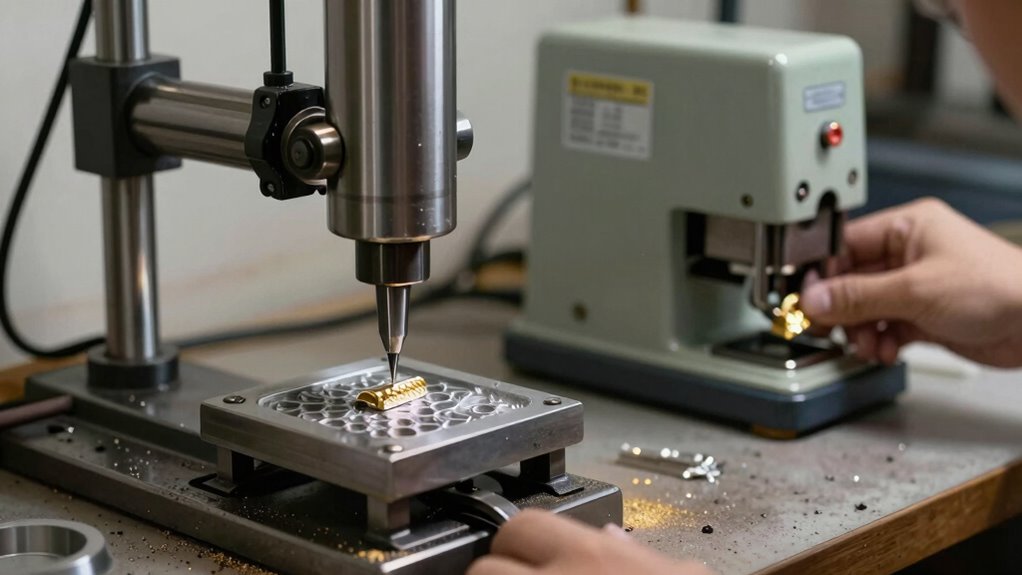
Hydraulic presses use fluid pressure for gentle, controlled shaping, perfect for delicate jewelry work like forming thin sheets or detailed designs. Stamping presses rely on mechanical force to quickly stamp or cut metal parts, ideal for mass-producing identical pieces. Both tools require proper maintenance and calibration to operate safely and efficiently, ensuring high-quality results. If you want to discover how these presses can transform your jewelry-making process, keep exploring for more insights.

Get business pricing on tools and workshop supplies
- Business-only prices and quantity discounts
- Tax-exempt purchasing
- Multiple users, one account, clear invoices
Key Takeaways
- Hydraulic presses provide precise, gentle force ideal for forming delicate jewelry components.
- Stamping presses enable mass production of consistent jewelry pieces through mechanical force.
- Proper maintenance ensures safe, reliable operation and high-quality jewelry output.
- Material compatibility and calibration are crucial for achieving desired results.
- Regular upkeep extends equipment lifespan and maintains production efficiency.
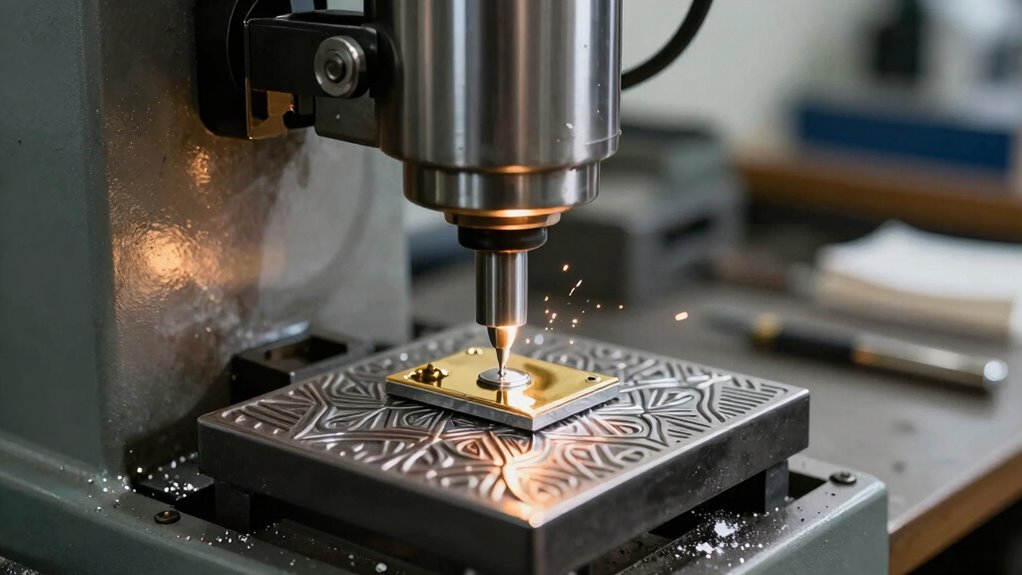
Hydraulic presses utilize fluid pressure to exert a steady, controlled force. This makes them ideal for delicate work, such as forming thin metal sheets or intricate components. Their precision allows you to apply consistent pressure, which is paramount when working with fragile or detailed designs. Stamping presses, on the other hand, operate with mechanical force, typically through a lever or motor-driven ram. They excel at mass production, enabling you to stamp out identical jewelry pieces efficiently. Both types of presses require regular maintenance techniques to stay in prime condition. For hydraulic presses, this means checking fluid levels, inspecting hoses for leaks, and replacing hydraulic oil periodically to prevent contamination. Stamping presses need lubrication of moving parts, inspection of dies for wear, and tightness checks on bolts and fasteners. Proper maintenance techniques not only prolong the lifespan of your equipment but also guarantee safety and consistent quality in every piece you produce. Understanding material compatibility is essential for achieving optimal results and avoiding damage during the shaping process. Additionally, staying current with maintenance practices ensures your presses operate safely and efficiently over time. Regularly monitoring pressure calibration helps maintain the accuracy needed for intricate jewelry work.
Furthermore, establishing a maintenance schedule can help prevent unexpected breakdowns and ensure reliable operation of your presses. When you’re operating these presses, knowing how to care for them is as important as understanding their function. Regular cleaning prevents dust and debris from interfering with moving parts. Using the appropriate lubricants reduces wear and tear, helping you avoid costly repairs. Additionally, proper calibration ensures pressure settings remain accurate, which is key to maintaining material compatibility and achieving precise results. Neglecting proper maintenance can lead to equipment failure, inconsistent jewelry quality, and safety hazards. So, it’s crucial to develop a routine that keeps your presses in top shape.
As an affiliate, we earn on qualifying purchases.
Frequently Asked Questions
How Do Hydraulic Presses Differ From Mechanical Presses in Jewelry Making?
Hydraulic presses differ from mechanical presses in jewelry making by offering better material compatibility and press customization. You can adjust pressure smoothly with hydraulic systems, making them ideal for delicate or varied materials. Mechanical presses deliver rapid, high-force impacts, but lack the same level of control. This makes hydraulic presses more versatile for intricate designs or sensitive materials, giving you precise control over pressure and shaping.
What Safety Precautions Are Necessary When Operating These Presses?
You should always wear safety gear, follow emergency procedures, and stay alert when operating these presses. Guarantee eye protection, gloves, and hearing protection are in place, and keep your workspace clear of distractions. Regularly inspect equipment, understand emergency shutdown procedures, and never bypass safety features. By staying vigilant, practicing safe handling, and adhering to protocols, you minimize risks and protect yourself during jewelry pressing operations.
Can These Presses Be Used for Small-Scale or Custom Jewelry Production?
Yes, you can use hydraulic and stamping presses for small-scale or custom jewelry production. Miniature presses are ideal because they offer precision and control, perfect for detailed work. They allow you to create unique designs and prototypes efficiently. With these presses, you can customize your fabrication process, making them a valuable tool for artisans and small jewelry businesses aiming for high-quality, personalized pieces without needing large-scale machinery.
What Maintenance Is Required to Ensure Press Longevity?
Think of your press as a finely tuned orchestra that needs regular tuning. You’ll want to follow consistent lubrication schedules to keep parts moving smoothly and prevent friction damage. Keep an eye on wear component replacement, swapping out worn parts before they cause bigger issues. Regular maintenance like cleaning, inspecting seals, and checking hydraulic fluid levels guarantees your press stays reliable, extending its lifespan and keeping your jewelry production running seamlessly.
Are These Presses Suitable for Delicate or Intricate Jewelry Designs?
Yes, these presses are suitable for delicate detailing and intricate patterns. You can adjust the pressure settings carefully to avoid damaging fragile designs. Using precision control, you maintain the integrity of your jewelry’s fine details. Hydraulic and stamping presses offer consistent force, ensuring your intricate patterns come out clean and precise. With proper setup and gentle handling, you’ll achieve high-quality results without compromising the delicate features of your jewelry pieces.
As an affiliate, we earn on qualifying purchases.
Conclusion
Now that you understand how hydraulic and stamping presses shape jewelry, you see their contrasts—one uses steady, powerful force; the other, rapid, precise strikes. Both might seem worlds apart, yet they work together to craft intricate designs and durable pieces. Whether you’re marveling at the strength or the finesse, these presses are the silent heroes behind every stunning jewelry item. In their differences, they unite to turn raw materials into treasured art.
As an affiliate, we earn on qualifying purchases.
As an affiliate, we earn on qualifying purchases.
Fall Picks
fall essentials
As an affiliate, we earn on qualifying purchases.