
TL;DR

Get business pricing on tools and workshop supplies
- Business-only prices and quantity discounts
- Tax-exempt purchasing
- Multiple users, one account, clear invoices
In 2018, photographs and exhibitions showcased Soviet control rooms, revealing their distinctive vintage design and technological features. This highlights a unique era of Cold War-era engineering and control infrastructure.
In 2018, a collection of photographs and exhibitions showcased the distinctive design and architecture of Soviet control rooms, highlighting their vintage aesthetic and technological features. These control rooms, once central to Cold War-era infrastructure, are now appreciated for their historical and visual significance, offering insight into Soviet engineering and control systems of the past.
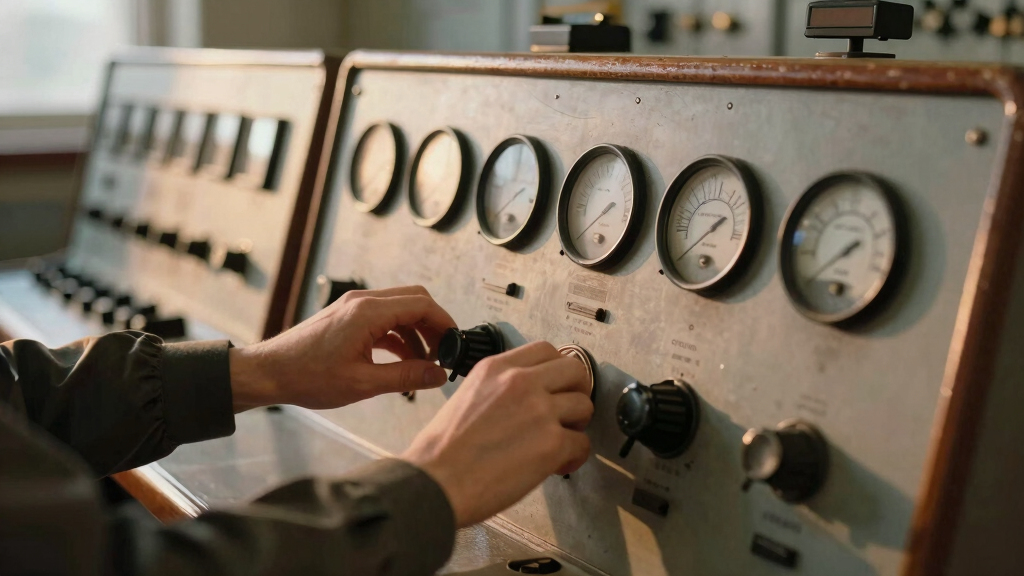
The control rooms featured in the 2018 displays are characterized by their robust, utilitarian design, with an array of analog dials, switches, and large control panels. Many of these spaces were used for managing nuclear facilities, missile silos, and communications networks during the Cold War period. The photographs reveal a mix of functional industrial design and Soviet-era technological optimism, with some rooms still preserved in museums or former military sites.
Experts and curators involved in the exhibitions have emphasized the aesthetic appeal of these control rooms, noting their vintage appeal and the way they reflect the technological mindset of their time. The rooms often feature symmetrical layouts, large indicator displays, and a sense of orderliness that contrasts with modern digital control centers. Some images depict control rooms with signs of aging, adding to their nostalgic and historical charm.
While most of these control rooms are no longer in active use, several have been preserved as part of historical exhibits, allowing visitors to gain a tangible sense of Cold War-era technological infrastructure. The preservation efforts aim to document and showcase Soviet engineering achievements and the design principles of the period.
Cultural and Historical Value of Soviet Control Rooms
The display and preservation of Soviet control rooms in 2018 underscore their importance as symbols of Cold War history and Soviet technological ambition. They offer a tangible connection to a period marked by intense geopolitical rivalry and technological competition. Their vintage design also appeals to enthusiasts of industrial and military architecture, contributing to broader appreciation of Soviet engineering.
Understanding these control rooms helps contextualize the technological capabilities and limitations of the Soviet Union during the Cold War. They serve as physical artifacts that reflect the era’s approach to control, security, and technological innovation, making them relevant for historians, engineers, and cultural scholars alike.
As an affiliate, we earn on qualifying purchases.
Cold War Era Control Infrastructure and Preservation Efforts
During the Cold War, Soviet control rooms played a critical role in managing nuclear arsenals, missile systems, and communication networks. Many of these facilities were designed to operate under strict security and secrecy, with a focus on durability and functionality. Since the dissolution of the Soviet Union, some control rooms have been abandoned, while others have been turned into museums or preserved sites. The 2018 exhibitions brought renewed attention to these spaces, emphasizing their unique design and historical significance.
Previous efforts to document Soviet technological achievements have included museum exhibits, academic studies, and photographic projects. The 2018 focus on control rooms is part of a broader trend to explore Cold War infrastructure and industrial design, highlighting the aesthetic qualities of these utilitarian spaces.
Despite their importance, many control rooms remain inaccessible to the public, and details about their current state are limited. The preservation of these sites varies by location, with some undergoing restoration and others deteriorating due to neglect or lack of funding.
“The vintage design of these control rooms offers a stark contrast to modern digital control centers, showcasing a different era of technological optimism.”
— Museum curator Alexei Petrov
As an affiliate, we earn on qualifying purchases.
Extent of Preservation and Public Accessibility
It is not yet clear how many Soviet control rooms remain fully preserved or accessible to the public. Details about their current condition, ownership, and potential for future exhibitions are still emerging. Some control rooms may be deteriorating or restricted due to security concerns or lack of funding for preservation.
vintage Soviet control panel replica
As an affiliate, we earn on qualifying purchases.
As an affiliate, we earn on qualifying purchases.
Future Preservation and Interest in Cold War Infrastructure
Efforts to document and preserve Soviet control rooms are expected to continue, with potential for more exhibitions, digital reconstructions, and academic research. Increased interest from historians, architects, and enthusiasts could lead to further preservation projects and public awareness campaigns, ensuring these sites remain as tangible links to Cold War history.
As an affiliate, we earn on qualifying purchases.
Key Questions
Why are Soviet control rooms considered historically significant?
Soviet control rooms are significant as symbols of Cold War technological ambition and industrial design. They reflect the era’s approach to security, control, and engineering, offering insights into Soviet infrastructure during a tense geopolitical period.
Are any Soviet control rooms still in active use today?
Most Soviet control rooms are no longer in active use. Many have been abandoned, repurposed as museums, or preserved as historical sites. Their current operational status varies by location.
What makes these control rooms visually appealing?
Their vintage industrial design, symmetrical layouts, analog gauges, and large control panels create a distinctive aesthetic that contrasts with modern digital facilities, attracting interest from enthusiasts and historians.
Can the public visit these control rooms?
Access is limited; some are open as part of museums or exhibitions, while others remain restricted or deteriorating. Preservation efforts are ongoing to maintain or restore these sites for future public engagement.
Source: hn
Halloween Picks
halloween
As an affiliate, we earn on qualifying purchases.