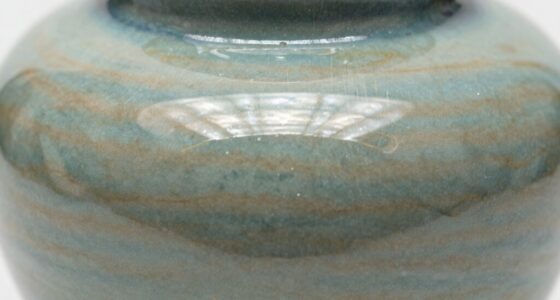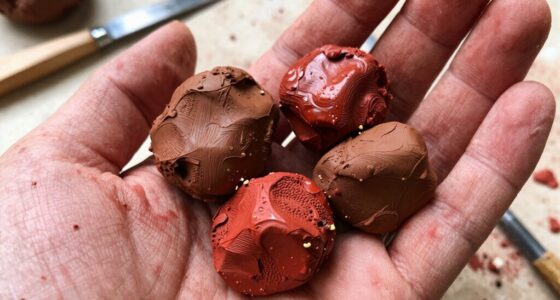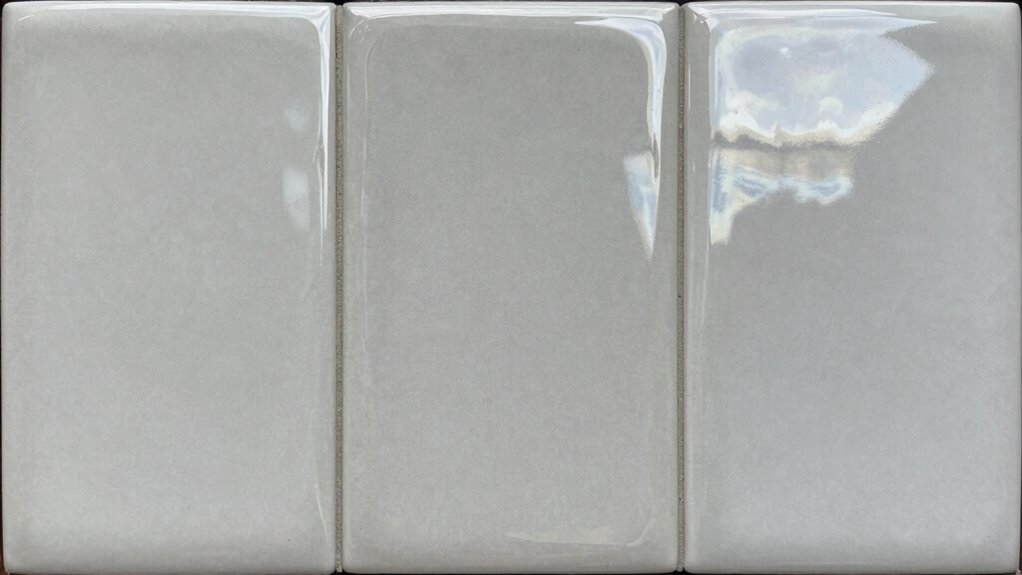

In ceramic design, matte finishes are non-reflective and hide scratches, making them low-maintenance and cost-effective. Satin offers a soft glow with moderate durability and easier cleaning, blending style and practicality. Gloss surfaces are shiny and striking but show water spots and scratches more easily, requiring more upkeep. Your choice depends on the look you want and how much maintenance you’re willing to do, so explore further to find the perfect match for your space.
Key Takeaways
- Matte finishes are non-reflective and hide imperfections, ideal for low-maintenance, durable surfaces.
- Satin offers a soft sheen with moderate durability and easier cleaning than gloss.
- Gloss creates a highly reflective, shiny surface, enhancing visual impact but showing scratches and spots more easily.
- Cost varies: matte is usually cheaper, satin balances cost and appearance, gloss is more expensive.
- Maintenance needs differ: matte requires less cleaning, gloss needs regular upkeep to maintain shine.
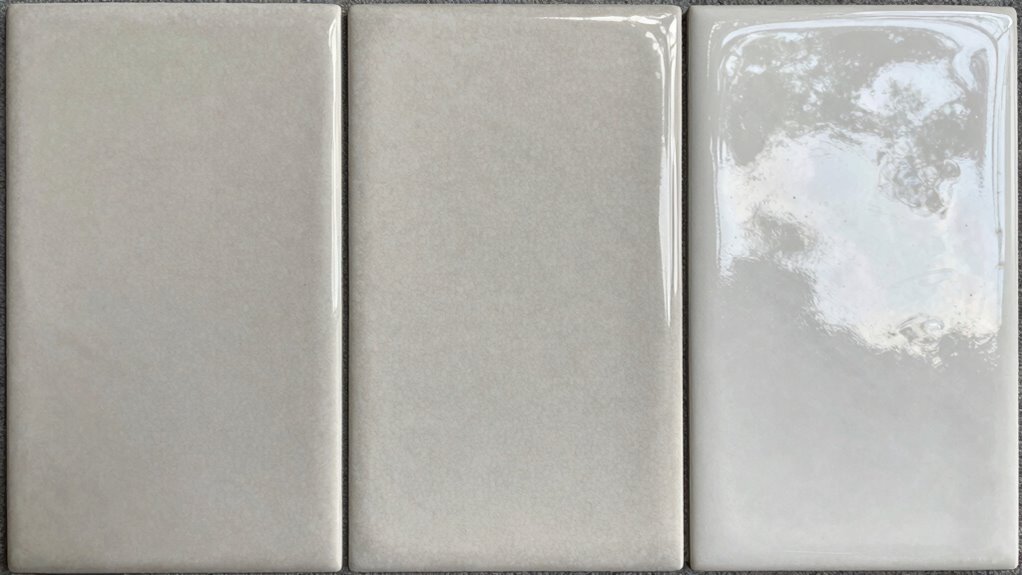
When choosing ceramic finishes for your design project, understanding the differences between matte, satin, and gloss surfaces is essential. Each finish offers a distinct look and feel, impacting not only aesthetics but also practical aspects like durability and cost. The durability comparison among these finishes varies significantly. Matte surfaces are typically more resistant to fingerprints, smudges, and water spots, making them a practical choice for high-traffic areas or spaces prone to splashes, like kitchens and bathrooms. They tend to hide scratches and imperfections better than glossier finishes, which can show every flaw or fingerprint more easily. Satin finishes strike a balance, offering a smooth, soft sheen that’s moderately resistant to wear and easier to clean than gloss but still more forgiving than matte. Gloss finishes are the most reflective and tend to be less durable in terms of hiding surface imperfections. They are more susceptible to showing scratches and water spots over time, especially in areas with frequent use or moisture exposure. Additionally, surface finish can influence how light interacts with the ceramic, affecting the overall ambiance of the space. Understanding the surface properties of each finish can help you select the best option for your specific needs. Moreover, the choice of finish also plays a role in the aesthetic appeal and how well the surface complements other design elements in your space. The availability of different finishes also impacts installation options, allowing for more customized and cohesive design schemes.
Cost implications are another important factor to consider. Generally, matte finishes tend to be more affordable because they require less intricate manufacturing processes to achieve their non-reflective surface. Satin finishes are usually priced in the middle range, offering a compromise between aesthetic appeal and cost. Gloss finishes often come with a higher price tag because they demand more refined manufacturing processes to achieve their high shine and reflective qualities. Additionally, maintenance costs can differ: matte surfaces typically need less frequent cleaning and are better at hiding dirt, which can save you money in the long run. Gloss surfaces, while easier to wipe clean, might require more frequent upkeep to maintain their sleek appearance, potentially increasing ongoing maintenance costs. By considering these factors, you can better tailor your ceramic choice to your budget and lifestyle.
In essence, your choice depends on your priorities. If you’re looking for a durable, low-maintenance finish that hides imperfections well and keeps costs in check, matte is a smart choice. If you want a versatile finish with a subtle shine that balances durability and cost, satin works perfectly. For those aiming for a high-end, striking look with maximum reflectivity—and are willing to invest more—gloss finishes can elevate your space but may require more careful upkeep. Weighing durability and cost implications carefully will help you select the best ceramic finish to suit both your aesthetic goals and practical needs.
As an affiliate, we earn on qualifying purchases.
Frequently Asked Questions
Which Finish Is Easiest to Clean and Maintain?
The gloss finish is easiest to clean and maintain because its smooth surface resists stains and smudges. You’ll want to clean it regularly, about weekly, with a gentle cleaner and soft cloth. Maintenance tips include avoiding abrasive scrubbers that can scratch the surface, and wiping spills quickly. Matte and satin finishes may require more frequent cleaning and delicate handling, as their surfaces can trap dirt and show water spots more easily.
How Does Lighting Affect the Appearance of Each Finish?
Lighting effects profoundly influence how you perceive each ceramic finish. Glossy surfaces reflect more light, making them appear brighter and more vibrant under direct lighting, enhancing their visual perception. Satin finishes offer a soft sheen that balances light reflection, providing a subtle glow. Matte finishes absorb light, reducing glare and creating a muted, understated look. Your choice depends on the ambiance you want to create and how lighting interacts with each finish.
Are There Environmental Differences in Producing Each Finish?
You notice that matte, satin, and gloss finishes have different environmental impacts during production. Matte surfaces often require eco-friendly manufacturing processes with sustainable material choices, reducing chemical use. Satin finishes strike a balance, while gloss requires more energy-intensive methods, increasing environmental footprint. By choosing sustainable materials and eco-conscious techniques, you can enjoy beautiful ceramic finishes that are kinder to our planet, making your design both stunning and environmentally responsible.
Can Finishes Be Combined in a Single Ceramic Piece?
Yes, you can combine different finishes in a single ceramic piece to create custom combinations and unique textures. Many artisans use mixed finishes intentionally for visual interest and tactile contrast. You’ll want to communicate your design goals clearly with your ceramic artist or choose pieces crafted with precision, as blending matte, satin, and gloss requires skill to guarantee the finishes complement each other and enhance the overall aesthetic.
Which Finish Is Most Resistant to Scratches and Chips?
For maximum resistance to scratches and chips, a gloss finish is your best bet, thanks to its smooth, shiny surface that’s less prone to damage. In durability comparison, gloss offers higher resilience, but it may sacrifice some aesthetic versatility. Satin finishes strike a balance, providing moderate durability with a softer look, while matte finishes, though stylish, tend to be more susceptible to scratches and chips.
As an affiliate, we earn on qualifying purchases.
Conclusion
Understanding the differences between matte, satin, and gloss finishes helps you choose the perfect look for your ceramic project. For example, if you want a sleek, modern vibe, a gloss finish might be ideal, like in a stylish kitchen backsplash. A matte finish offers a soft, understated feel for a cozy bathroom, while satin strikes a balance with subtle sheen. By selecting the right finish, you’ll create a space that truly reflects your style and needs.
As an affiliate, we earn on qualifying purchases.