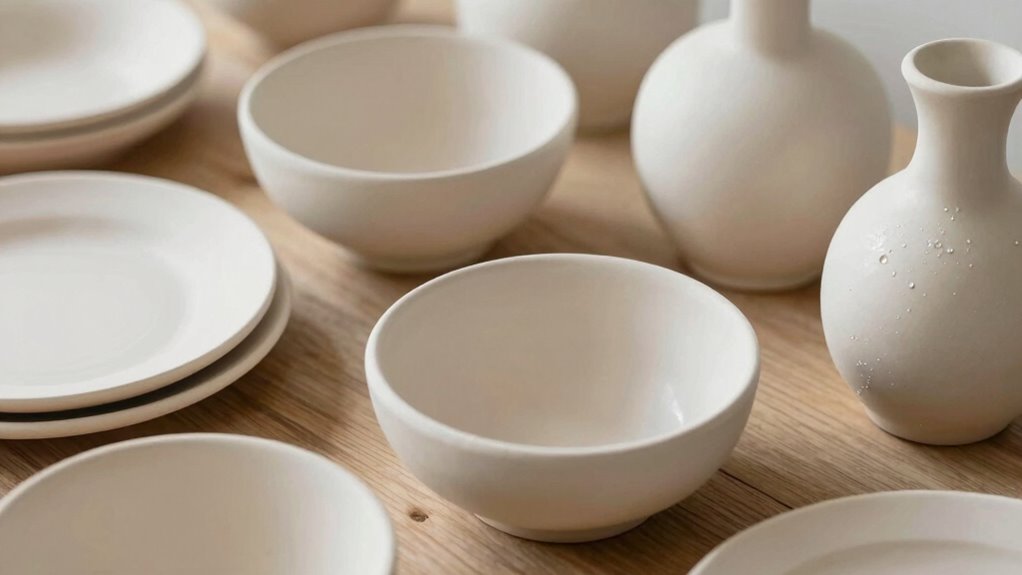

Your ceramic shapes dry better when you carefully plan mold techniques to promote even moisture escape, such as hollowing thick sections and creating vent holes. Controlling the environment with stable temperature, humidity, and gentle airflow also matters. Design shapes with uniform thickness and avoid trapping moisture in details or hollow areas. By understanding how moisture moves and adjusting your process accordingly, you’ll reduce cracks and warping. Keep exploring for more tips to achieve perfect, durable ceramics.

Get tools and workshop supplies delivered free — and shop member deals
- Fast, free delivery on millions of items
- Access to Prime Big Deal Days deals on October 6–7
- Prime Video, Amazon Music and more included
Key Takeaways
- Uniform thickness in ceramic shapes allows for even moisture evaporation, reducing cracking risks.
- Proper mold techniques, like vent holes and hollowing, facilitate consistent drying and moisture escape.
- Shapes with intricate details or hollow areas can trap moisture, increasing internal stress during drying.
- Thinner sections dry faster and more uniformly, preventing uneven moisture distribution.
- Controlled drying environments with stable humidity and airflow promote better shape preservation.
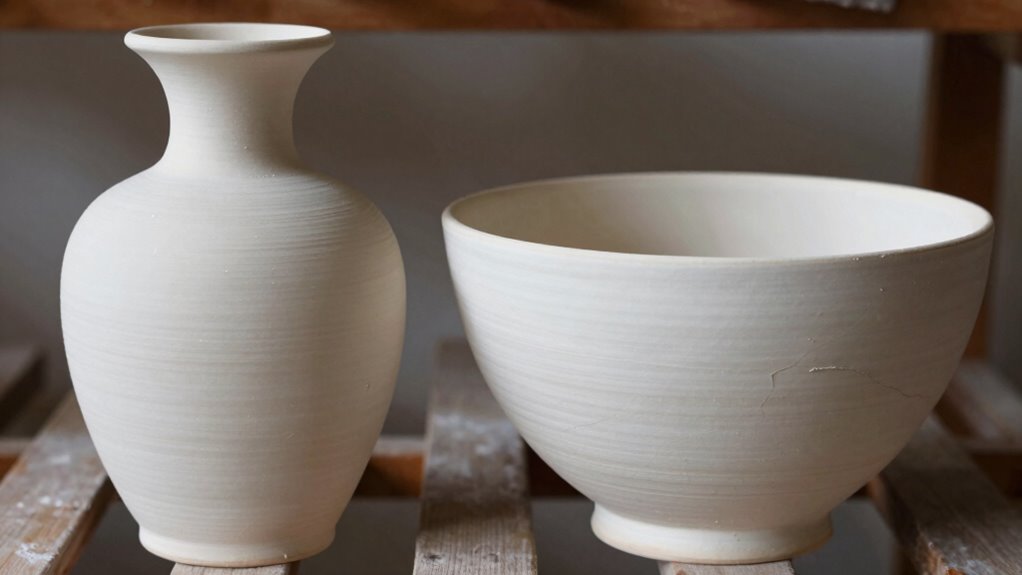
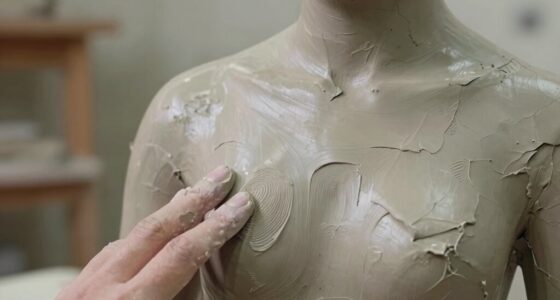
Drying ceramic shapes properly is vital to guarantee their strength and durability. When you’re working with ceramics, the way you handle the drying process can make all the difference in the final outcome. One key factor is understanding ceramic mold techniques, which influence how evenly moisture escapes from your pieces. Proper mold techniques, such as hollowing out thick sections or creating vent holes, help prevent uneven drying and minimize cracking. If you neglect these methods, moisture can become trapped, leading to warping or splitting as the clay shrinks during drying. It’s essential to plan your mold techniques carefully from the start to promote uniform moisture loss.
Equally important are the drying environment factors that affect how your ceramic shapes dry. Temperature, humidity, and airflow all play roles in the drying process. If the environment is too humid, moisture evaporates slowly, increasing the risk of uneven drying and potential defects. Conversely, if it’s too dry or drafty, the surface may dry too quickly, causing cracks or warping. Maintaining a stable, moderate humidity level—around 50%—can help guarantee consistent drying. You should also control airflow carefully; gentle, even air circulation can speed up drying without causing surface cracks. Avoid placing your ceramics in direct sunlight or near heat sources, as rapid drying can lead to warping or cracking. Additionally, understanding how drying environment factors interact helps in creating optimal conditions for your ceramic pieces. Proper clay body composition can also influence how evenly your shapes dry and how resilient they are to cracking. Recognizing the importance of moisture content during drying ensures you don’t end up with overly wet or dry spots that compromise the integrity of your work. Paying attention to moisture migration within the clay can further prevent internal stresses that cause cracks.
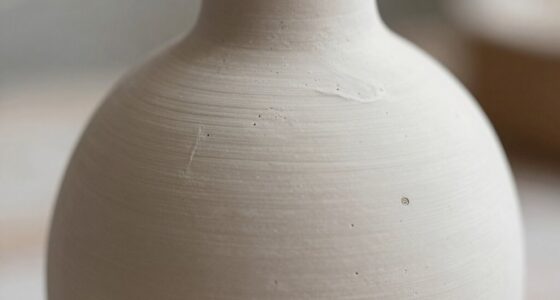
Another factor that influences why some ceramic shapes dry better than others is the thickness and form of the piece. Thinner sections dry faster and more evenly, whereas thicker areas hold moisture longer and are more prone to cracking. When you design your ceramic shapes, aim for uniform thickness to promote balanced drying. Additionally, the shape’s complexity can affect drying; intricate details or hollow areas might trap moisture, making them more vulnerable. Using techniques like scoring and slipping before drying can help reinforce weak spots and even out moisture distribution. Moreover, paying attention to the shape design can significantly impact how well your piece dries without defects. Properly planning your shapes to avoid abrupt changes in thickness can also make a substantial difference in drying success.
The overall drying process is a delicate balance. By paying close attention to your ceramic mold techniques and carefully controlling your drying environment factors, you can considerably improve the quality of your dried shapes. Patience is key—rushing the process often results in imperfections that compromise strength. When you take the time to create an ideal environment and apply proper mold techniques, your ceramic pieces will dry more evenly, reducing the risk of cracks and warping. This careful approach ultimately leads to stronger, more durable finished pieces that stand the test of time.
As an affiliate, we earn on qualifying purchases.
Frequently Asked Questions
How Does Clay Type Affect Drying Time?
Your clay type directly affects drying time because clay composition varies; some materials hold moisture longer, slowing drying, while others dry faster. For example, stoneware clay, with its specific composition, needs higher firing temperatures and tends to dry more evenly, reducing cracks. On the other hand, earthenware dries quicker but can crack if not handled carefully. Choosing the right clay for your project helps manage drying time and guarantees better results.
Can Shape Size Impact Cracking During Drying?
Think of your ceramic piece as a delicate sail, catching the wind of drying conditions. Larger or thicker shapes can catch more “wind,” risking cracks if surface texture traps moisture. Smaller or thinner forms allow better air circulation, helping moisture escape evenly. Shape size directly impacts cracking risk—carefully consider it to guarantee your piece dries smoothly, avoiding stress points caused by uneven moisture removal.
Do Humidity Levels Influence Drying Efficiency?
Humidity levels considerably influence drying efficiency. High humidity causes moisture to evaporate more slowly, prolonging drying time and increasing the risk of cracks or warping. Conversely, low humidity speeds up evaporation, helping ceramics dry faster but potentially leading to surface cracks if the drying is too rapid. You should monitor humidity effects carefully, adjusting your drying environment to guarantee consistent, even moisture loss for ideal drying results.
How Does Placement Affect Drying Consistency?
Placement notably affects drying consistency because even, strategic positioning promotes better surface texture and air circulation. You might notice that placing ceramics in open, evenly spaced areas allows airflow to reach all surfaces equally, preventing uneven drying. Conversely, overcrowded or shadowed spots hinder air movement, causing irregular moisture evaporation. To guarantee uniform drying, position your ceramics to maximize airflow and avoid contact with other objects, helping them dry more evenly.
Are There Specific Shapes Prone to Warping?
Shapes with uneven symmetry or inconsistent edge thickness are more prone to warping during drying. When the shape isn’t symmetrical, different areas dry at different rates, causing stress and distortion. Similarly, thick edges retain moisture longer, leading to uneven shrinkage. To prevent warping, opt for designs with balanced shape symmetry and uniform edge thickness. This guarantees even drying, maintains form, and reduces the risk of deformation as the ceramic dries.
As an affiliate, we earn on qualifying purchases.
Conclusion
By choosing shapes that allow even air circulation, by adjusting thickness for quicker moisture escape, and by supporting proper orientation during drying, you set yourself up for success. Focus on open forms that breathe, on balanced proportions that dry uniformly, and on thoughtful placement that promotes airflow. When you prioritize these principles, you guarantee your ceramics dry faster, more evenly, and with less risk of cracks or warping. Embrace these tips, and watch your creations come to life smoothly and beautifully.
clay drying environment controller
As an affiliate, we earn on qualifying purchases.
As an affiliate, we earn on qualifying purchases.
As an affiliate, we earn on qualifying purchases.
Halloween Picks
halloween
As an affiliate, we earn on qualifying purchases.