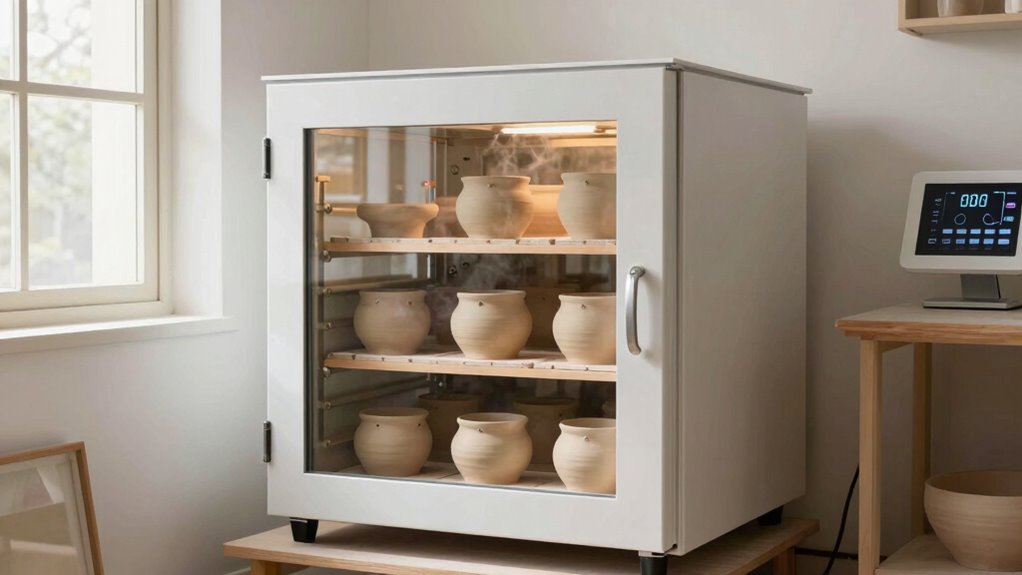

If you’re aiming for consistent, high-quality pottery, a drying cabinet is a smart choice because it gives you precise control over humidity, temperature, and airflow, reducing the risk of warping, cracking, or glaze issues. While room control can work with careful adjustments, it’s harder to keep conditions steady, especially for delicate or detailed pieces. To discover how to choose the best setup for your studio, keep exploring these options further.

Get business pricing on tools and workshop supplies
- Business-only prices and quantity discounts
- Tax-exempt purchasing
- Multiple users, one account, clear invoices
Key Takeaways
- Drying cabinets offer precise control over humidity, temperature, and airflow, reducing drying inconsistencies.
- Room control is cost-effective but requires careful adjustments for stable environmental conditions.
- Cabinets are ideal for delicate or complex pieces needing uniform drying and surface quality.
- Improving room conditions can be sufficient for larger or budget-conscious setups with proper tools.
- Both options influence glaze quality and firing success, so choose based on project scale and desired consistency.
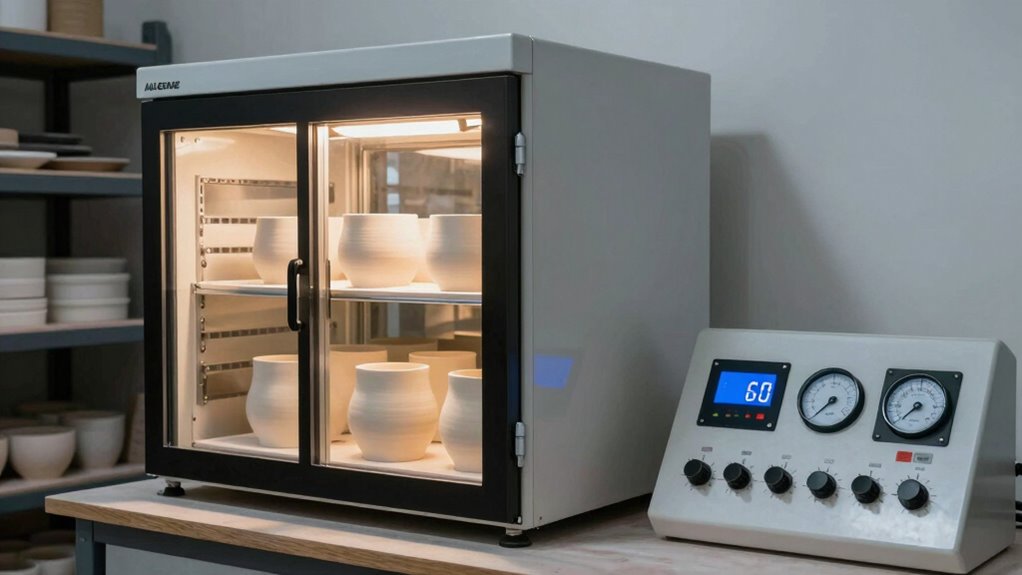
Controlling the drying environment is essential for producing high-quality pottery, whether you’re using a dedicated drying cabinet or managing room conditions. The environment directly impacts how your pieces dry, influencing their structural integrity and surface finish. If you’re aiming for consistent results, paying attention to factors like humidity, temperature, and airflow is crucial. A drying cabinet offers precise control over these variables, helping prevent issues like warping or cracking caused by uneven drying. On the other hand, managing room conditions requires careful adjustments to keep humidity and temperature steady, which can be more challenging but often more cost-effective. Additionally, understanding drying environment factors can help you optimize your setup for better results.
Controlling humidity, temperature, and airflow ensures consistent, high-quality pottery drying and minimizes defects.
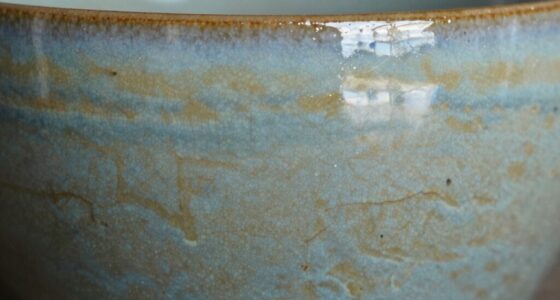
When considering whether to invest in a pottery drying cabinet or improve room control, think about your glazing techniques and kiln temperature management. Proper glazing techniques often involve multiple layers and specific drying times to achieve the desired surface quality. If your environment isn’t controlled, uneven drying can lead to glaze imperfections, such as pinholes or crawling. A drying cabinet minimizes these risks by creating a stable setting where you can fine-tune drying parameters, ensuring your glaze adheres evenly and dries uniformly. Furthermore, incorporating humidity regulation tools can enhance your ability to maintain optimal conditions, particularly in variable climates. Employing controlled environment systems can also contribute to more consistent drying and firing results.
Furthermore, kiln temperature plays a crucial role in the overall firing process. Even if your drying process is perfect, inconsistent kiln temperatures can cause problems during firing, such as glaze running or surface imperfections. Maintaining a consistent kiln temperature is just as important as controlling the drying environment. If your room is prone to temperature fluctuations, a drying cabinet with controlled conditions can help you prep your pieces more reliably before firing. Some advanced drying cabinets even integrate temperature controls compatible with kiln schedules, allowing you to optimize the entire process for better results. Incorporating climate control solutions into your workspace can also help stabilize other environmental factors that influence drying and firing outcomes. Additionally, understanding the effects of temperature fluctuations on clay and glaze can help you better manage your drying and firing procedures.
Ultimately, whether you choose a dedicated drying cabinet or focus on room control, understanding the relationship between drying conditions, glazing techniques, and kiln temperature is key. A drying cabinet offers precision and repeatability, reducing variables that could compromise your work, especially when working with delicate glazes or thin-walled pieces. Conversely, improving your room environment can be a practical solution if you’re on a budget or working with larger pieces. Whichever route you take, remember that consistent, controlled drying leads to better surface quality, fewer defects, and more predictable firing outcomes. This control helps you produce professional-quality pottery, whether you’re a hobbyist or a seasoned artist.
Popular right now

Philips 4400 Series Fully Automatic Espresso Machine with LatteGo Milk System

Breville Bambino Espresso Machine, Brushed Stainless Steel

KitchenAid Classic Series 4.5-Quart Tilt-Head Stand Mixer, Onyx Black
As an affiliate, we earn on qualifying purchases.
Frequently Asked Questions
What Are the Initial Costs of a Pottery Drying Cabinet Versus Room Control?
The initial costs of a pottery drying cabinet are higher, mainly due to the purchase price and installation complexity, which can be straightforward but adds to expenses. Room control systems typically cost less upfront, especially if you already have HVAC adjustments in place. Your choice depends on the cost comparison and how much you’re willing to invest initially; cabinets offer more dedicated drying, while room control offers broader climate regulation.
How Energy-Efficient Are Pottery Drying Cabinets Compared to Controlled Rooms?
Imagine a pottery drying cabinet gently circulating warm air around your pieces, using less energy than a large room. You’ll see energy savings through lower power consumption, reducing your costs and environmental impact. These cabinets are designed for efficiency, focusing heat directly where it’s needed, unlike controlled rooms that often waste energy. Overall, drying cabinets are a smarter, more eco-friendly choice for conserving resources and minimizing your carbon footprint.
Can Existing Studio Spaces Be Easily Adapted for Either Option?
You can adapt existing studio spaces for drying cabinets or controlled rooms, but it depends on your studio layout and ventilation needs. Installing a drying cabinet is often straightforward if you have enough space and proper ventilation. For controlled rooms, you may need to modify your layout and upgrade ventilation systems to maintain temperature and humidity. Assess your space carefully to determine the most efficient and feasible option.
What Maintenance Is Required for Drying Cabinets Versus Room Control Systems?
You’ll find that drying cabinets require regular maintenance of humidity levels, such as checking and replenishing moisture sources, and guaranteeing ventilation quality remains ideal to prevent mold. Room control systems demand consistent calibration of humidity sensors and occasional filter cleaning to maintain proper ventilation. Both systems benefit from routine inspections to ensure humidity levels stay steady, but cabinets often need more frequent attention to humidity regulation, while room controls focus on sensor accuracy and airflow.
How Do Drying Times Compare Between Cabinets and Controlled Rooms?
Drying times in cabinets are often faster—like lightning—thanks to precise humidity regulation and temperature consistency. Cabinets create a controlled environment that accelerates drying, while rooms with better control may take longer but offer more even results. If quick, uniform drying is your goal, a drying cabinet is your best bet. For steady, adaptable drying, a well-regulated room provides consistent results over time.
Conclusion
So, whether you choose a pottery drying cabinet or total room control, remember—this decision could make or break your entire pottery empire! Imagine your masterpieces drying perfectly every single time, no cracks, no warping—just flawless beauty. Don’t let poor drying methods sabotage your artistry. Invest wisely, because your creations deserve the best. Choose the right control method now, and watch your pottery skills skyrocket to legendary status—your future masterpieces will thank you!