
When designing pottery, you focus on whether it’s meant for everyday use or artistic display. Functional pottery emphasizes durability, ergonomic shape, and practical glazing so it can be used regularly. Decorative pottery prioritizes visual appeal, surface textures, and artistic details, often with experimental glazes and intricate designs. Your choices in shaping, glazing, and firing reflect these goals. If you keep exploring, you’ll discover how these differences influence techniques and finishes in each style.

Get business pricing on tools and workshop supplies
- Business-only prices and quantity discounts
- Tax-exempt purchasing
- Multiple users, one account, clear invoices
Key Takeaways
- Functional pottery is designed for everyday use, emphasizing durability and practicality, while decorative pottery focuses on aesthetic appeal and artistic expression.
- Shaping techniques like wheel throwing and controlling thickness ensure functional pieces are sturdy; decorative pottery often features carving or textured surfaces.
- Glazing in functional pottery enhances usability and waterproofing, whereas decorative glazing emphasizes visual effects like layering or crackle finishes.
- Firing methods and material choices impact the strength and appearance of both types, with functional pieces prioritizing durability.
- Artistic freedom is greater in decorative pottery, while functional pottery emphasizes consistency, usability, and meeting practical standards.
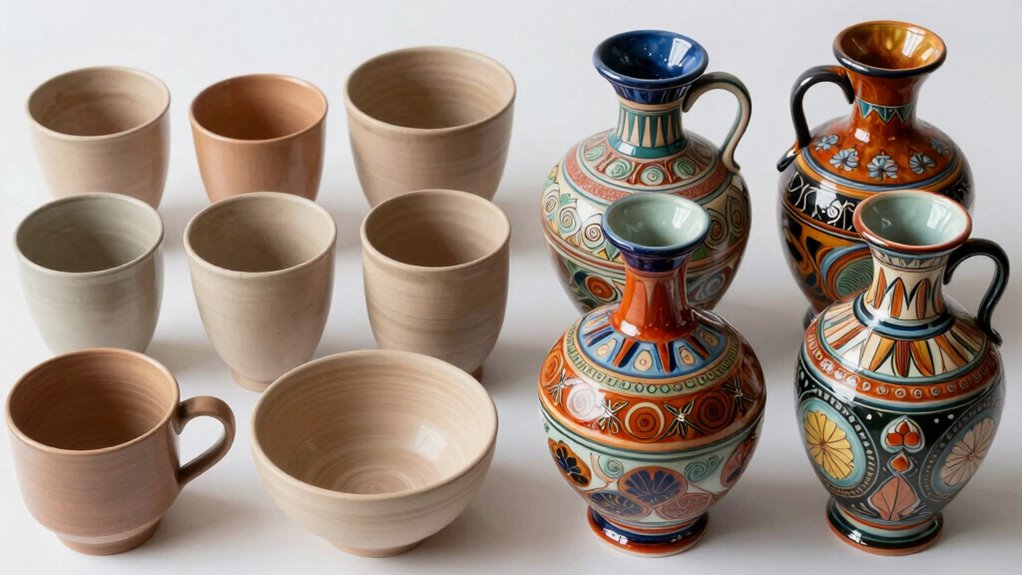
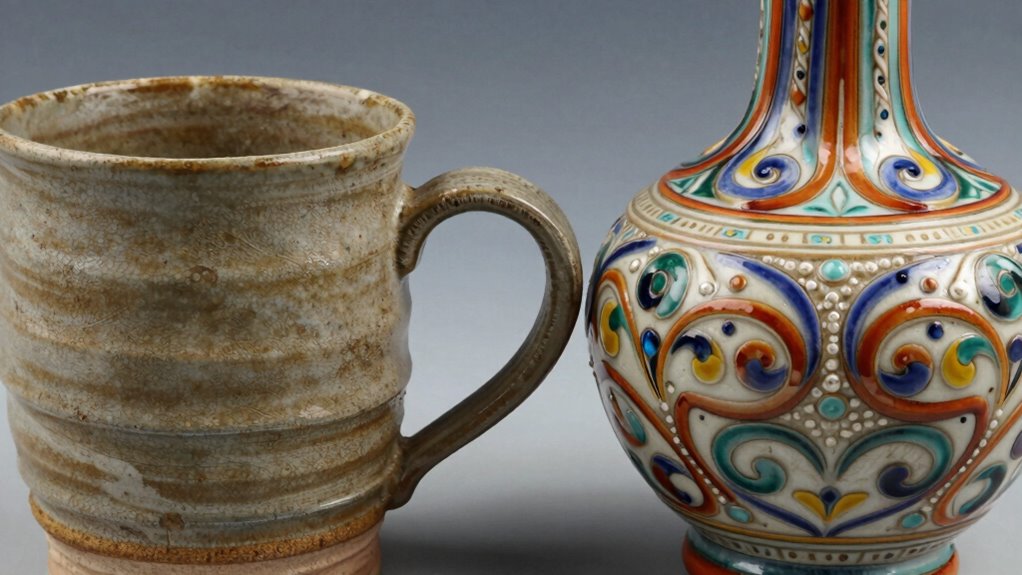
Pottery design often balances between functionality and decoration, shaping how you use and appreciate these creations. When it comes to functional pottery, you focus on practicality—things like mugs, bowls, and vases that serve everyday needs. To craft these pieces, you rely on specific clay techniques that enhance strength and durability. Techniques like wheel throwing or hand-building allow you to shape sturdy forms while controlling thickness, guaranteeing the final product can withstand regular use. You also pay close attention to glazing methods; a well-applied glaze not only adds a smooth, attractive surface but also makes your pottery waterproof and easy to clean. The glazing process involves selecting the right type of glaze, applying it evenly, and firing it at precise temperatures to achieve a glossy or matte finish. These steps are essential because they directly impact the usability and longevity of your functional pieces. Additionally, understanding clay techniques helps ensure your creations meet both aesthetic and practical standards. Furthermore, mastering firing techniques can significantly influence the final strength and finish of your pottery, whether functional or decorative. Incorporating sustainable practices in your pottery process can also contribute to environmentally conscious craftsmanship, minimizing waste and energy consumption. Developing an understanding of material properties allows you to choose the best clays and glazes suited for your specific functional needs and environmental considerations.
On the other hand, decorative pottery centers around visual appeal rather than practical use. Here, your focus shifts to showcasing artistry through intricate surface designs, textures, and colors. You might experiment with clay techniques like carving, slip trailing, or adding textured elements to create complex patterns that catch the eye. Glazing methods in decorative pottery serve more as artistic statements—using layered glazes, crackle effects, or unique color combinations to evoke emotion or tell a story. You often fire decorative pieces at different temperatures or use specialty glazes to achieve unique effects like iridescence or matte finishes that enhance the aesthetic. Unlike functional pottery, which demands consistency and durability, decorative pieces allow for more experimentation and expressive freedom. You might even incorporate mixed media or incorporate decorative accents like gold leaf or underglaze painting to elevate the visual interest.
Despite their differences, both types of pottery share common ground in your mastery of clay techniques and glazing methods. Whether creating a utilitarian mug or a purely decorative sculpture, the core skills in shaping the clay and applying glazes remain essential. The distinction lies in your intent—whether you prioritize function or form—yet both require a thoughtful approach to craftsmanship. As a potter, understanding this balance helps you decide whether to focus on durability and everyday use or push boundaries with innovative decoration. Ultimately, your choice depends on what you want to express or achieve with your work, but honing your skills in clay techniques and glazing methods guarantees that every piece, whether functional or decorative, is crafted with purpose and precision.
ceramic coffee mug with waterproof glaze
As an affiliate, we earn on qualifying purchases.
As an affiliate, we earn on qualifying purchases.
Frequently Asked Questions
Can Functional Pottery Also Be Decorative?
Yes, functional pottery can also be decorative. You can infuse artistic expression into practical pieces, making them visually appealing while serving a purpose. Many potters blend form and function, creating items like beautifully glazed bowls or uniquely shaped mugs that elevate everyday use. This balance of practical versatility and artistic design allows your pottery to be both useful and aesthetically pleasing, showcasing your creativity in every piece.
How Do Artists Decide Between Form and Function?
You decide between form and function by considering your artistic expression and cultural significance. If your goal is to communicate a message or honor tradition, you might prioritize form, making the piece visually striking. Conversely, if practicality guides you, function takes precedence, ensuring usability and durability. Often, artists blend both, creating pieces that are both functional and artistically meaningful, reflecting cultural values and personal style.
Are There Hybrid Styles Combining Both Features?
Yes, hybrid pottery exists, blending form and function like a musical duet. You’ll find mixed styles that marry practicality with artistic expression, turning everyday objects into visual symphonies. These pieces dance between beauty and utility, offering both aesthetic appeal and usefulness. Artists craft these hybrid styles to challenge traditional boundaries, creating pottery that’s as decorative as it is functional. It’s a harmonious marriage of style and purpose, inviting you to enjoy both form and function simultaneously.
Which Type Lasts Longer in Everyday Use?
Functional pottery generally lasts longer in everyday use because it’s designed for durability and regular handling. Its pottery durability guarantees it withstands daily wear and tear, making it more suitable for practical purposes like eating and drinking. Decorative pottery, while beautiful, often prioritizes aesthetics over strength, so it may not hold up as well over time. If you need long-lasting ware, choose functional pottery for better everyday durability.
How Does Price Vary Between Functional and Decorative Pottery?
You’ll find that functional pottery often costs more due to its material durability, as it needs to withstand daily use. Decorative pieces, while sometimes pricier for their artistic value, generally have a lower market value for everyday practicality. The price varies based on craftsmanship, materials, and uniqueness. If you want longevity and utility, expect to pay a premium for durable, functional items.
handcrafted functional pottery bowls
As an affiliate, we earn on qualifying purchases.
As an affiliate, we earn on qualifying purchases.
Conclusion
So, now you see the clear divide between functional and decorative pottery, but the true magic lies in what you choose to create. Will your next piece serve a purpose or be a stunning showstopper? The line blurs when art meets utility, leaving you on the edge of a creative choice. Whatever path you take, one thing’s certain—your next piece could surprise everyone, including yourself. Are you ready to make that leap?
decorative ceramic vases with textured surface
As an affiliate, we earn on qualifying purchases.
As an affiliate, we earn on qualifying purchases.
As an affiliate, we earn on qualifying purchases.
Halloween Picks
halloween
As an affiliate, we earn on qualifying purchases.