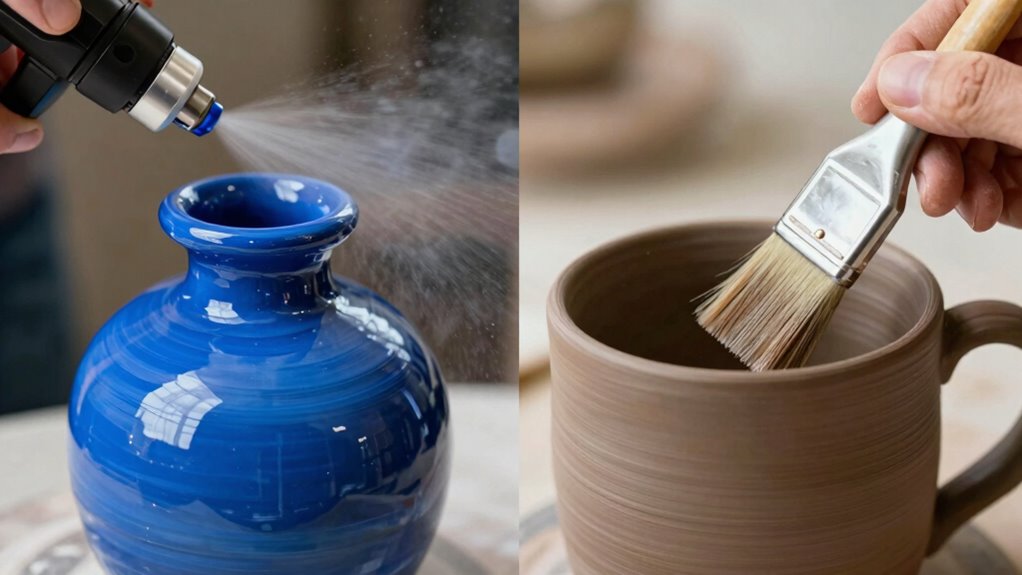

If you want smooth, even surfaces and faster coverage, a glaze sprayer suits your style, especially for larger pieces or textured surfaces. On the other hand, if you prefer control for intricate designs, layering, or subtle color blending, brushing is ideal. Sprayers are great for spontaneous effects, while brushing offers finesse for detailed work. To discover which method aligns best with your pottery approach, explore the details ahead.

Get business pricing on tools and workshop supplies
- Business-only prices and quantity discounts
- Tax-exempt purchasing
- Multiple users, one account, clear invoices
Key Takeaways
- Use a sprayer for smooth, even coats over large surfaces and quick coverage; brushing is better for detailed, textured designs.
- Choose a sprayer for high-temperature glazes needing thin, uniform layers; brush for layered, complex glaze effects.
- Sprayers require more setup and cleaning but save time; brushing offers more control with less mess.
- Environmental factors like humidity and ventilation influence spray application; brushing is more adaptable to controlled indoor conditions.
- Select based on your style: sprayers for efficiency and atmospheric finishes; brushes for finesse and intricate details.
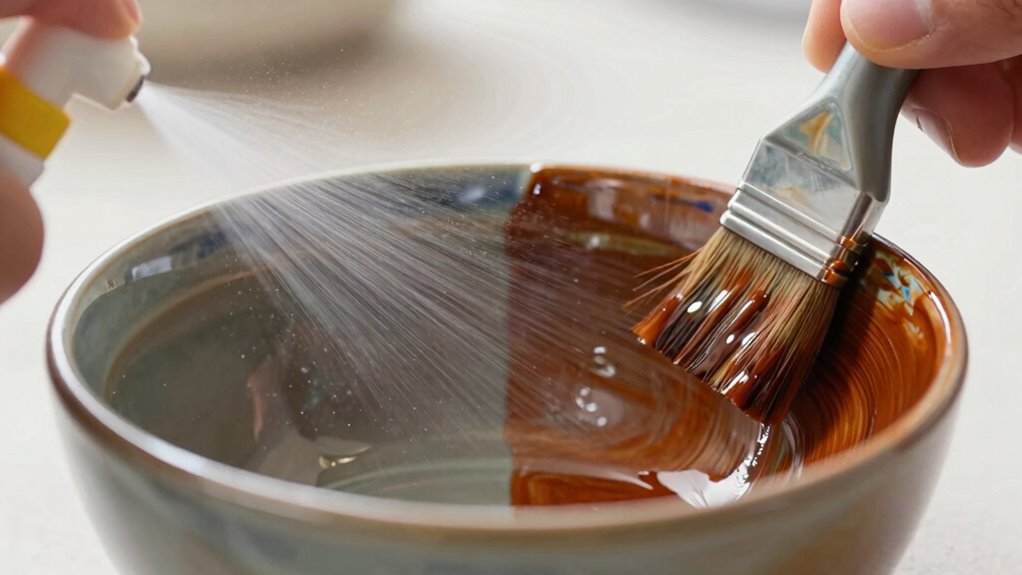
When it comes to applying glaze, choosing between a sprayer and a brush can considerably impact your project’s outcome. Your decision influences not only the finish’s texture and consistency but also how well you can execute your preferred ceramic techniques. For example, if you aim for a smooth, even surface, a sprayer might be your best option. It allows for quick, uniform coverage, especially on larger pieces, reducing the chance of streaks or brush marks. On the other hand, brushing offers more control and detail, making it ideal for intricate designs or textured surfaces where precision matters. Your choice should also consider your firing methods. Certain firing techniques, like reduction firing or high-temperature oxidation, can affect how glaze reacts on the surface. A sprayer often lends itself better to achieving thin, even coats that withstand high firing temperatures, while brushing can help layer glazes for complex effects that might change during firing. Additionally, application techniques play a significant role in how the glaze interacts with your ceramic surface and firing conditions, influencing the final look.
Your ceramic techniques also influence which method suits you better. If you prefer layered glazing or want to create subtle gradations, brushing allows you to manipulate the glaze directly, blending colors or adding texture where needed. For techniques involving slip trailing or detailed patterning, a brush provides the finesse required for fine lines and controlled application. Conversely, if you enjoy experimenting with textured surfaces or want a more spontaneous, atmospheric look, spraying can help achieve those effects efficiently. It’s especially useful for creating mottled or splattered finishes, which can add depth and character to your work. Additionally, understanding how each method interacts with different firing atmospheres can help you plan your glazing process more effectively. Incorporating glaze formulations suited for each method can also optimize your results and ensure compatibility with your firing schedule. Being aware of environmental factors such as humidity and ventilation can also influence the success of each application method. Being mindful of these environmental considerations can help you achieve a more consistent and successful glazing outcome.
Another factor to consider is cleanup and efficiency. Sprayers tend to require more setup, cleaning, and maintenance, but they save time when covering large areas or multiple pieces. Brushing might be slower but provides more immediate control and less mess, making it suitable for detailed work or small batches. Your comfort level with each method also plays a role; some artists find spraying intimidating due to the equipment, while others prefer its speed. Ultimately, your firing methods and preferred ceramic techniques guide your choice. If you’re working with high-temperature glazes or experimenting with different firing atmospheres, know how each application method interacts with those conditions. Evaluating your workspace and available tools can also influence which method is more practical for your projects.
In the end, both methods have their strengths, and your project’s specific needs will determine the best fit. Whether you lean toward the efficiency and evenness of a sprayer or the control and finesse of brushing, understanding how each technique complements your ceramic techniques and firing methods will help you create the best possible results.
Popular right now

Breville Barista Pro Espresso Machine with Grinder, Brushed Stainless Steel

Breville Bambino Espresso Machine, Brushed Stainless Steel

Vitamix Propel Series 750 Professional-Grade Blender, 4 Programs, Black
As an affiliate, we earn on qualifying purchases.
Frequently Asked Questions
Which Method Is Better for Detailed or Intricate Designs?
For detailed or intricate designs, brushing is better because it offers greater artistic precision. You can control the brush strokes, allowing you to achieve fine lines and complex textures with precision. Spray glazing tends to produce a smoother, more uniform texture, which isn’t ideal for highly detailed work. If your goal is to emphasize texture complexity and intricate details, brushing gives you the control needed for the most refined results.
How Do Glaze Sprayers Impact Glaze Thickness Control?
Using a glaze sprayer impacts your glaze thickness control by offering consistent airbrush consistency, which helps achieve even coverage. However, you need to regularly maintain your spray nozzle to prevent clogs and uneven application. Proper maintenance guarantees your sprayer produces a smooth, uniform glaze layer, giving you better control over thickness. With practice, you’ll find that spray glazing allows for precise, lightweight coats, ideal for delicate or subtle effects.
Can Both Methods Be Used on Different Types of Pottery?
Yes, you can use both methods on different types of pottery. Curiously, 85% of ceramists blend colors more smoothly with sprayers, while brushing offers more control for intricate textures. For functional ware, brushing helps create detailed textures, whereas sprayers excel in achieving even color blending on larger pieces. Mixing both techniques lets you explore diverse styles, from vibrant, smoothly blended surfaces to richly textured finishes, enhancing your pottery’s visual appeal.
What Safety Precautions Are Necessary for Spray Glazing?
When spray glazing, you need protective gear like a mask, goggles, and gloves to protect your lungs and skin from harmful fumes and particles. Make certain proper ventilation requirements are met by working in a well-ventilated area or using a spray booth. Always follow safety guidelines, avoid inhaling mist, and clean your tools thoroughly afterward. Staying cautious helps you work safely and enjoy your pottery process.
How Do Cleanup and Maintenance Differ Between the Two Methods?
You’ll find that cleanup and maintenance differ markedly between spraying and brushing. With a glaze sprayer, tool efficiency matters—cleaning involves flushing the system with water and properly storing hoses and nozzles to prevent clogs or damage. Brushing requires less equipment cleanup but demands thorough washing of brushes and palettes. Storage considerations for both include keeping tools dry, organized, and protected from dust and debris to maintain their longevity.
Conclusion
So, whether you choose a glaze sprayer or brushing, remember that the method won’t make your pottery truly unique—that’s all on you. Ironically, in trying to perfect the tool, you might forget that the real artistry lies in your hands and imagination. So, pick your method, but don’t rely on it to define your style. After all, the most beautiful pieces often come from the most unexpected, imperfect touches.