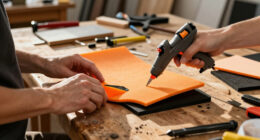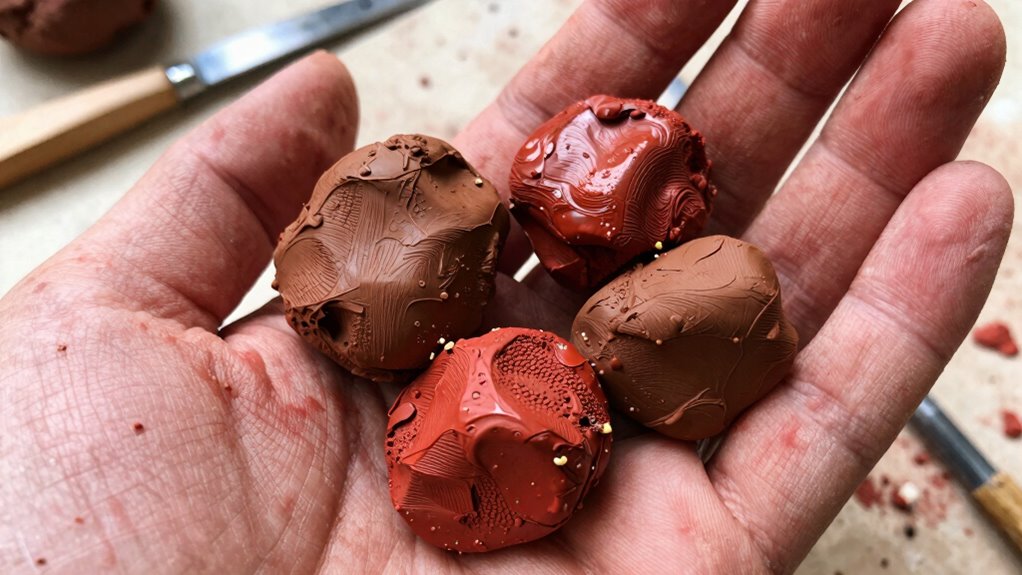
Your clay sticks to everything because of its moisture content and texture, which cause it to cling to hands, tools, and surfaces. To stop this, control the moisture by drying out the clay slightly with powders like cornstarch or talcum, and use non-stick surfaces like silicone mats. Keeping tools and hands lightly dusted can also prevent excess sticking. For more tips on mastering your clay work, explore further techniques you can try.

Get business pricing on tools and workshop supplies
- Business-only prices and quantity discounts
- Tax-exempt purchasing
- Multiple users, one account, clear invoices
Key Takeaways
- Excess moisture makes clay sticky; controlling moisture levels prevents it from clinging to surfaces and tools.
- Using non-stick surfaces like silicone mats or wax paper reduces direct contact and sticking during shaping.
- Dusting your hands, tools, and work surfaces with cornstarch or talcum powder creates a barrier against adhesion.
- Handling clay with dry or lightly powdered hands minimizes excess moisture transfer that causes stickiness.
- Properly kneading in powders and managing moisture content balances texture, making clay easier to work with and less prone to sticking.
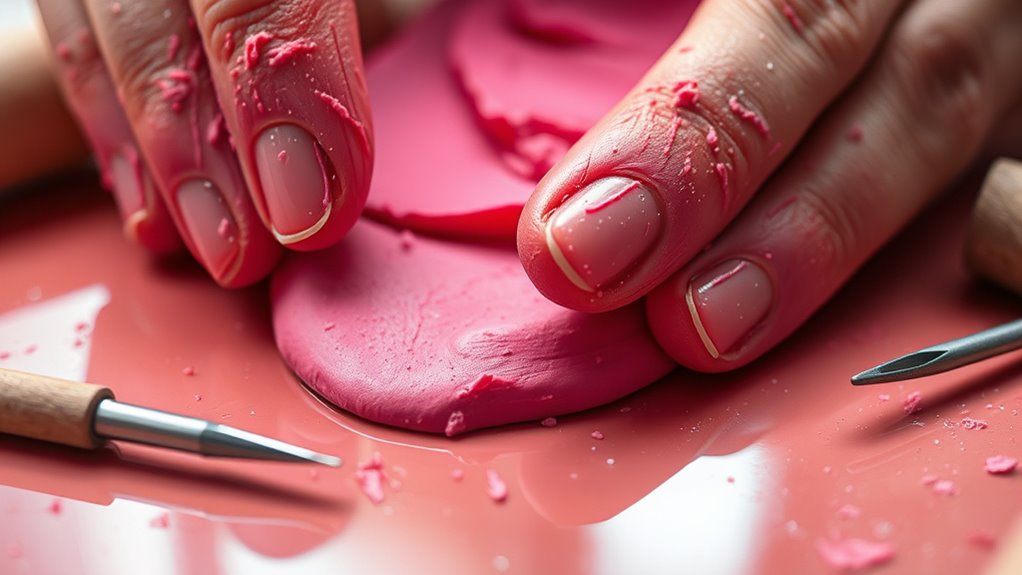
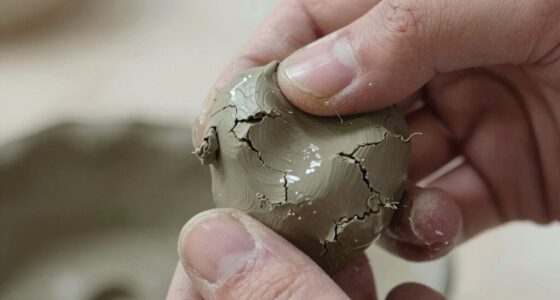
If you’ve ever worked with clay, you know how frustrating it can be when it sticks to your hands, tools, or workspace. This issue is especially common with air drying clay, which tends to have a softer, more delicate texture that makes sticking even more problematic. The clay texture plays a significant role in how much it adheres to surfaces; softer, wetter clays are more prone to cling, while drier clays are less sticky but can crack or break easily. Understanding this helps you choose the right techniques to prevent sticking and keep your project manageable. Additionally, the moisture content of the clay can influence its Free Floating properties, which impacts how it interacts with surfaces and tools.
Air drying clay is popular for its convenience, but its moisture content makes it inherently sticky. When the clay is too moist, it can easily cling to your fingers and tools, which can slow down your work and cause frustration. To improve your experience, you need to manage the clay’s moisture level by controlling its texture. If the clay feels overly soft and sticky, try adding a small amount of cornstarch or baby powder to dry it out slightly. This not only reduces stickiness but also helps achieve a more manageable clay texture. Be careful not to add too much at once, as this can make the clay too dry and difficult to work with.
Another effective way to reduce sticking is to work on a non-stick surface. A silicone mat or a piece of wax paper can serve as an excellent workspace that prevents the clay from adhering. You can also lightly dust your work surface and tools with cornstarch or talcum powder to create a barrier between the clay and the surface. This prevents the clay from gripping too tightly, making it easier to shape and move without tearing or deforming the piece. Remember to reapply the powder as needed, especially if you notice the clay starting to stick again.
Proper hand technique also makes a difference. Keep your hands clean and lightly dusted with powder to prevent excess moisture from transferring onto the clay. When working with air drying clay, don’t handle it excessively or with wet hands, as moisture will increase its stickiness. Instead, keep your hands dry and use tools for shaping and detailing. If your clay becomes too sticky during sculpting, pause and lightly knead in some powder to regain a better texture.
As an affiliate, we earn on qualifying purchases.
Frequently Asked Questions
Can I Reuse Clay That’s Stuck to Surfaces?
Yes, you can reuse clay stuck to surfaces if you carefully remove it. First, guarantee proper surface preparation to prevent future sticking. Gently scrape off the clay, then knead it to restore its texture. Store your clay properly in an airtight container to keep it moist and prevent it from drying out. Reusing clay saves money and reduces waste, but always check for dryness or cracks before reusing.
Does Air-Drying Clay Stick More Than Polymer Clay?
Yes, air-drying clay tends to stick more than polymer clay due to its softer, more porous texture. Its sticky nature is influenced by clay texture and longer drying time, which allows it to adhere to surfaces more easily. Polymer clay, with its denser, non-porous surface, generally resists sticking better. So, if you’re working with air-drying clay, expect more stickiness and plan accordingly for longer drying times.
Are There Specific Tools to Prevent Clay Sticking?
Think of your tools as magic wands in a clay wizard’s arsenal. To prevent sticking, you can choose tools with the right clay surface compatibility, like silicone or metal. Using alternative non-stick coatings, such as beeswax or commercial release sprays, also helps. These tools work smoothly with your clay, making your crafting process effortless. Always select the right tools to keep your creativity flowing without the hassle of sticking.
How Does Humidity Affect Clay’s Stickiness?
You’ll notice that higher environmental humidity increases clay’s stickiness because moisture levels in the air make the clay more hydrated. When the air is humid, the clay absorbs this moisture, becoming softer and more prone to sticking. Conversely, in dry conditions, it’s less sticky. To control this, keep the workspace climate stable, store your clay in airtight containers, and work in a controlled environment to maintain consistent moisture levels.
Can Commercial Release Agents Reduce Clay Sticking?
Like a shield for your project, commercial release agents can help reduce clay sticking. They form a barrier between your reusable clay and surfaces, making demolding easier. Using a quality release agent prevents frustration and preserves your clay’s texture. Always apply a thin, even layer to ensure smooth work. With the right product, you’ll find that your reusable clay stays intact and your creations come out effortlessly.
As an affiliate, we earn on qualifying purchases.
Conclusion
Now that you know the secrets to preventing your clay from sticking everywhere, you’re practically a superhero in the world of crafting. Imagine your workspace remaining spotless, your hands perfectly clean, and your projects coming out flawless every single time. No more battles with stubborn clay messes or frustration-filled cleanup sessions. With these simple tricks, you’ll conquer sticky clay like a master magician—turning chaos into clean, smooth, and effortless creativity. Your clay-sticking days are officially over!
As an affiliate, we earn on qualifying purchases.
As an affiliate, we earn on qualifying purchases.
Fall yard work Picks
leaf blowers
As an affiliate, we earn on qualifying purchases.