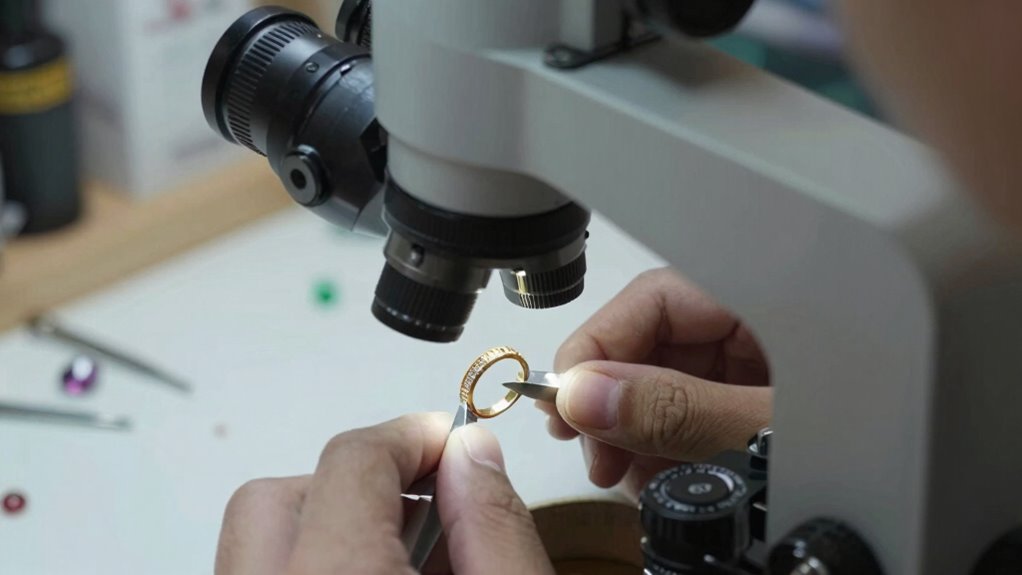

A jewelry microscope is worth adding to your bench when you need detailed, accurate analysis of gemstones and jewelry. It helps you spot flaws, internal features, and surface details that can impact value and authenticity. This tool enhances your ability to evaluate diamonds, identify treatments, and distinguish natural from synthetic stones. If you want to improve your appraisal skills and make better decisions, this microscope could be a game-changer—keep exploring to learn more about its benefits.

Get business pricing on tools and workshop supplies
- Business-only prices and quantity discounts
- Tax-exempt purchasing
- Multiple users, one account, clear invoices
Key Takeaways
- When precise examination of gemstone internal features and surface details influences buying, selling, or repair decisions.
- If identifying diamond clarity, inclusions, or differentiating natural stones from synthetics is critical.
- When assessing gemstone authenticity, treatments, or internal characteristics for accurate valuation.
- If enhancing confidence and accuracy in gemstone grading and appraisal processes.
- During complex jewelry repairs requiring detailed microscopic inspection for quality control.
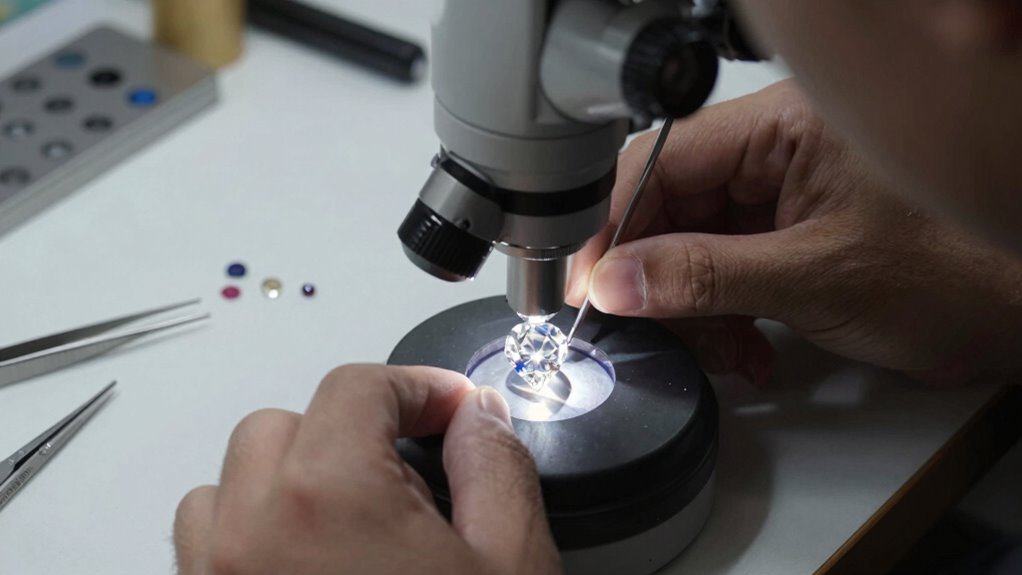
If you’re serious about evaluating jewelry quality, investing in a good jewelry microscope is a smart move. A high-quality microscope allows you to closely examine every detail of a piece, ensuring you’re making informed decisions whether you’re buying, selling, or repairing. One of the primary benefits is assessing diamond clarity. With a microscope, you can spot internal flaws, known as inclusions, and surface blemishes that might not be visible to the naked eye. This helps you determine the true quality of a diamond and accurately assess its value. When it comes to gemstone identification, a jewelry microscope becomes an essential tool. Many gemstones have unique internal features or surface characteristics that can help you distinguish between natural stones, synthetics, and simulants. Recognizing these details ensures you’re dealing with authentic pieces and helps you avoid costly mistakes.
Using a microscope regularly on the bench improves your ability to evaluate the authenticity and quality of various stones. For diamonds, understanding clarity is crucial, and a microscope provides the detailed view needed to grade each stone properly. It allows you to see the size, number, and position of inclusions, which directly impact a diamond’s brilliance and worth. When examining other gemstones, the microscope reveals internal structures like growth patterns, inclusions, or zoning, all of which aid in correct identification. This is especially valuable when determining if a gemstone is natural or lab-grown, as the internal features often differ significantly. Additionally, microscope magnification enables you to detect subtle surface features that can influence the gemstone’s value or authenticity. Regularly using a microscope also helps build your expertise in gemology, which is essential for making accurate assessments and understanding the nuances of different stones. Furthermore, understanding the internal features of gemstones can provide insights into their origins and treatments, adding another layer to your evaluation skills. It also enhances your ability to recognize inorganic salts or other mineral inclusions that can be critical indicators during gemstone analysis. Developing skills in microscopic examination can significantly improve your confidence and precision in gemstone appraisal.
Popular right now

Shark AI Ultra Robot Vacuum with Self-Empty Base

LG 85-inch QNED75B Mini LED Smart TV Bundle with HDMI and CPS Protection Plan

De'Longhi Stilosa Compact Manual Espresso Machine with Milk Frother
As an affiliate, we earn on qualifying purchases.
Frequently Asked Questions
What Features Should I Look for in a Jewelry Microscope?
You should look for a jewelry microscope with high magnification capabilities, ideally adjustable from 20x to 80x or more, to see fine details clearly. Make certain it has good lighting options, like built-in LED lights or fiber optic lighting, to illuminate your work evenly. Easy focusing mechanisms and sturdy construction help you work precisely and comfortably. These features guarantee you get the best detail and clarity for inspecting jewelry effectively.
How Much Does a Quality Jewelry Microscope Typically Cost?
You can expect a quality jewelry microscope to cost anywhere from $200 to over $1,000. It’s wise to do a price comparison and consider brand reputation before investing. While higher-priced models often offer better optics and durability, affordable options can still deliver solid performance for beginners. Don’t settle for less, but remember, sometimes you get what you pay for—so choose wisely based on your needs.
Can a Jewelry Microscope Be Used for Other Crafts or Industries?
Yes, a jewelry microscope can be used for alternative art applications like examining tiny details in painting or sculpture. It’s also handy for industrial inspection techniques, such as inspecting small components or circuit boards. You’ll find it versatile for various crafts and industries, giving you detailed views that improve precision and quality. Its magnification capabilities make it a valuable tool beyond jewelry, enhancing your work in multiple creative and technical fields.
How Difficult Is It to Operate a Jewelry Microscope for Beginners?
You’ll find operating a jewelry microscope fairly straightforward as a beginner. Adjusting lighting and magnification levels takes some practice, but most models include user-friendly controls. You’ll want to start with lower magnification to get comfortable, then gradually increase it for detailed work. With patience, you’ll quickly learn to navigate the controls, making it easier to inspect your pieces with precision and confidence.
What Maintenance Is Required to Keep a Jewelry Microscope in Good Condition?
Think of your jewelry microscope as a trusty sidekick—keep it sharp and ready for action. You should follow cleaning protocols regularly to prevent dust and debris from clouding your view, and stick to a calibration frequency to guarantee accuracy. Wipe lenses with a soft cloth and check alignment periodically. This simple routine keeps your microscope in top shape, making your work precise and enjoyable.
Conclusion
So, next time you’re debating whether a jewelry microscope is worth the space, remember—sometimes the tiniest tools reveal the biggest secrets. Sure, you could rely on your naked eye, but where’s the fun in that? Irony’s sweet: investing in a microscope might just save you from costly mistakes, proving that tiny magnifications can make a huge difference. After all, in jewelry, it’s often the little details that make all the sparkle worthwhile.