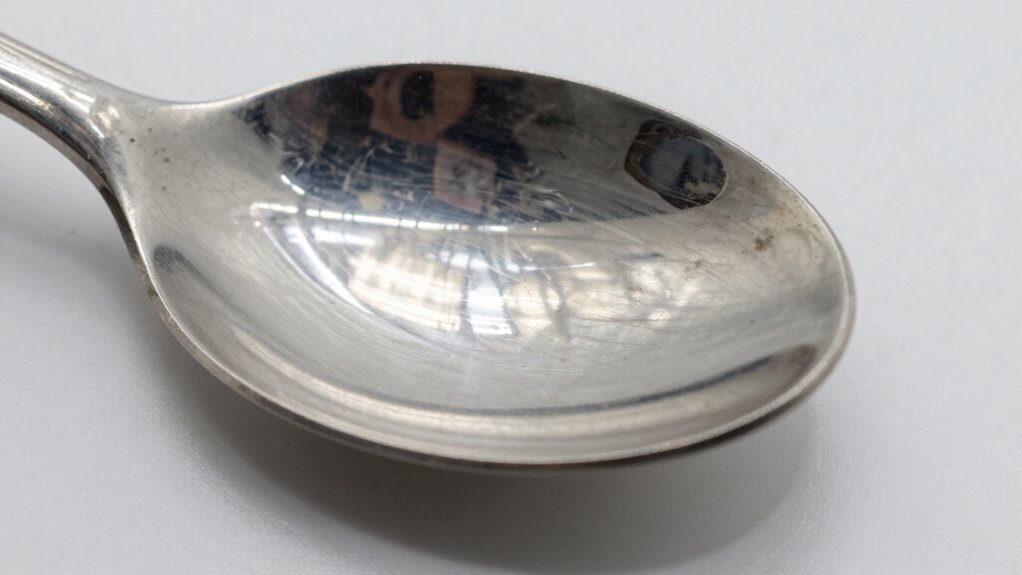

If your metal looks dull after polishing, it’s likely because you didn’t clean and protect the surface afterward. Polishing exposes fresh metal that quickly reacts with oxygen, forming dull oxidation layers. Residual dirt or grease can also trap light, making it look hazy. The missing step is a thorough cleaning and applying a protective coating. To keep that shine longer, learn the key finishing steps that prevent dullness from reappearing.

Get business pricing on tools and workshop supplies
- Business-only prices and quantity discounts
- Tax-exempt purchasing
- Multiple users, one account, clear invoices
Key Takeaways
- Residual dirt, grease, or contaminants remain on the surface, causing dullness after polishing.
- Failure to promptly apply a protective coating exposes fresh metal to oxygen, leading to oxidation.
- Inadequate cleaning before polishing leaves residues that hinder light reflection and cause dullness.
- Surface imperfections or scratches can reveal underlying oxidation or contamination, dulling the appearance.
- Skipping the final step of sealing or protecting the polished surface allows oxidation and dirt buildup over time.
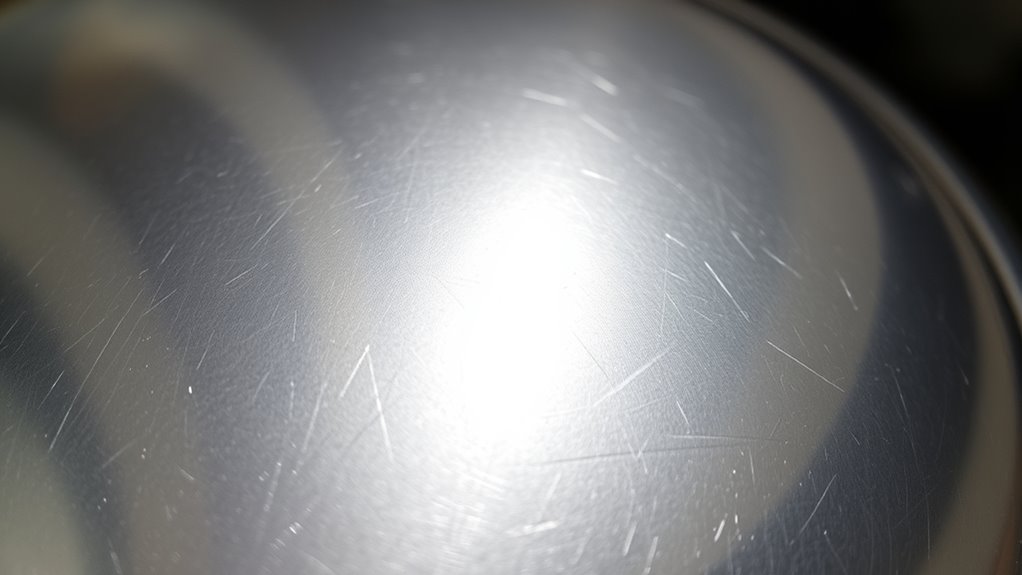
After polishing, metal surfaces can sometimes lose their shine and appear duller than before. This unexpected dullness often leaves you puzzled, especially after putting in effort to restore the metal’s original luster. The reason behind this usually boils down to a couple of key issues: oxidation and surface contamination. While polishing removes dirt, tarnish, and surface imperfections, it can sometimes expose or even accelerate these problems if you don’t follow the proper finishing steps.
Oxidation issues are one of the main culprits behind dull-looking metal after polishing. When you polish metal, you’re removing surface layers that may have become oxidized or tarnished over time. However, if you don’t protect the freshly polished surface, it’s vulnerable to reacting with oxygen in the air. This reaction forms a new layer of oxidation, which can dull the surface quickly. The result is a metal that looks clean but lacks its previous shine because oxidation creates a matte or hazy appearance. To prevent this, it’s essential to apply a protective coating or sealant immediately after polishing, sealing out oxygen and slowing down further oxidation.
Protect polished metal surfaces with a sealant to prevent oxidation and restore their shine longer.
Surface contamination is another common problem that causes dullness. During polishing, tiny particles of dirt, grease, or other residues can get trapped on the surface if you don’t thoroughly clean the metal beforehand. These contaminants aren’t always visible but can create a barrier that prevents the metal from reflecting light properly. They can also react with the metal’s surface, leading to dull patches or uneven shine. To avoid this, you need to start with a clean surface—use a degreaser or mild cleaner to remove any oils, dirt, or residues before polishing. After polishing, wipe the surface with a clean, lint-free cloth to remove any lingering contaminants.
Another often-missed step is the final cleaning and protective treatment. After you finish polishing, it’s tempting to just admire your work, but skipping this step can leave the surface vulnerable. Properly cleaning the metal with a gentle solvent or polish that leaves a protective film can make a big difference. This film acts as a barrier against oxidation and surface contamination, helping your metal keep its shine longer. If you neglect this final step, you might find your polished surface dulling again much sooner. Additionally, understanding how contrast ratio affects the appearance of your metal can help you select the right finishing products to enhance its shine and depth.
metal polishing protective sealant
As an affiliate, we earn on qualifying purchases.
As an affiliate, we earn on qualifying purchases.
Frequently Asked Questions
Can Using the Wrong Polish Cause Dullness?
Yes, using the wrong polish can cause dullness. It may leave behind polish residue or react poorly with your metal, leading to a dull finish. Improper technique, like applying too much pressure or not buffing thoroughly, can also worsen the problem. Make sure to choose the right polish for your metal type and use proper, gentle motions to avoid dullness caused by improper technique.
How Often Should I Polish My Metal?
Think of your metal like a high-maintenance celebrity—frequent visits keep it shining. You should polish your metal every few months for proper metal maintenance, depending on use and environment. Over-polishing can strip away its natural luster, so strike a balance. Regular polishing maintains that dazzling appearance, but too much can cause dullness. Keep an eye on your metal’s glow and adjust your polishing frequency accordingly.
Does Environmental Exposure Affect Metal Shine?
Yes, environmental exposure affects metal shine. Oxidation effects from air, moisture, and pollutants cause environmental tarnishing, which dulls your metal over time. When you leave your metal exposed, it reacts with elements in the environment, forming tarnish or corrosion that diminishes its luster. To maintain a bright shine, you should protect your metal from harsh conditions, regularly clean it, and apply protective coatings to prevent oxidation effects and environmental tarnishing.
Can Cleaning Agents Damage Polished Metal?
Absolutely, cleaning agents can damage polished metal. They often contain harsh chemicals that trigger unwanted chemical reactions, leading to surface corrosion or dullness. Like a knight’s armor, your metal needs gentle care; aggressive cleaners might strip away its shine or cause pitting. Always use mild, non-abrasive cleaners specifically designed for your metal type. This way, you’ll prevent damage and keep your metal gleaming, just like in the good old days.
Is There a Difference Between Polishing and Buffing?
Polishing and buffing differ mainly in technique; polishing uses finer abrasive materials to create a smooth, shiny surface, while buffing involves softer wheels that remove surface scratches. Buffing can sometimes leave a dull appearance if not done correctly or if abrasive materials are too harsh. To keep your metal gleaming, make certain you’re using the right abrasive materials and avoid over-buffing, which can cause surface scratches and dullness.
As an affiliate, we earn on qualifying purchases.
Conclusion
If your metal still looks dull after polishing, you’re likely missing a essential step—applying a protective finish or sealant. This final touch prevents oxidation and fingerprints that cause dullness over time. Did you know that untreated metals can lose up to 70% of their shine within just six months? Incorporating this simple step can keep your metal shining brilliantly longer, saving you time and effort. Don’t skip it—your metal will thank you!
As an affiliate, we earn on qualifying purchases.
As an affiliate, we earn on qualifying purchases.
Fall yard work Picks
leaf blowers
As an affiliate, we earn on qualifying purchases.