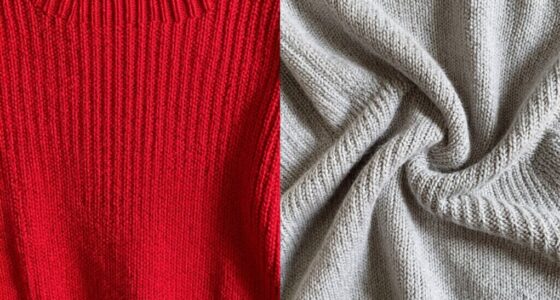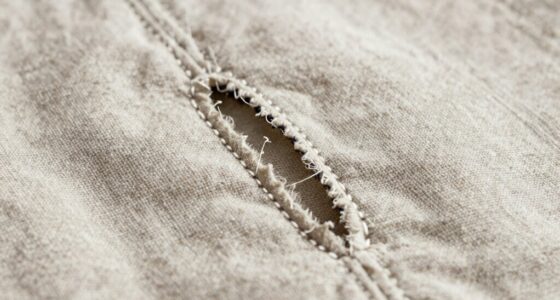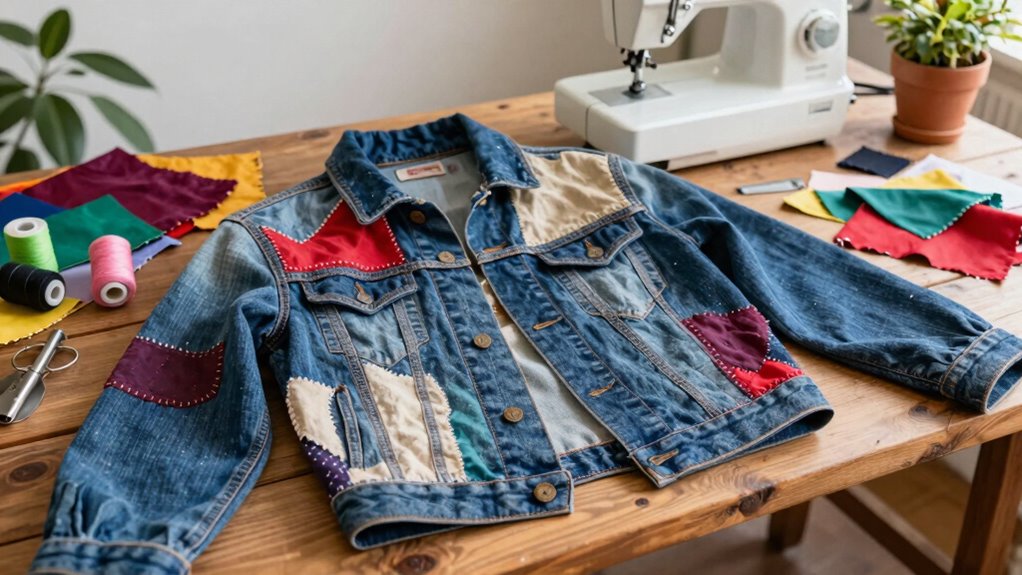

To upcycle old clothing into craft fabric that looks professional, start by choosing sturdy, quality fabrics like denim or canvas, and wash them thoroughly before working. Carefully disassemble the garments, removing seams, buttons, and zippers with sharp tools, and cut the fabric with precise, clean edges. Use neat finishing techniques like matching thread, zigzag stitches, or bias tape to prevent fraying. Add stylish details or embellishments for a customized touch, and pay attention to seamless joins for a polished look—if you keep exploring, you’ll discover how to turn your upcycled pieces into chic, high-end crafts.
Key Takeaways
- Select durable, quality fabrics and thoroughly wash to ensure a professional, long-lasting finish.
- Carefully disassemble garments, preserving interesting details like embroidery or pockets for visual appeal.
- Use precise sewing techniques, such as matching threads and clean edges, to create a polished, seamless look.
- Incorporate modern embellishments like hardware or patches to elevate the design and avoid a homemade appearance.
- Pay attention to finishing touches, combining fabric pieces thoughtfully for a cohesive, stylish result.
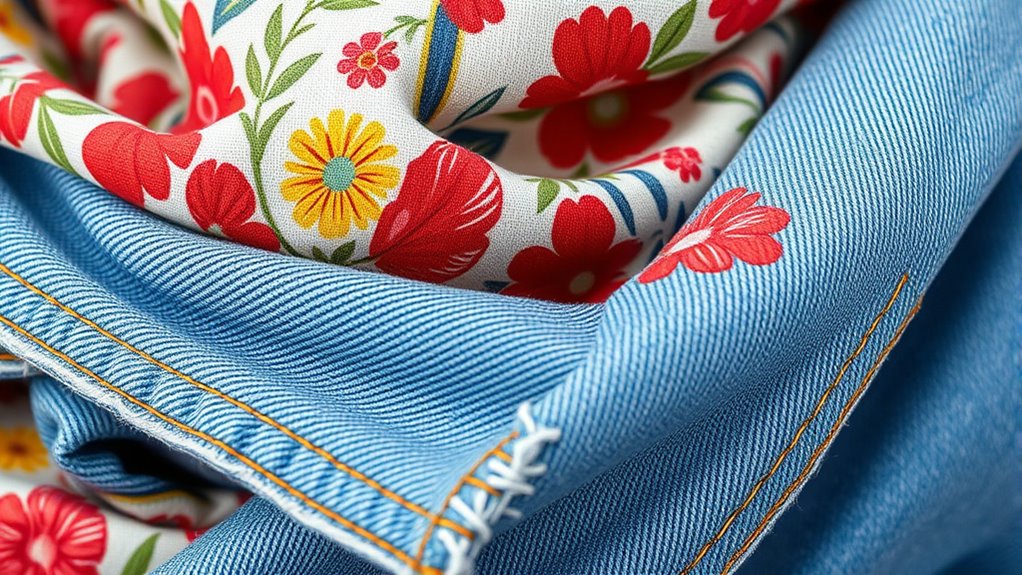
Upcycling old clothing is a creative way to breathe new life into garments you no longer wear. Instead of tossing out worn-out shirts or outdated jeans, you can transform them into unique craft fabric that elevates your projects. This approach supports sustainable fashion by reducing waste and encourages creative reuse, giving your clothing a second purpose. When done right, your upcycled fabric won’t look homemade—instead, it’ll look stylish and intentional, blending seamlessly into your craft or wardrobe.
Upcycling clothing transforms old garments into stylish, sustainable craft fabric with a polished, intentional look.
To start, choose your garments wisely. Select pieces made from sturdy, quality fabric that can hold up to cutting and sewing. Thicker fabrics like denim, canvas, or heavy cotton work well for craft fabric, especially if you’re planning to make bags, home décor, or accessories. Lighter fabrics can be ideal for clothing alterations or delicate accessories. Before transforming your clothing, wash and dry everything thoroughly to prevent shrinking or color bleeding later on. This step guarantees your upcycled fabric remains durable and maintains its fresh look.
Next, carefully disassemble your clothing. Use sharp scissors or a rotary cutter for clean, precise cuts. Take your time to remove seams, buttons, and zippers neatly, as these details can be incorporated into your final piece or removed for a cleaner finish. When cutting your fabric, think about the pattern or texture you want to highlight. For example, if your shirt has an interesting pocket or embroidery, consider incorporating those details into your new project for a personalized touch.
To avoid that homemade look, pay attention to finishing techniques. Use straight or zigzag stitches to secure raw edges, preventing fraying and creating a polished appearance. If you want a seamless look, consider serging or binding raw edges with bias tape. Matching thread colors to your fabric can help your seams blend in seamlessly, making your project look professionally finished. Combining different pieces of upcycled fabric can also create interesting visual effects—just be sure to cut and sew with precision to keep the design cohesive and stylish. Additionally, understanding Free Floating techniques can help you achieve a more polished, high-end appearance by avoiding visible stitches or uneven seams.
Finally, don’t shy away from adding modern details. You can incorporate hardware, like new buttons or grommets, or add embellishments such as patches or embroidery to elevate the look. These small touches make your upcycled fabric appear thoughtfully crafted, not homemade, and ensure your final product aligns with current trends. When you approach upcycling with care and attention to detail, you turn old clothing into versatile, fashionable craft fabric that’s both sustainable and uniquely yours.

Fabric Scissors Professional, 8" Heavy Duty Sewing Scissor for Fabric Cutting, Tailor Sharp Sewing Shears for Cutting Leather craft Home Office Students Artists Dressmakers
Ultra Sharp Fabric Scissors: Wteehn sewing scissors for fabric cutting is made of high-quality galvanized manganese, exquisite hand-forged…
As an affiliate, we earn on qualifying purchases.
As an affiliate, we earn on qualifying purchases.
Frequently Asked Questions
What Types of Clothing Fabrics Are Best for Upcycling?
You should choose fabrics suitable for your project that also offer good fabric durability. Cotton, denim, linen, and canvas are excellent options because they’re sturdy and easy to work with. Avoid delicate fabrics like silk or lace, which may not hold up well over time. By selecting durable fabrics, you guarantee your upcycled craft looks polished and lasts, giving your project a professional finish without looking homemade.
How Can I Prevent My Upcycled Items From Looking DIY?
Did you know that 85% of consumers say they value unique, stylish clothing? To prevent your upcycled items from looking DIY, focus on fabric dyeing techniques for a polished look. Add decorative embellishments like beads or embroidery for sophistication. Choose high-quality fabrics and finish edges neatly. These tips help your projects appear professional, elevating your upcycled creations from homemade to high-end, ensuring you love wearing or gifting them.
What Tools Are Essential for Transforming Old Clothing Into Craft Fabric?
You’ll need sharp scissors, a rotary cutter, and a cutting mat to precisely cut your fabric. A sewing machine or fabric glue helps achieve clean finishes, while fabric care products like gentle detergent keep your upcycled pieces looking fresh. Staying updated on upcycling trends guides your project choices. With these essential tools, you can craft polished, stylish items that elevate your upcycling efforts without a homemade look.
How Should I Prepare Clothing Before Starting My Upcycling Project?
Before starting your upcycling project, wash and thoroughly clean your clothing to remove dirt and oils. Iron the fabric to smooth out wrinkles, making it easier to work with. If you plan to use fabric dyeing or embellishment techniques, consider pre-treating the fabric to make certain of color absorption and better adhesion of decorations. This preparation helps achieve a polished, professional look without it appearing homemade.
Are There Specific Sewing Techniques to Achieve a Professional Finish?
Ah, the elusive art of sewing like a pro—don’t worry, you can master it! Focus on sewing machine mastery by practicing straight, zigzag, and topstitch techniques. Use seam finish techniques like serging or pinking shears to prevent fraying. Press every seam for a crisp look, and take your time. With patience, your upcycled creations will look polished, not homemade—just like those high-end fashion magazines secretly envy.
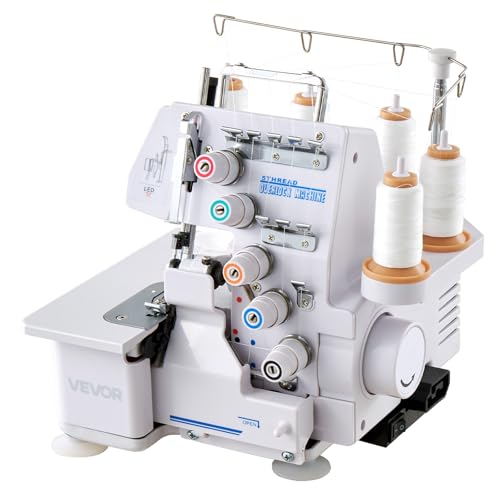
VEVOR Serger Overlock Sewing Machine, 1250 Stitches Per Minute, 2-3-5 Thread Capability, with LED Light and Strong Suction Feet, Heavy-Duty Metal Frame Sewing Machine for Various Fabrics, White
2/3/5-Thread Versatility: Our serger sewing machine features flexible 2/3/5-thread setup with adjustable stitch length and width—great for simple…
As an affiliate, we earn on qualifying purchases.
As an affiliate, we earn on qualifying purchases.
Conclusion
By transforming your old clothing into stylish craft fabrics, you’re not just saving money—you’re also making a sustainable choice that’s totally in vogue. With a bit of creativity and modern techniques, your upcycled pieces won’t look like they came straight from a cobbler’s shop in the 1800s. So, don’t be afraid to get crafty and give those worn-out garments a fresh new life, proving that you’re a true eco-fashionista ahead of your time.

Jeimier 5 Sizes Bias Tape Makers, Upgraded Bias Binding Tape Making Tool for Fabric Quilting Sewing, Quickly Customize, Solidly Bias Quilting Tool, 1/4IN 3/8IN 1/2IN 3/4IN 1IN
QUICKLY MAKE BIAS BINDING: The Jeimier 5 sizes professional Bias Tape Makers out of any fabric to match…
As an affiliate, we earn on qualifying purchases.
As an affiliate, we earn on qualifying purchases.

Wear, Repair, Repurpose: A Maker's Guide to Mending and Upcycling Clothes
As an affiliate, we earn on qualifying purchases.
As an affiliate, we earn on qualifying purchases.