Handmade buttonholes often fray because the stitches aren’t dense or secure enough to hold the fabric together over time. To prevent this, reinforce the edges with tight zigzag or buttonhole stitches and add small bar tacks or cross-stitches at the ends. Trimming raw edges carefully and pressing the finished buttonhole also helps maintain its shape and durability. Keep these tips in mind, and you’ll find out how proper reinforcement can extend the life of your buttonholes.

Get business pricing on tools and workshop supplies
- Business-only prices and quantity discounts
- Tax-exempt purchasing
- Multiple users, one account, clear invoices
Key Takeaways
- Handmade buttonholes often fray due to raw fabric edges not being properly reinforced.
- Using dense zigzag stitches and reinforcing with interfacing prevents fraying and increases durability.
- Cutting the slit carefully and trimming edges close to stitches helps minimize fraying over time.
- Adding small bar tacks or cross-stitches at each end of the buttonhole enhances strength and prevents unraveling.
- Proper pressing and finishing techniques, like sewing buttonhole stitches, maintain neatness and prolong the buttonhole’s lifespan.

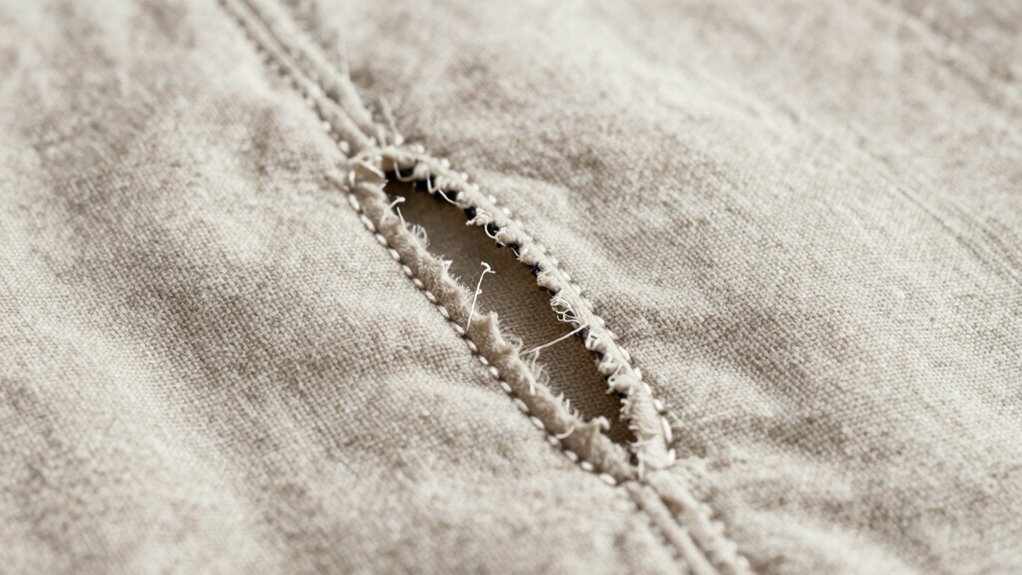
Have you ever wondered how to create professional-looking buttonholes by hand? When you take on sewing your own garments, achieving a neat, durable buttonhole can make a big difference in the overall finish. One common challenge is preventing your handmade buttonholes from fraying over time. The key to this lies in understanding proper buttonhole reinforcement and mastering effective sewing techniques. Reinforcing your buttonholes ensures they stay intact and look polished, even after repeated use. Without reinforcement, the fabric around the buttonhole can weaken, leading to fraying, unraveling, or even tearing, which diminishes the garment’s appearance and longevity.
Reinforcing buttonholes ensures they stay neat, durable, and resistant to fraying over time.
To properly reinforce your buttonholes, start by selecting the right stitches. Using a dense zigzag stitch is a popular sewing technique for reinforcement. It creates a sturdy edge that resists fraying and provides extra strength. Before sewing, mark the buttonhole placement carefully and cut the slit with sharp scissors, making sure the edges are clean. When sewing, begin by stitching around the perimeter of the buttonhole several times, gradually increasing the density to lock the stitches in place. This layered stitching acts as a reinforcement, preventing the fabric from unraveling. For added durability, you can also sew a small bar tack or cross-stitch at each end of the slit, which further secures the opening.
Another effective sewing technique involves using specialized buttonhole stitches, such as the buttonhole stitch, which encircles the raw edges and provides a clean, finished look. This stitch not only adds aesthetic appeal but also serves as a reinforcement, keeping fraying at bay. Additionally, some sewists prefer to use fusible interfacing or a small piece of stabilizer behind the fabric where the buttonhole will be sewn. This extra layer strengthens the fabric, especially on lightweight or delicate materials, making it less prone to fraying over time. Understanding the importance of contrast ratio in fabric selection can also help choose materials that are more resistant to fraying and wear.
Once you’ve sewn the reinforcement stitches and added any stabilizers, trim the raw edges close to the stitching but be careful not to cut through your stitches. You can then carefully cut the buttonhole slit, taking care to keep the stitches intact. Afterward, pressing the finished buttonhole with an iron helps set the stitches and smooth out any puckers, ensuring a professional appearance. With these sewing techniques and reinforcement methods, your handmade buttonholes will not only look more polished but also last much longer, resisting the tendency to fray and unravel with regular use.
Frequently Asked Questions
Can Machine-Made Buttonholes Be More Durable Than Handmade Ones?
Machine-made buttonholes can often be more durable than handmade ones because of their consistent stitch quality and precise tension, which enhances machine durability. However, handmade craftsmanship allows you to control stitch strength and reinforce areas prone to fraying. Your choice depends on your skills and desired durability; machines offer uniformity, while handmade work adds personal strength through careful reinforcement and craftsmanship.
What Fabrics Are Most Prone to Fraying in Buttonholes?
You’ll find that fabrics with loose or uneven fabric weaving, like linen or raw silk, are most prone to fraying in buttonholes. These fabrics have less stable edge finish techniques, making their edges more vulnerable. To prevent fraying, use reinforced edge finish techniques such as zigzag stitching or bias tape. Properly stabilizing the fabric before cutting and sewing also helps maintain the integrity of the buttonhole, reducing fraying over time.
How Does Thread Quality Affect the Longevity of Handmade Buttonholes?
Think of thread quality as the backbone of your handmade buttonholes—like the sturdy frame of a well-built house. High-quality thread boosts thread durability and sewing strength, ensuring your buttonholes last through years of use. Cheaper threads tend to weaken, fray, and break over time. To keep your buttonholes looking sharp and functioning smoothly, invest in strong, durable thread that supports your craftsmanship and withstands daily wear.
Are There Specific Tools That Improve Handmade Buttonhole Quality?
You can improve your handmade buttonhole quality by using specialized tools like a buttonhole foot and sharp, fine needles. Fabric stabilizers also help maintain the fabric’s structure during sewing, preventing fraying and uneven stitches. These tools give you more control, resulting in cleaner, more professional-looking buttonholes. Make sure to select the right stabilizer for your fabric type, and practice on scraps to perfect your technique before working on your main project.
What Are Common Mistakes That Cause Handmade Buttonholes to Fray?
Like a delicate spider’s web, your buttonholes can fray if you make common mistakes. If you ignore buttonhole symmetry, they’ll look uneven and weaken easily. Using inconsistent stitching tension causes threads to loosen or bunch, increasing fraying risk. Rushing the process or not reinforcing the edges also weakens the fabric. Focus on even stitches, proper tension, and symmetry to keep your handmade buttonholes durable and neat.
Conclusion
Think of your handmade buttonholes as tiny bridges you build with care. When you reinforce them properly, they become strong enough to withstand daily wear and tear, just like a sturdy bridge endures traffic. If you neglect to prevent fraying, it’s like leaving gaps that let water seep through. With a little extra attention and the right techniques, your buttonholes will stand tall, ready to carry your style across any journey you take.
Fall yard work Picks
leaf blowers
As an affiliate, we earn on qualifying purchases.