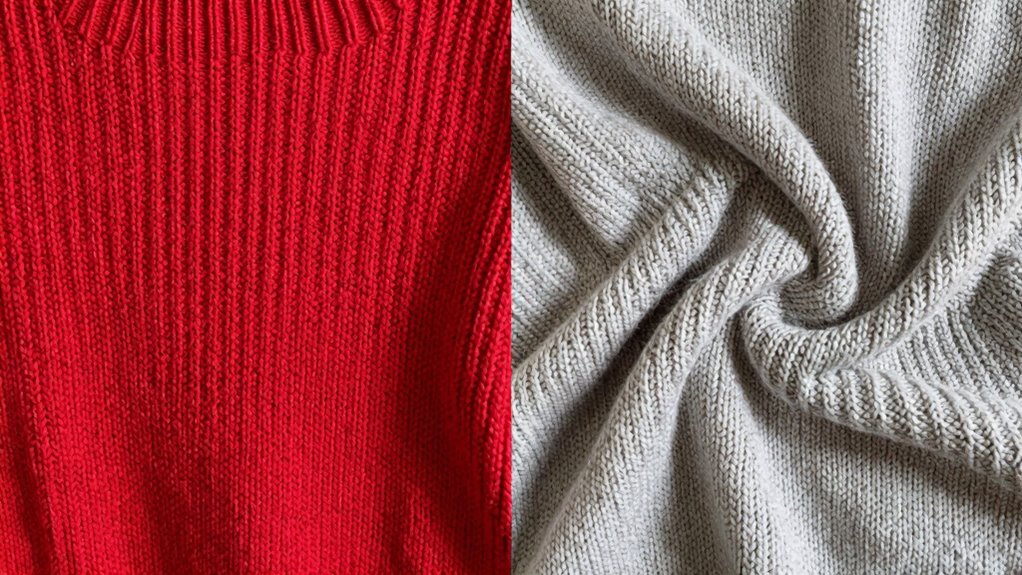
Some knits bounce back because they’re made from fibers with high elasticity, like wool or silk, which can stretch and recover easily. If the knitting tension is loose, the fabric will be more flexible and able to regain its shape. However, tight tension or synthetic fibers like polyester tend to stay misshapen because they don’t recover as well. Understanding fiber types and knitting techniques can help you make better choices for long-lasting shape retention—learn more to get it right.

Get business pricing on tools and workshop supplies
- Business-only prices and quantity discounts
- Tax-exempt purchasing
- Multiple users, one account, clear invoices
Key Takeaways
- Natural fibers like wool and silk have higher elasticity, enabling them to recover shape after stretching.
- Synthetic fibers such as acrylic or polyester typically have lower elasticity, leading to permanent deformation.
- Proper knitting tension, especially balanced tension, enhances a fabric’s ability to bounce back.
- Tight tension creates denser, stiffer fabric that resists shape recovery; loose tension improves flexibility but may reduce shape retention.
- Gentle care and appropriate washing help maintain fiber elasticity and knitting tension, prolonging shape stability.
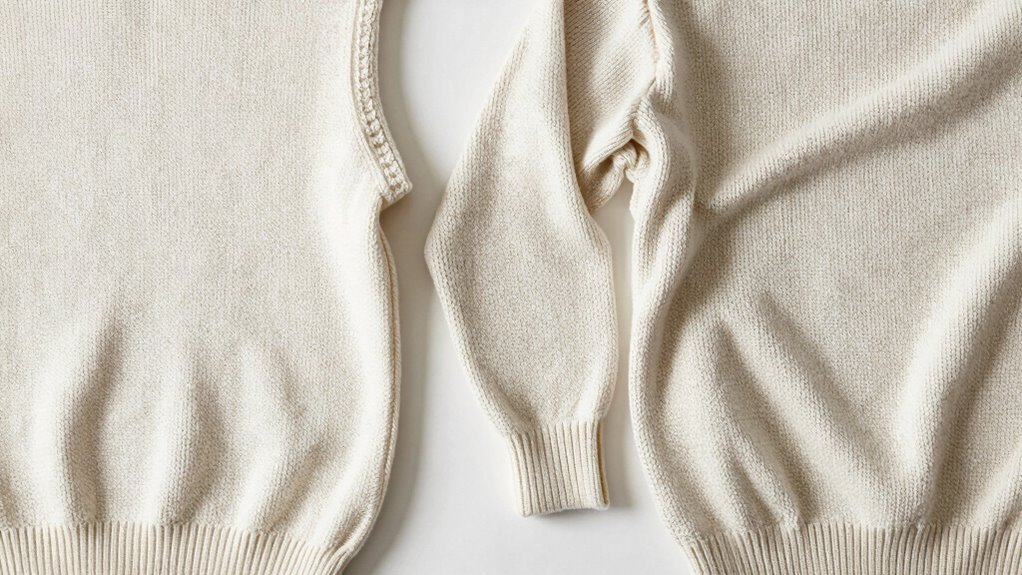
When you wash or wear knits, you might notice some bounce back to their original shape, while others seem to lose their form entirely. This difference largely comes down to fiber elasticity and knitting tension. Fiber elasticity refers to a fiber’s ability to stretch and return to its initial shape. Natural fibers like wool and silk tend to have high elasticity, allowing the fabric to bounce back after stretching. Conversely, synthetic fibers like acrylic or polyester may have less elasticity, making them more prone to permanent deformation. Knitting tension also plays a critical role. If the tension is too tight during knitting, the fabric becomes stiff and less able to stretch and recover. Loose tension, on the other hand, results in a softer fabric that can stretch more easily but may also lose its shape faster if not carefully cared for.
Fiber elasticity and knitting tension determine how well your knits bounce back and keep their shape over time.
When you handle knits with high fiber elasticity, you’ll notice they tend to spring back after stretching, whether it’s from wearing or washing. These fibers can elongate temporarily but return to their original form because their molecular structures are resilient. For example, wool fibers have a natural crimp that allows them to stretch and recover, giving your sweaters a bounce-back quality. On the other hand, fabrics made with fibers of lower elasticity, like acrylic, may stretch out permanently after wear or washing, leaving your garment misshapen.
Knitting tension influences how tightly or loosely the fabric is constructed. If the tension was too tight during your knitting process, the fabric might feel dense and stiff, making it less able to stretch without damage. When washed, these tightly knit fabrics might not recover their shape well, leading to bagginess or distortion. Conversely, a looser tension creates a more flexible fabric that can stretch and bounce back more easily, especially if combined with fibers that have good elasticity. Additionally, knitting techniques can impact the overall elasticity and durability of the finished garment.
Ultimately, it’s a combination of fiber elasticity and knitting tension that determines how well your knits hold their shape. When the fibers are naturally elastic and the tension was balanced during knitting, your garments are more likely to recover after stretching. If either factor isn’t ideal — low fiber elasticity or overly tight tension — you’ll notice your knits losing their shape or becoming misshapen over time. Proper care, gentle washing, and understanding these fabric qualities can help your knits retain their form longer. Recognizing the importance of fiber elasticity can help you choose and care for your knits more effectively. Additionally, being aware of knitting tension can inform your decisions about how to handle and store your knitted garments to maintain their shape.
As an affiliate, we earn on qualifying purchases.
Frequently Asked Questions
Do Different Yarn Types Affect How Knits Stretch or Hold Shape?
Yes, different yarn types affect how knits stretch or hold shape. Fibers with high elasticity, like wool or spandex, let your knit fabric stretch comfortably and spring back, maintaining shape. Conversely, less elastic fibers, such as cotton or linen, may stretch out over time and stay misshapen. Yarn durability also plays a role; durable yarns resist wear and deformation, helping your knits keep their form longer.
Can Washing Methods Prevent Knits From Losing Their Shape?
Yes, washing methods can prevent knits from losing their shape. You should wash knits gently in cold water to preserve fabric softness and dye stability. Avoid wringing or twisting the garment, as this can stretch or distort it. Instead, lay it flat to dry. Using a mild detergent and avoiding high heat helps maintain the knit’s original shape, ensuring it stays neat and comfortable over time.
How Does Knitting Tension Impact Stretch and Shape Retention?
Your knitting tension directly affects stretch and shape retention by influencing yarn elasticity and tension consistency. If your tension is too tight, the knit fabric becomes less elastic and more prone to misshaping. Conversely, loose tension allows better stretch and recovery. Maintaining even tension ensures your stitches are consistent, which helps your finished piece retain its shape after washing and wearing. Proper tension control is crucial to durable, well-shaped knits.
Are There Specific Stitches That Resist Stretching or Misshaping?
Certain stitches, like the stockinette stitch, tend to resist stretching and misshaping due to their stitch durability and elasticity resistance. Ribbing and seed stitches also offer excellent shape retention because their textured patterns provide added elasticity resistance. You’ll find these stitches maintain their form better over time, especially with proper tension and yarn choice. To prevent misshaping, opt for stitches known for their durability and elasticity resistance in your projects.
Does Age or Wear Influence a Knit’s Ability to Recover Shape?
Yes, age and wear do influence a knit’s ability to recover shape. Over time, fiber elasticity decreases due to age-related deterioration, making your knits less resilient. Repeated washing and use can also weaken fibers, leading to misshapen or stretched garments that don’t bounce back as easily. To maintain shape, handle your knits gently, avoid excessive stretching, and follow care instructions carefully to prolong their elasticity and appearance.
As an affiliate, we earn on qualifying purchases.
Conclusion
Ultimately, understanding why some knits bounce back while others don’t helps you choose wisely and care properly. Remember, a stitch in time saves nine—taking the time to follow care instructions and choosing quality yarns makes all the difference. If you treat your knits with love and patience, they’ll keep their shape longer, proving that good things come to those who take care. So, handle your knits with care, and they’ll reward you with lasting beauty.
As an affiliate, we earn on qualifying purchases.
shape retaining knitting tension gauge
As an affiliate, we earn on qualifying purchases.
As an affiliate, we earn on qualifying purchases.
Halloween Picks
halloween
As an affiliate, we earn on qualifying purchases.