Wood warps after you build because it naturally expands and contracts with changes in humidity and temperature, mostly along the grain. As moisture levels fluctuate, wood can swell, shrink, or twist, leading to bowing, cupping, or twisting. The type of wood and its grain pattern influence how much it moves. Properly managing moisture and understanding wood properties can help prevent warping—if you want to know more, there’s much to learn about controlling wood movement.
Key Takeaways
- Wood naturally expands or contracts with humidity and temperature changes, causing warping over time.
- Uneven moisture levels across the wood lead to bowing, cupping, twisting, or crooking.
- Proper drying, storage, and environmental control prevent internal stresses that cause warping after construction.
- Grain orientation, wood species, and density influence how much and in what way wood moves.
- Sealing edges and maintaining consistent humidity during installation minimize future warping and movement.
wood moisture meter
As an affiliate, we earn on qualifying purchases.
As an affiliate, we earn on qualifying purchases.
What Causes Wood to Expand and Contract
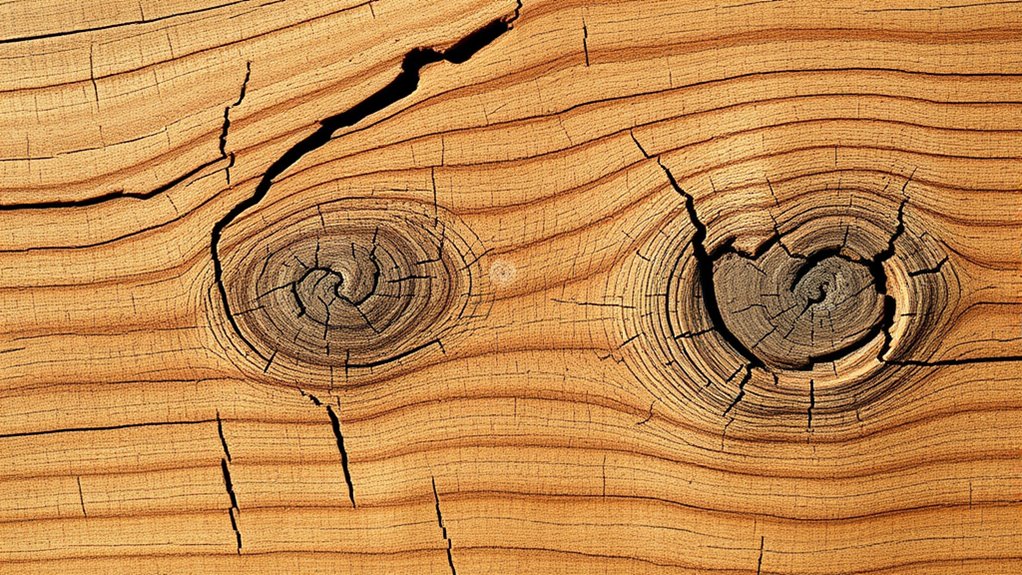
Wood naturally expands and contracts because of changes in humidity and temperature. This movement occurs along the wood grain, which directs how the material reacts to environmental shifts. During the drying process, moisture leaves the wood, causing it to shrink. Conversely, when humidity rises, the wood absorbs moisture and swells. These fluctuations happen mainly along the grain, making boards expand or contract lengthwise and widthwise. If you don’t account for this natural behavior during construction, your projects can develop gaps, warping, or buckling over time. Understanding how the drying process influences moisture levels helps you anticipate these movements. By recognizing the role of the wood grain, you can plan for expansion and contraction, ensuring your work remains stable and durable.
wood grain orientation guide
As an affiliate, we earn on qualifying purchases.
As an affiliate, we earn on qualifying purchases.
The Science Behind Wood Humidity Levels
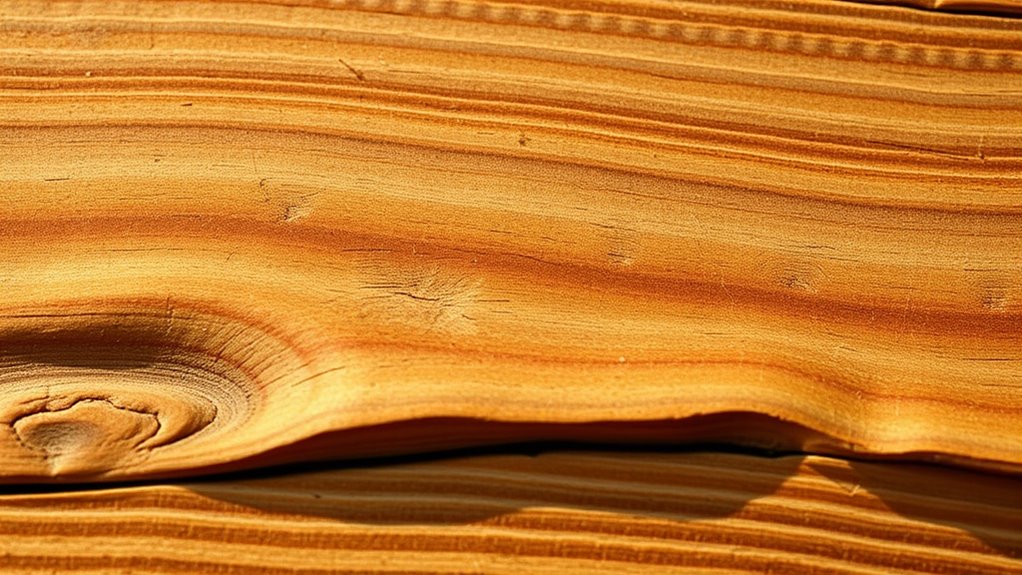
Understanding the science behind wood humidity levels is essential because moisture content directly influences how wood behaves over time. When wood absorbs or loses moisture, its wood grain expands or contracts, causing warping or cracking. Properly regulating humidity ensures your wood stays stable, especially during finishing techniques that can trap moisture inside. If the wood is too moist, it may swell unevenly, affecting the final appearance and structural integrity. Conversely, overly dry wood becomes brittle and prone to splitting. By monitoring humidity levels, you can predict how your wood will respond to environmental changes. This is why controlling wood moisture content is crucial for successful woodworking projects. Additionally, using a moisture meter can help you accurately measure and control the humidity levels in your wood, preventing potential warping issues. Maintaining proper humidity levels within the recommended range minimizes wood movement, which is essential for preserving the integrity of your projects over time. Being aware of environmental factors such as temperature and humidity fluctuations can further help you better manage wood stability and prevent warping.
wood drying and sealing products
As an affiliate, we earn on qualifying purchases.
As an affiliate, we earn on qualifying purchases.
How Moisture Content Affects Wood Stability
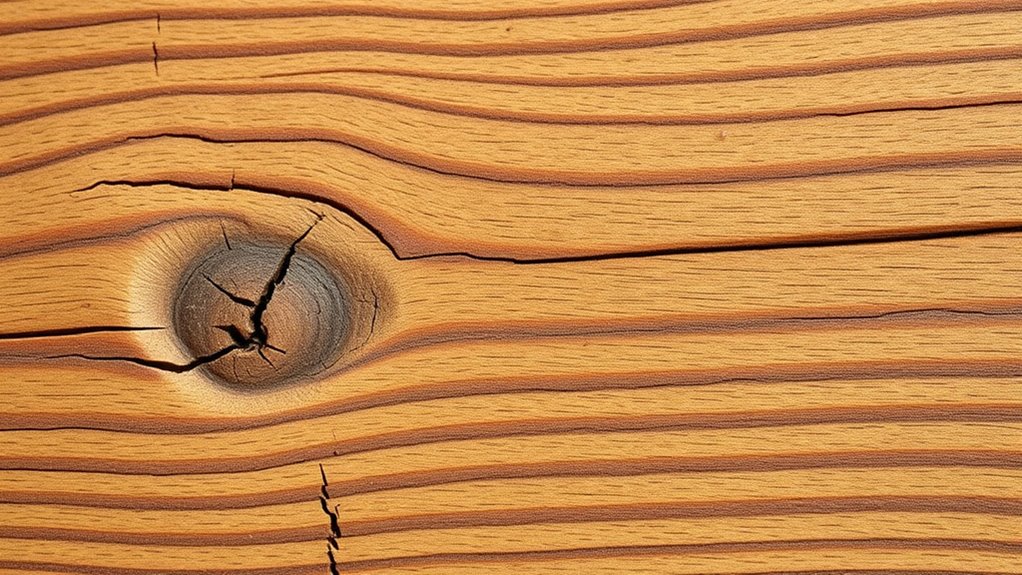
When moisture levels change, wood expands or contracts, impacting its stability. You need to understand the equilibrium moisture level, which is the ideal moisture content for your environment. Recognizing how fluctuations affect your wood helps prevent warping and other issues over time. Additionally, maintaining consistent humidity levels can significantly reduce the risk of wood movement and preserve the integrity of your craftsmanship.
Moisture Fluctuation Effects
Moisture content plays a crucial role in determining the stability of wood. When moisture levels fluctuate, wood expands or contracts, causing movement. Denser woods with higher wood density tend to be less responsive to moisture changes, but grain orientation markedly influences how the wood reacts. For example, wood boards with grain running parallel to the length will expand and contract differently than those with grain perpendicular. This uneven response can lead to warping or cracking over time. As moisture content rises or falls, the internal stresses within the wood shift, making it prone to movement. Understanding how moisture fluctuation affects wood helps you anticipate potential issues and choose appropriate wood for your project, ensuring better stability and longevity. moisture content significantly impacts wood’s dimensional stability, making it essential to control moisture levels during storage and installation. Additionally, proper climate management during storage and use can help reduce the risk of warping caused by moisture fluctuations.
Equilibrium Moisture Level
Equilibrium Moisture Level (EML) refers to the stable moisture content that wood naturally reaches when exposed to a specific environment’s temperature and humidity. Your wood’s EML depends on these environmental factors, and it influences how much the wood will expand or contract. Grain orientation affects how moisture impacts stability; vertical grain tends to be more stable than flat-sawn. Seasonal changes cause fluctuations in humidity, which in turn alter the moisture content of your wood. When the environment shifts, wood moves toward its new EML, leading to warping or cracking if it can’t adapt smoothly. Understanding EML helps you predict and manage wood movement, ensuring your projects stay stable despite seasonal variations. Moisture content is the key factor that determines how much your wood will move over time.
humidity control for woodworking
As an affiliate, we earn on qualifying purchases.
As an affiliate, we earn on qualifying purchases.
Common Types of Warping and Their Causes
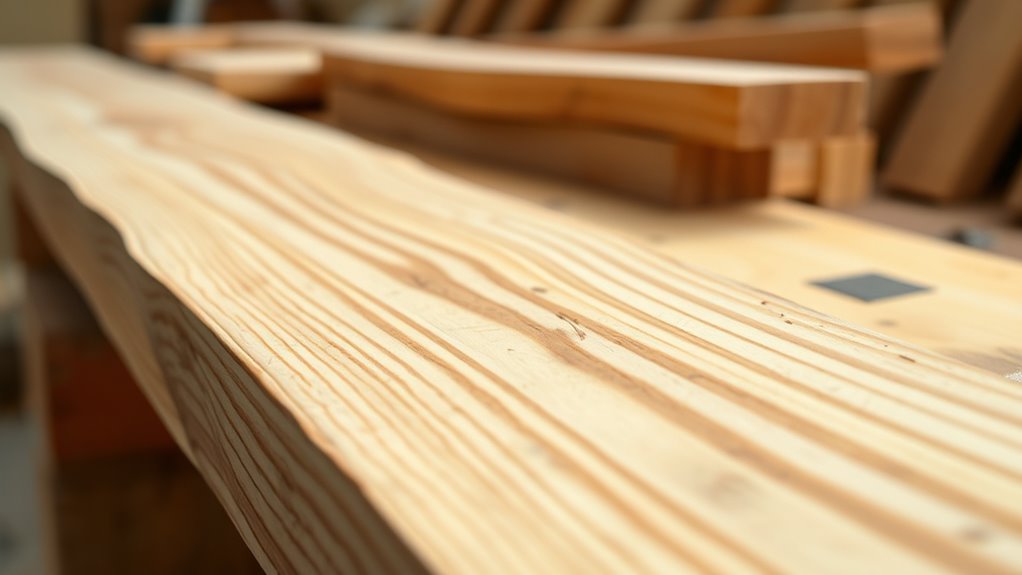
You’ll notice that wood can warp in different ways, like bowing or cupping, which change its shape. These issues often happen when moisture levels shift unevenly across the piece. Understanding the causes of twisting and crooking helps you prevent and correct these common warping problems. Additionally, Free Floating techniques in backyard design can influence how wood materials respond to environmental changes, impacting their tendency to warp over time. Recognizing wood movement factors is essential for proper installation and long-term stability, especially when considering climate variations that can accelerate or mitigate these effects. Being aware of moisture content fluctuations allows for better control of conditions that lead to warping and helps in choosing the right wood for specific projects. Proper acclimation and moisture management are key steps in minimizing warping during and after construction.
Bowing and Cupping
Bowing and cupping are common types of wood warping that can compromise both the appearance and stability of your project. Bowing occurs when a board curves along its length, often caused by uneven moisture content or inconsistent grain orientation. Cupping, on the other hand, happens when the edges of a board rise or fall, creating a concave or convex surface. These issues are directly related to wood grain, as grain orientation influences how moisture moves within the wood. If the grain runs chiefly in one direction, moisture absorption or loss can cause the wood to warp unevenly. Proper drying, storage, and understanding of the wood grain can help prevent bowing and cupping, keeping your projects stable and visually appealing. Additionally, wood grain patterns play a significant role in how the wood responds to environmental changes, so selecting the right grain orientation can minimize warping risks. Recognizing the importance of moisture content management is essential for preventing warping during storage and construction. Implementing proper wood drying techniques can further reduce the likelihood of warping and ensure better stability over time. Understanding how environmental humidity fluctuations impact wood can also help you choose the best storage conditions to minimize warping risks. Moreover, maintaining consistent climate control in your workspace can greatly reduce the chances of warping after building.
Twisting and Crooking
Have you ever noticed a board twisting or crooking after it’s been cut or installed? This often happens when the grain orientation isn’t properly aligned, causing uneven expansion and contraction. Twisting and crooking occur when the wood’s internal stresses shift as it acclimates to its environment, especially if the finish application isn’t evenly applied or penetrates differently across the surface. If the grain runs unevenly or diagonally, the wood is more prone to these distortions. To minimize this, ensure the grain is aligned properly during installation and avoid applying finishes that can trap moisture unevenly. Properly selecting grain orientation and controlling moisture levels during finish application helps prevent twisting and crooking, keeping your project stable and true to its original design. Additionally, understanding wood movement can help you anticipate and mitigate these issues before they develop. Paying attention to moisture content during wood selection and finishing can significantly reduce the likelihood of warping over time. Monitoring environmental conditions, such as humidity and temperature fluctuations, also plays a crucial role in maintaining wood stability over the long term. Being aware of these factors and how they interact with wood behavior allows you to plan your projects more effectively. Regularly checking for signs of internal stresses can help catch potential warping early, saving time and materials.
The Role of Wood Species in Movement

Different wood species respond to moisture changes in unique ways, substantially influencing how much they move or expand. You’ll notice that species with lower wood density tend to swell and shrink more, making them more prone to warping. Conversely, denser woods usually move less because their tighter grain resists moisture fluctuations. Grain pattern also plays a vital role; straight-grained woods typically expand and contract uniformly, reducing warping, while irregular or wavy grain patterns can cause uneven movement. Knowing these differences helps you select the right wood for your project, especially if stability is a priority. By understanding how specific species behave, you can better anticipate movement and take steps to minimize warping after construction. Additionally, the moisture content of wood significantly impacts its movement, so controlling humidity levels during storage and use can further reduce warping.
Environmental Factors Influencing Wood Behavior

Environmental factors such as humidity, temperature, and exposure to moisture play a crucial role in how wood behaves over time. Changes in these elements cause wood to expand or contract, affecting its wood grain and overall stability. Denser woods with tighter wood grain tend to resist movement more, but they still respond to environmental shifts. For example, high humidity causes wood to swell, while dry conditions lead to shrinkage. Temperature fluctuations can accelerate these changes. Understanding these influences helps you anticipate how your project might warp or crack. Here’s a closer look at how specific factors interact with wood properties:
| Factor | Effect on Wood Behavior |
|---|---|
| Humidity | Causes expansion or contraction in grain |
| Temperature | Accelerates moisture exchange |
| Moisture Exposure | Leads to swelling or drying out |
Best Practices for Preparing and Storing Wood
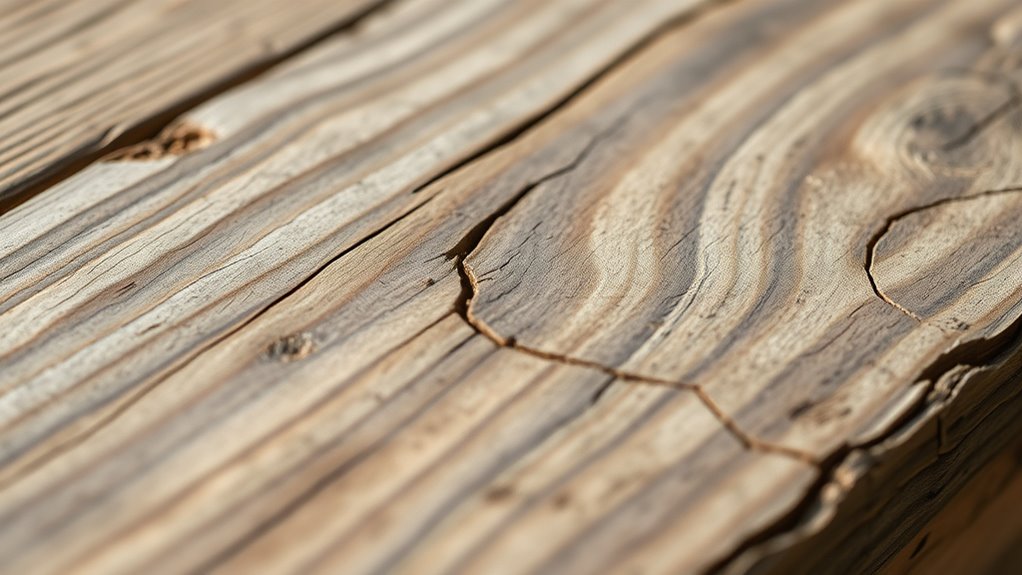
To guarantee your wood maintains its quality and stability, proper preparation and storage are key. Start with good wood storage practices by keeping your boards in a dry, well-ventilated area, away from direct sunlight and moisture. This prevents uneven drying and warping. Use drying techniques such as stacking boards with spacers or stickers to promote even airflow, ensuring moisture content reduces gradually. Avoid stacking wood directly on the ground, which can introduce excess moisture. Keep humidity levels consistent to prevent rapid changes that cause warping. Cover your wood with breathable materials if exposed to the elements, but don’t seal it airtight. Proper preparation and storage help your wood dry evenly, minimizing movement and ensuring better stability for your projects.
Techniques to Minimize Warping During Construction
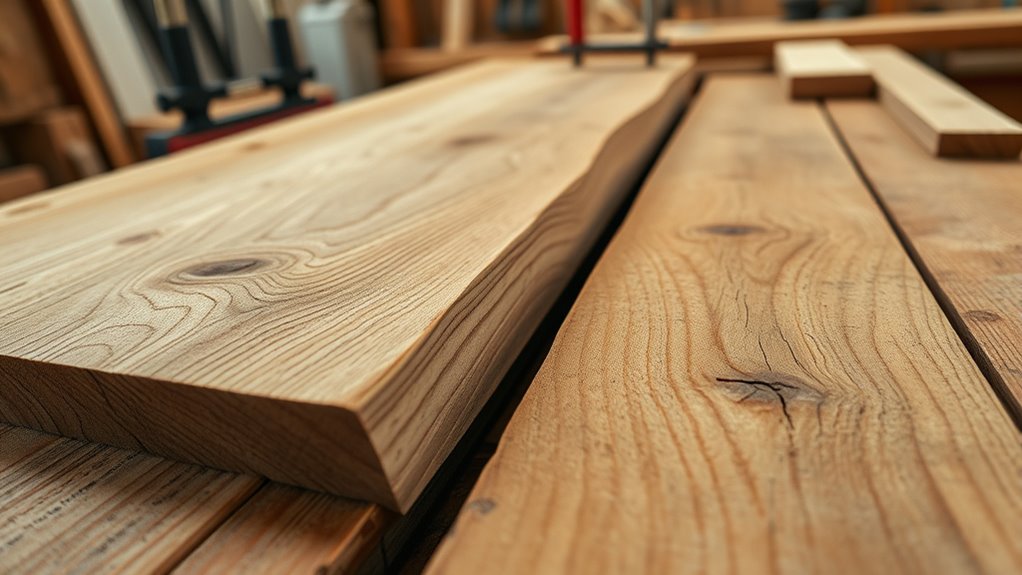
Implementing proper construction techniques is essential to minimize warping and guarantee your project stays stable over time. Focus on aligning the grain orientation to reduce internal stresses that cause movement. Use consistent drying methods to prevent uneven moisture content, which can lead to warping during construction. Carefully select and prepare your wood before assembly to ensure stability. Consider these techniques:
- Align grain direction with the project’s stress points
- Use controlled drying to maintain uniform moisture levels
- Keep boards flat and properly supported during work
- Avoid exposing wood to rapid temperature or humidity changes
- Seal edges to slow moisture absorption and release
How to Recognize Signs of Movement in Wood Projects
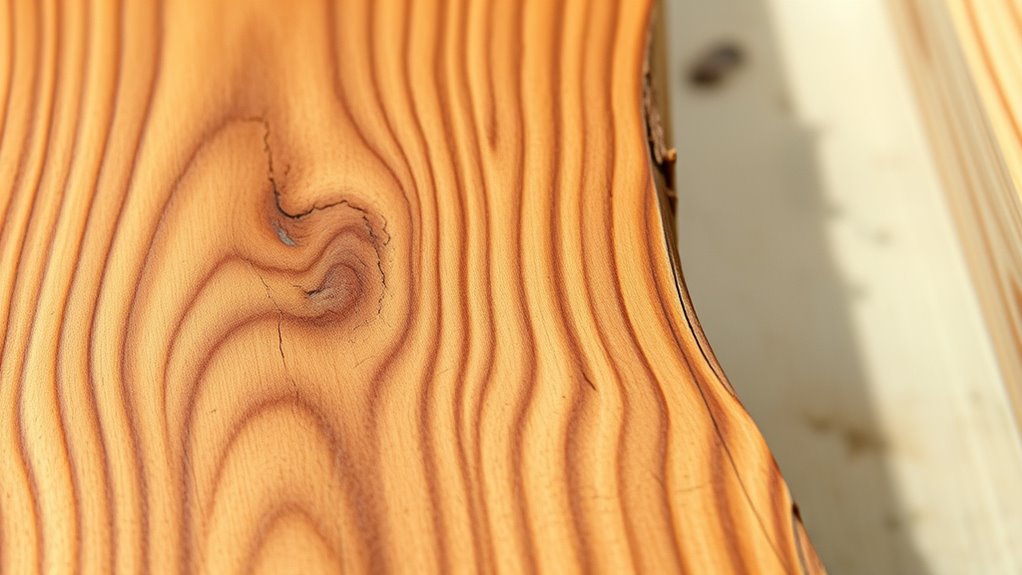
Recognizing early signs of movement in your wood projects is essential to prevent structural issues and costly repairs. Look for uneven gaps or cracks developing between boards, which indicate movement due to changes in moisture or temperature. Pay close attention to the grain orientation; boards with grain running parallel to edges may expand or contract differently than those with perpendicular grain. Warping often becomes evident around areas with inconsistent finish application, where moisture absorption varies.
| Sign of Movement | What to Watch For |
|---|---|
| Cracks | Small splits along the grain |
| Gaps | Spaces forming between joints |
| Warping | Bowed or twisted boards |
| Finish Damage | Peeling or uneven finish |
| Moisture Spots | Dark patches from absorption |
Recognizing these signs helps you catch movement early and address it before it escalates.
Long-Term Strategies for Maintaining Wood Stability
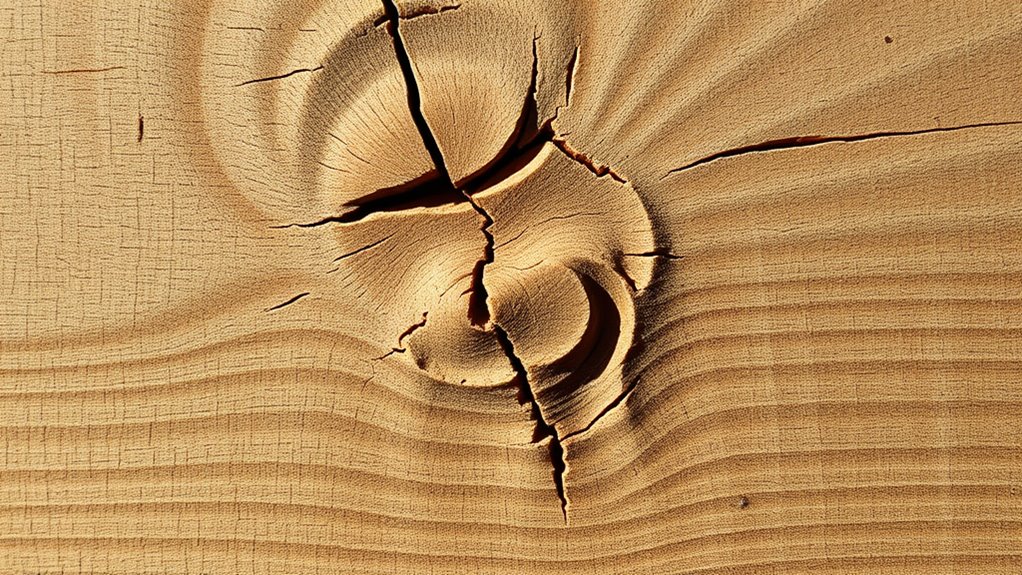
Long-term stability of wood relies heavily on consistent maintenance and thoughtful planning. To keep your projects stable, consider regular wood treatment to protect against moisture and environmental stress. Be mindful of seasonal changes, which cause wood to expand and contract. You can minimize movement by controlling humidity levels in your space and using stable, seasoned wood. Additionally, applying sealants or finishes helps prevent moisture intrusion. Regularly inspect your projects for signs of stress or wear.
- Protect your wood from extreme weather with proper covers
- Maintain consistent indoor humidity levels
- Use durable, high-quality wood treatments
- Avoid drastic temperature fluctuations
- Address any warping or cracking early before it worsens
These strategies will help preserve your craftsmanship, keeping wood stable and beautiful for years to come.
Frequently Asked Questions
Can Finishing Wood Prevent Warping Over Time?
Finishing wood can help prevent warping over time by improving wood stability, but it doesn’t eliminate the risk entirely. Proper finishing techniques, like sealing all sides and edges, reduce moisture exchange with the environment, which is a key cause of warping. Keep in mind that environmental factors still play a role, so regular maintenance and controlled humidity are essential for maintaining your wood’s shape and stability long-term.
How Do Indoor and Outdoor Environments Differently Affect Wood Movement?
Indoor and outdoor environments impact wood movement differently because humidity effects and temperature fluctuations vary. Indoors, stable humidity levels help minimize warping, but sudden changes can still cause movement. Outdoors, fluctuating humidity and temperature cause significant expansion and contraction, increasing warping risk. You should control indoor humidity and protect outdoor wood from weather variations to reduce movement and maintain your project’s stability over time.
What Tools Are Best for Detecting Early Signs of Wood Warping?
Think of your tools as the early warning system in a storm. You should use moisture meters to detect hidden moisture changes that signal warping, and perform visual inspections to spot cracks, twists, or bows as they begin to form. These tools act like a lighthouse guiding you before damage spreads. Regularly checking your wood helps catch warping early, saving you time, effort, and costly repairs down the line.
Does Veneer or Engineered Wood Resist Warping Better Than Solid Wood?
Veneer and engineered wood resist warping better than solid wood due to their veneer durability and engineered stability. You’ll find that veneer is less prone to expansion and contraction because it’s thin and glued onto stable substrates, while engineered wood is designed with layered materials that balance moisture changes. This makes both options more resistant to warping, helping your projects stay flatter and more durable over time.
How Often Should I Check Wood for Signs of Movement During Projects?
Like a modern-day Sherlock, you should check your wood weekly during construction. Regular moisture monitoring helps catch signs of wood expansion or contraction early. Pay close attention to warping, cracks, or gaps—these indicate movement. Frequent inspections ensure you catch issues before they worsen, especially in varying humidity conditions. Staying vigilant allows you to maintain the integrity of your project and address potential problems promptly, saving time and materials.
Conclusion
Think of your wood project as a living garden—if you don’t tend to its needs, it’ll drift apart. By understanding how moisture and temperature influence wood, you become the gardener who nurtures stability instead of chaos. With proper care and mindful techniques, your boards will stay true to their form, weathering time’s changes. Embrace this knowledge, and your craftsmanship will flourish, standing strong like a well-tended tree rooted deep in its environment.