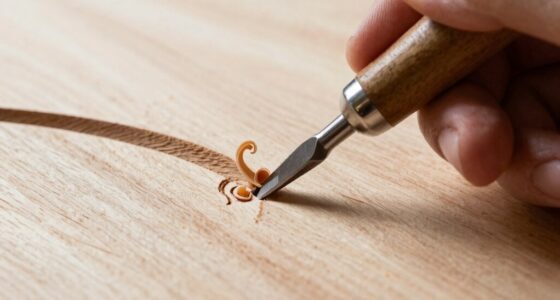
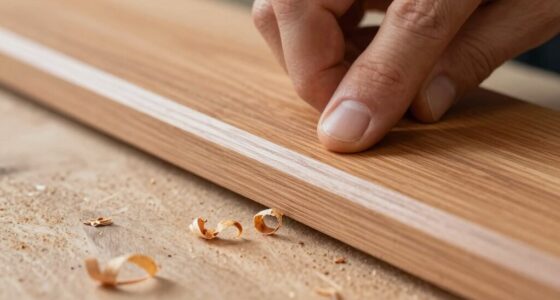
To protect your fingers and get better results, always carve with the grain of the wood. Examine the surface and look for lines or patterns that indicate fiber direction. Carving along the grain makes cutting smoother and reduces splintering, while carving against it can cause tear-out and injuries. Mastering this simple rule keeps your work safe and professional—keep exploring how to identify and follow grain properly for expert carving.

Get tools and workshop supplies delivered free — and shop member deals
- Fast, free delivery on millions of items
- Access to Prime Big Deal Days deals on October 6–7
- Prime Video, Amazon Music and more included
Key Takeaways
- Always carve with the grain to prevent splintering, tear-out, and accidental injuries.
- Identify grain direction by examining surface patterns and running your fingers lightly across the wood.
- Follow the grain during carving to reduce force, tool resistance, and fatigue.
- Reassess grain orientation if you encounter tough spots or resistance to avoid damaging the wood.
- Keep tools sharp and use controlled strokes to enhance safety and achieve a smoother, cleaner finish.
As an affiliate, we earn on qualifying purchases.
Understanding Wood Grain and Its Impact on Carving

Have you ever wondered why some carvings turn out smoother and easier to work with than others? The secret lies in the grain orientation and how you cut through the wood fibers. When you carve along the grain, you follow the natural direction of the wood fibers, making your cuts cleaner and requiring less effort. Carving against the grain, however, causes splintering and rough surfaces, which can ruin your work and slow you down. Understanding the way the wood fibers run helps you plan your cuts more effectively, reducing the risk of tear-out. By paying attention to the grain orientation, you’ll achieve smoother finishes and make carving safer and more enjoyable. Mastering this aspect is key to successful, high-quality wood carving.
As an affiliate, we earn on qualifying purchases.
How to Identify the Grain Direction in Your Wood

Wondering how to determine the direction of the wood grain? Start by examining the surface texture. Look closely at the lines and patterns on the wood’s surface—they reveal the grain orientation. Run your fingers lightly across the surface; if the wood feels smooth in one direction and rougher in another, that’s a clue to the grain’s path. You can also observe the end grain, which shows the wood’s growth rings and helps confirm the grain direction. Always check for subtle variations, as grain can shift or bend. Recognizing the grain pattern is essential for achieving a clean cut and proper woodworking techniques. Understanding the grain direction can help prevent damage to your tools and improve the overall quality of your work. Additionally, understanding the grain pattern can help prevent damage to your tools and improve the overall quality of your work. Taking a moment to study the surface texture makes carving safer and more precise, especially when considering the importance of grain orientation in woodworking. Being aware of the grain orientation can also aid in selecting the right tools and techniques for different types of wood, ensuring better results.
As an affiliate, we earn on qualifying purchases.
Applying the Grain Direction Rule During Carving

Once you’ve identified the grain direction, applying it correctly during carving makes a significant difference in your results. Always pay attention to the grain orientation and carve with it, not against it. Carving with the grain reduces the risk of splintering and minimizes carving hazards, helping you achieve smoother cuts. When you follow the grain, your tools move more easily, requiring less force and decreasing fatigue. Keep your cuts aligned with the grain, especially on delicate areas or when refining details. If you encounter tough spots, reassess the grain orientation to avoid tearing or damaging the wood. Properly applying the grain rule during carving not only improves your work’s quality but also keeps you safer by reducing the likelihood of slips and accidents. Incorporating visual cues can further enhance your ability to identify grain direction accurately. Paying attention to wood properties can also assist in understanding how the grain runs through your material.
As an affiliate, we earn on qualifying purchases.
Common Mistakes That Break the Grain Rule

Many woodworkers unintentionally break the grain rule by carving against the grain, which can cause splintering, tearing, and rough finishes. Ignoring the grain pattern and wood texture often leads to these mistakes. For example, carving across the grain may seem easier but damages the surface. Here’s a visual to help you understand:
| Grain Pattern | Effect of Carving Against It |
|---|---|
| Straight | Causes splinters and rough edges |
| Curved | Leads to tearing and uneven surfaces |
| Cross-grain | Increases risk of tear-out and splinters |
Additionally, understanding the grain direction can help you plan your carving technique for optimal results, and being aware of the wood texture enhances your ability to avoid common mistakes. Recognizing the importance of grain orientation is essential for achieving a smooth finish and preventing damage during carving.
Tips for Safe and Precise Wood Carving

To guarantee safe and precise wood carving, focus on proper technique and tool control. Always pay attention to grain orientation—carve with the grain to prevent splitting and reduce resistance. Keep your tools sharp, as dull blades increase the risk of slips and accidents, compromising carving safety. Use controlled, deliberate strokes rather than forceful motions, which can cause the tool to catch or jump. Work slowly around curves or intricate details, maintaining steady pressure and adjusting your angle to follow the grain. Secure your workpiece firmly to avoid slips. By understanding how grain orientation affects your cuts, you’ll improve precision and minimize the risk of injury, making your carving safer and more accurate every time. Additionally, understanding the concept of Free Floating can help you manage your tools better and reduce unnecessary movement, further enhancing safety. Incorporating Water-based techniques can also help keep your tools clean and your work smooth, contributing to safer carving practices. Proper tool maintenance is essential for maintaining safety and ensuring precise cuts. Maintaining your tools regularly can prevent unexpected failures during carving. Proper filtration and pump protection can also help keep your tools functioning smoothly during projects.
Frequently Asked Questions
Can the Grain Direction Change Within a Single Piece of Wood?
Yes, the grain direction can change within a single piece of wood due to wood variability. You’ll notice areas where the grain shifts, making it less consistent. It’s important to pay attention to these changes because they affect how you carve and how the wood reacts. By observing grain consistency, you can adjust your technique to avoid splintering or damaging the wood, ensuring a safer and cleaner carve.
How Does Grain Orientation Affect Different Carving Tools?
Grain orientation greatly impacts how your carving tools perform, affecting grain stability and tool compatibility. When you carve with the grain, tools glide smoothly, reducing splintering and effort. Against the grain, you risk tearing or chipping, so choosing tools designed for such cuts helps uphold stability. Understanding grain direction ensures you pick the right tools and techniques, making your carving safer, cleaner, and more precise.
Is the Grain Rule Applicable to All Types of Wood?
Yes, the grain rule applies to all types of wood, but you should consider the wood’s variability and grain stability. Different woods have varying grain patterns and stability, affecting how you should follow the rule. By paying attention to grain direction, you reduce the risk of splitting or chipping, especially with softer or more variable woods. Always test and observe the grain to guarantee safe, precise carving.
What Signs Indicate Incorrect Grain Direction During Carving?
Imagine you’re wielding your chisel like a knight’s sword, and suddenly, you notice increased tool resistance—it’s a sign of grain misalignment. If your carving feels rough, catches easily, or causes splintering, you’re likely working against the grain. These signs indicate incorrect grain direction, risking damage to your piece and your fingers. Always pay attention to how the wood responds, adjusting your cuts to follow the grain properly.
How to Modify the Grain Rule for Complex or Layered Wood Pieces?
When working with complex or layered wood pieces, you should adapt the grain rule by carefully examining the grain pattern in each layer. Carve along the dominant grain direction in each layer, even if they differ, to prevent splits or tear-out. Use a small chisel or gouge to test the grain’s flow, and adjust your tools and techniques accordingly. This approach helps you maintain control and achieve clean, precise carvings.
Conclusion
By following the grain direction rule, you protect your fingers and achieve cleaner carvings. Imagine carving a delicate figure, only to slip and cause injury because you ignored the grain. Instead, when you work with the wood’s natural flow, your cuts become smoother and safer. Don’t let a simple mistake ruin your project or your safety—embrace the grain rule, and craft with confidence and care every time.
Fall yard work Picks
leaf blowers
As an affiliate, we earn on qualifying purchases.