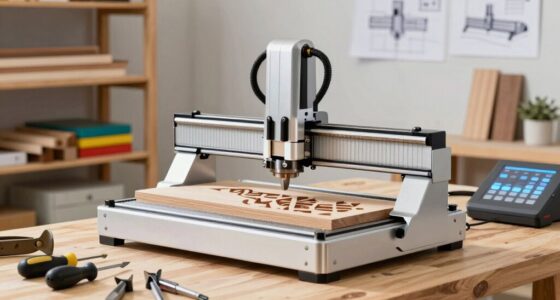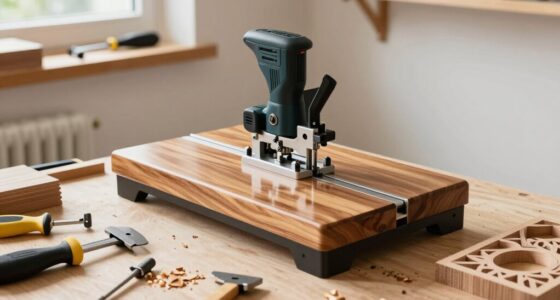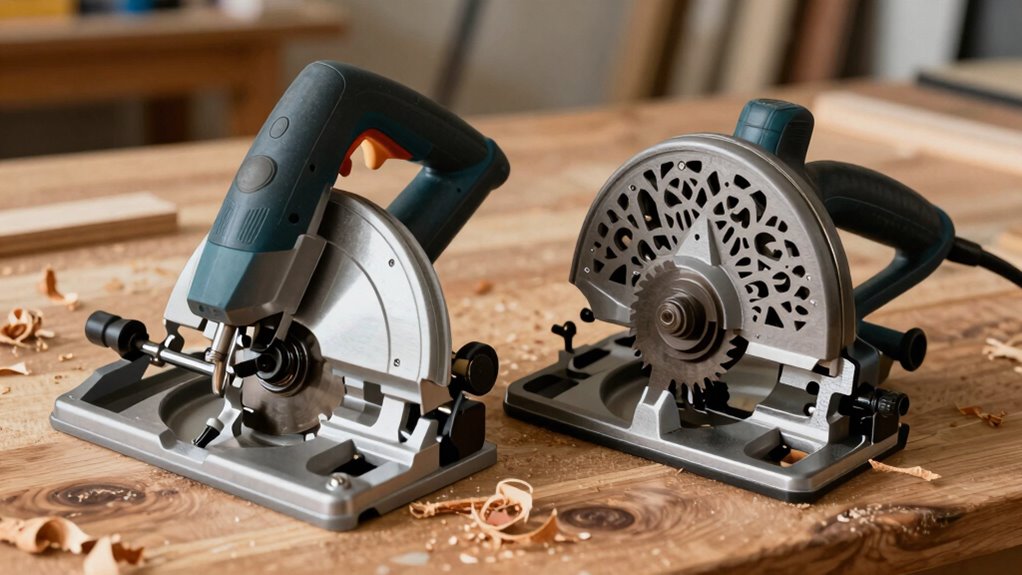

If you’re working on decorative wood projects, a scroll saw is your best choice because it handles intricate patterns and fine details with precision. It’s perfect for ornate designs, inlays, and delicate curves. A miter saw excels at straight and angled cuts for framing or large pieces but isn’t as suited for detailed work. To achieve the best craftsmanship, understanding the strengths of each tool is key—stay with us to learn more about matching tools to your project needs.

Get business pricing on tools and workshop supplies
- Business-only prices and quantity discounts
- Tax-exempt purchasing
- Multiple users, one account, clear invoices
Key Takeaways
- Scroll saw is ideal for intricate, detailed, and decorative carvings, patterns, and inlays in wood projects.
- Miter saw excels at straight, angled, and large cuts, suitable for framing and structural elements.
- For complex decorative designs, the scroll saw offers greater precision and creative flexibility.
- Use a miter saw for quick, accurate cuts needed in assembly or large-scale woodworking projects.
- Combining both tools allows for comprehensive craftsmanship, covering both decorative details and precise cuts.
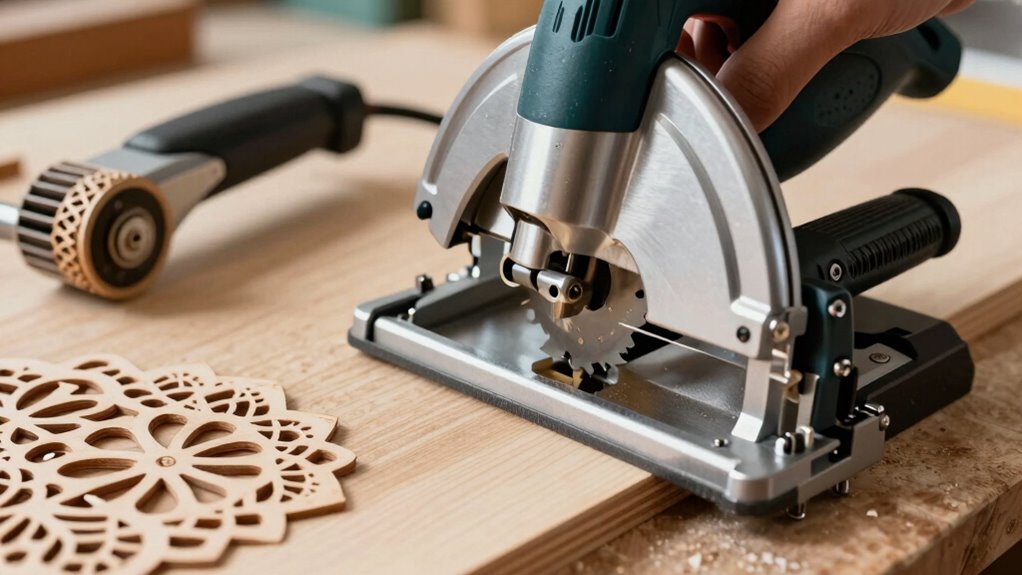
When choosing between a miter saw and a scroll saw, understanding their primary functions and applications can help you make an informed decision. Both tools serve different purposes, especially when it comes to decorative wood projects. A miter saw excels at making straight, angled, and cross cuts quickly and accurately, which is essential when framing or preparing large pieces of wood. However, it’s less suited for intricate or detailed cuts. Conversely, a scroll saw is designed for precision and fine detail work. Its ability to make intricate curves and patterns makes it ideal for decorative features, inlay work, or delicate projects. Using the right tool for the appropriate project type enhances both safety and the quality of your finished work. Power tool safety should be your top priority whenever working with either tool. Miter saws, with their powerful blades, can generate significant kickback if not used properly. Always wear safety glasses, keep your hands clear of the blade, and secure your workpiece firmly. Scroll saws, while generally safer, still require careful handling, especially because of their fine blades and intricate cuts. Maintaining focus and using push sticks or guides helps prevent accidents and guarantees clean, precise results. Proper safety practices not only protect you but also contribute to cutting accuracy, which is vital for the quality of your finished piece. Additionally, understanding the fundamental differences between these tools can help you select the most suitable one for your specific project requirements. Recognizing the different blade types and their functions can also influence your choice, ensuring you have the right blade for detailed or straight cuts.
When considering which tool fits better for decorative projects, think about the complexity of your designs. If you’re working on frames, molding, or projects that involve straight or angled cuts, the miter saw is your best bet. Its ability to cut multiple pieces to precise lengths and angles makes assembly straightforward. On the other hand, if your work involves ornate patterns, scrollwork, or detailed inlays, the scroll saw is unmatched in its ability to produce delicate, intricate cuts. Its ability to cut tight curves and detailed shapes allows you to create decorative accents with finesse. Both tools have their unique capabilities that can elevate your craftsmanship when used appropriately. In terms of versatility, the scroll saw offers more creative freedom for decorative touches. It enables you to craft complex designs that a miter saw simply can’t handle. Additionally, understanding the differences in blade types can help you select the best tool for various detailed projects. However, for bulk cuts or framing tasks, the miter saw provides speed and accuracy, saving you time. Ultimately, the best choice depends on your project needs. For decorative woodwork that demands fine detail, the scroll saw is your go-to. For large, precise cuts and angled joints, the miter saw is more efficient. Combining both tools can give you a full range of options to elevate your woodworking projects, blending speed, precision, and intricate craftsmanship.
scroll saw for intricate wood patterns
As an affiliate, we earn on qualifying purchases.
As an affiliate, we earn on qualifying purchases.
Frequently Asked Questions
Can Both Saws Cut Metal or Plastic Materials?
Both saws are primarily designed for wood, so they’re not ideal for metal or plastic cutting. A miter saw can handle plastic with a fine blade but isn’t suited for metal cutting. A scroll saw is great for intricate plastic projects but isn’t meant for metal. For metal cutting, you should use a metal-cutting saw or a hacksaw. For plastics, a fine-tooth blade on the appropriate saw works best.
Which Saw Is Safer for Beginner Woodworkers?
Imagine steering a small boat through gentle waters—this is how a scroll saw feels for beginners. It’s safer because it offers more control, especially with safety gear like push sticks and eye protection. With beginner tips in mind—like keeping fingers clear and steady—you can navigate projects confidently. A scroll saw’s slower, more precise cuts make it the friendliest choice for new woodworkers seeking safety and ease.
Do These Saws Require Special Blades for Intricate Cuts?
Yes, both saws require special blades for intricate cuts to guarantee blade compatibility and cutting precision. For a miter saw, look for blades designed for fine, detailed work, like thin-kerf blades. Scroll saws often use specialized blades with small teeth that handle delicate, intricate patterns. Using the right blades enhances safety, precision, and the quality of your decorative wood projects, making your cuts cleaner and more accurate.
How Much Space Does Each Saw Typically Need?
You’ll find that a miter saw generally needs more space, around 3 to 4 feet of clearance, to operate safely, especially when adjusting cutting angles. A scroll saw requires a smaller footprint, often just a compact table, making it ideal for tight spaces. When choosing, consider blade types for intricate cuts, as scroll saws excel here, while miter saws handle precise angle cuts efficiently in a modest area.
Are There Specific Maintenance Tips for Each Saw?
You should regularly check blade maintenance to keep your saws running smoothly and safely. For both saws, clean blades after each use and replace dull or damaged blades promptly. Always follow safety precautions, like unplugging the saw before blade changes and wearing protective gear. Keep blades sharp to guarantee precise cuts and reduce the risk of accidents. Proper maintenance and safety habits prolong your saws’ lifespan and improve your woodworking experience.
As an affiliate, we earn on qualifying purchases.
Conclusion
When choosing between a miter saw and a scroll saw, consider your project needs and precision requirements. Did you know that 65% of DIY enthusiasts report crafting more intricate designs with a scroll saw? If you love detailed, decorative work, the scroll saw is your best bet. For larger cuts and framing, a miter saw excels. Ultimately, selecting the right tool can turn your creative ideas into stunning reality—so pick the one that sparks your passion!
best scroll saw for detailed inlays
As an affiliate, we earn on qualifying purchases.
As an affiliate, we earn on qualifying purchases.
professional miter saw for framing
As an affiliate, we earn on qualifying purchases.
As an affiliate, we earn on qualifying purchases.
Fall yard work Picks
leaf blowers
As an affiliate, we earn on qualifying purchases.